
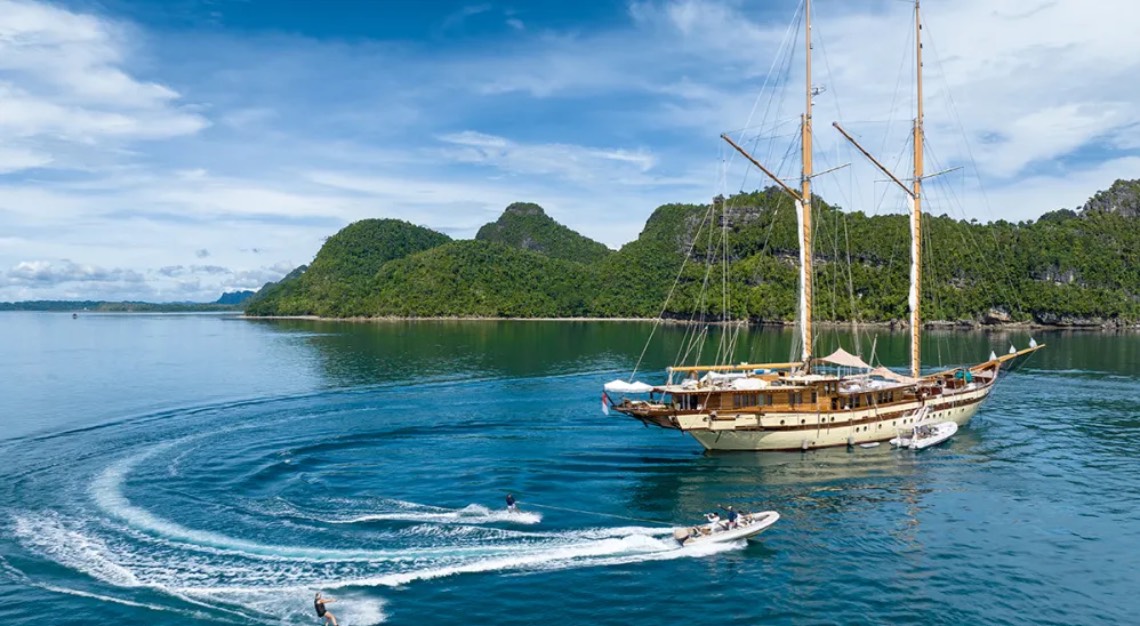
“Lamima” is the biggest—and dare we say best—phinisi on the water
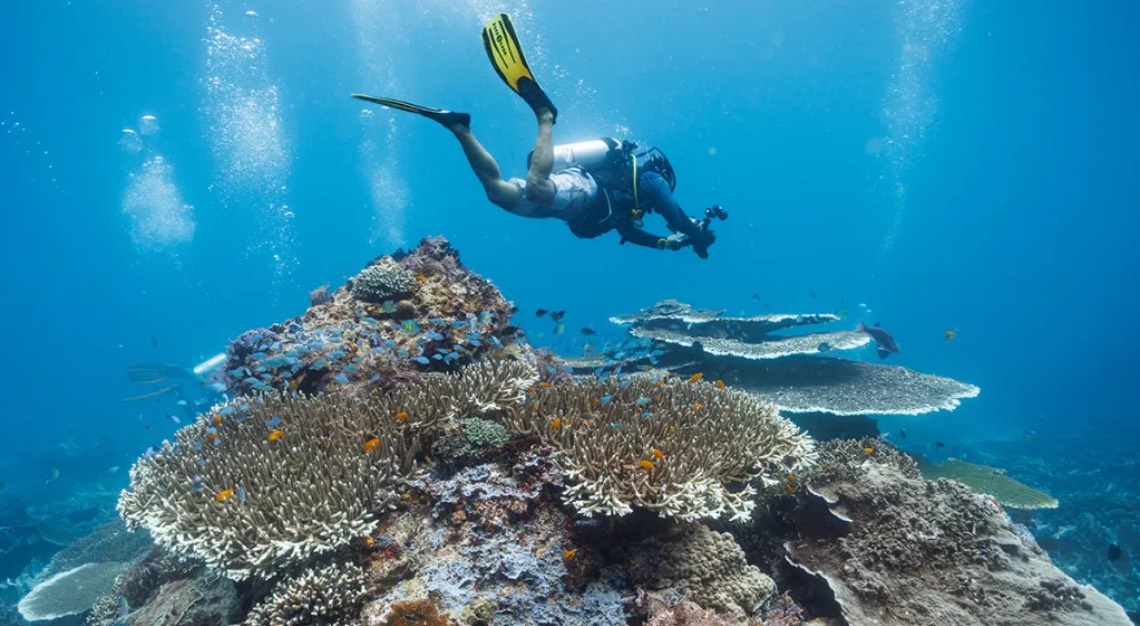
To dive into Raja Ampat is to enter a subaquatic kaleidoscope. Blue tangs radiate different colours, depending on their moods. Dolphins follow fishing boats; divers can follow both. This 1,500-island archipelago in Indonesia, midway between Australia and Thailand, is categorically the world’s best diving location. It holds the world record for biodiversity: 374 fish species spotted during one 90-minute dive.
One of the only ways to explore Raja Ampat is in a phinisi. These Indonesian-built sailing ships are constructed in barefoot shipyards near the ironwood forests of Sulawesi, without the aid of blueprints or nails. They once lugged timber to Thailand and sea cucumbers from Australia. Today’s phinisis carry nitrox generators and Starlink connections.
Phinisis have become wildly popular because Indonesia is a closed maritime registry, meaning only locally flagged boats can charter here. Want to snorkel with mantas? Get shipwrecked on a Robinson Crusoe beach with a picnic of yellowfin ceviche? Go wooden, or go home.
In Indonesia’s growing armada of luxury phinisis, one boat heads the fleet. Lamima was the first phinisi fitted out to superyacht standards. She is the only one with RINA certification, the global benchmark of seaworthiness and safety. She remains the biggest phinisi ever built. The master suite is nearly 46.5 square metres and has panoramic views and private main deck access. The six ensuite cabins on the lower deck, where I stayed, have calm interiors made from teak and local fabrics as well as eco-conscious products. On a European boat, the structure would be concealed. In these cabins, the ironwood ribs are clearly visible.
The upper deck in front of the pilot house is the most dynamic communal area. It flips from dawn yoga to sunset dining room to outdoor disco. One night, all 14 guests and 20 crew danced the Macarena under a tropical sky. You don’t forget a charter on Lamima. It’s an experience, not an ego-boost.
But my first day on the world’s longest wooden sailing yacht starts with a wobble. Wicked jetlag wakes me at 4 a.m. A platter of papaya and rambutans prepared by the 24/7 team of host staff fails to kickstart my body clock. Under the watchful eye of the first officer, I swim off my lethargy alongside the boat. A tropical current keeps me stationary, like a superyacht contra-flow pool, as a bioluminescent necklace blossoms in my wake.
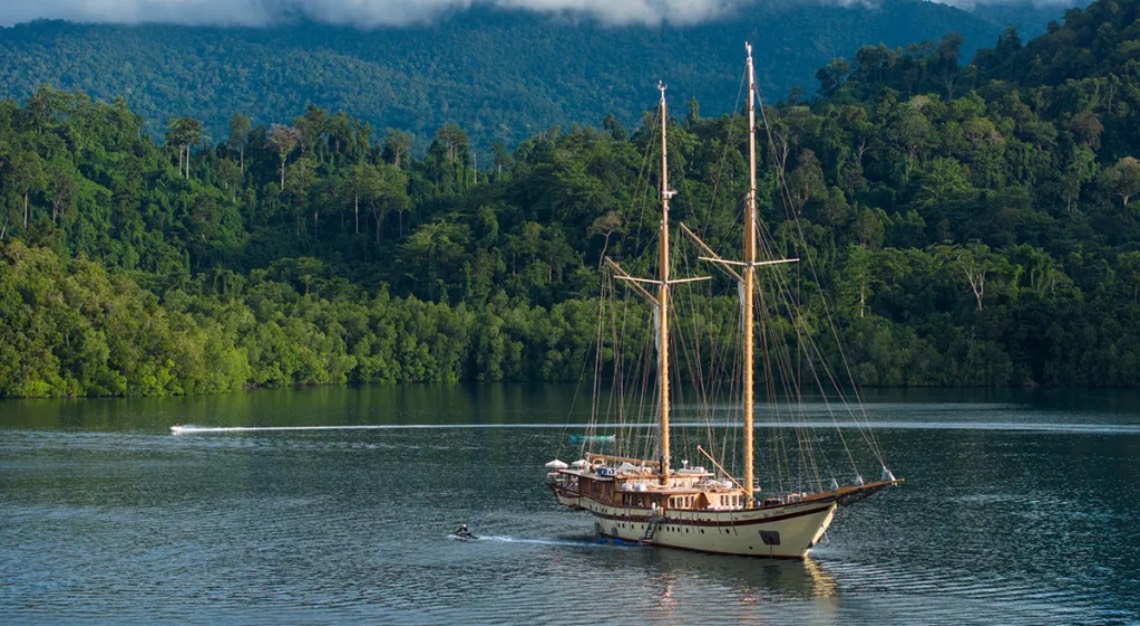
Post-swim, my flat white comes with a choice of coffee beans: earthy Java, chocolatey Papuan, or a citrusy blend from Raja Ampat. Dawn colours break like an exploding watermelon, and I’m ready to explore.
The first stop on my Raja Ampat charter is Farondi Island. I kayak to a remote jetty marked by two leather armchairs placed by the crew. From here, I climb up a ramshackle staircase through forests of tropical almond and nodding palms.
The panorama from my island summit is spellbinding. Frigatebirds whirl down to snap squid mid-air. In a heart-shaped lagoon, rabbitfish spiral in bright yellow eddies. Volcanic specks mushroom up from topaz seas, like a real estate brochure for The Man With The Golden Gun. It’s pure Insta-envy.
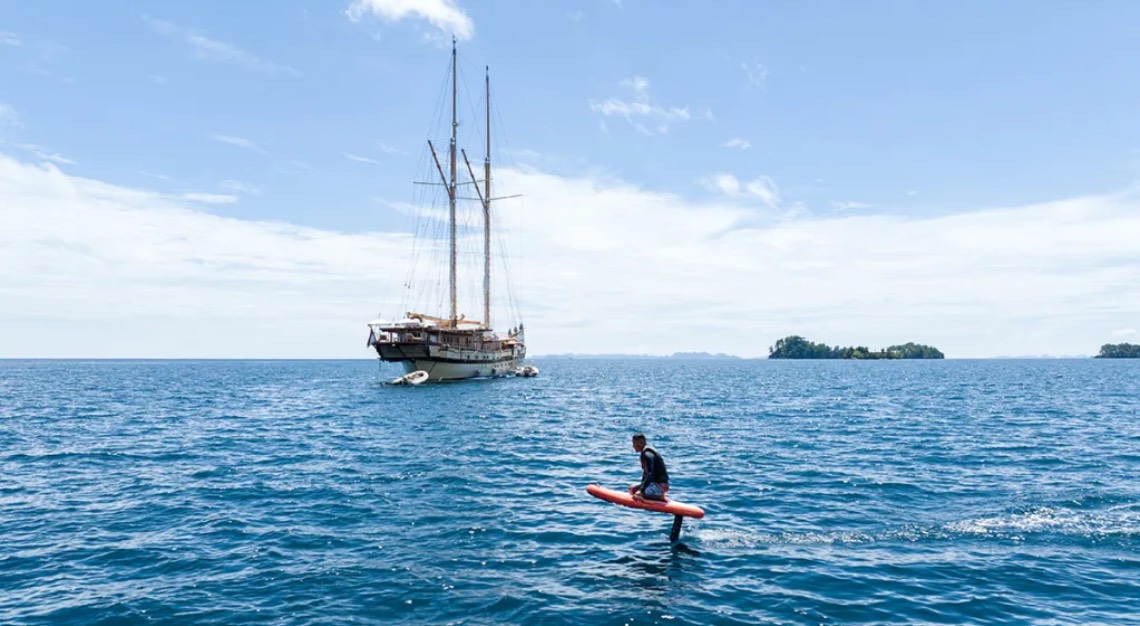
Like any superyacht, Lamima has the capacity to undertake unique missions on an hourly basis. Wakeboarding, E-Foiling, Seascooter safaris. But here’s the distinction. “Lamima is a toy in herself,” her owner Dominique Gerardin tellsRobb Report. Unlike fibreglass European motoryachts, phinisis can raise sail while exuding a UNESCO-inscribed cruising experience. Guests can read books in bowsprit nets or partake in a village dance that is centuries removed from a Hawaiian hula show.
In the Mediterranean and the Caribbean, the current trend is quiet luxury. Pillow menus. White-gloved waiters. 10,000 hours of televisual entertainment on demand. In Indonesia, luxury is loud. Lamima’s crew can annex a private island in the Coral Sea, decorate it with fairy lights, then form a live band that belts out “Dancing Queen.” Guests are expected to sing along late into the tropical night. Enthusiasm, not formality, is the order of the day.
Any luxuries that can’t be purchased in Indonesia must be invented. One example: a famous European yacht spent US$200,000 creating a Jacuzzi that could become an ice bath in mere minutes. On Lamima, crew fill a bathtub with, erm, ice. Same-same.
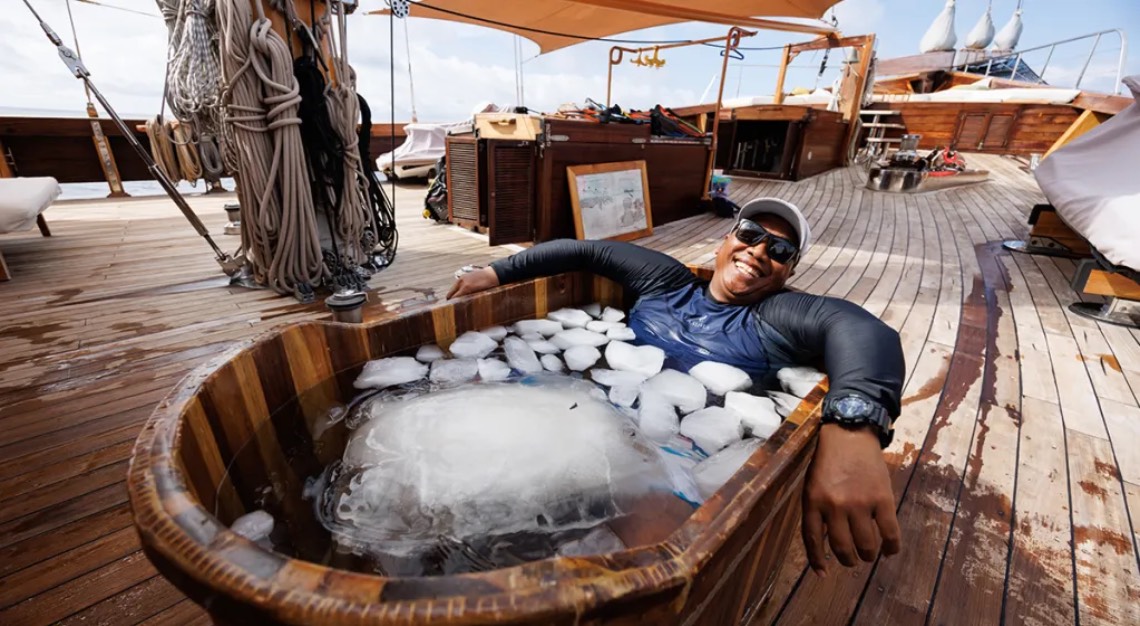
Yet there are problems in paradise. Plastic pollution in Indonesia, a nation of nearly 300 million, is as commonplace as in developing locations like Seychelles and Brazil. Phinisis are working with local communities to educate the next generation.
Mining for nickel, ironically a key component in eco-friendly EV batteries, caused significant sedimentation in Raja Ampat until the Indonesian government revoked most mining licences in mid-2025. Some phinisis checked out the dive charter scene in Palau but found it crowded by comparison. “Once the novelty of Palau’s jellyfish lakes and shark reefs has been satisfied,” states Gerardin, “it’s time to sail home.”
Lamima plans to sail ahead of the fleet to virgin locations more familiar to phinisis of old. In 2026, she will cruise the Spice Islands, an archipelago known for whale shark migrations and colonial forts. In the 17th century, the Spice Islands’ crop of cinnamon and pepper was so valuable that Dutch colonialists swapped one British-owned nutmeg island for a worthless speck off the Americas. It’s now called Manhattan.
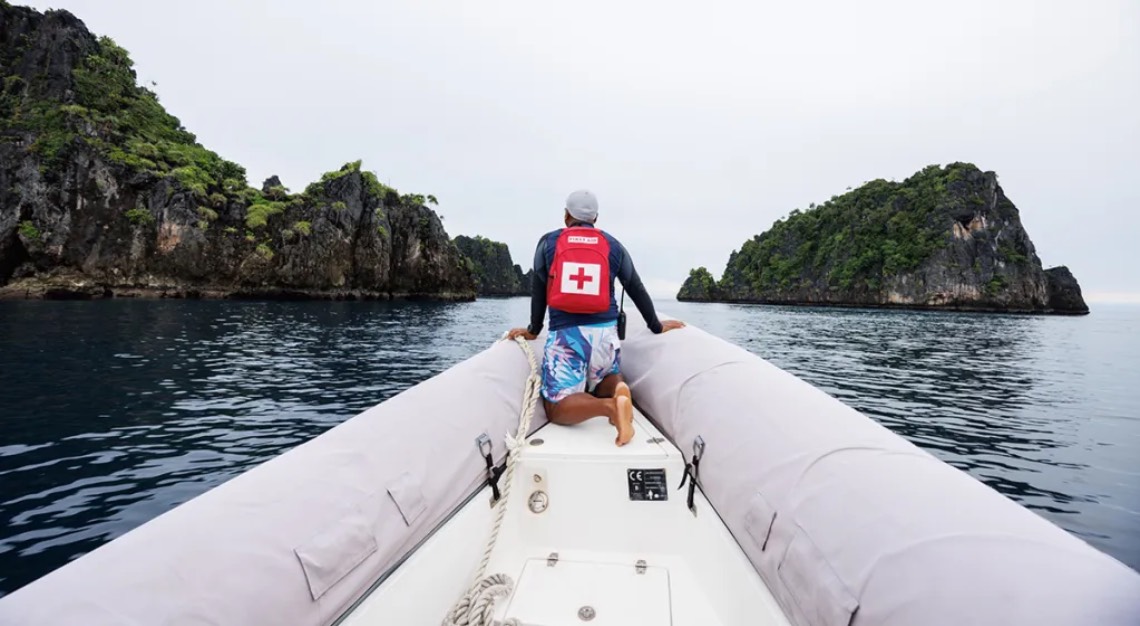
Lamima has upgraded her adventure offerings, too. Her central booking agent is now EYOS, an expedition agency that organizes the sublime and the unattainable for a billionaire elite, from heliskiing in Greenland to longlining from a chopper into virgin Colombian jungle. She charters for around $200,000 per week. The price includes all taxes, lobster lunches, and Don Julio cocktails. To book a similar product in Saint-Tropez or St. Barts would cost $600,000.
EYOS can install specialists on board Lamima. Like an ex-NatGeo marine videographer, who can film guests drift diving through walls of harlequin sweetlips, as if the spirit of Jacques Cousteau was puppeteering their wetsuits. Or they can arrange a light aircraft from an island airstrip into neighbouring Papua New Guinea to visit a Stone Age culture. “We also solve the logistical jigsaw puzzle involved in a three-leg flight from Europe or the Americas,” says EYOS’s Head of Expeditions Jen Martin, a veteran of expeditions in 120 countries.
My final adventure requires only local knowledge. Crew anchor off Misool, a mid-oceanic squiggle of emerald islands, where the Imperial Japanese Navy hid from American spotter planes during WWII. Paddleboards are disembarked next to an unassuming cliff face. Each explorer is given a headlamp. By dodging stalagites we enter a cathedral of rock. The only noise is the dip-dip of oars and the ethereal screech of horseshoe bats. Misool cave distills the phinisi spirit: singular, experiential, and unavailable anywhere else.
This story was first published on Robb Report USA. Featured photo by EYOS Expeditions/Matt Hardy