After 27 years, Maria Grazia Chiuri returns to Fendi as chief creative officer, unveiling a Fall Winter collection that honours the brand’s storied past while heralding a bold new era
It’s now the Italian brands’ turn, as they unveil their Fall Winter collections on the heels of the recent showcases at Paris Fashion Week. If Hermès’ presentation was the most sentimental moment of the season in Paris—signalling the end of Véronique Nichanian’s 37-year tenure—then Fendi seized the emotional spotlight at Milan Fashion Week, where the maison’s Fall Winter collection heralded Maria Grazia Chiuri’s return to the house where she first cut her teeth.
Now the chief creative officer, replacing Silvia Venturini Fendi and succeeding Kim Jones, Chiuri bypassed the usual ego of a debut. Instead, she set the stage beneath a singular, guiding motto: “Less I, More Us.” It was a clear declaration that this new era for Fendi would not be defined by a single designer, but by the communal spirit of the five Fendi sisters and the Italian “way of doing things.”
This philosophy of shared intention manifested first through a radical approach to the house’s most famous—and controversial—medium: fur. Under a program titled “Echo of Love,” Chiuri didn’t just send new luxury pieces down the runway; she introduced a system of “sartorial regeneration.” By unpicking and reassembling outdated garments into contemporary volumes, the collection treated fur as an archive of memories rather than a disposable commodity. This shift toward “emotional durability” served as a quiet act of resistance against the industry’s cycle of overconsumption, grounding the high-glamour aesthetic in a sense of historical responsibility.
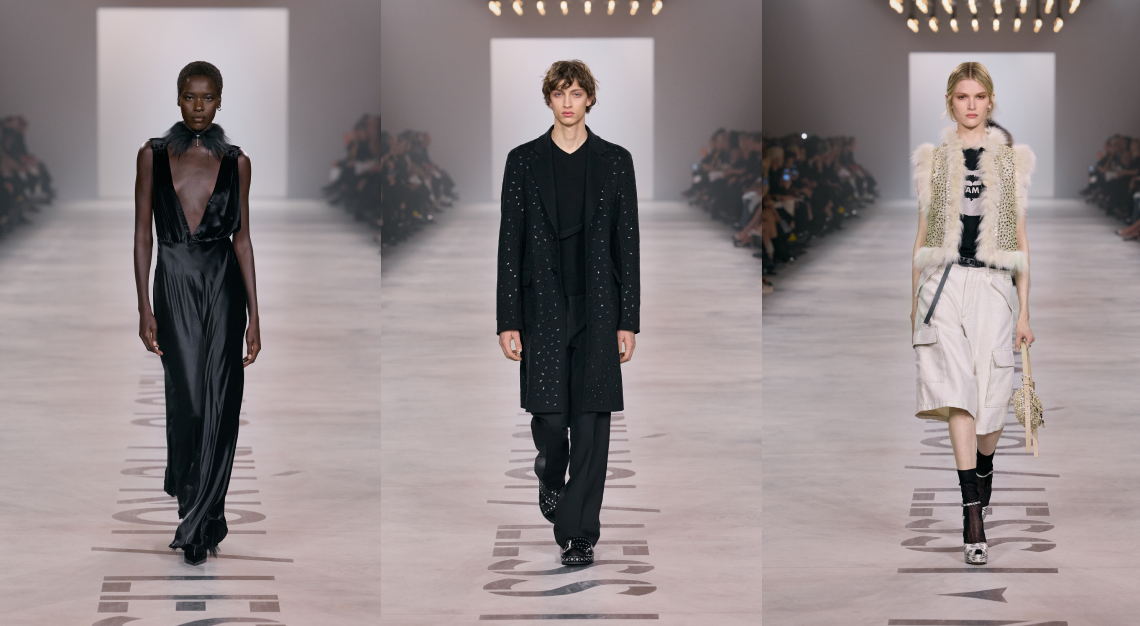
As the show progressed, this intellectual restraint gave way to a “return to desire.” The clothing was designed to serve the body’s impulses rather than dictate them. Fluid eveningwear and tailored blazers moved with a tactile ease, intentionally blurring the lines between the masculine and the feminine. By sending men and women down the runway together, Chiuri suggested that these categories are not opposing forces, but shared qualities. Even the collection’s darker, more rebellious touches—sheer black lace, rock-inflected collars, and knee-high socks—felt less like a subcultural statement and more like an authentic expression of dressing with intention.
The “Us” in Chiuri’s vision extended beyond the atelier to a “personal geography” of cultural collaborators. The collection was deepened by the inclusion of “verbal objects”—jewellery and graphics inspired by the late artist Mirella Bentivoglio—and a partnership with SAGG Napoli. The latter’s principles, such as “Rooted but not stuck,” were emblazoned on football scarves and T-shirts, further cementing the theme of a sisterhood built on balance and individual boundaries.
Our favourite looks
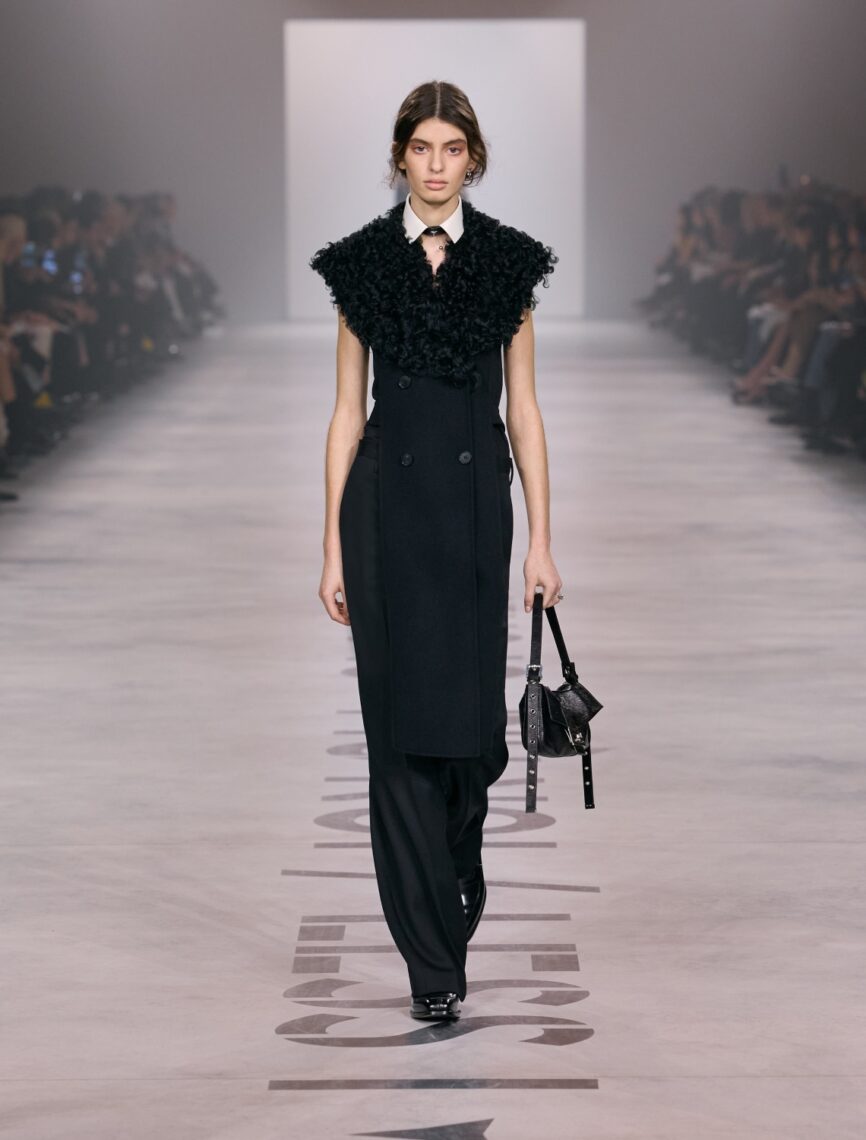
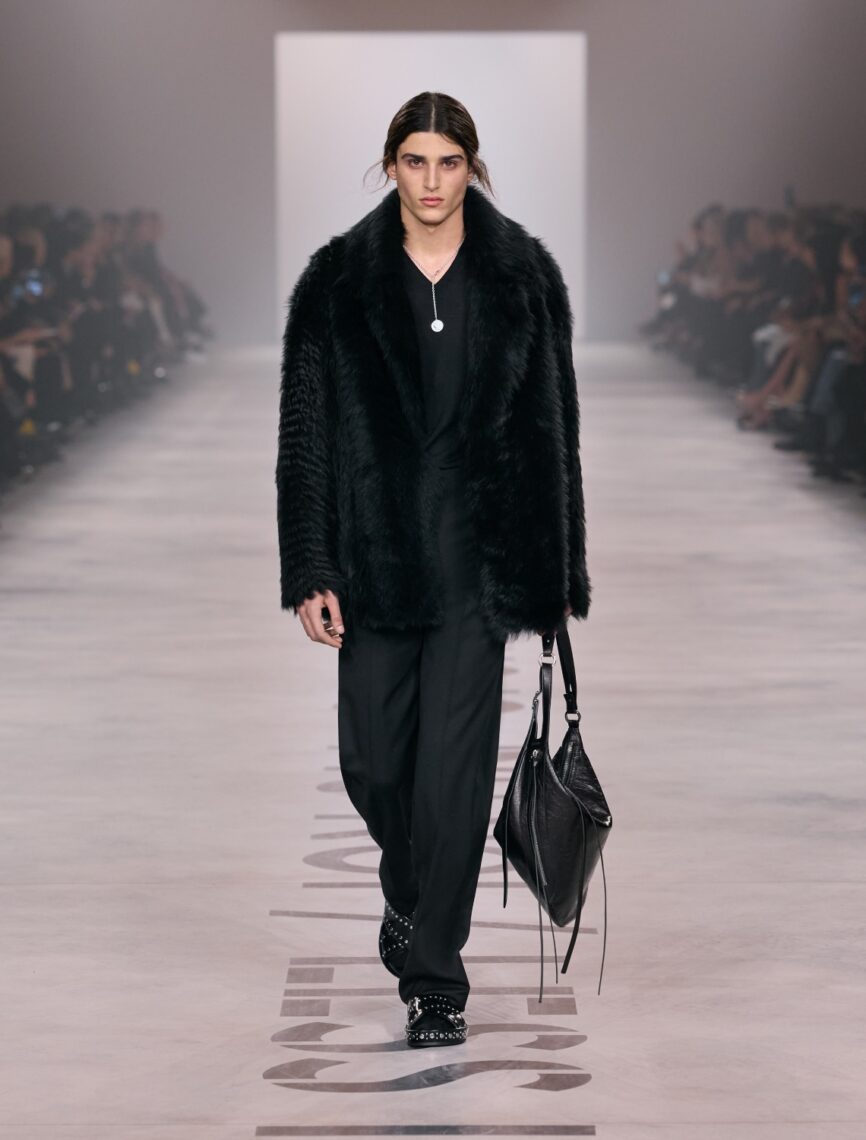
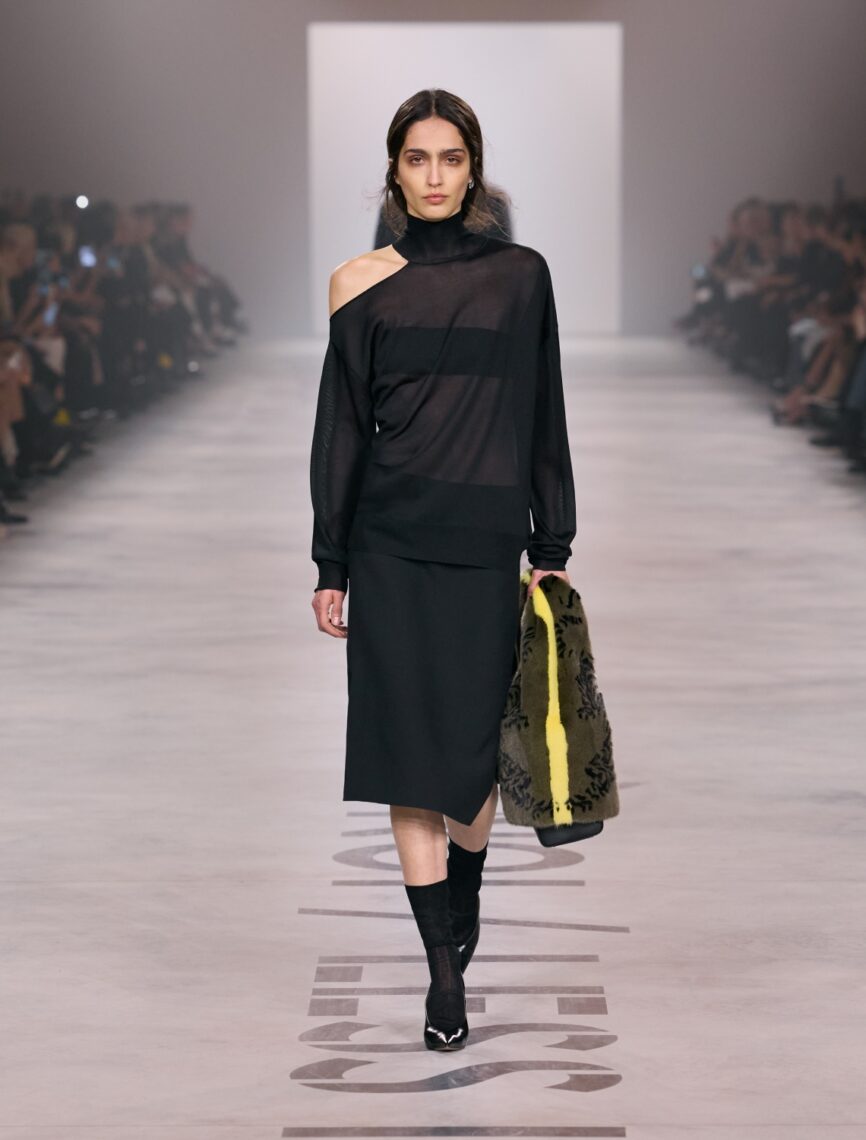
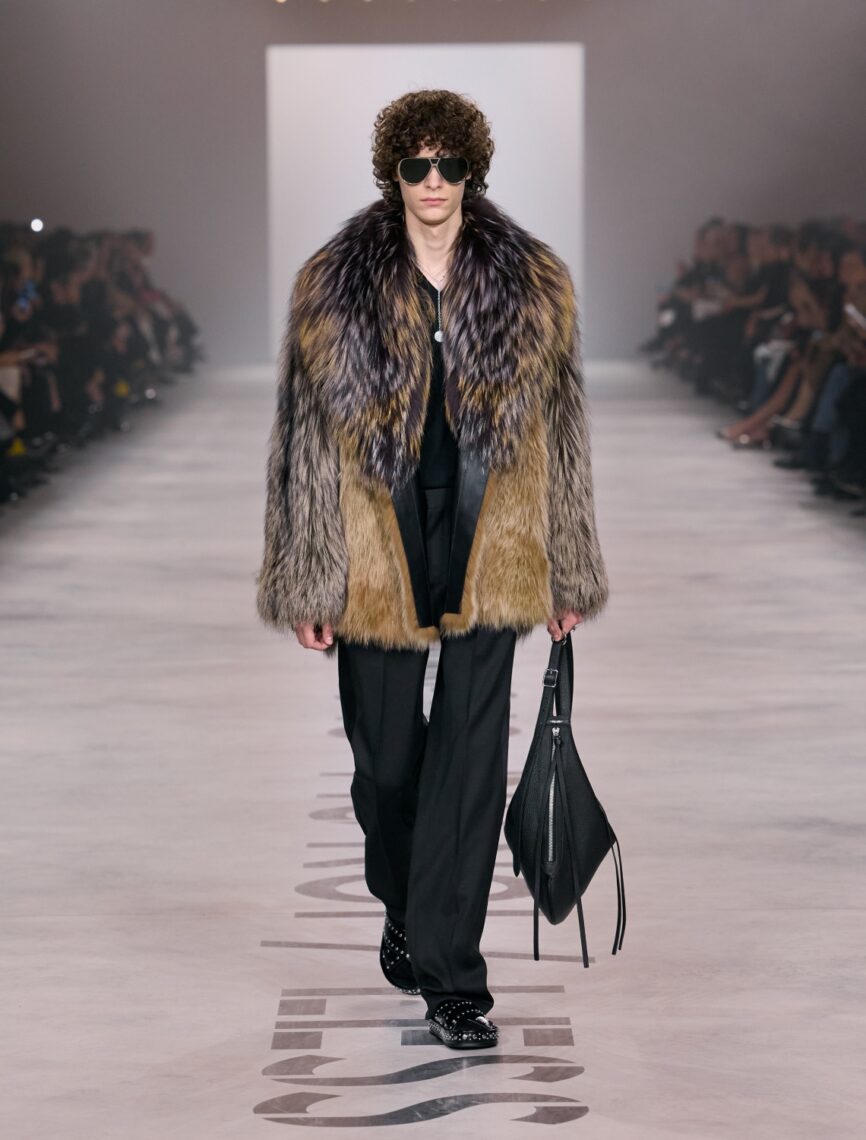
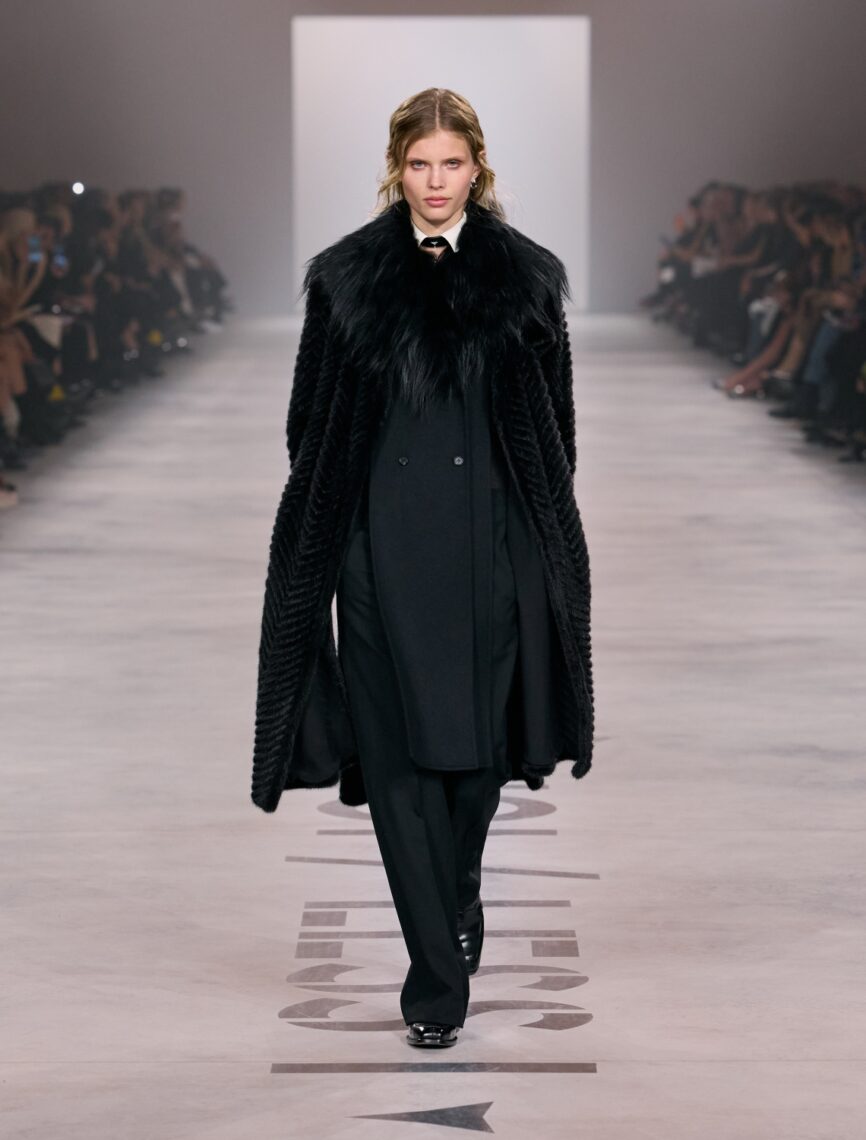
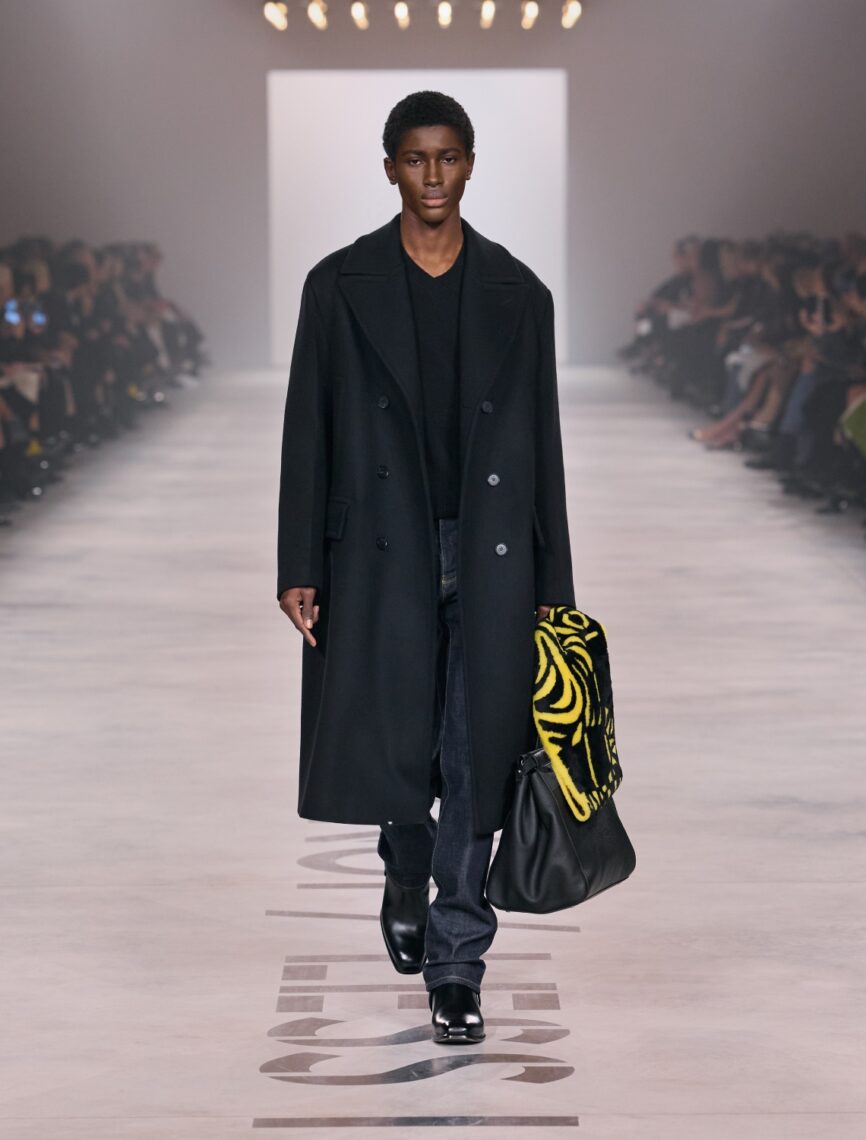
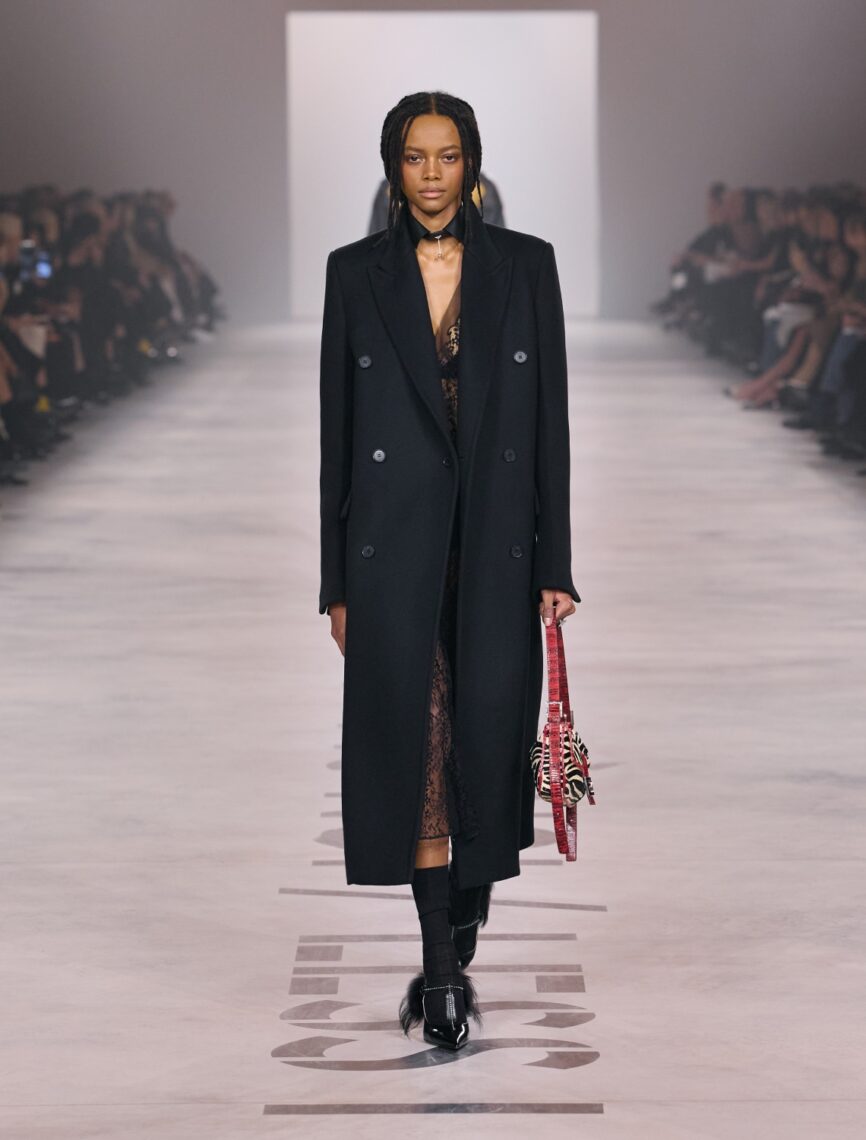
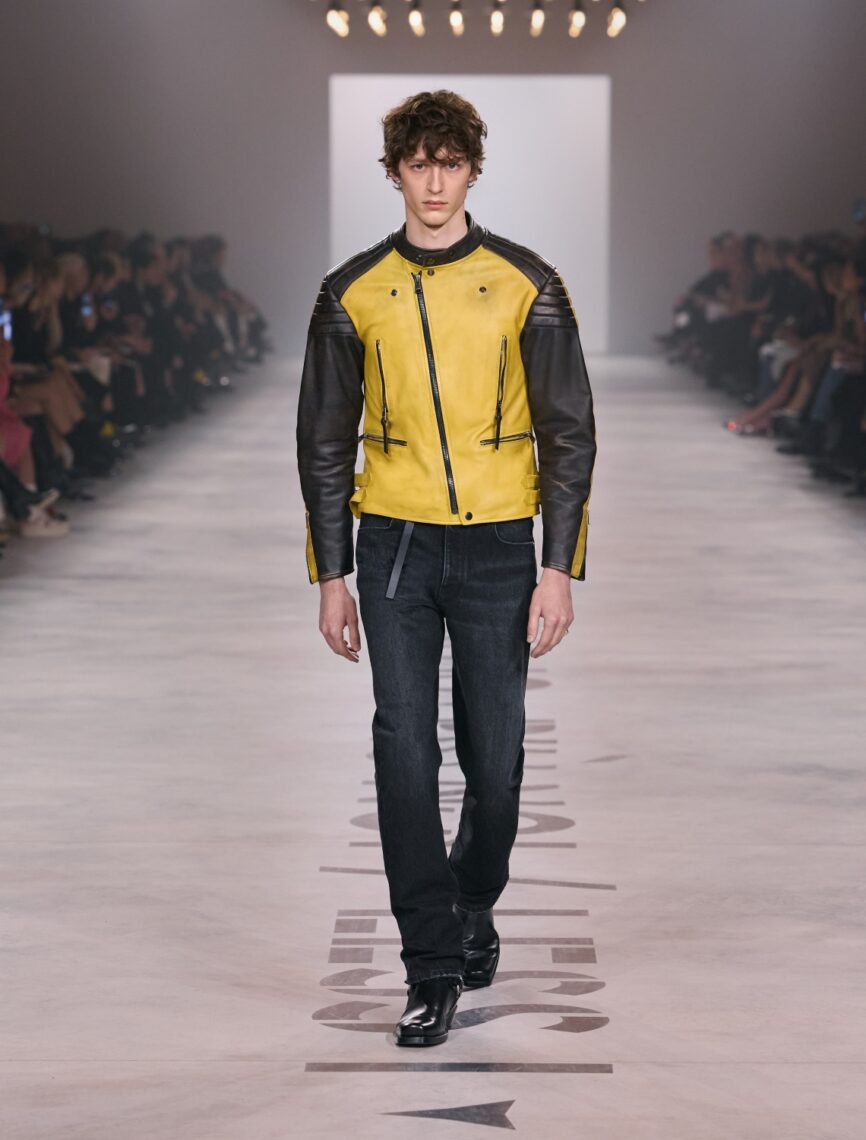
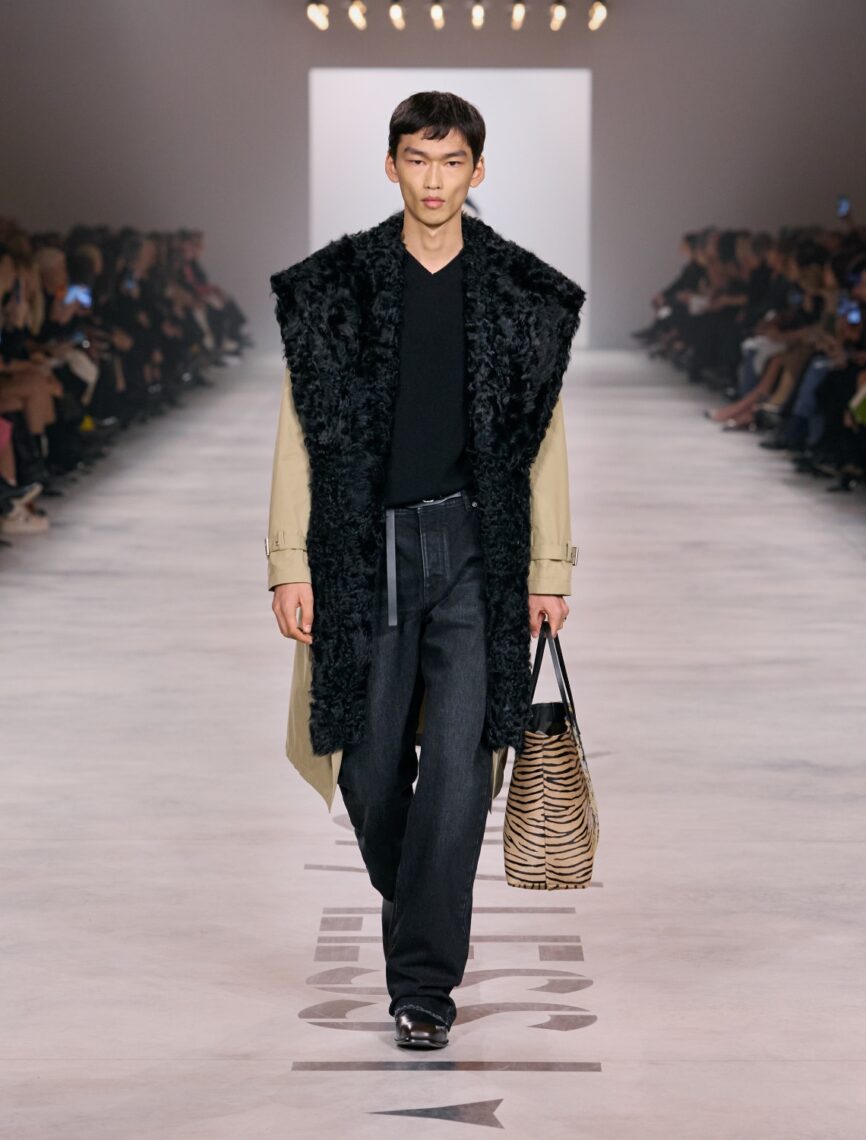
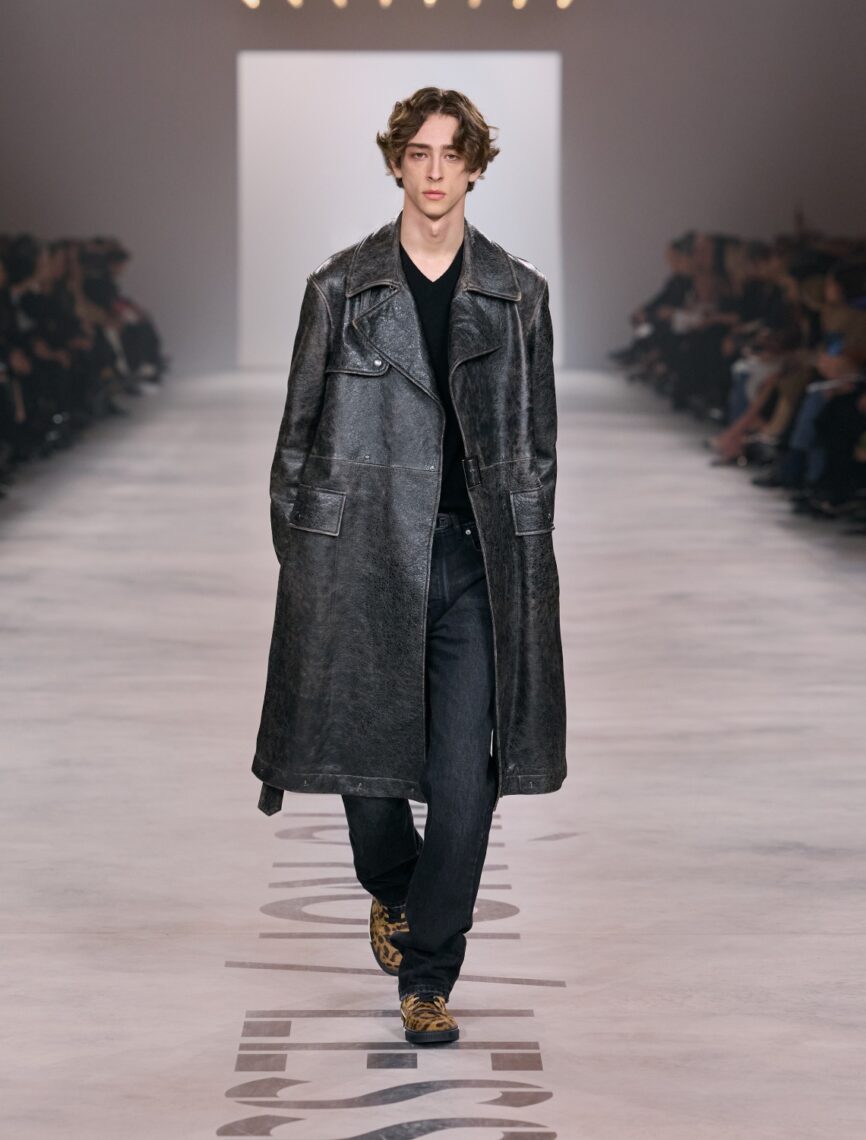
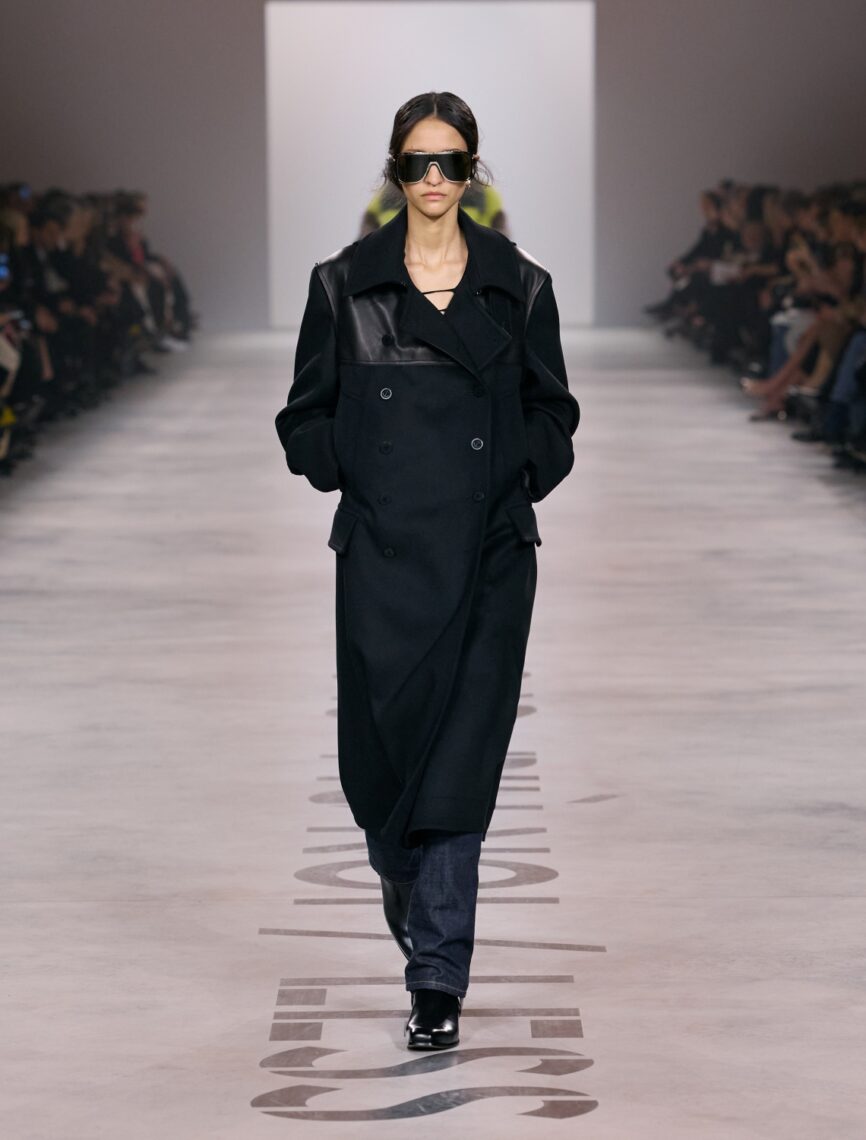
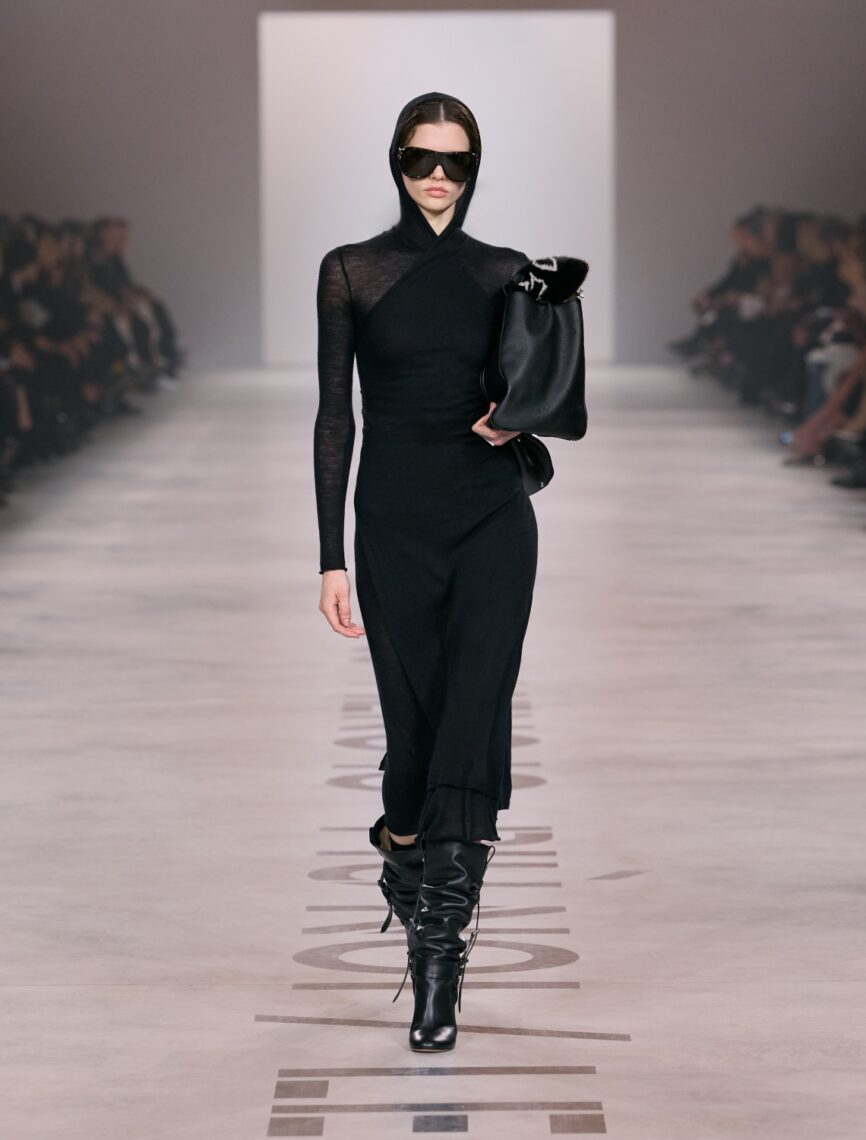
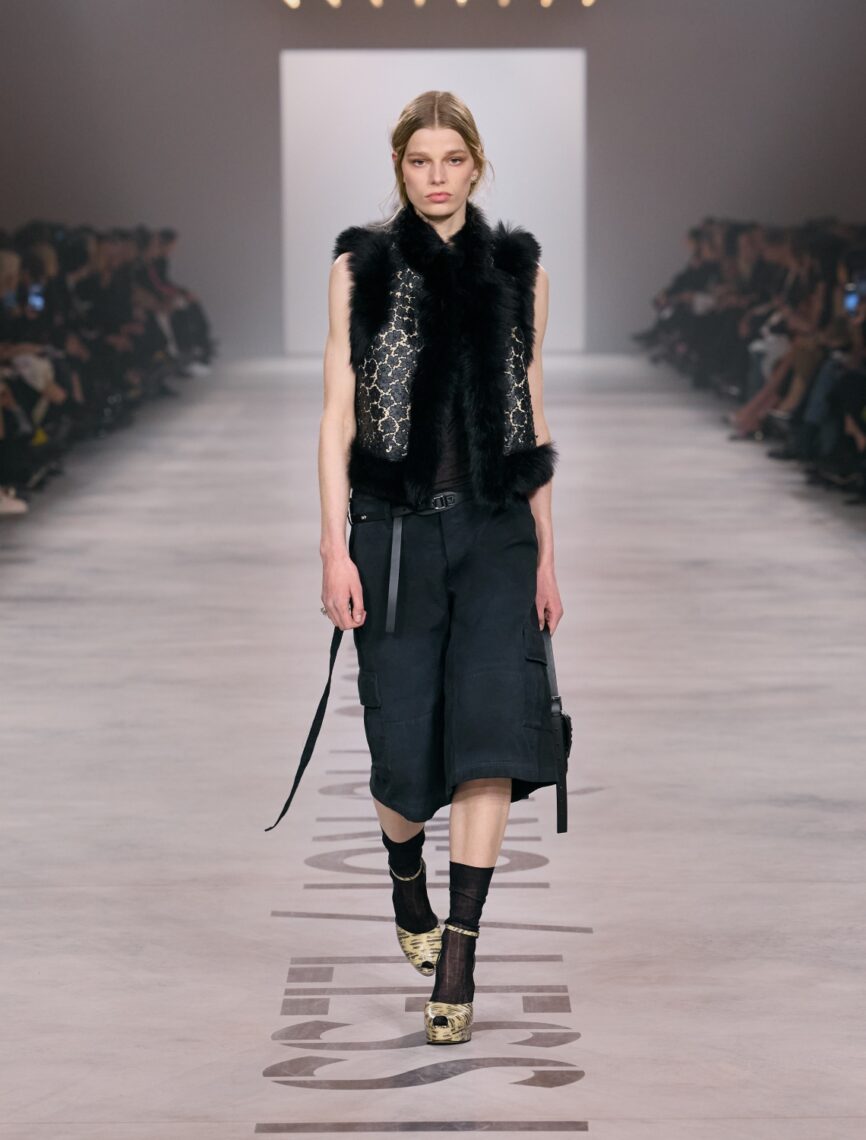
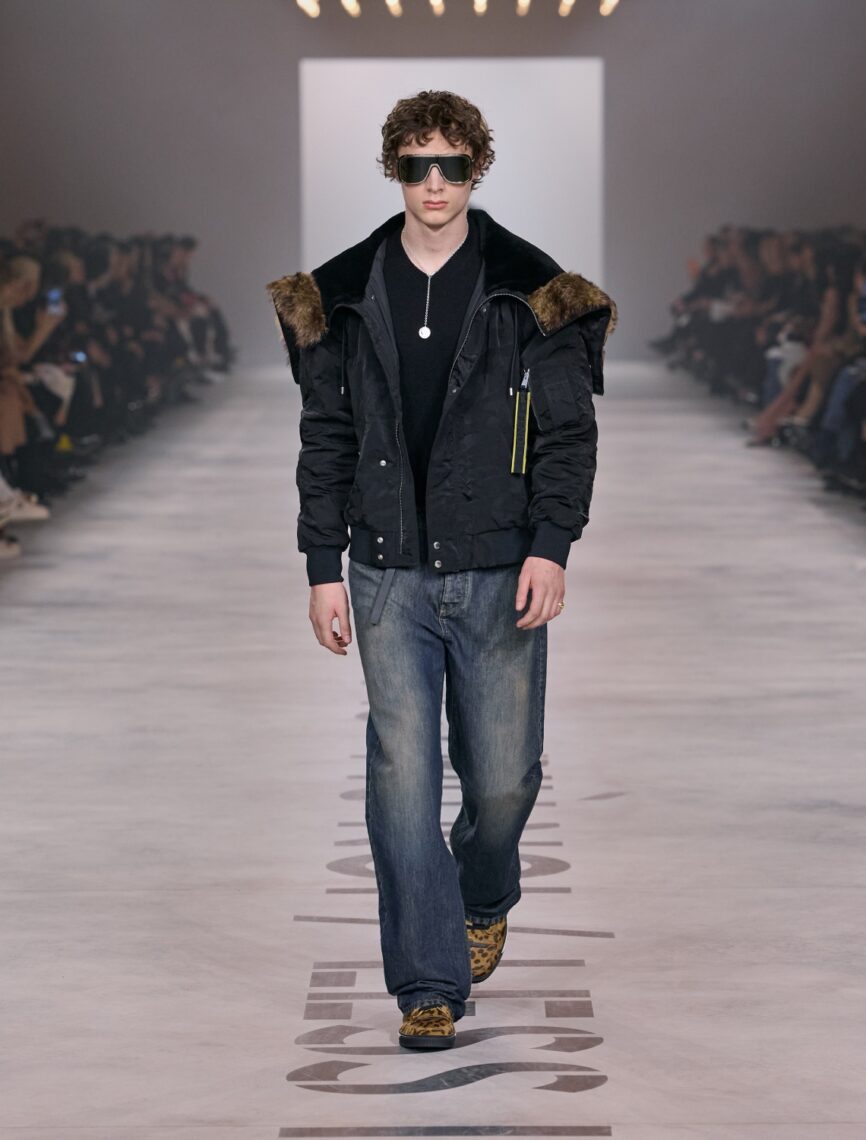
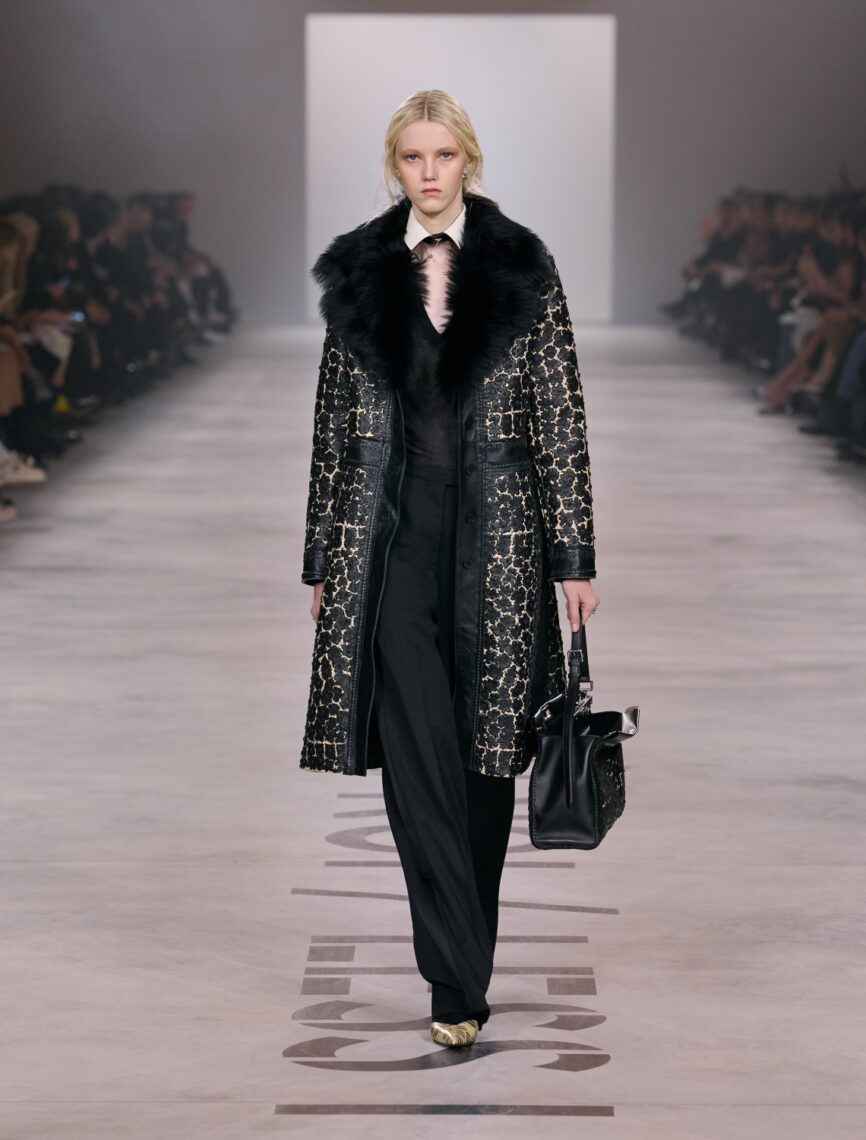
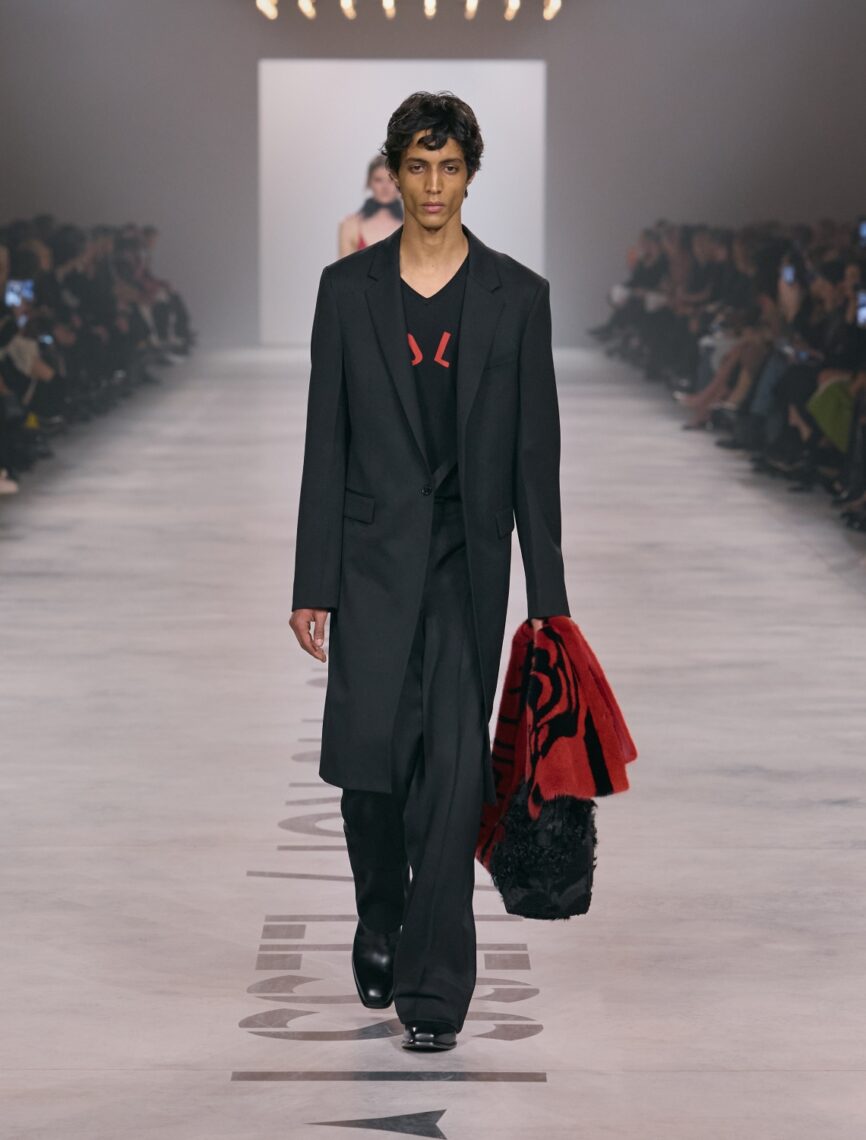
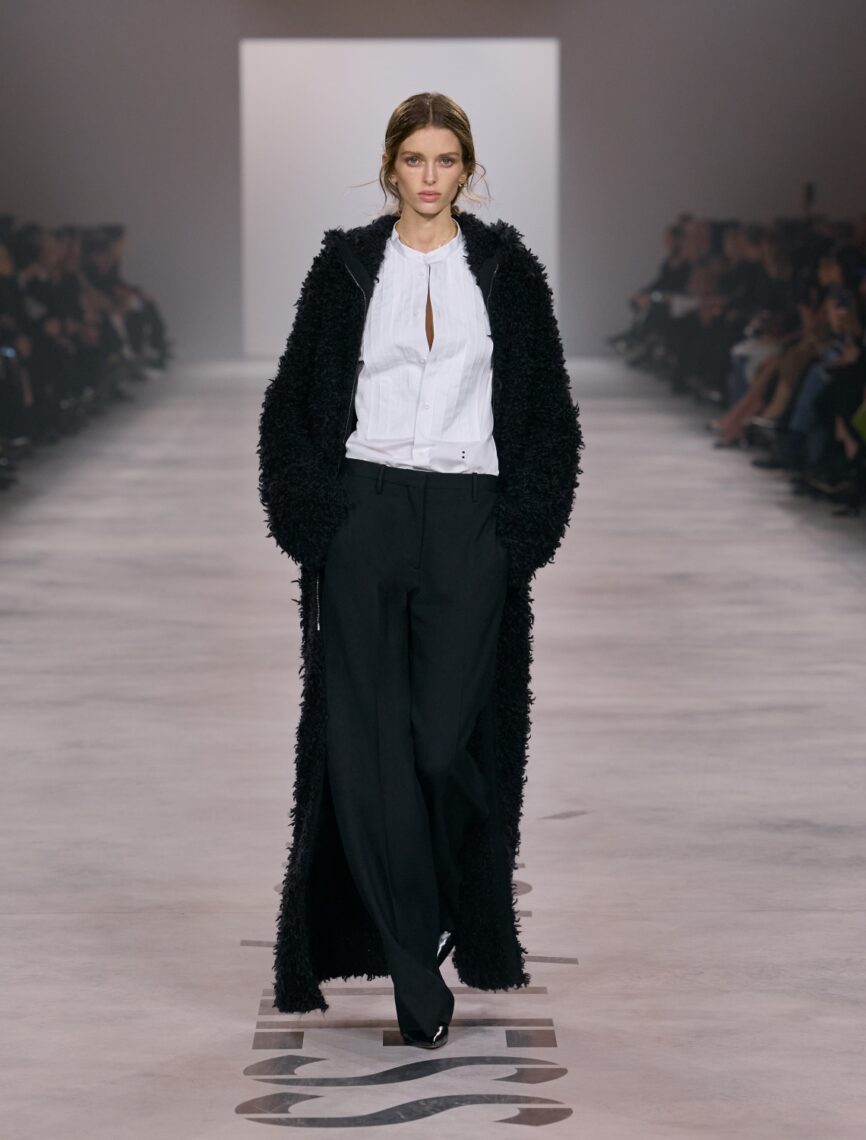
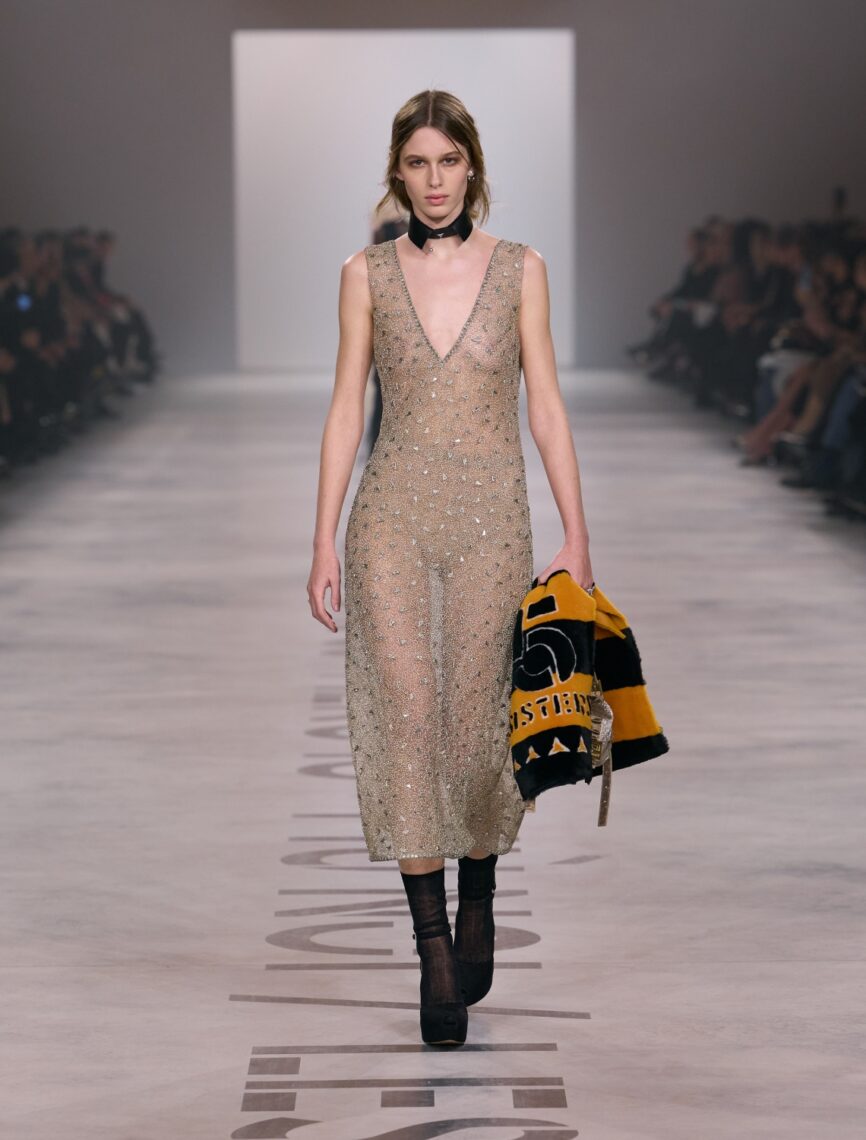
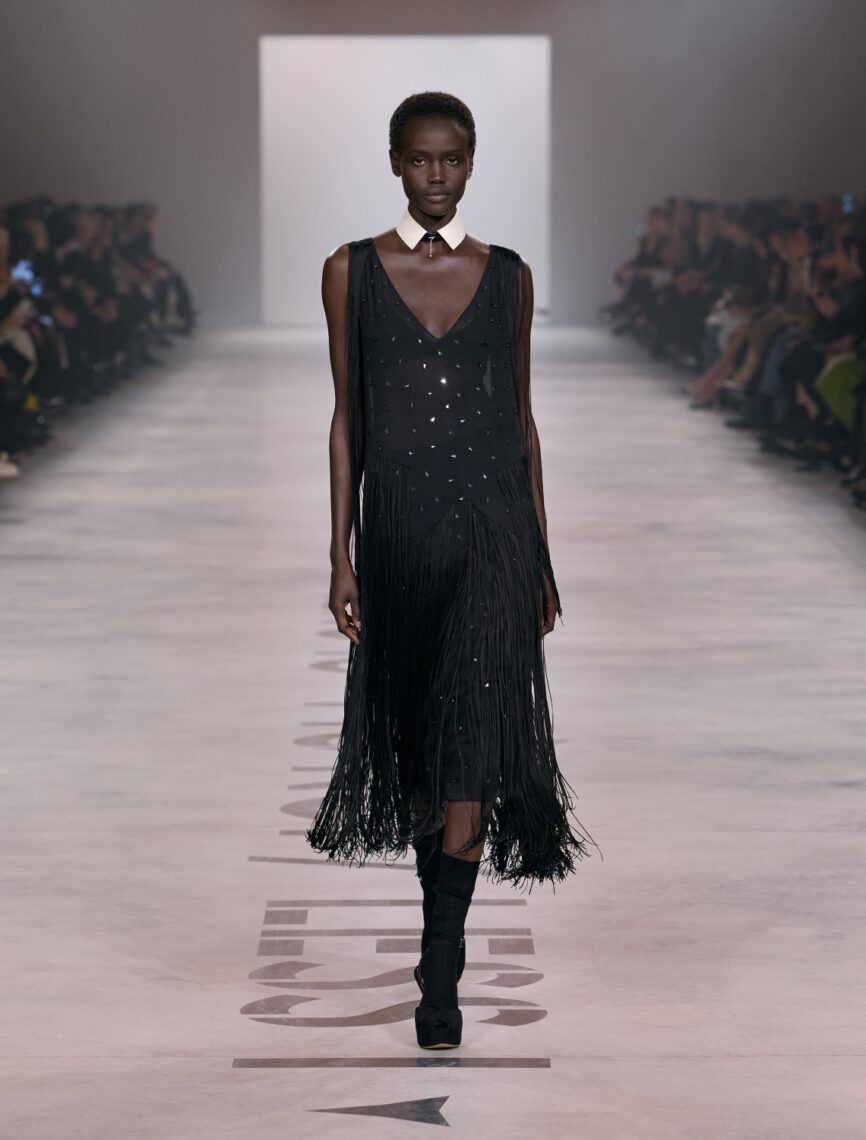
Ultimately, while the collection offered subtle nods to the past—most notably the crisp white leather collars reminiscent of Karl Lagerfeld—it refused to stay there. By balancing the weight of heritage with the lightness of modern, gender-agnostic design, Chiuri’s Fendi feels alive. It is a vision of luxury that understands where it came from, but is far more interested in where we are going together.