The Fall Winter 2026/27 collection, dubbed Primavera, marked Demna’s first full collection for Gucci
The fashion musical chairs continue: last week, Fendi showcased Maria Grazia Chiuri’s debut collection for the maison, and on Saturday, Gucci debuted Demna’s first full collection, dubbed Primavera, for the Italian house.
Held at the monumental Palazzo delle Scintille, the latter kickstarted the Demna era within a purpose-built set reminiscent of a museum, surrounded by marble statuary akin to those in ancient Greek or Roman theatres. It’s the brand’s way of highlighting its importance in Italian culture.
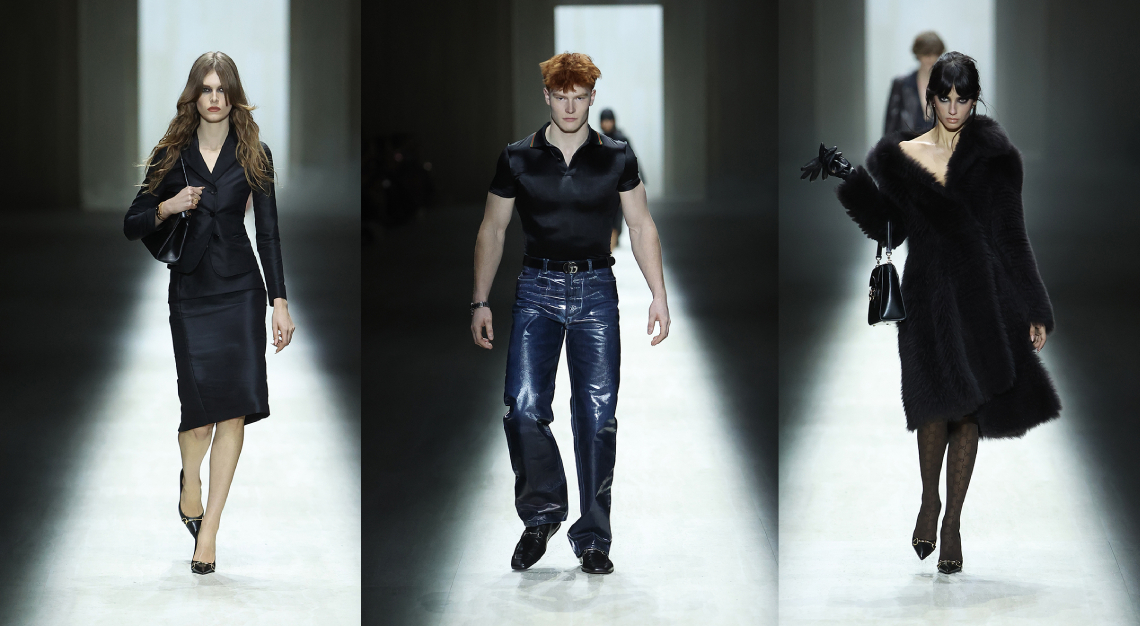
As the lights dimmed, the space fell pitch black, with only the runway illuminated, and the mood following suit, turning darker and more overtly sensual. Models strutted down the runway in fits that can be best expressed as provocative, unapologetically seductive, and powerful—very Tom Ford, if you will. Even the make-up choices spoke to Gucci of the late 90s and early 2000s, when Ford was at the helm.
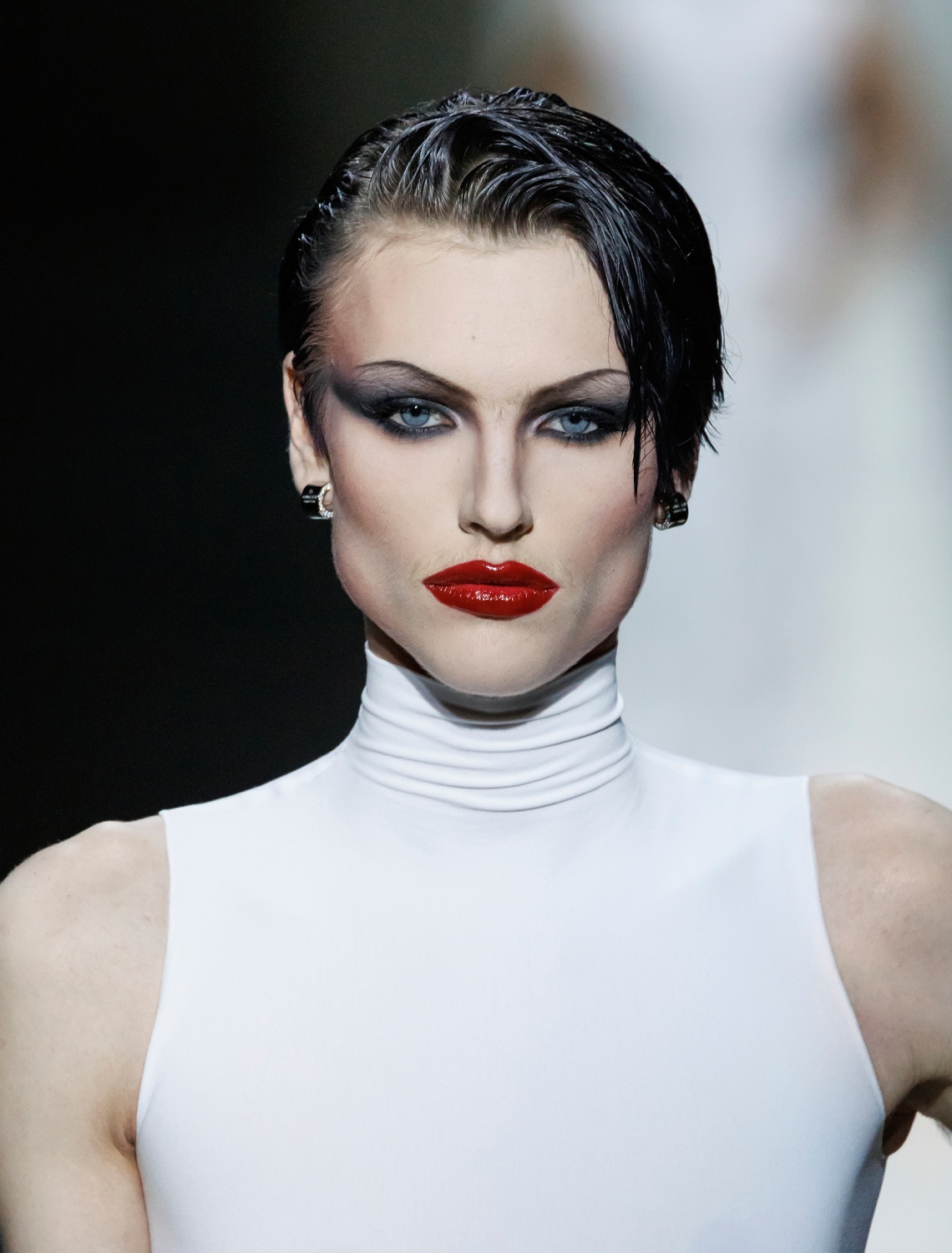
A study in hedonism, the clothes hugged the body, their silhouettes accentuating every curve and contour, echoing the “if you have it, flaunt it” philosophy. The vision was clear from the very get-go, with a model opening the show in a skintight white turtle minidress that bared her thigh tattoos, followed closely by a male model in a similar ensemble, showcasing a Greek god–like physique straining against the seams.
Some of the characters from Demna’s La Famiglia, too, reappeared for the show, emphasising his vision of a new, sexy Gucci. Mariacarla Boscono appeared in a sheer, dark “Morticia Addams-esque” gown, while Alex Consani strutted down in a shimmering, long-sleeve gold turtleneck dress tracing the body to a T. New characters of La Famiglia emerged as well, extending the narrative: Emily Ratajkowski walked in a silver-studded mini dress, representing the “Gucci party girl”; Karlie Kloss returned from a runway hiatus to model a “businesswoman” look consisting of a monogram pencil skirt and black turtleneck.
Closing the show, Kate Moss sashayed down the catwalk in a black sequin gown that reflected light from every direction. But it was the backless construction that truly stole the spotlight, showing her derriere and a diamond-studded G-string.
Though sensuality threaded through the collection, some pieces spoke more subtly, rather than in an overtly sexual voice. Leather jackets, blazers, and bombers—seemingly reimaginations of Tom Ford’s Gucci—along with blazer co-eds with a streetwear sensibility, highlight men who convey sexiness through their aura as well as their physique. For women, fur was ubiquitous, appearing on bomber collars, off-shoulder tops, skirt hems, or covering the entire body of pea coats.
Demna’s debut also saw the debut of new silhouettes: tracksuits and dresses morphed into modern trackdresses; leggings fused with trousers; jackets and tops merged into a single ultra-fitted garment; and leather shoes and sneakers that meld into a shoe with the aerodynamism of a sports car.
Our favourite looks
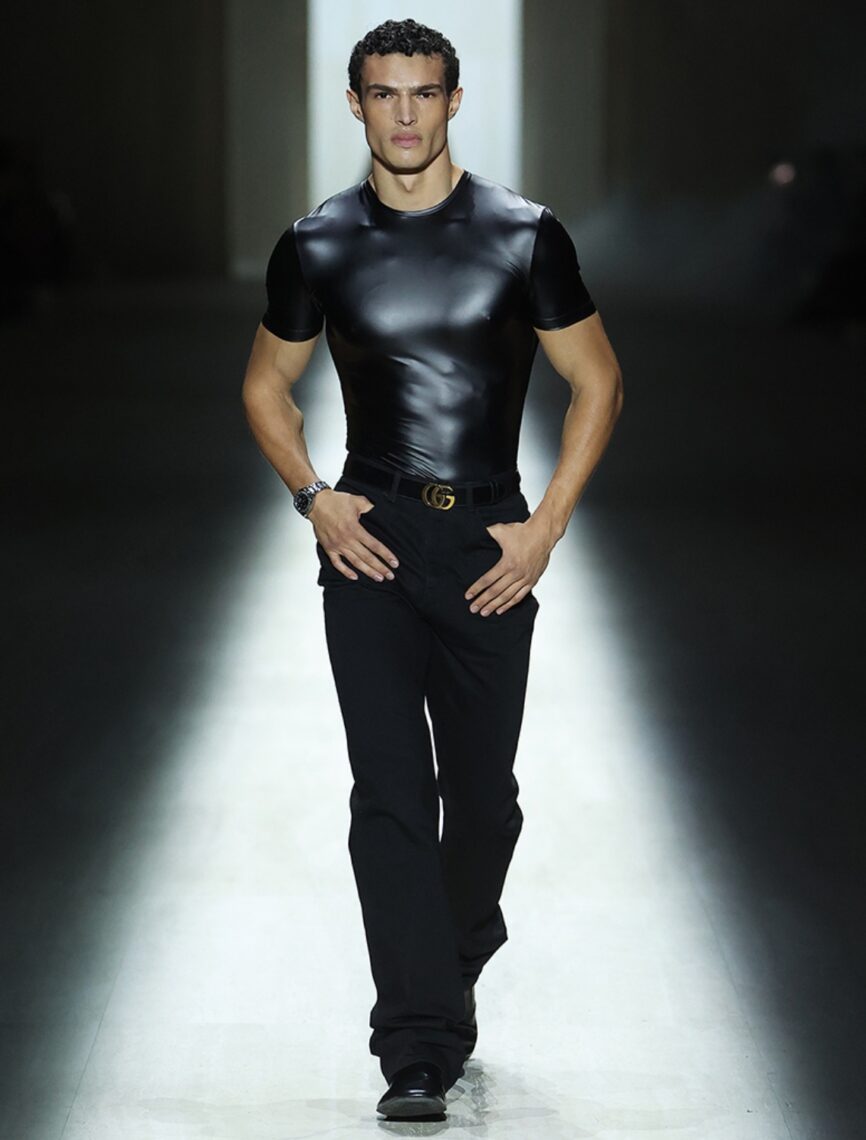
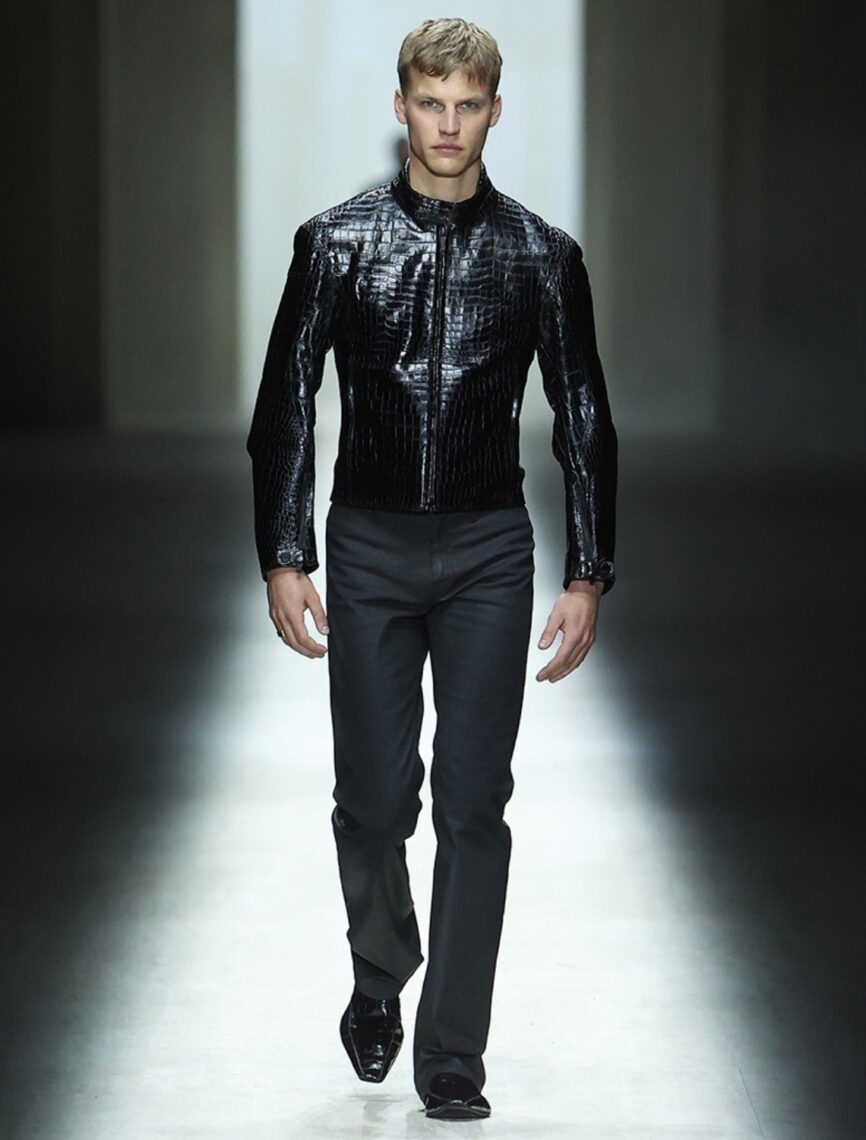
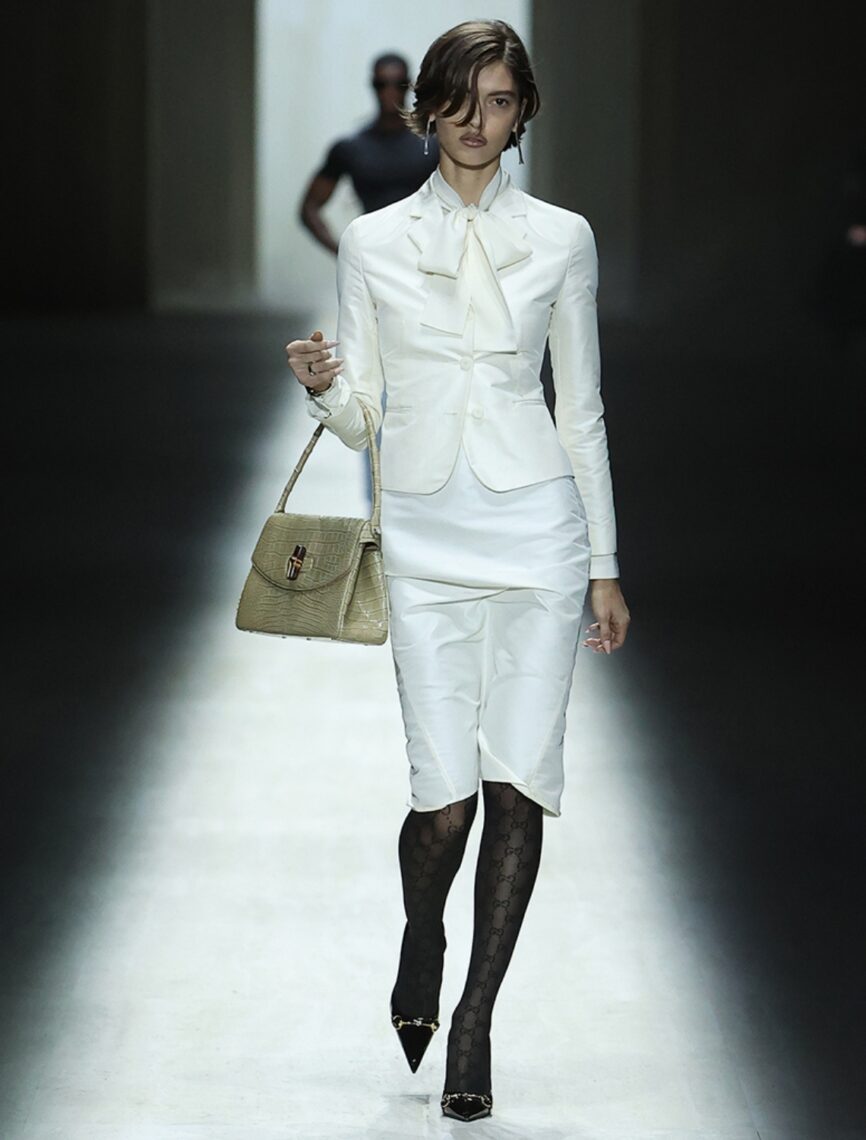
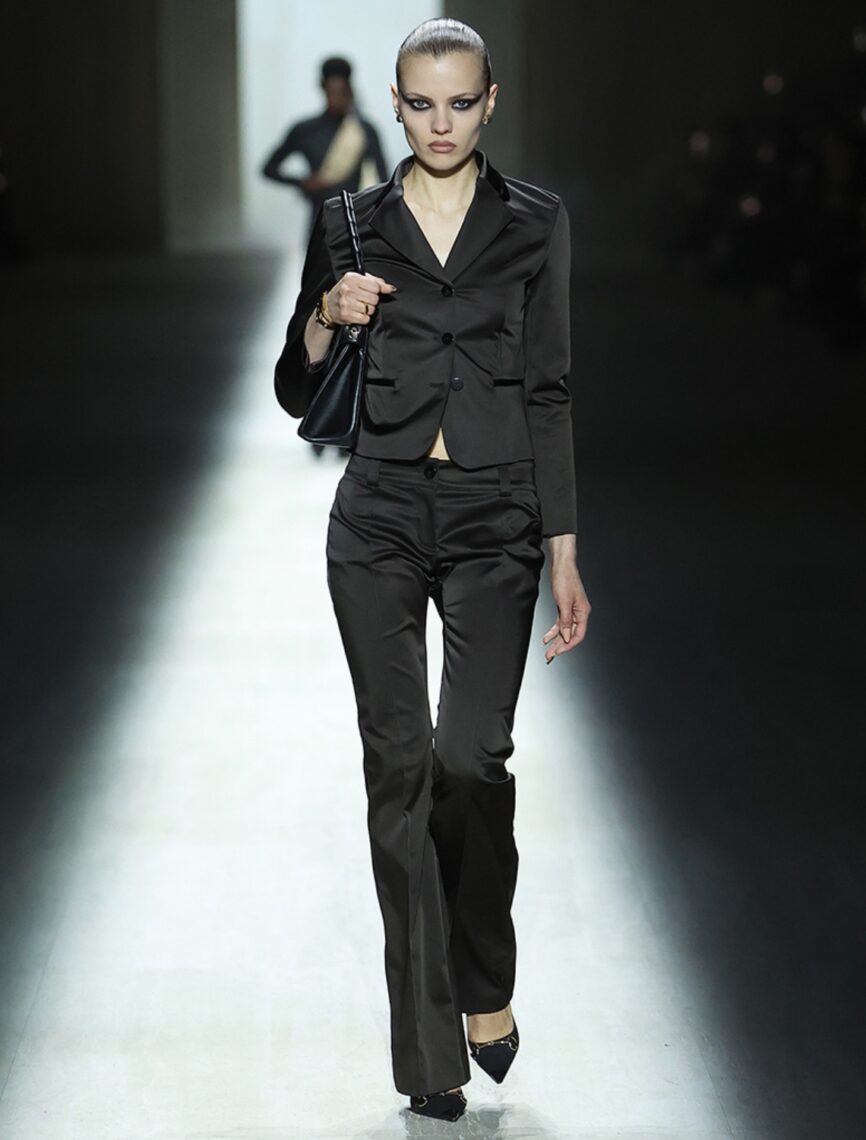
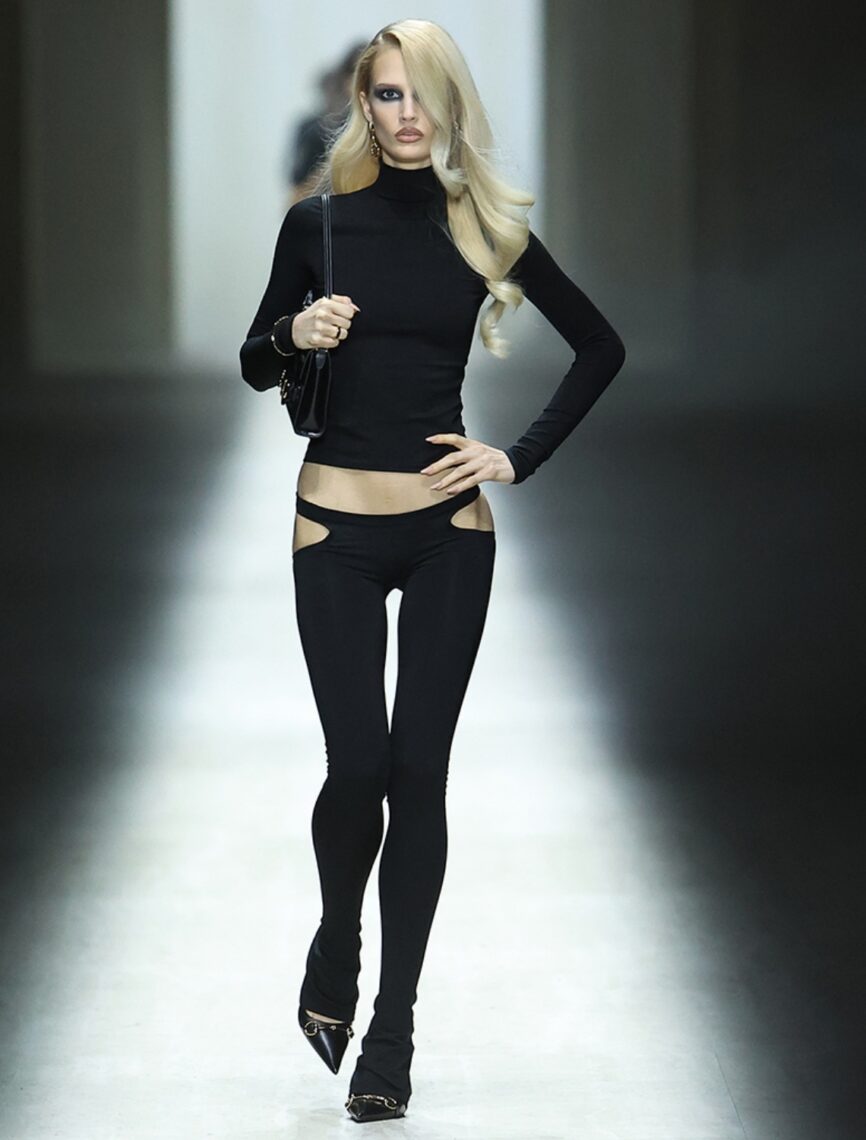
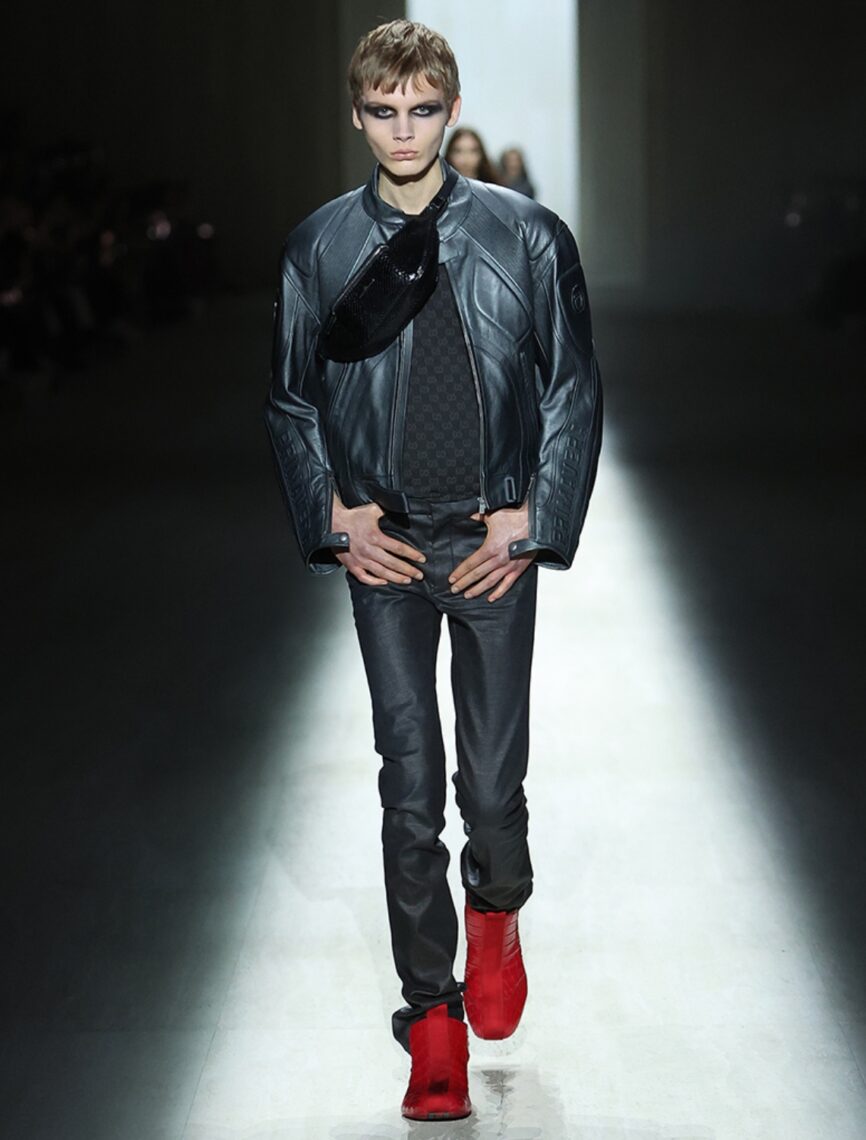
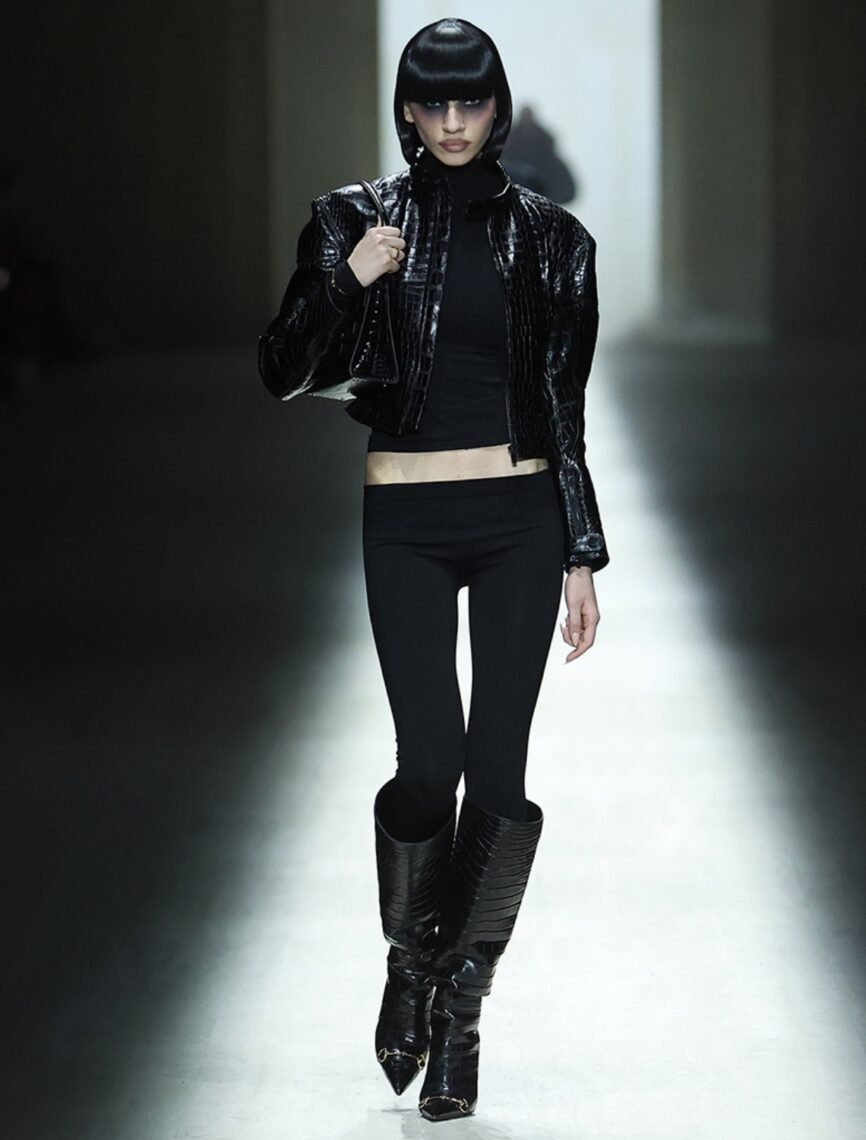
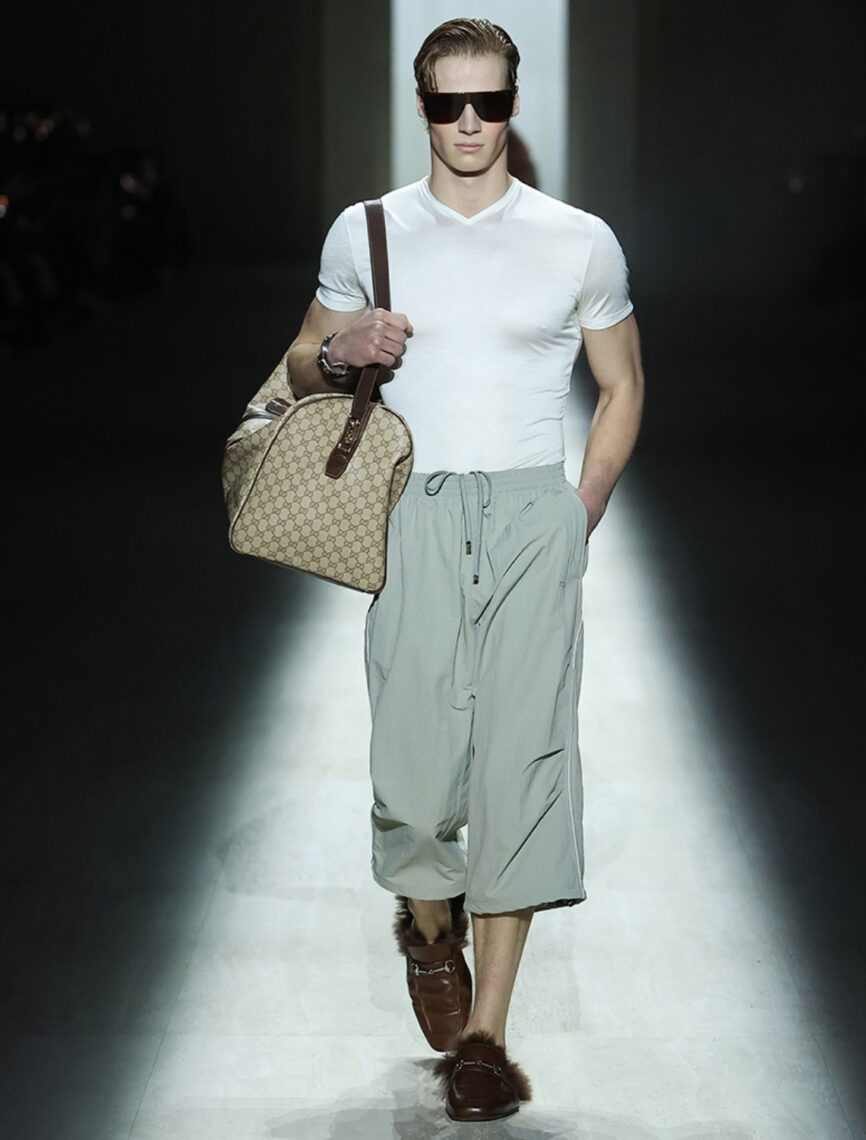
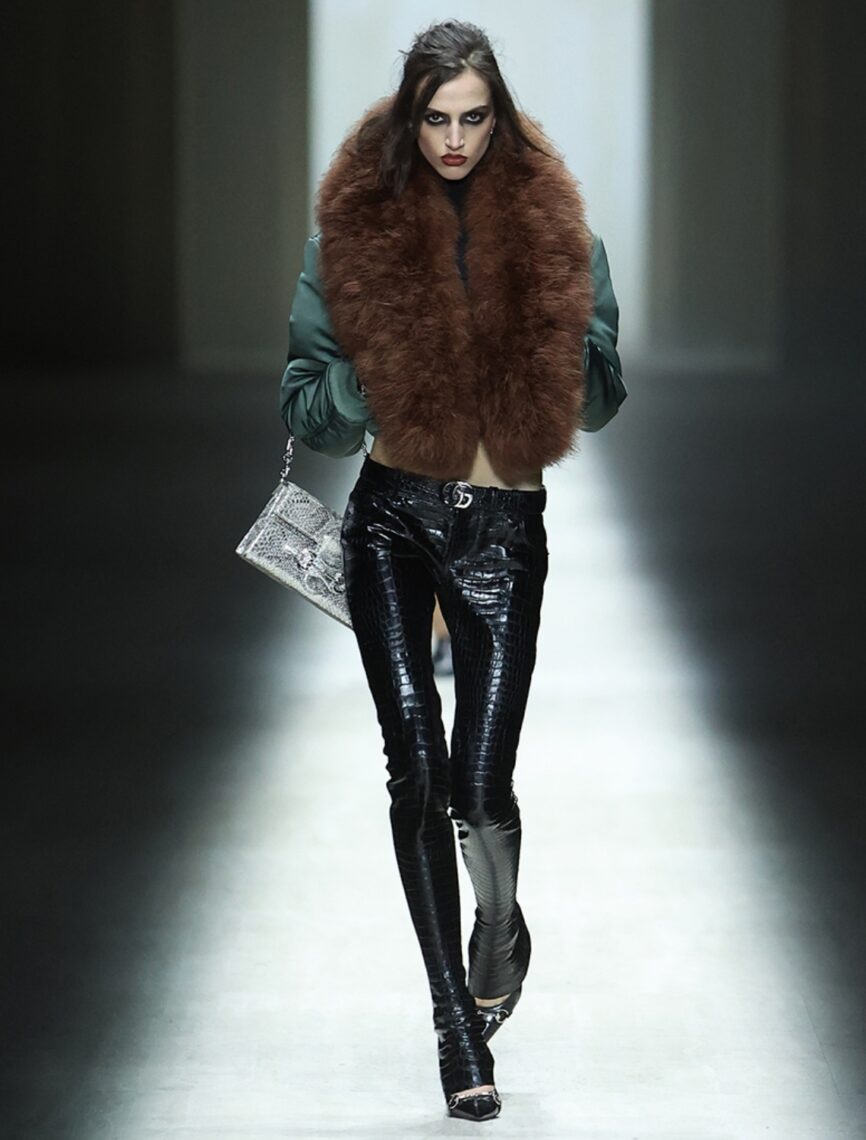
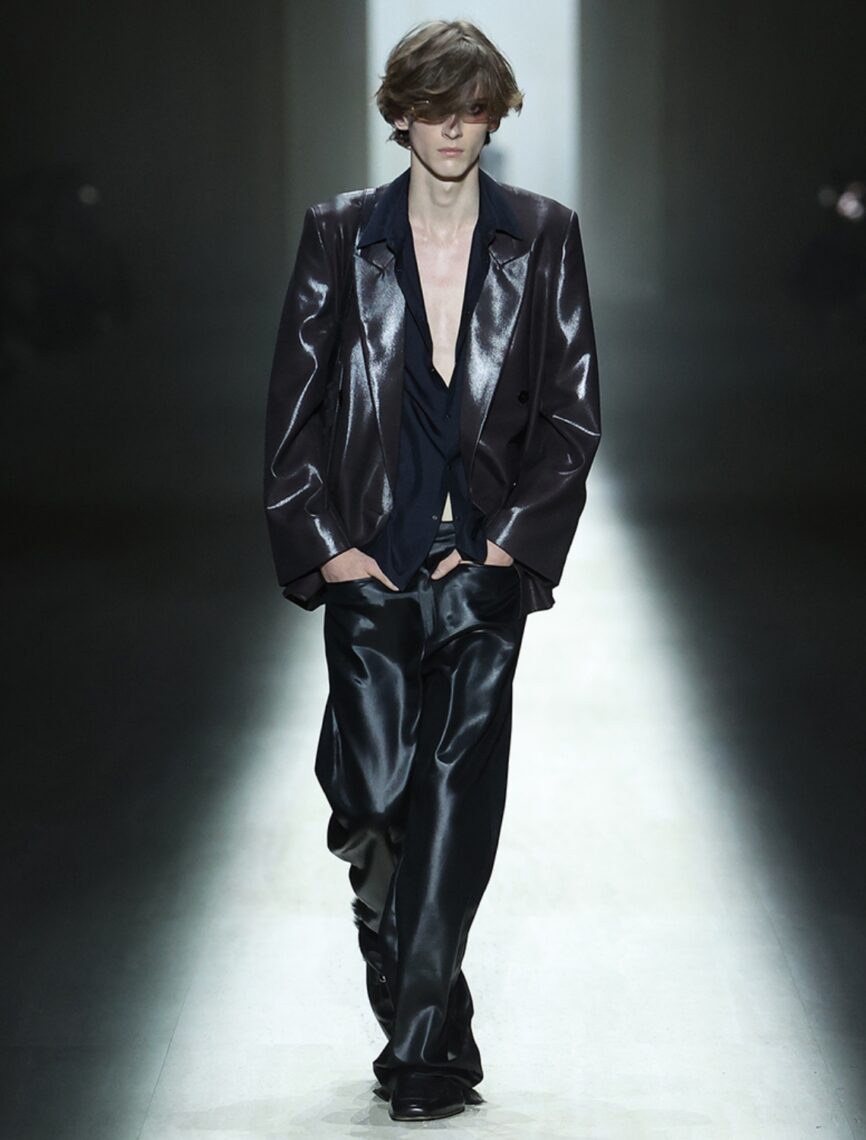
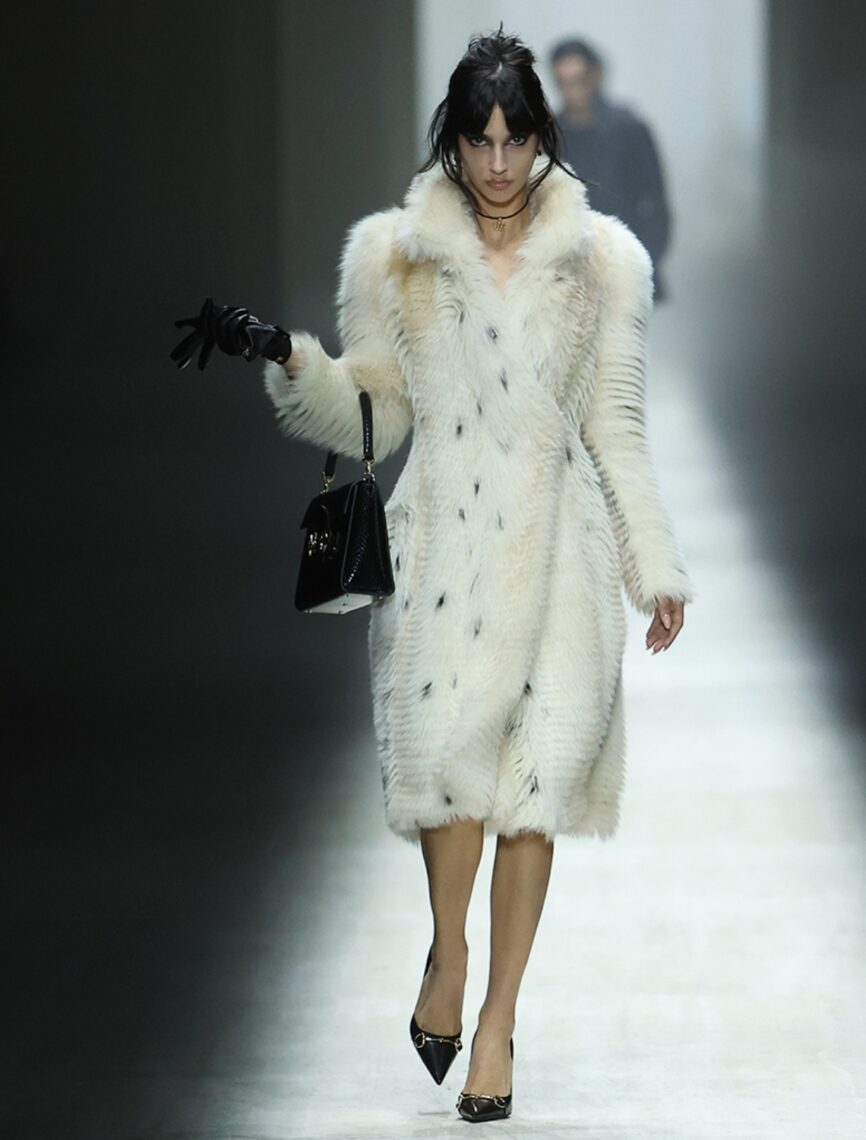
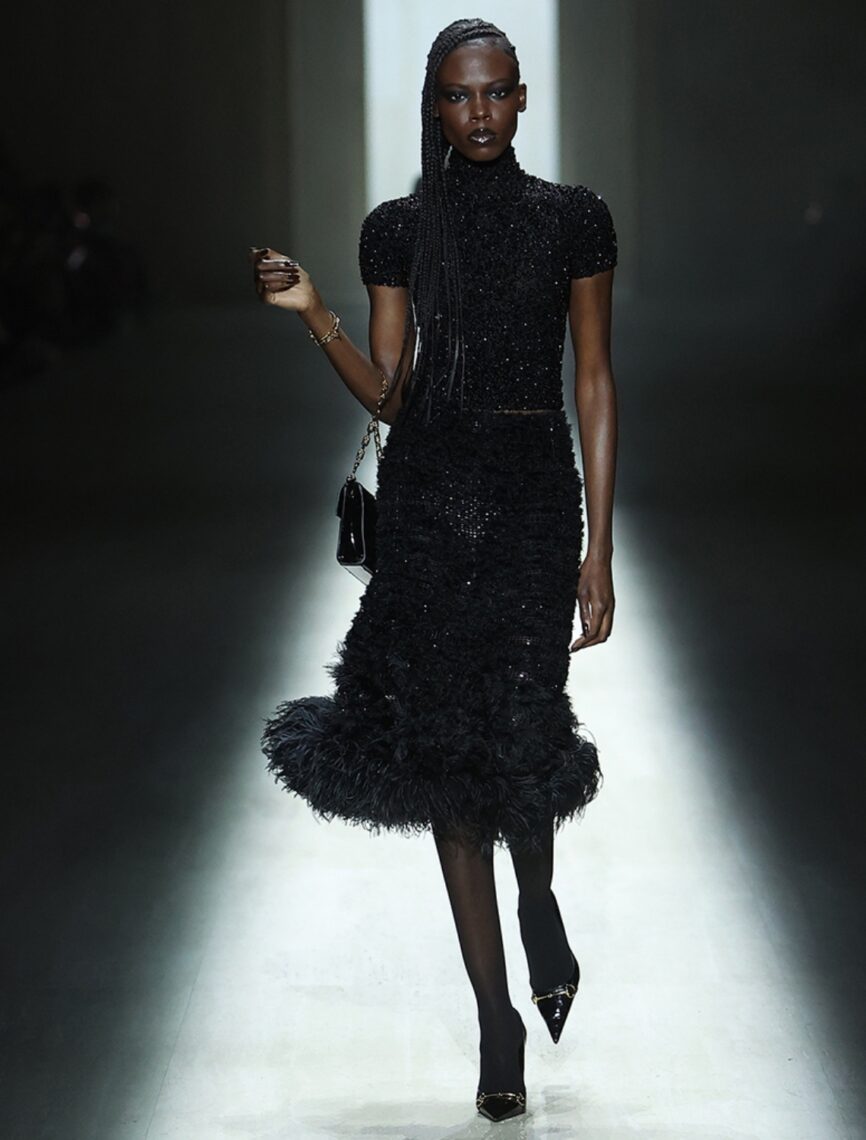
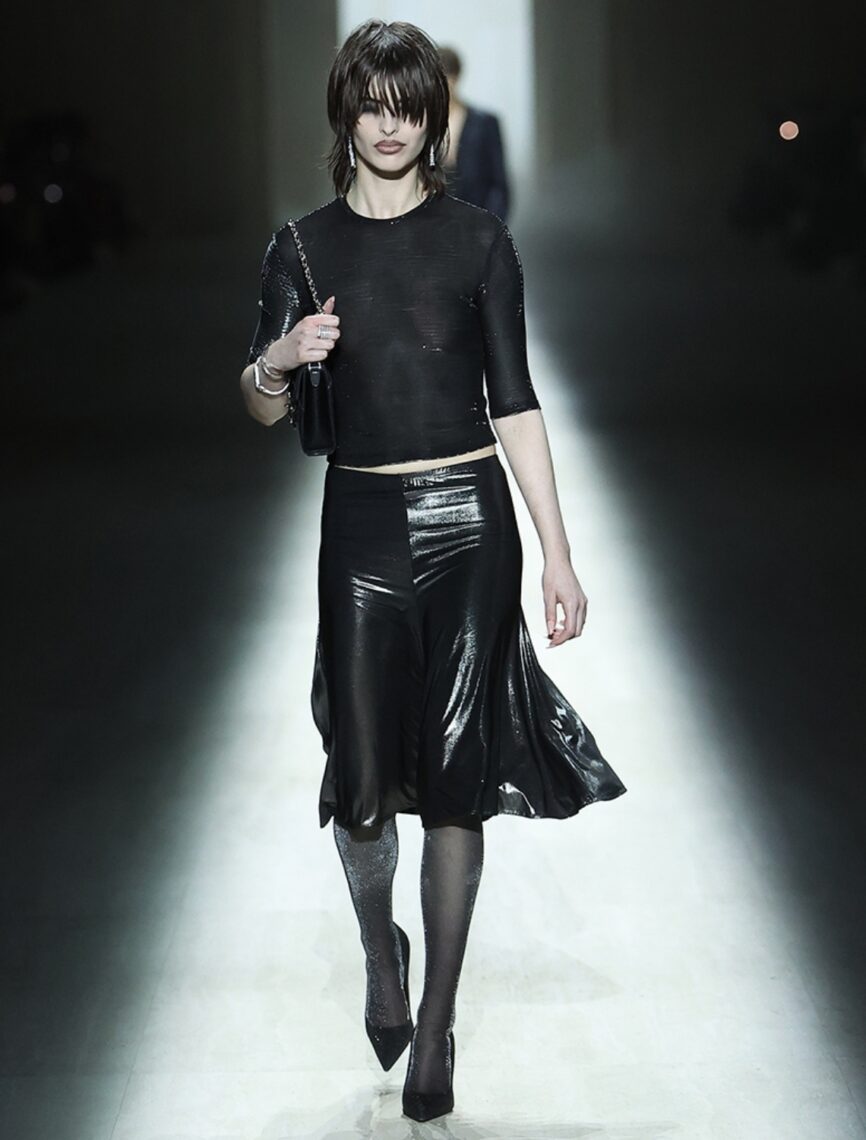
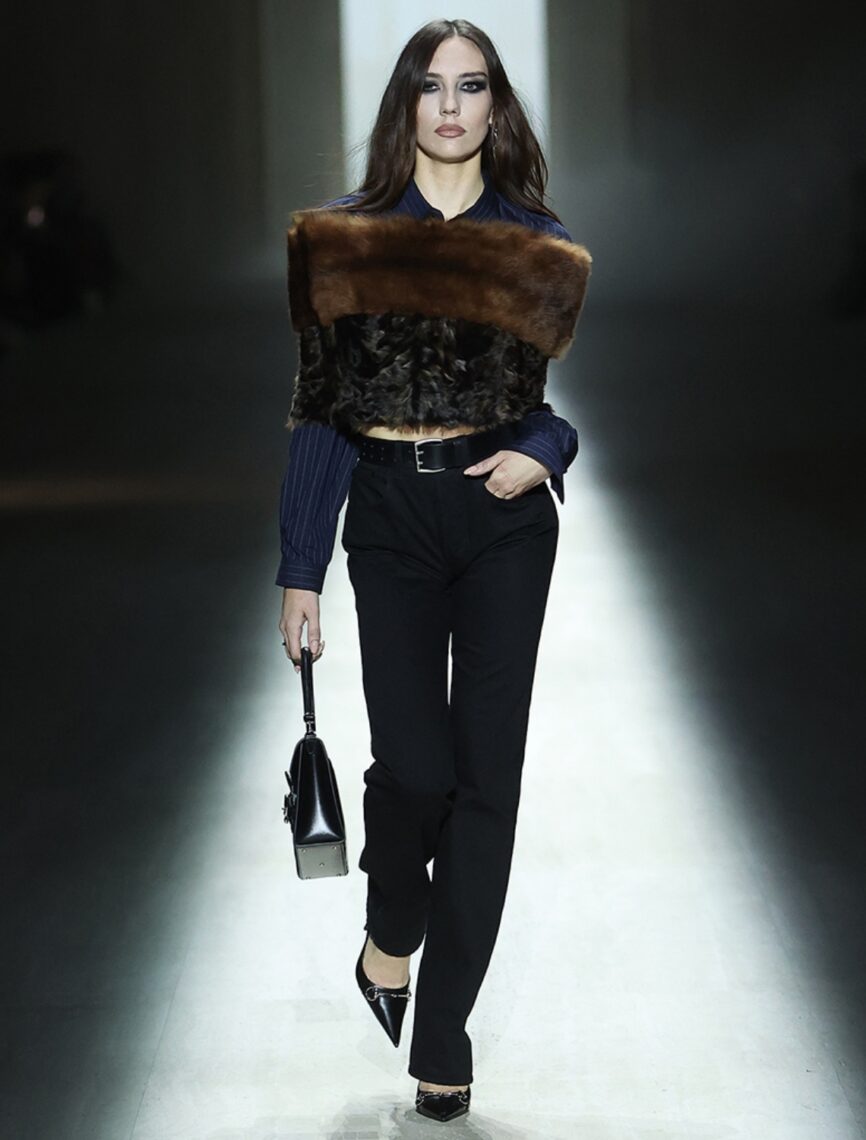
In a way, Demna captured all the different Gucci archetypes, which is the goal.
“Gucci is a brand, but it is also a shared cultural touchpoint that speaks to a wide variety of people, reflected in the range of archetypes, tastes, identities, and dress codes of Primavera: a palette of stylistic propositions for those the House already speaks to, and those I hope for it to speak to,” the Balenciaga alum notes.
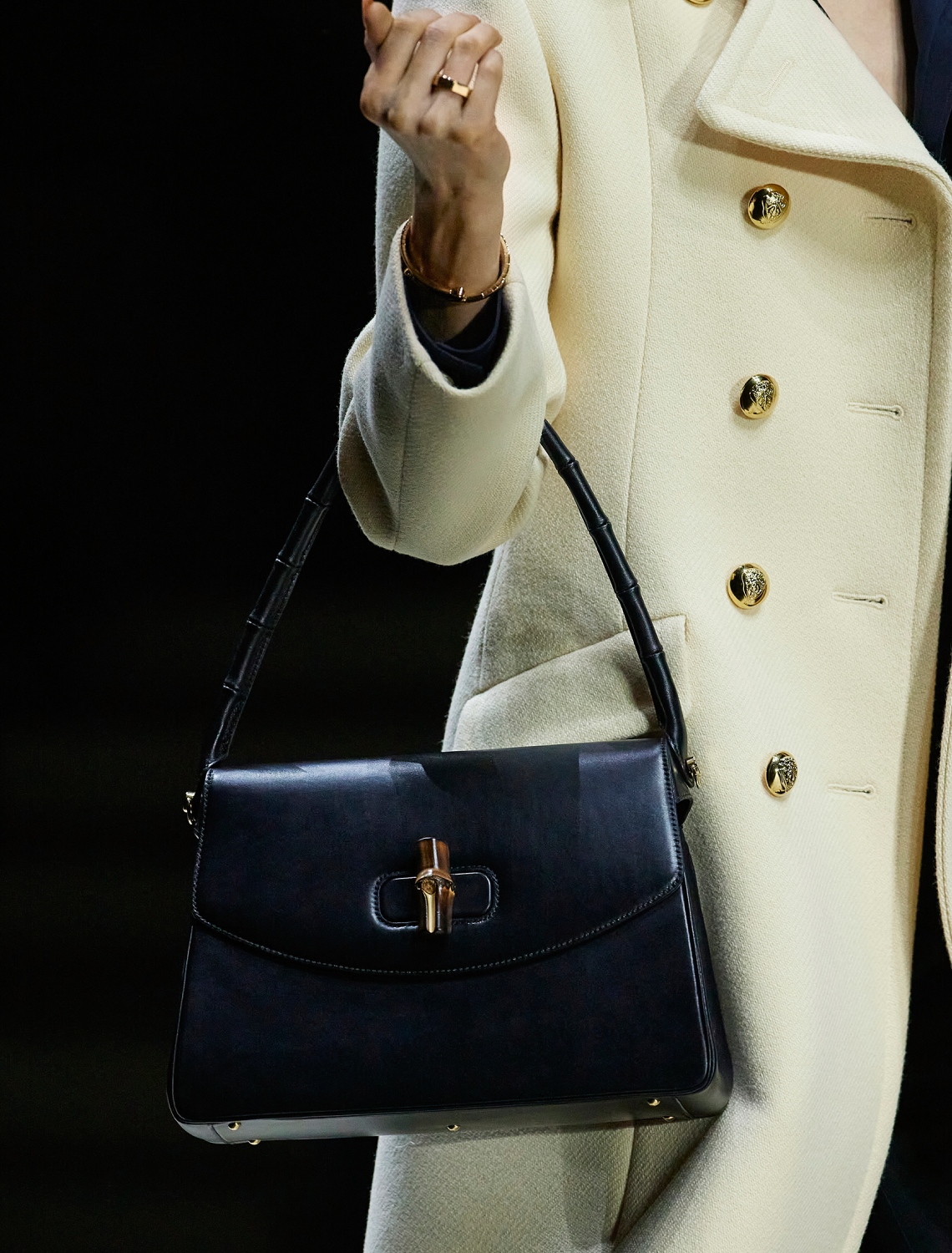
Elsewhere, iconic accessories received a facelift, accompanying some of the looks: the Gucci Bamboo 1947 bag is updated with a sleeker volume and a “bamboo” handle made of flexible, pieced leather sections, and archival minaudières are stretched to fit essentials. Manhattan, Demna’s first-ever Gucci sneaker, combines an ultra-minimal basketball shape with the slip-on ease of a mocassino, while soft Giovanni and Cupertino loafers eschew the stiffness of leather shoes.
“This collection, and my overall vision for Gucci, is built around a sense of pragmatism: products that can be enjoyed by a variety of people, that enrich their lives and make them feel great, that can stand on their own, without the need for pseudo-intellectual justifications,” the Georgian fashion designer concludes.