Amid sacred peaks and ancient rituals, Pemako Punakha offers something more precious than remoteness—a lesson in moving slowly, but with purpose
It is on the final stretch up to Khamsum Yuelley Namgyal Chorten that my lungs begin to protest. Each step feels heavier, my footing slipping on loose dust. In any other country, I might have turned back. But Bhutan is not a country that makes giving up feel like failure. Even the sharp snap of prayer flags in the wind carries an unexpected calm. My breathing steadies and, somewhere along the ascent, I find myself quietly reshuffling my priorities, determined not to turn my life into one giant deadline I am always trying to meet.
Unlike Tiger’s Nest, which now draws steady crowds, Khamsum remains largely untouched. The approach winds through paddy fields for 30 to 45 minutes before arriving at a four-storey sacred structure that often feels entirely your own. At the summit, the reward is sweeping views over Punakha, and interiors dominated by wrathful, multi-armed deities that are fierce and faintly unsettling. It is a space that juxtaposes fierce energy with peace, a distinctly Buddhist paradox that surprises and stays with you long after the visit.
That sense of peace lingers during my stay at Pemako Punakha. The property captures something essential about this country: a balance of ancient values, royal heritage, and spirituality, framed by views across the valley where the Mo Chhu and Pho Chhu rivers converge.
My butler, observing that I had returned visibly spent, has arranged a restorative treatment before I could ask. It begins with a warm herbal soak, followed by a yak butter massage (Drimar Jukpa), known for its anti- inflammatory and deeply moisturising properties. My masseuse, Kinley, is slight in stature but her firm strokes quickly loosen the knots in my body.
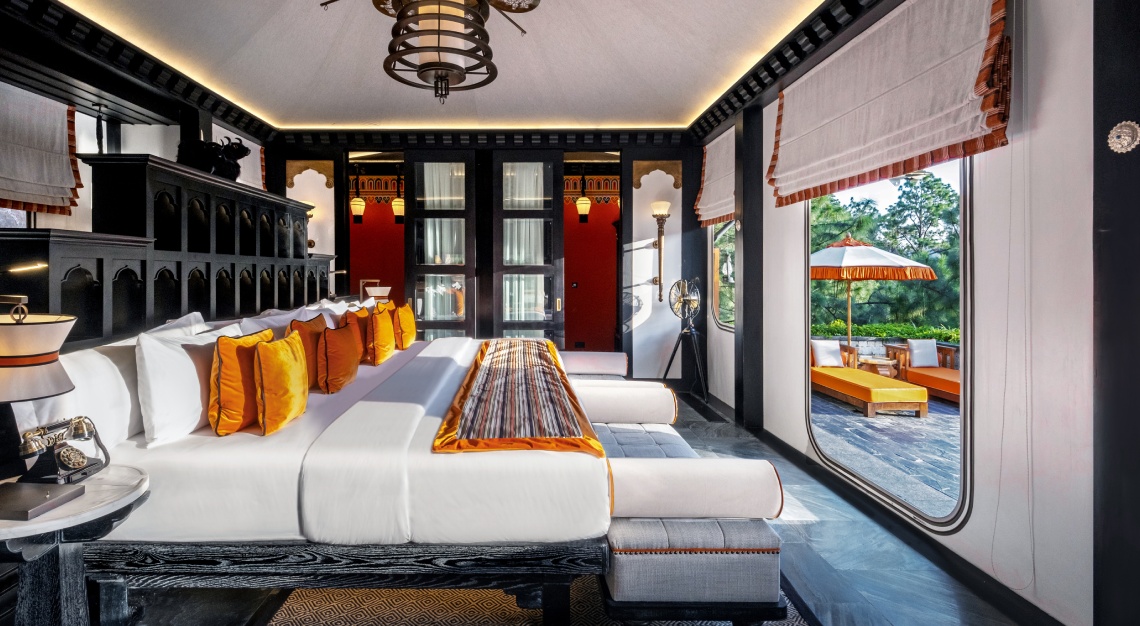
That night, I sleep deeply. Pemako Punakha comprises 21 luxury tented pool villas across 24 hectares of forest and riverside landscape, and is so deliberately secluded that there is no road access: guests arrive on foot, crossing a suspension bridge adorned with prayer flags, accompanied by a dedicated butler assigned to each villa. The interiors were conceived by Bangkok-based designer Bill Bensley, who layers cultural symbolism into every object and surface with characteristic theatricality. The glass-and-teak bar, in particular, has been singled out by many as architecturally striking.
Breathe and balance
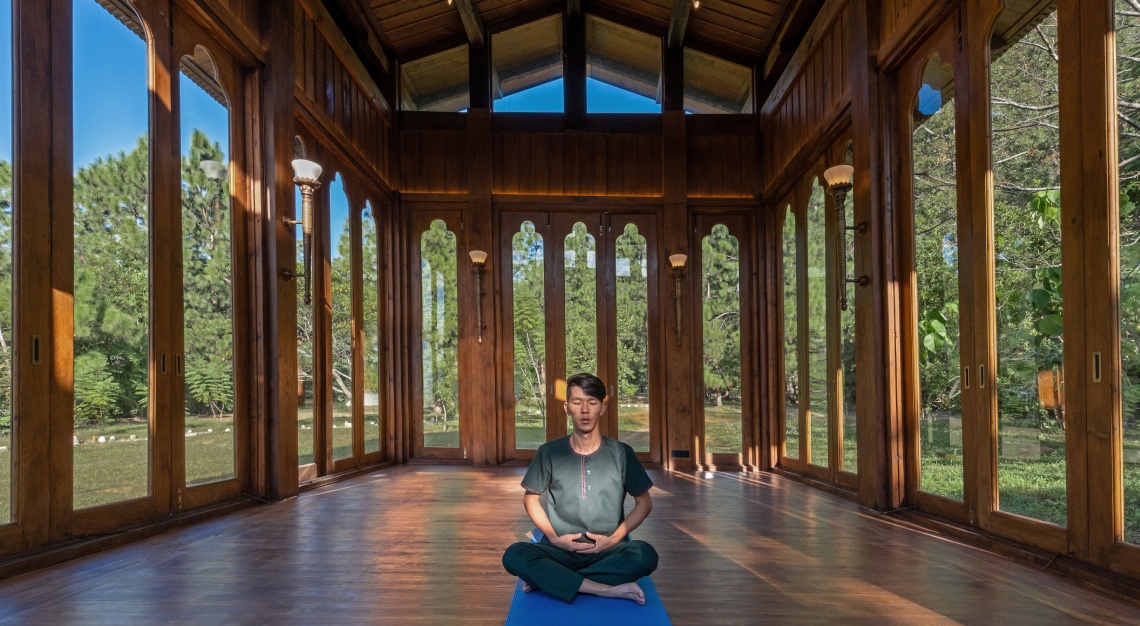
The next morning, I am up at sunrise for Sorig yoga, a Tibetan-Bhutanese practice that focuses on restorative breathing techniques. The movements are not designed for flexibility or aesthetics, but to identify and correct imbalances in the body’s internal energy systems.
Energised, I am whisked away to Ara House for a chance to see how Bhutan’s traditional homemade spirit is made. Similar in character to sake but considerably stronger, at roughly 45 per cent alcohol, ara is fermented from rice, maize, wheat, millet, or barley. The grain is combined with phab—a traditional yeast cake—then fermented for several days in a sealed clay pot or wooden barrel before being distilled over a wood fire using a simple pot- still set-up. The result is slightly sweet, earthy, and more pungent than sake, and is typically served warm in winter.
The chef pairs it with momo, small dumplings of unleavened dough, folded and pleated around fillings of minced pork or beef seasoned with onion, ginger, garlic, coriander, and green chilli, eaten with a chilli dipping sauce. The pairing is unpretentious and exactly right.
That evening, I am invited to wear the kira, the traditional dress for Bhutanese women—an honour I received with genuine appreciation. The ensemble consists of a long-sleeved blouse called a wonju, beneath a rectangular woven cloth roughly 2.5m long, wrapped and secured with two brooch-like clasps, then cinched at the waist with a woven belt, or kera, that gives the garment its distinctive silhouette.
It felt especially fitting, as I was about to experience a traditional Bhutanese dinner at Alchemy House. This restored heritage-style building is designed to offer diners an immersive encounter with Bhutanese food culture. The name connects to Sowa Rigpa, the traditional Bhutanese-Tibetan system of medicine in which cooking and healing are not separate disciplines: the right combination of ingredients, correctly prepared, is itself therapeutic. The kitchen as alchemical space is not a metaphor here—it is real and practised.
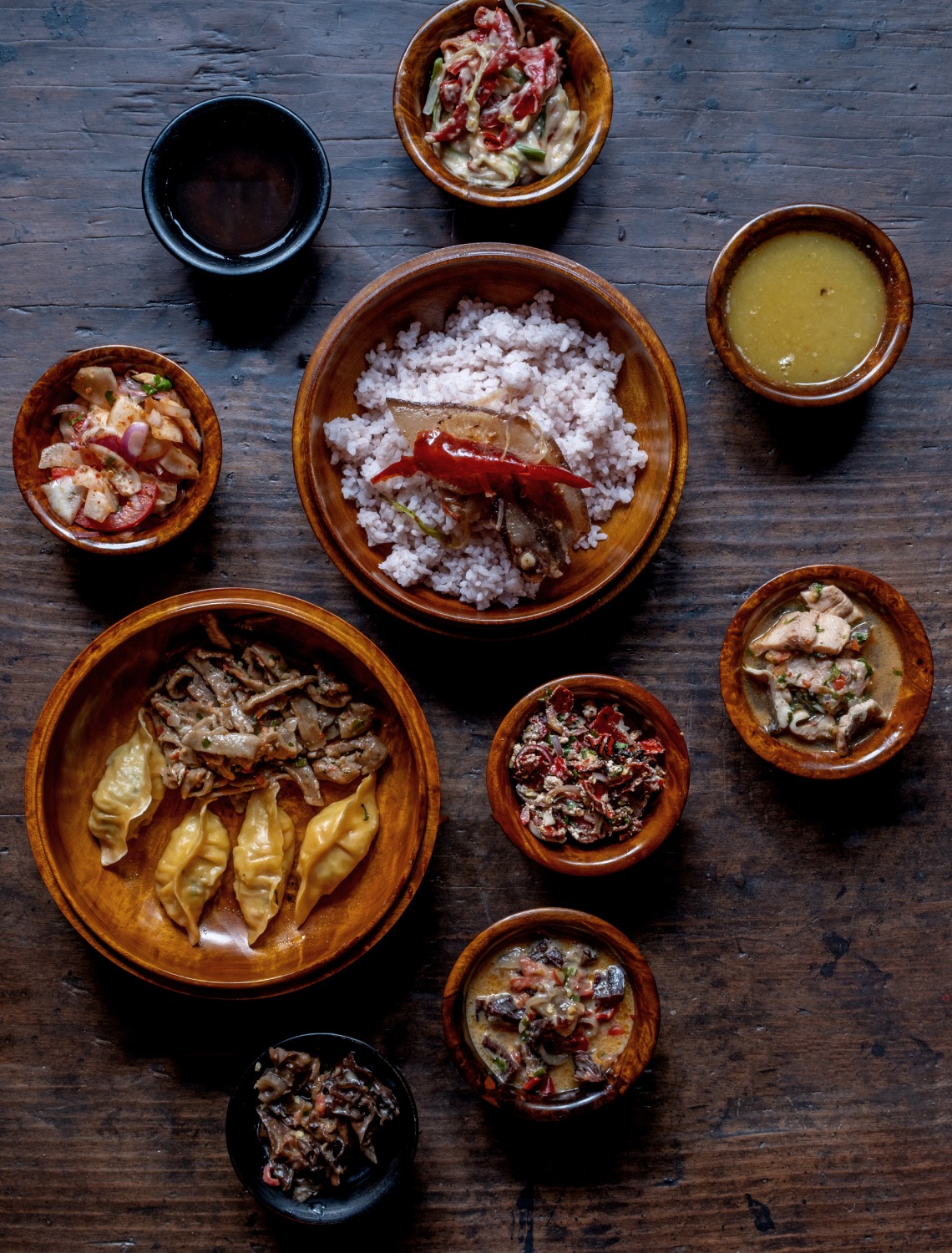
The meal is served in a style reminiscent of Korean banchan, with red rice as the centrepiece, accompanied by a variety of side dishes. Ema datshi—chilli with local cheese—has an initial intensity that gives way to a creamy richness. Rhoentay, a buckwheat dumpling stuffed with pork, dried chillies, and radish, offers something more rustic. Shakam datshi—dried beef or yak with cheese—is the most assertive of the three. The beef arrives in thin strips, air-dried in the cold mountain air as Bhutanese farmhouses have done for generations, a process that concentrates the flavour into something chewy and deeply savoury. It also has an almost smoky character that fresh beef cannot replicate. The aroma takes adjustment, but paired with chilli, it becomes unexpectedly satisfying.
On to Thimphu
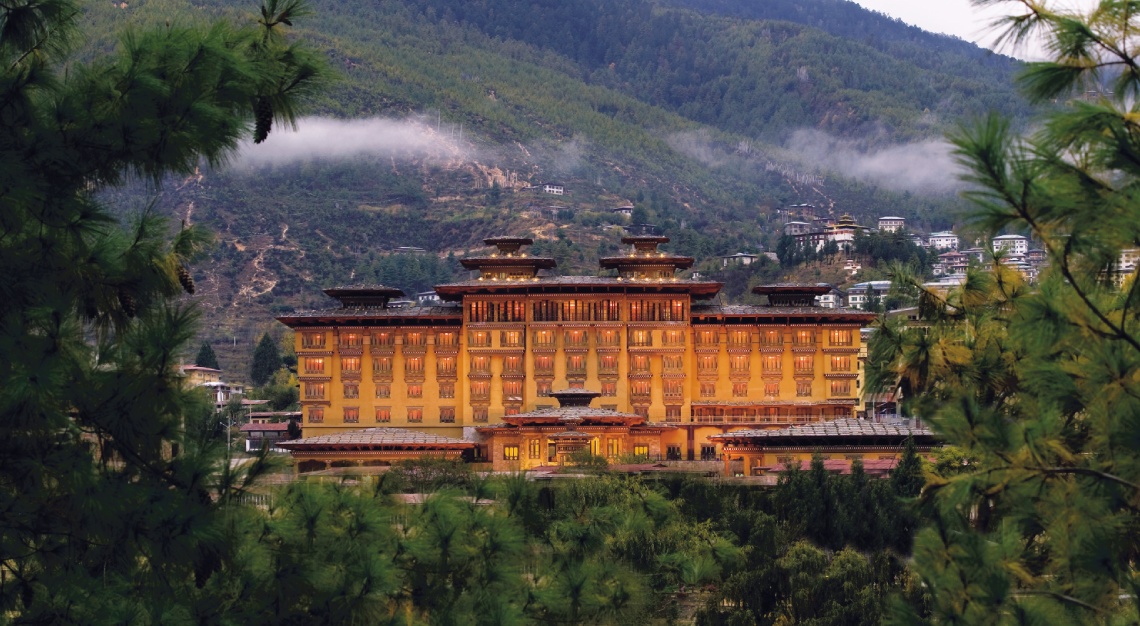
The following morning, I cross the suspension bridge once more to begin a three-hour drive to Pemako Thimphu. Located in the heart of Bhutan’s capital, the property offers easy access to the city’s key sights. With 66 rooms and suites, complemented by fine dining, it serves as a gateway to exploring Thimphu.
The Buddha Dordenma demands a visit. At 51.5m—roughly the height of an 18-storey building—the gilded bronze statue sits on a hillside above Thimphu with an authority proportional to its scale. Within its structure are 125,000 smaller Buddha figures: approximately 100,000 at 20cm tall and 25,000 at 30cm, each cast in gilded bronze.
Equally impressive is Tashichho Dzong, or the Fortress of the Glorious Religion. It houses the offices of the king of Bhutan, along with the ministries of home affairs and finance, behind whitewashed walls several metres thick, designed to resist both invaders and fire. Golden tiered roofs crown the structure and intricate painted woodwork covers every surface.
Inside are 30 temples, chapels and shrines, as well as the grand assembly hall, which houses a statue of Shakyamuni Buddha and the dual thrones of the king and the Je Khenpo— symbolising the harmony between state and religion. Visitors are sometimes told that the king may be seen walking the grounds.
After lunch, a walk through nearby handicraft shops yields the kind of slow discovery that has become rare. Among the most compelling finds is yathra—a traditional textile woven from sheep and yak wool in bold geometric patterns, coloured with natural dyes derived from plants and minerals.
Leaving Bhutan, I carried not just souvenirs but a deeper takeaway: this is a place that may move slowly, but always with purpose. Every experience feels rooted in something far older than tourism. You are not a visitor passing through, but a guest within something ancient and enduring. The pace invites you to slow down, be present, and take in what surrounds you—a reflection of a country that measures its success not only in wealth, but in the happiness of those within it.