The Patek Philippe Nautilus marks its fifth decade looking more dashing and desirable than ever
A useful conversation starter I have deployed more than once at Patek Philippe events this year is to remark to fellow guests that, just like the Nautilus, yours truly is also turning 50. I usually hasten to add, as a makeshift punchline, that this is where the similarity ends. The Nautilus, unlike me, arrived fully formed.
The watch entered the scene as a true disruptor in 1976. Sporting an imposing porthole-shaped silhouette and remarkable heft, the Nautilus looked nothing like the classically inclined dress watches that Patek Philippe had been making then. If its disposition didn’t leave watch retailers and customers bewildered, the Nautilus’s price tag certainly did. Fashioned from steel at a time when ‘serious’ watches were crafted in gold, the Nautilus cost as much as a gilded dress watch.
It wasn’t surprising that the Nautilus didn’t take off instantly. But it wouldn’t be long before collectors began to warm to it. They eventually caught on to the watch in the early 1980s, and Patek Philippe and the Nautilus haven’t looked back since.
Marking the milestone
Today, the Nautilus is one of the most sought-after watches in Patek Philippe’s line-up and a true contemporary horological icon. Its popularity had even moved Patek Philippe’s president, Thierry Stern, to discontinue the fan-favourite Reference 5711 in 2021—the stainless steel iteration with blue dial that was the successor to the original Reference 3700 from the 1970s. Stern’s reasoning was straightforward: he didn’t want a single steel sports watch to overshadow the broader repertoire of complications and precious-metal dress watches.
Even so, the Nautilus’s stock continued to rise. The Reference 5811 in gold, which replaced the Reference 5711, inspired similarly long waiting lists. And with recent models, the Nautilus demonstrates its reach with creations that include a flyback chronograph (Reference 5980/60G-001), a high-jewellery version set with over 1,480 diamonds (5811/1460G), and a Ladies’ Nautilus housed in a smaller 32mm white gold case (Reference 7010G).
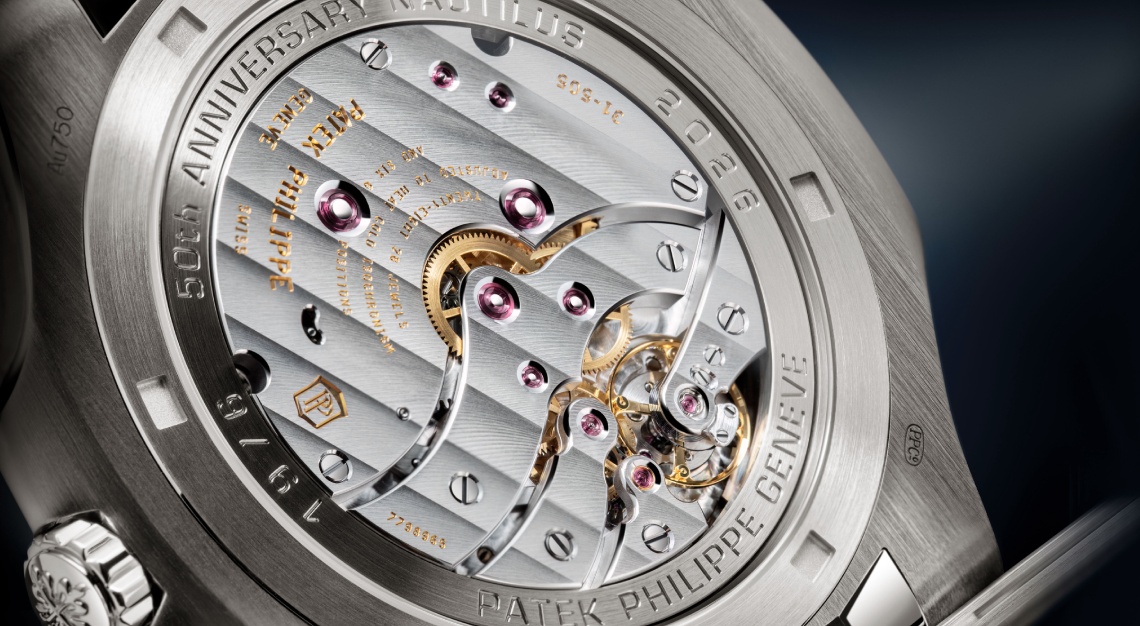
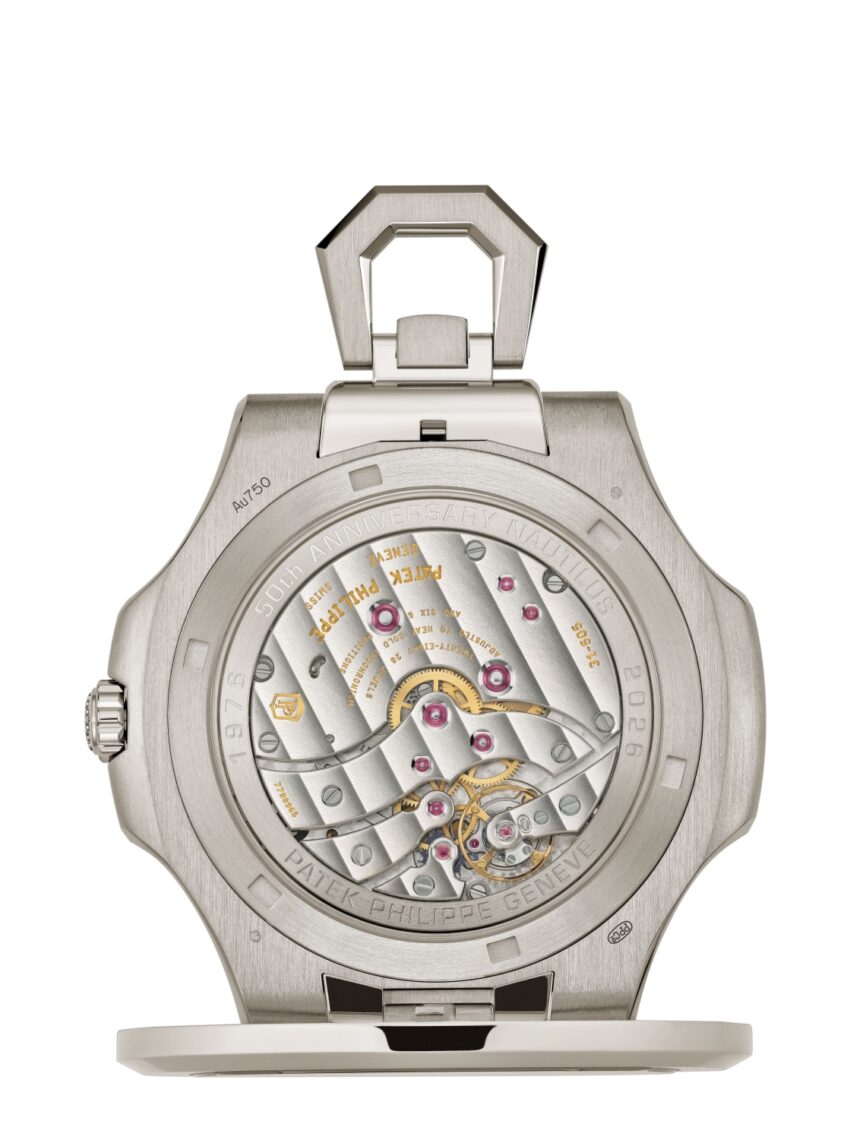
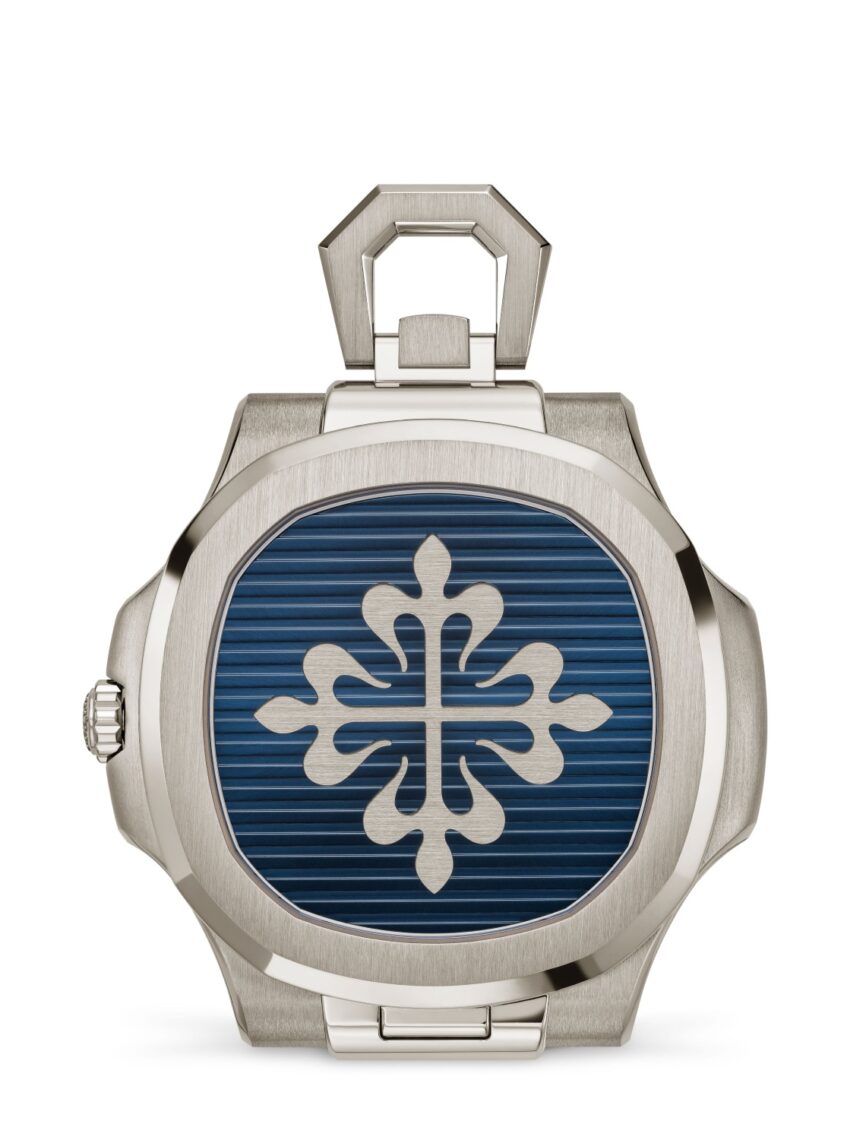
This year’s 50th anniversary, however, calls for something special. And Patek Philippe is marking the occasion with four new limited editions, each one paying homage to the audacious original. The most immediately striking of the quartet is the one that isn’t a wristwatch at all. The Reference 958G-001 is the first Nautilus desk watch ever produced.
Limited to 100 pieces, it is encased in 50.65mm white gold bearing the collection’s unmistakable silhouette. Its hinged dust cover doubles as a stand; beneath it sits a manually wound eight-day calibre whose twin barrels sustain enough autonomy to outlast most working weeks. Diamond-set baguette hour markers and a sunburst blue dial complete the look.
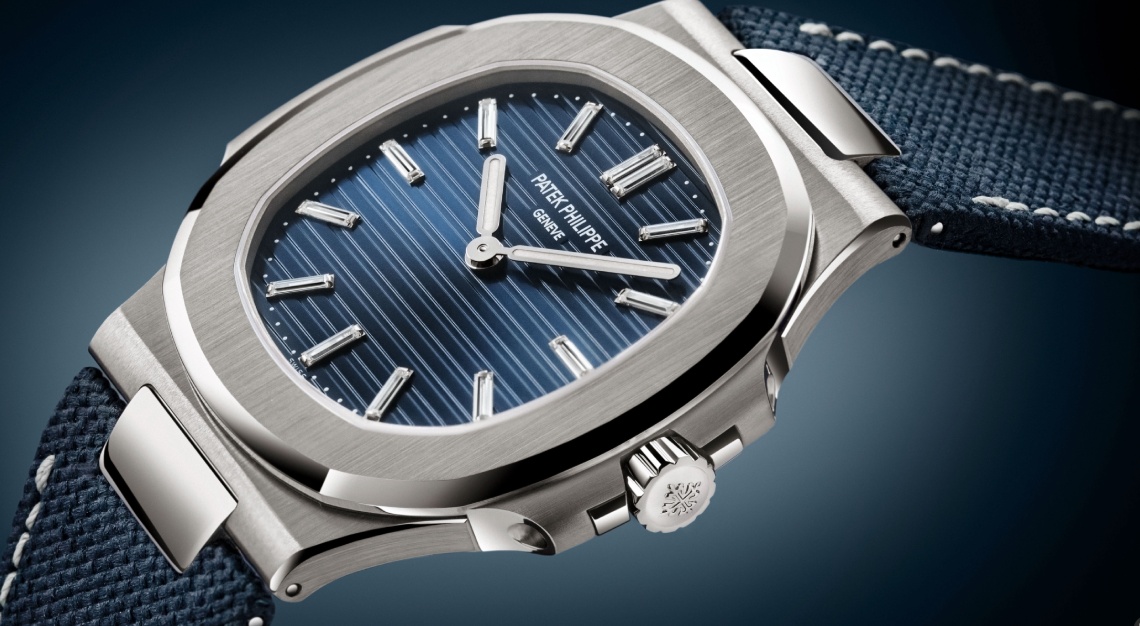
Meanwhile, the three wristwatches take an approach that will please Nautilus purists. Their time-only dials strip back the complications that have accumulated on the Nautilus collection over the years to draw attention to the one thing that has never needed improving: the design. Two Jumbo references—5810/1G-001 and 5810G-001—come in 41mm white gold cases that are just 6.9mm tall. They owe their slenderness to calibre 240, which at 2.53mm remains one of the thinnest self-winding movements in existence.
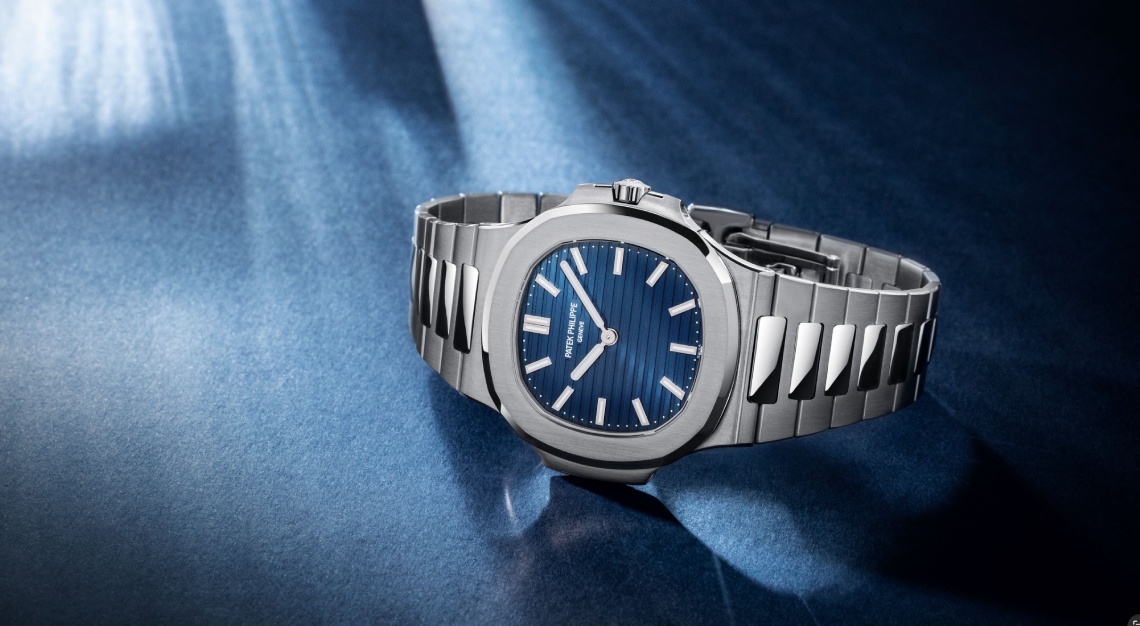
The 5810/1G-001 wears a matching white gold bracelet, while the 5810G-001 pairs its diamond-set baguette hour markers with a navy blue composite strap edged in cream stitching. The third model, the Reference 5610/1P-001, is my favourite. Housed in a 38mm case—reviving a medium size the collection hasn’t seen since its 30th anniversary—the watch is crafted in platinum. A single diamond set into the hinge at 9 o’clock offers a subtle flourish. All four arrive in a cork-lined presentation case, a deliberate nod to the original Reference 3700 packaging from 1976.
Always exploring
The Nautilus’s genesis owes as much to the Stern family’s acumen for product development as it does to the creative genius of watch designer Gérald Genta. More than any other designer, Genta shaped the modern luxury sports watch, with the Royal Oak and the IWC Ingenieur among them. Genta understood the brief well: the Sterns wanted a luxury steel sports watch that would be robust enough for adventure, yet refined enough for a dinner table.
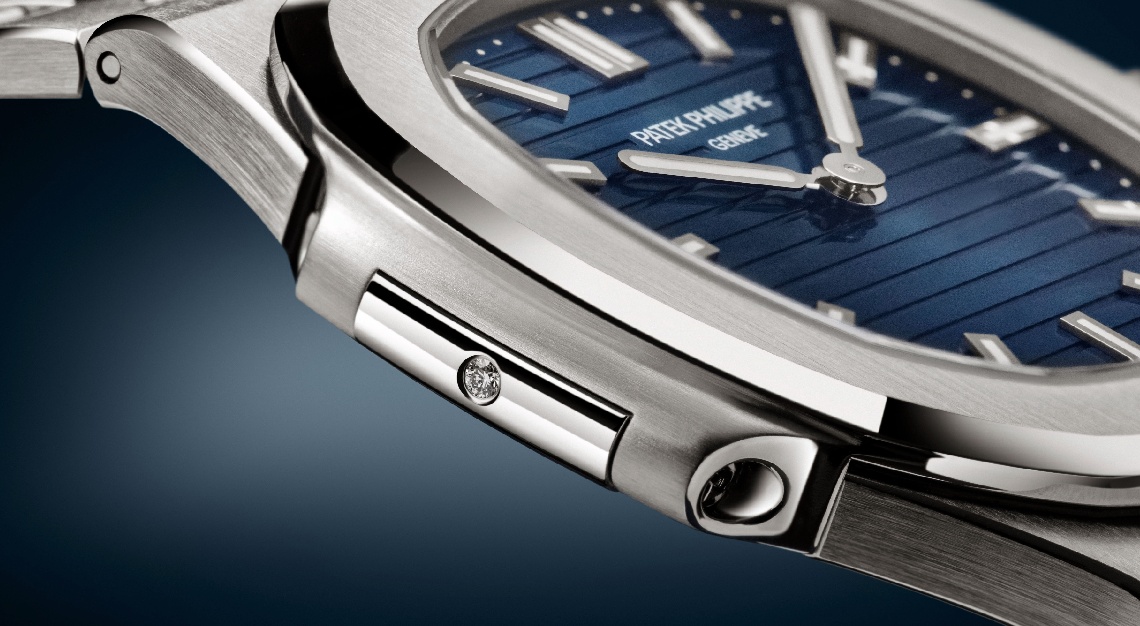
Genta’s answer came from an unlikely source: the porthole of a transatlantic liner. Those heavy circular windows, sealed against the sea by bolts clamping a bezel onto hinges, became his inspiration. The watch case, with its octagonal bezel, four clamping screws, and two-part construction, proved both architecturally and aesthetically sound, and set the foundation for one of the most recognisable watches ever made.
What followed over the next five decades was an expansion that never once compromised the original proposition. Even when the Nautilus family grew to include complications spanning perpetual calendars and chronographs, as well as bejewelled iterations and decorative flourishes, its aesthetic essence and spirit of versatility always remained intact. Genta and the Sterns got it right in 1976, and every new Nautilus watch has been arriving fully formed ever since.
This story first appeared in the August 2026 issue. Purchase it as a print or digital copy, or consider subscribing to us here