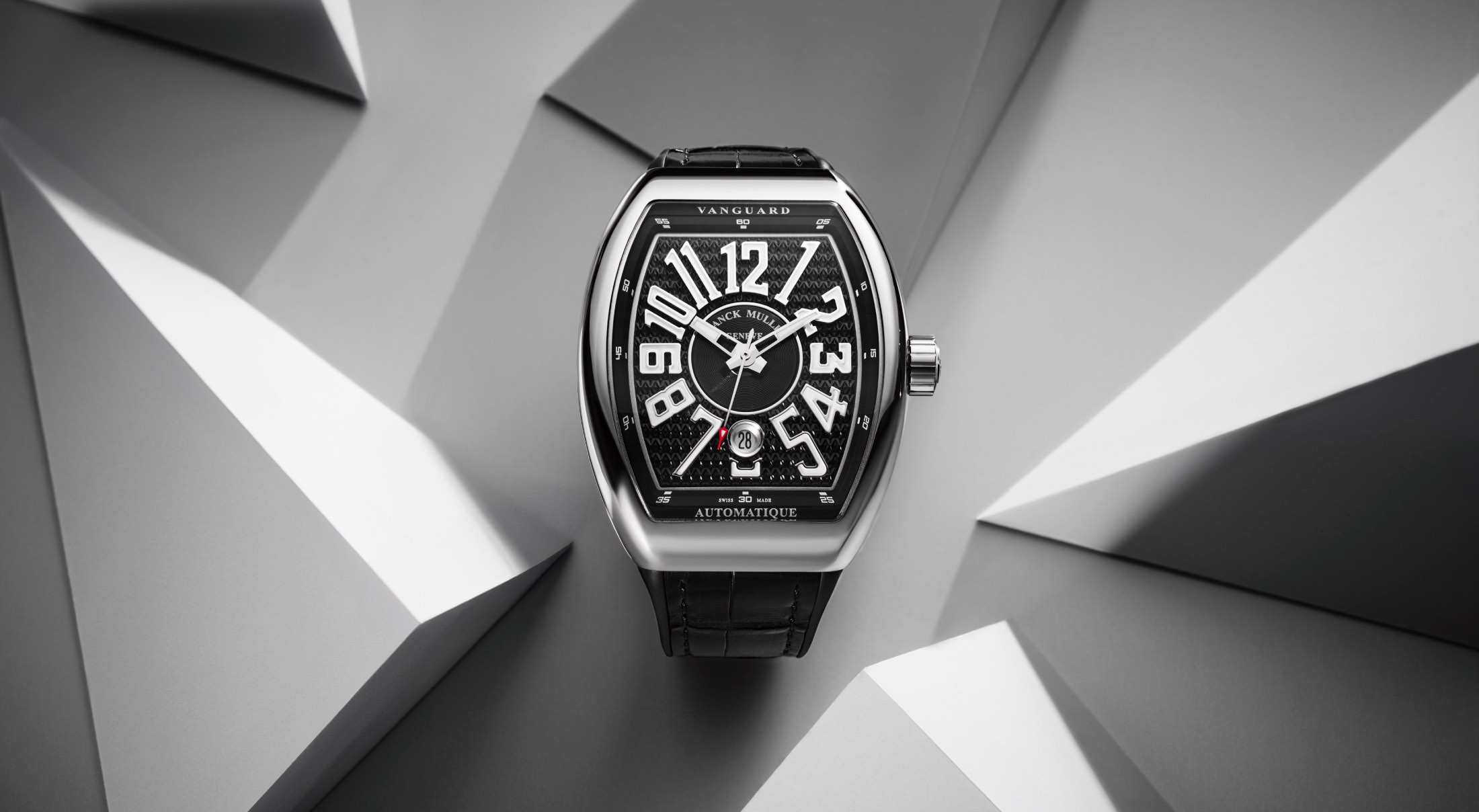

Bell & Ross creative director Fabien de Nonancourt explains why form and function go hand in hand, whether designing cockpit-inspired instruments, Mondrian-style skeleton movements, or aventurine dials
Bell & Ross is one of the rare modern watch brands whose silhouette can be picked out across a crowded room: a graphic square case, round dial, four exposed screws, and cockpit-sharp numerals. Three decades later, that design language still anchors its rolls-outs.
For managing director Fabien de Nonancourt, the code is non-negotiable; it has become an industry icon. “We drew four principles from flight instruments that guide all our creations: precision, reliability, functionality and legibility— all crucial when you are flying a plane,” he says.

The brand’s evolution has been one of careful layering. In 2016, it introduced the BR-05 line with its integrated bracelet alongside the original instrument collection, splitting the portfolio roughly 50/50 between the two. Skeleton movements followed, then manufacture calibres—the Kenissi-based BR- X3 and BR X5—and now high watchmaking, embodied in the BR-X3 Tourbillon Micro Rotor and the BR-05 Blue Diamond Eagle 36mm. High complications have never been the brand’s core business, but they are essential, Nonancourt says, to proving what it is capable of.
Bell & Ross works across ceramic, bronze, and carbon composites. How do you choose your materials?
The starting point is always functionality. Ceramic, for example, is extremely scratch resistant; that functional quality is the primary reason we use it. Functionality can be in the movement, but also in the material or even the colour. Matt black, for instance, is functional: when you fly above the clouds, there is a lot of light and you want to avoid reflections. That’s why cockpit instruments are matt black.
Tell us about the two new pieces.
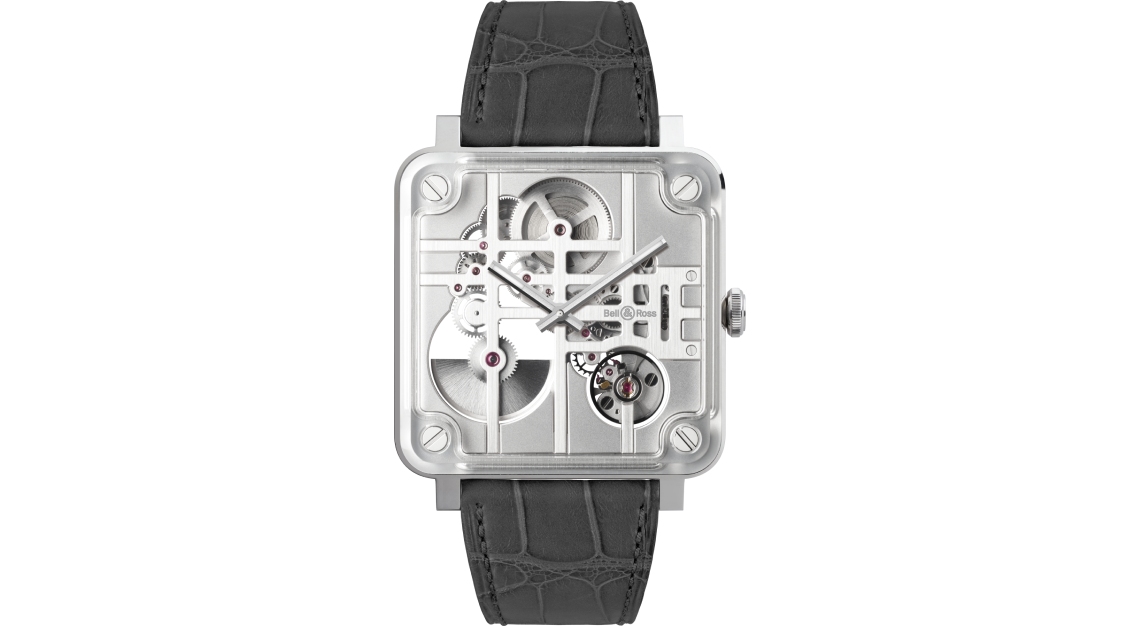
We have two very different products. One is an haute horlogerie piece called the BR-X3 Micro Rotor and the other is the BR-X3 Tourbillon from last year. Our artistic director, Bruno Belamich, wanted to display, magnify, and emphasise the movement. For him, time indication is almost secondary. The idea was to showcase the movement in an unusual way.
How does the construction work?
He wanted a skeleton watch that isolates and highlights the key elements: the flying tourbillon, the micro rotor, the barrel. He then applied a Mondrian-like structural approach, building the movement from vertical and horizontal lines. That grid naturally complements the square case.
Technically, it is a simple concept: usually, you have a case and you put a movement inside. Here, the case and the movement are fused into a single component. The movement is the case. We simply add sapphire crystals on the front and back, so you can see all the movement details clearly. It allows the watch to be only 9mm thick, which is quite slim for a fully skeletonised piece with a 40mm case.
The first edition is the fully skeletonised version, limited to 25 pieces. The second, to be introduced at the end of this year, is a semi-skeleton version—same 40mm case, same design philosophy, but a different spirit. Only the spiral, the micro rotor, and the barrel remain clearly exposed. Limited to 99 pieces.
Who did you have in mind when you designed this semi-skeleton piece?
We envisioned this semi-skeleton piece for collectors who want to move deeper into haute horlogerie with Bell & Ross without abandoning the brand’s instrumental DNA. We are not just a brand that uses Sellita movements; we can design and create our own calibres. We work with Concepto, a highly regarded Swiss movement specialist that supplies to many brands. These movements help elevate the brand and appeal to collectors who are interested in haute horlogerie and unusual constructions.
What about the BR-05 Diamond Eagle?
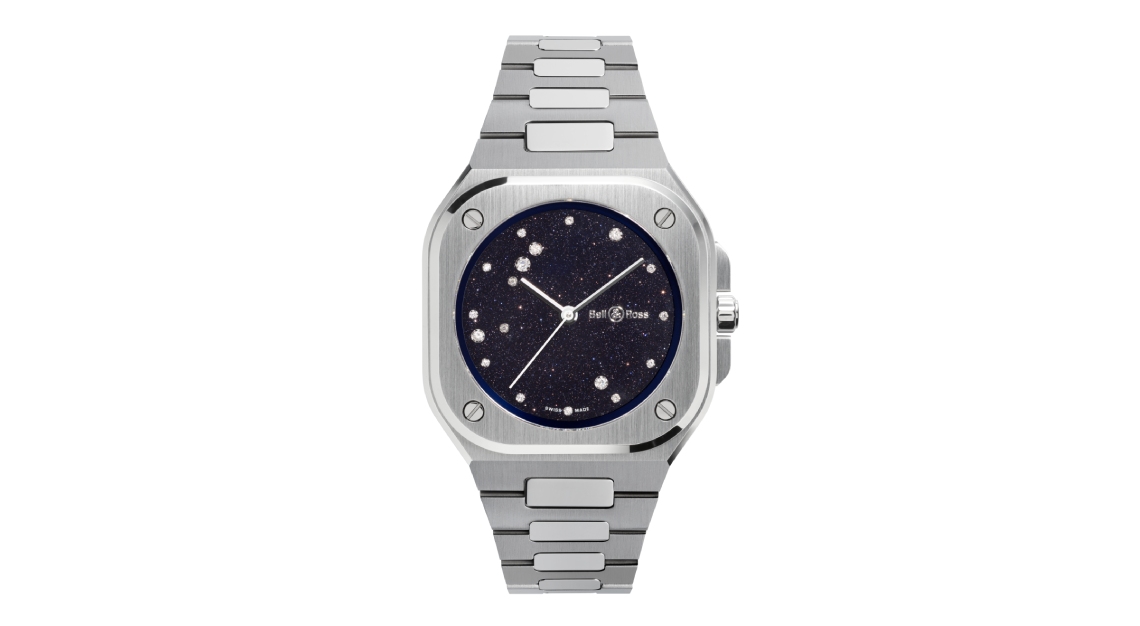
Last year, we introduced the BR-05 in a 36mm size. This year, we wanted to highlight the design’s feminine potential, which is why we are introducing the Diamond Eagle. The idea is to create a feminine dial with diamonds, but not in the obvious way of placing diamonds at each hour marker, as many brands do. Instead, we give the impression that the diamonds are scattered randomly across the dial, but they follow a specific pattern: they mirror the stars of the Eagle constellation in the night sky. So, when you look at the dial, you’re not just seeing diamonds; you are seeing a constellation translated into watch form.
This story first appeared in the August 2026 issue. Purchase it as a print or digital copy, or consider subscribing to us here