Available in stores from 1 October, Unforeseen Aer draws inspiration from an unlikely subject: a breeze
There is a slight perversity to calling a fragrance Unforeseen Aer. Air is everywhere, after all. It is one of the few things we experience constantly without giving much thought to it.
Aesop’s new Eau de Parfum gives it a little more consideration.
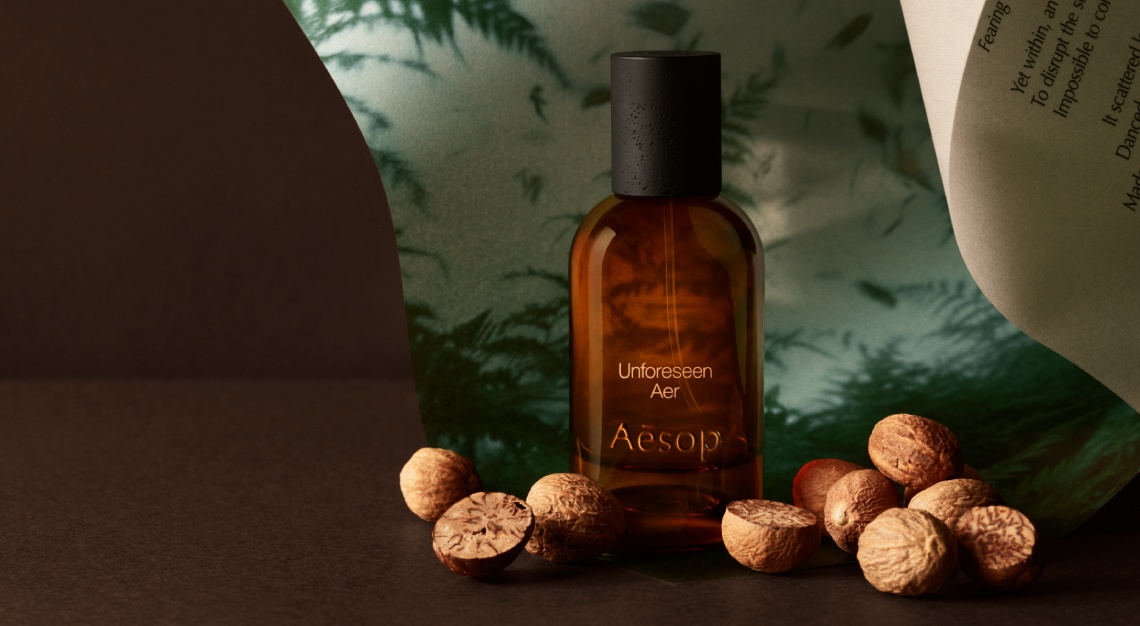
The starting point is the fougère, a familiar fragrance structure built around aromatic, green notes. Here, Geranium, Lavandin and Rosemary make up what Aesop calls its Fabulist Accord, an interpretation of clean air moving across a high, rugged landscape. Nutmeg sits against it as the Radical Ingredient, bringing warmth and an almost grainy texture to the freshness.
That contrast is central to Unforeseen Aer. Rather than treating freshness as an end in itself, the fragrance allows something warmer and less polished to sit underneath it.
The idea is reflected in the fable that accompanies the scent: a gentle wind, initially concerned by the disruption its movement causes, eventually comes to embrace the disorder of its own gusts. “It is a fable that urges us to rethink what we might view as ‘flaws’, instead seeing the potential that lies beyond moments of seeming failure or imperfection,” the brand highlights.
Aesop has always been comfortable with this kind of indirectness. Its fragrances don’t tend to announce themselves through conventional ideas of prettiness or seduction. They are more interested in texture than obvious impact. Unforeseen Aer fits neatly into that world while taking on a fragrance category that could easily have felt familiar.
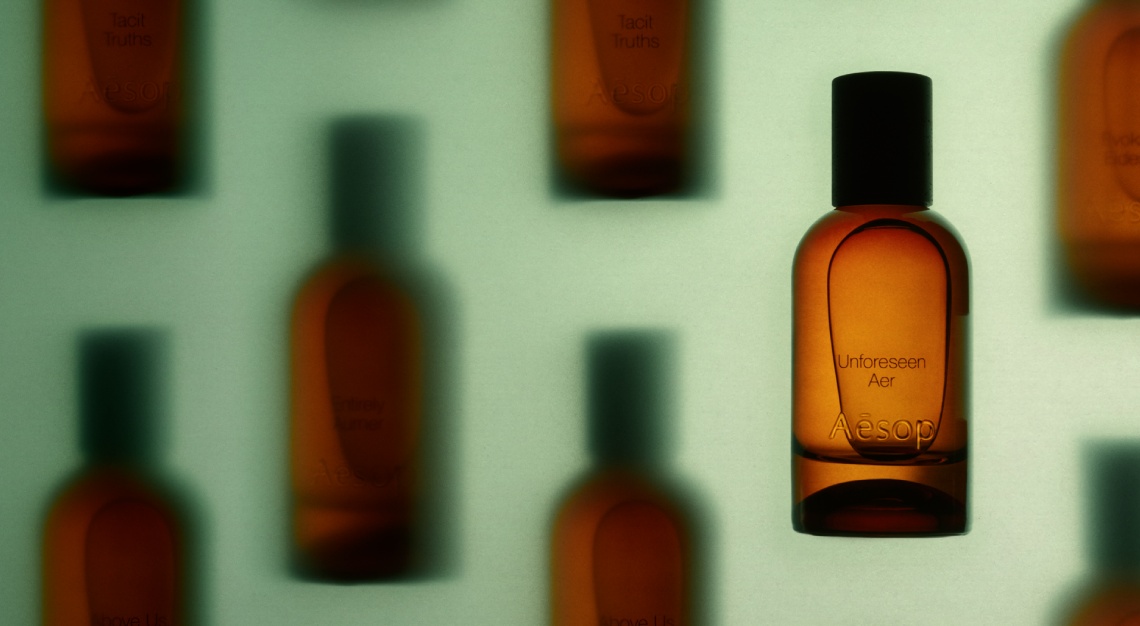
The new bottle follows the same logic. The amber glass remains, but the proportions have changed: taller, with a domed base and a textured cap based on the surface of basalt. It is a small departure rather than a redesign. The atomiser is also now removable, making the bottle easier to recycle.
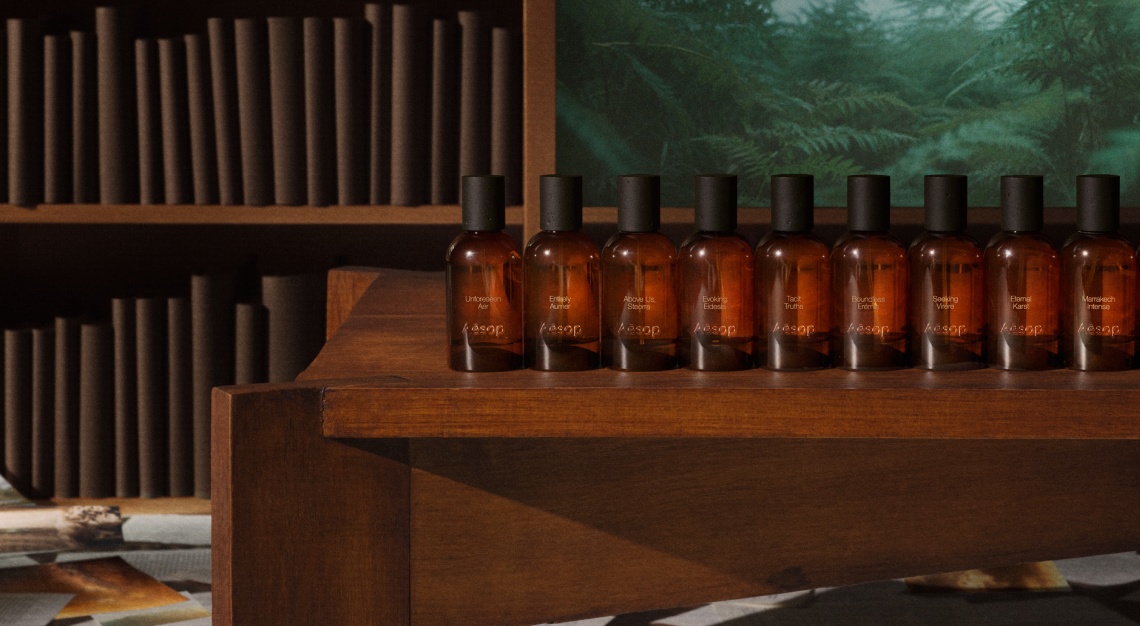
Unforeseen Aer is part of Aesop’s Fragrant Fables collection, which reframes the brand’s existing fragrances through short fable-like stories. It is perhaps an unusually literary way to introduce perfume, but it makes sense for Aesop, where scent has long sat somewhere between product and object of curiosity.