The Lange Datograph Perpetual turns 20 with a black diamond dial, a platinum bracelet and a calendar that needs no correction until 2100
The Datograph Perpetual made its debut at the SIHH watch fair in Geneva in 2006. It was Lange’s first watch to combine a flyback chronograph with a perpetual calendar, and it came in platinum with a silver dial and Roman numerals.
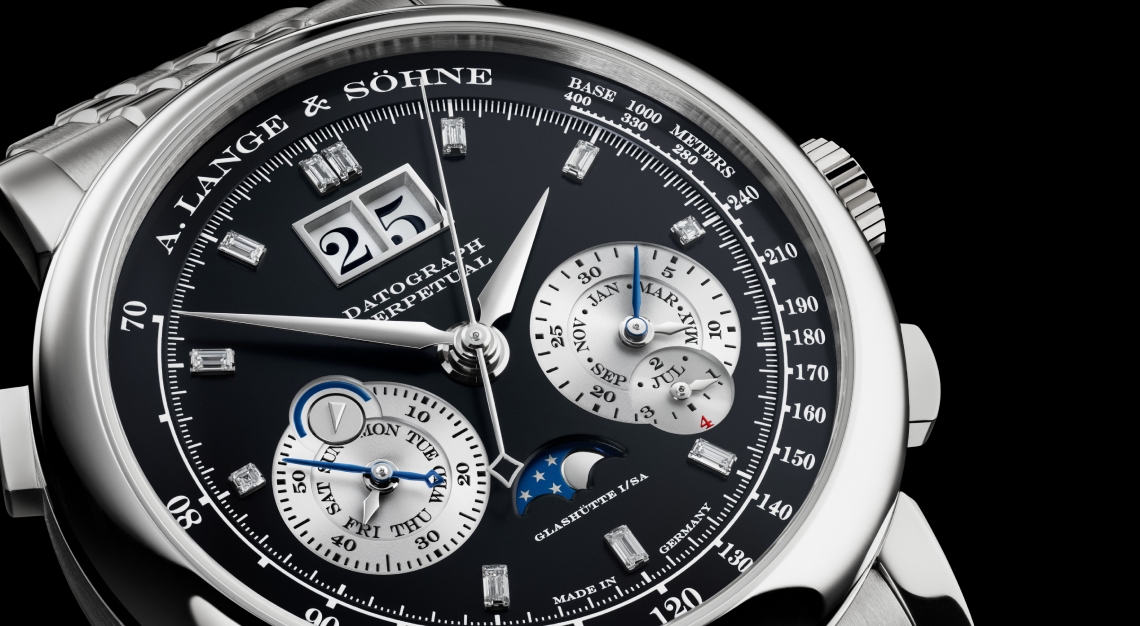
Twenty years later, A. Lange & Söhne revisits the Datograph Perpetual with a black dial, baguette-cut diamond markers and a five-row platinum bracelet. Its calendar is built to run without correction until 1 March 2100. On that day the Gregorian calendar skips a leap year, and the owner will need to move the date by one day.
Few of us will be around 74 years from now, but there is plenty to enjoy in the meantime. The watch keeps track of short months, long months and leap years by itself. Its moon phase is even more precise: as long as the watch keeps running, it will drift from the true lunar cycle by just one day in 122.6 years.
The chronograph is a flyback, controlled by a classic column wheel and measuring to a fifth of a second. A single press of a pusher resets a running measurement and starts a new one, and the minute counter jumps from one minute to the next. Setting the calendar is just as considered. A pusher at 10 o’clock advances every calendar display at once, recessed correctors adjust each one separately, and a safety mechanism prevents accidental use.
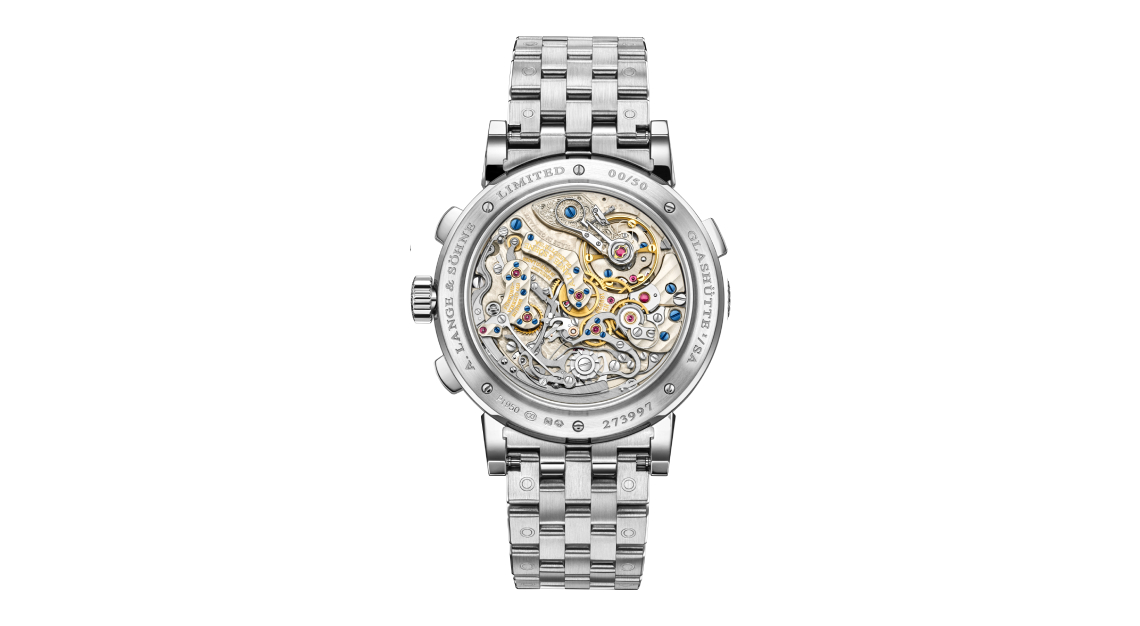
Behind it all is the manually wound calibre L952.1: 556 parts, 223 of them for the calendar alone, with 45 jewels and four screwed gold chatons. The plates and bridges are untreated German silver, and the balance cock is engraved by hand. Through the sapphire caseback, the column wheel and an unusually long set of levers are on show. The levers have to be long to reach around the outsize date mechanism and down to the lowered subdials. As with every Lange movement, it is assembled twice. The power reserve is 36 hours.
Making it is no small task. Regulating a chronograph or a perpetual calendar on its own is demanding, the brand says, but making the two work together in one movement raises the challenge considerably.
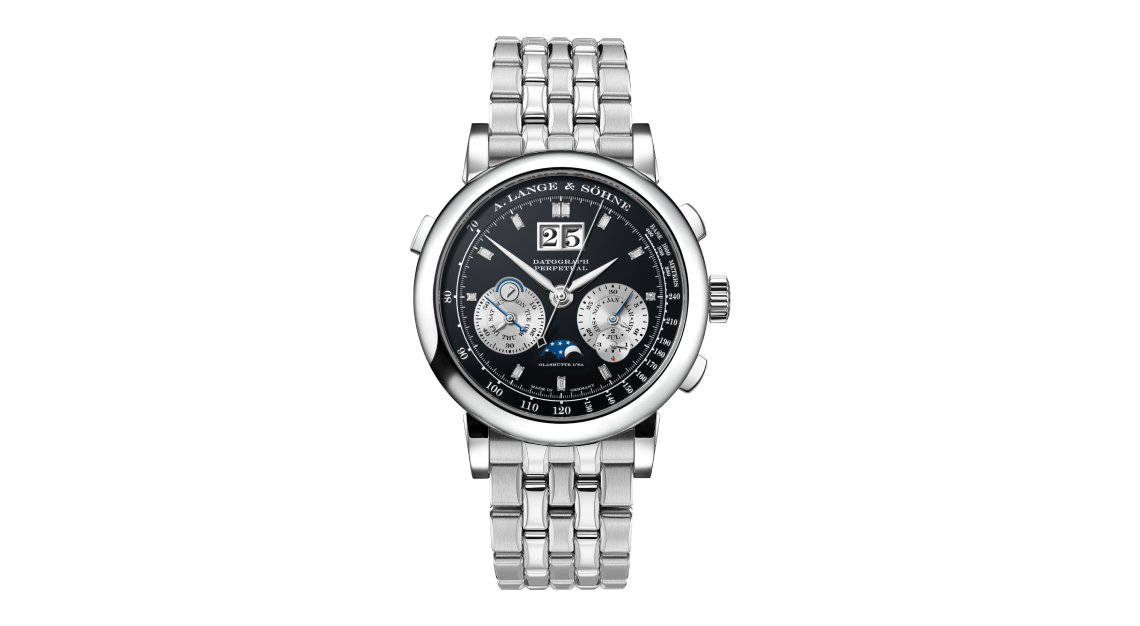
The black dial is made of 925 silver and set by hand with eleven baguette-cut diamonds as hour markers. Together they weigh about 0.13 carats and are graded F–G in colour and VVS in clarity. A pair marks 12 o’clock. At 4 and 8 o’clock, the markers are left out to make room for the rhodié subdials, which sit slightly lower than usual and stand out against the black.
The look is unmistakably Lange. The outsize date, in its framed twin window at 12 o’clock, forms the tip of an equilateral triangle. The base is formed by the two subdials below the centre line: small seconds, day of the week and a day/night indicator at 9 o’clock, and the month, leap-year indicator and the chronograph’s jumping minute counter at 3 o’clock. The moon phase sits at 6. The hour, minute and calendar hands are in 750 gold, and the small seconds and chronograph minute hands are blued steel.
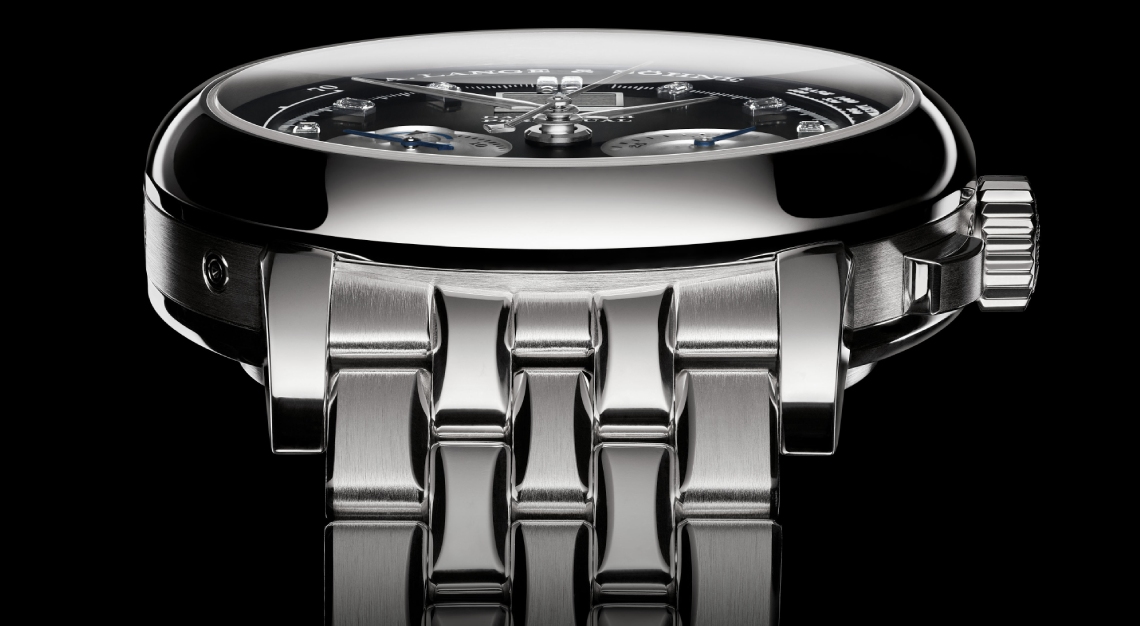
The case measures 41mm across and 13.5mm thick. Platinum’s weight and cool tone suit the watch, and the five-row bracelet carries the metal through to the clasp. Its links are polished and satin-finished, with chamfered edges, and they fasten with a platinum deployant buckle.