
In Aston Martin’s latest S trilogy— the enhanced DB12 S, DBX S, and Vantage S—exhilarating performance is engineered through a mastery of weight, air, and heat
On logos, monograms, and brand monikers, some letters are designed to be more than decoration, stitched into leather or pressed into metal to signal hierarchy. When Aston Martin deploys the letter ‘S’, however, it carries a different weight. At the British luxury marque, it signals a focused commitment to refining performance in ways that are measured, deliberate, and unmistakable.
With this issue being dedicated to technology—and as we are approaching this from the perspective of cutting-edge innovations—it helps to look past the badge. The emblem is only the surface. The substance sits in the engineering beneath it. Performance today is not simply about adding power. It is about how well a car manages itself. How it controls its weight. How it moves air around and through its body. How it deals with heat when it is pushed hard.
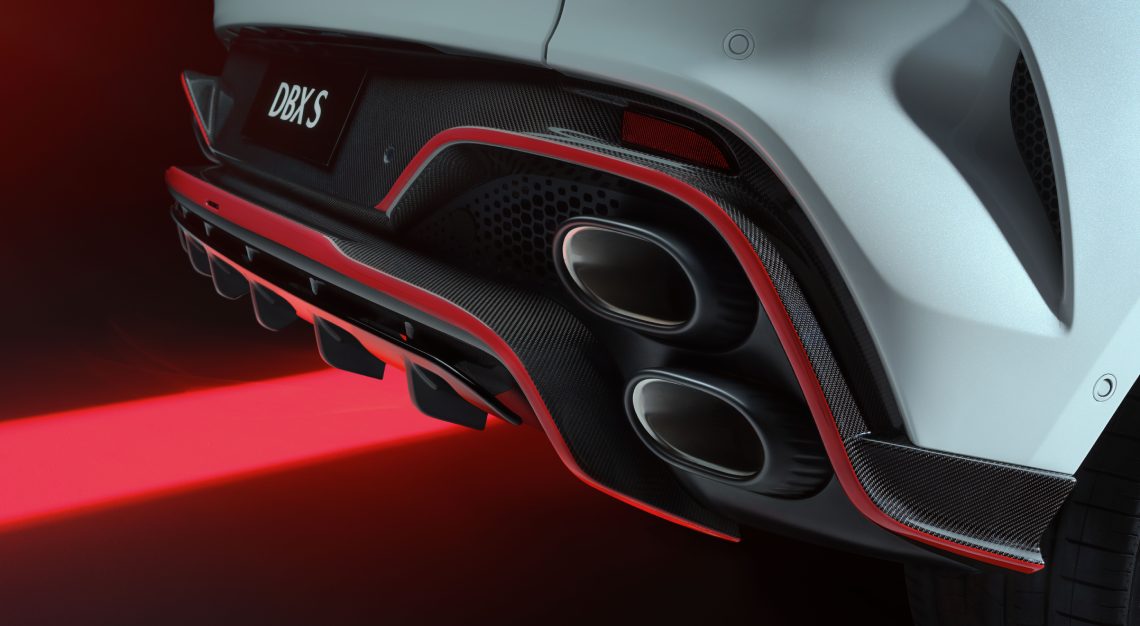
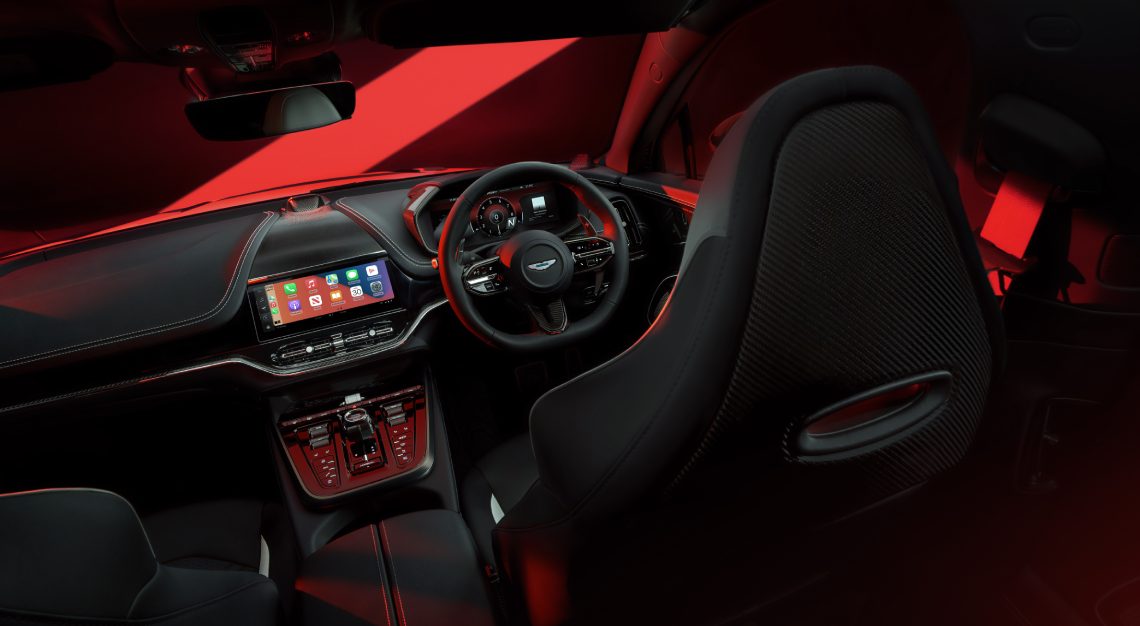
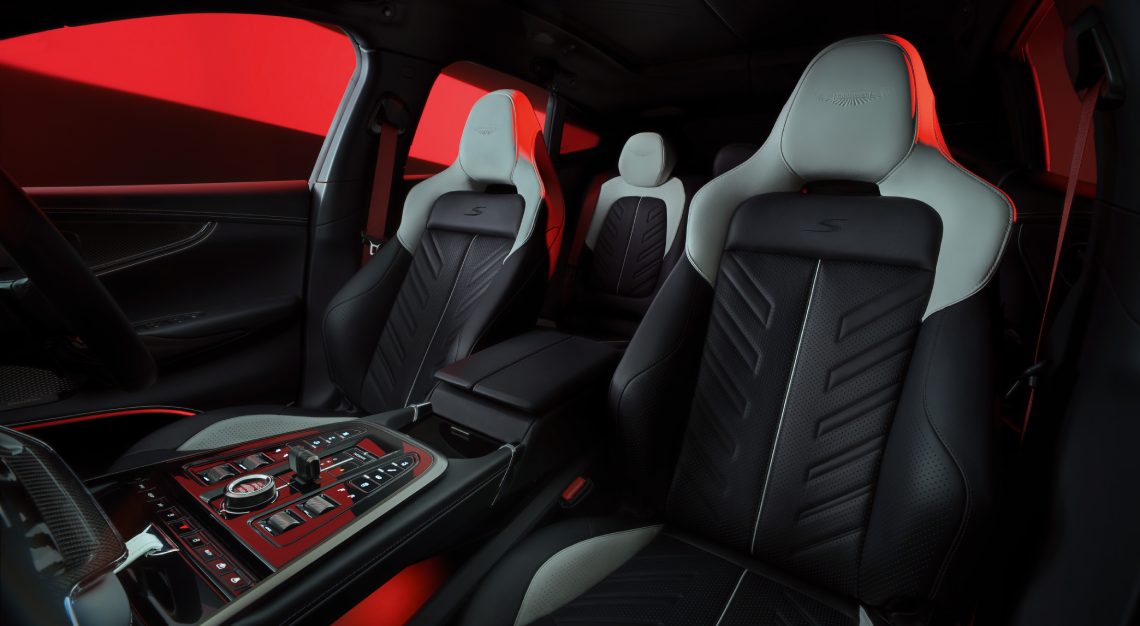
Weight of expectation
In motoring, weight is often discussed like a personality flaw—something you chip away at or pretend doesn’t exist. But Aston’s ‘S’ approach is surgical: save weight where it changes behaviour.
Take, for example, the DB12 S. Yes, it gets a meaningful power bump—700PS and 800Nm—going from 0 to 100km/h in 3.5 seconds. But for the true details, look at what happens at the corners: carbon ceramic brakes come standard and this decision saves 27kg of unsprung weight as opposed to using steel.
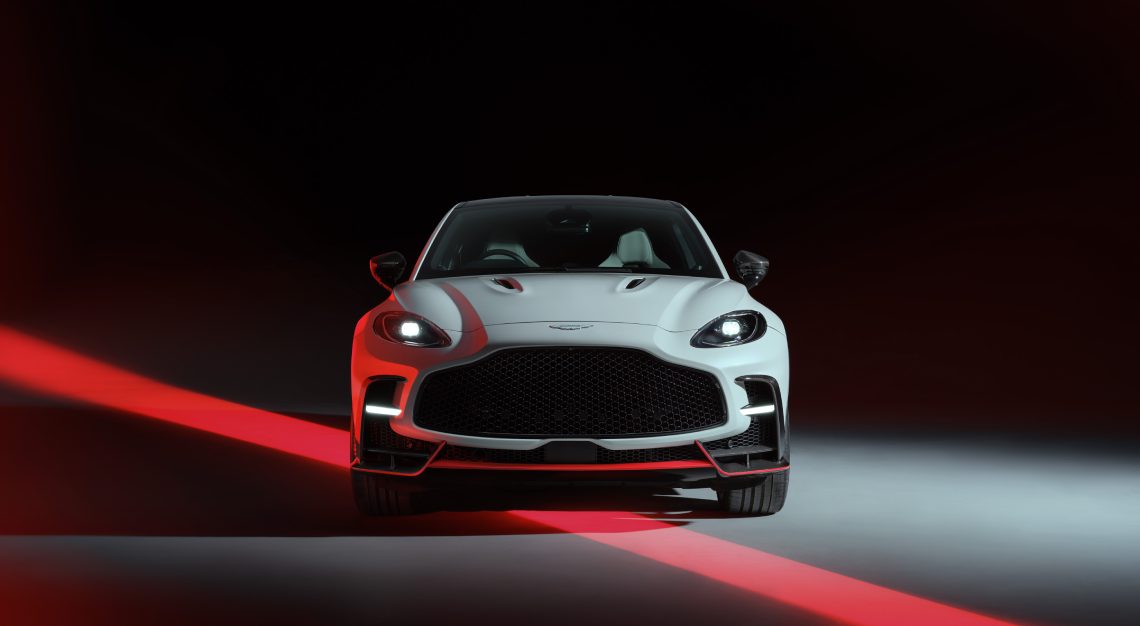
For the uninitiated, unsprung weight is the kind that you feel in a car’s steering delicacy, ride quality, and the way it moves over city roads. In the DBX S, the balance between weight and performance is pointedly dramatic because the physics are less forgiving. A high-performance SUV fights where mass sits as much as it fights mass in general. The solution? Aston Martin goes after the highest point: an optional carbon fibre roof (of nearly three square metres) that, paired with the deletion of roof rails, shaves 18kg from the top of the car, which in turn lowers the centre of gravity to lend stability and agility.
Down below, optional 23-inch magnesium wheels (a first for an SUV) take away a further 19kg of unsprung mass to give improved ride quality, steering precision, and the immediacy of response. And this is the Aston Martin ‘S’ thinking at its most calculated—rebalancing the body, so the car behaves with greater intelligence.


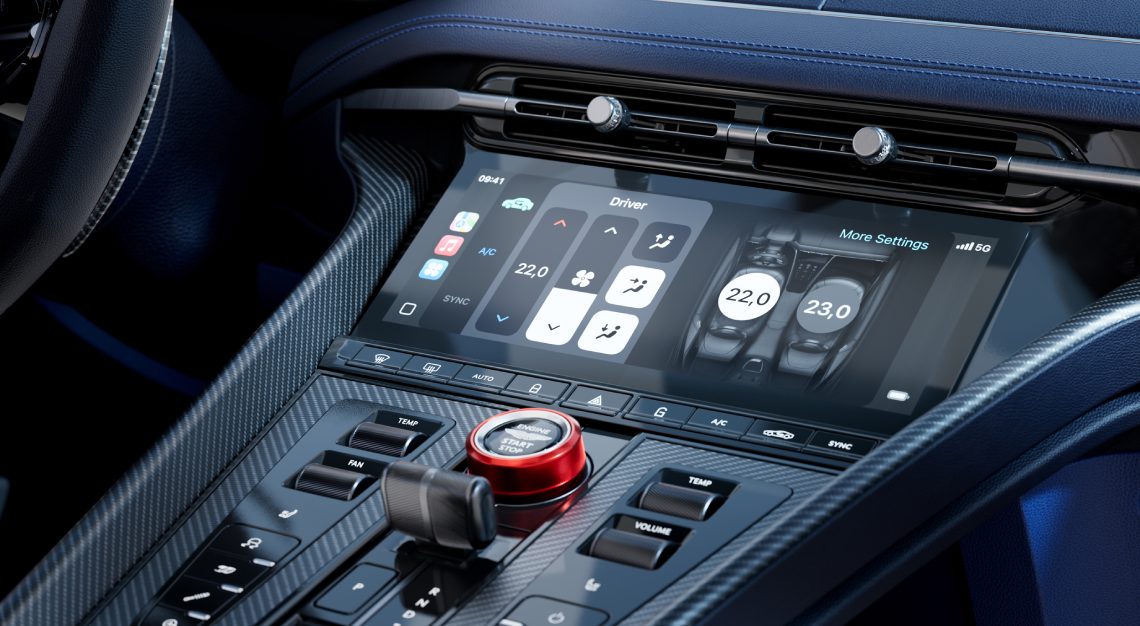
Mastering air
We think air is the most overlooked technology in our culture. When it’s done well, you don’t notice it, other than that the car feels planted, calm, and coherent at speeds where most vehicles start to fidget a little.
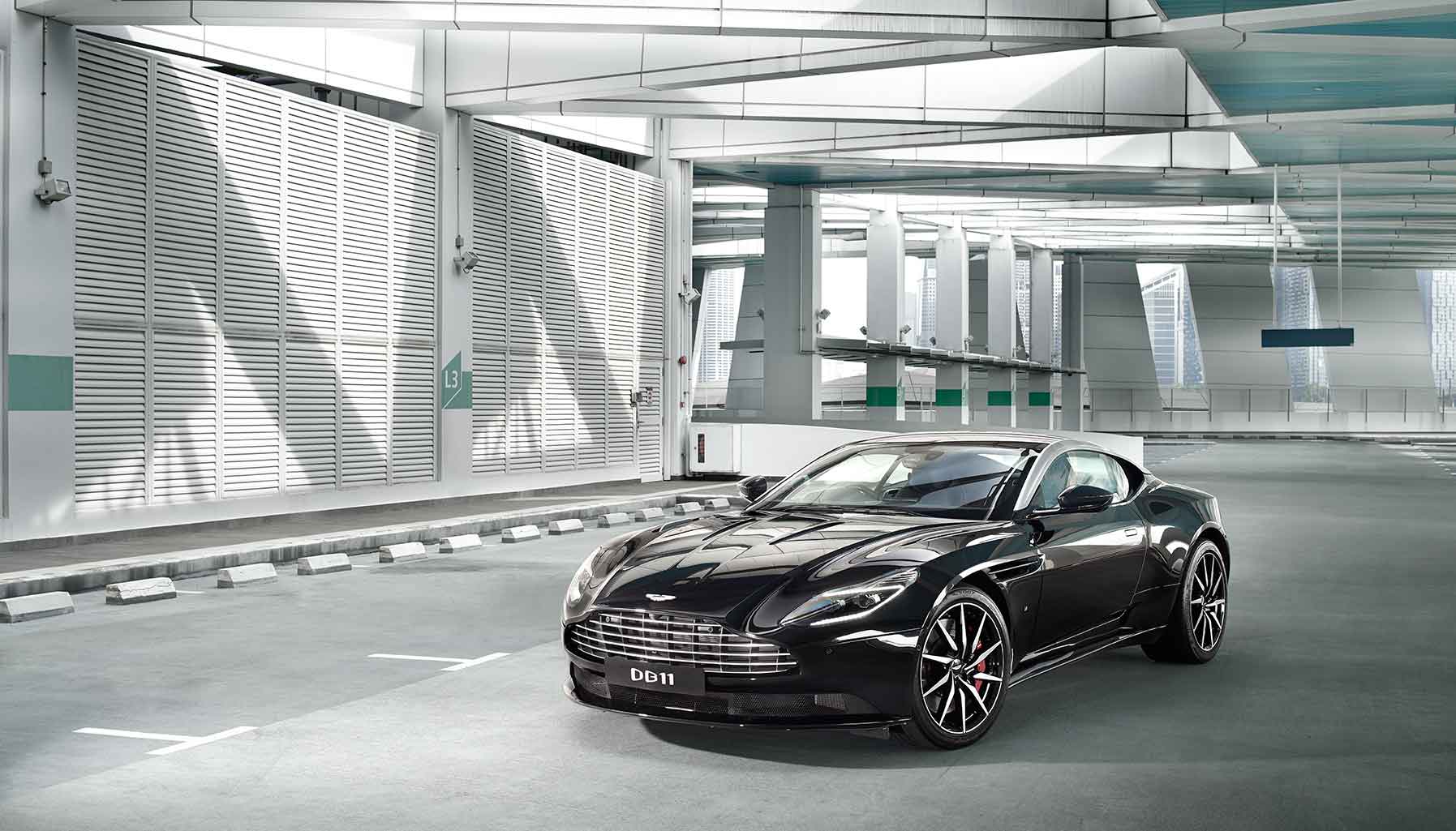
The DB12 S wears this intent up front. A dual-element front splitter provides more than just visual theatre, generating downforce, guiding airflow around the front wheel arches to stabilise airflow and reduce lift. The bonnet louvres also do more than just look pretty; they help extract hot air from the ‘hot-V’ configured V8. And this is how design becomes technology—when air management is dressed as a sharper jawline.
The Vantage S, meanwhile, is the concentrated sports-car expression of that same philosophy. Dramatic new bonnet blades and a rear-lip spoiler are flagged as part of the car’s unique identity, but that’s just the visible side. The less visible side is how those surfaces, apertures, and ducting decisions feed into heat management.
Heat of the moment
So, if weight affects how a car moves and air impacts its stability, heat is what keeps a car honest. The effect heat has on a drive is pointed. It can turn thrilling performance into an inconsistent drive, transforming a fast car into one that was, well, fast once.

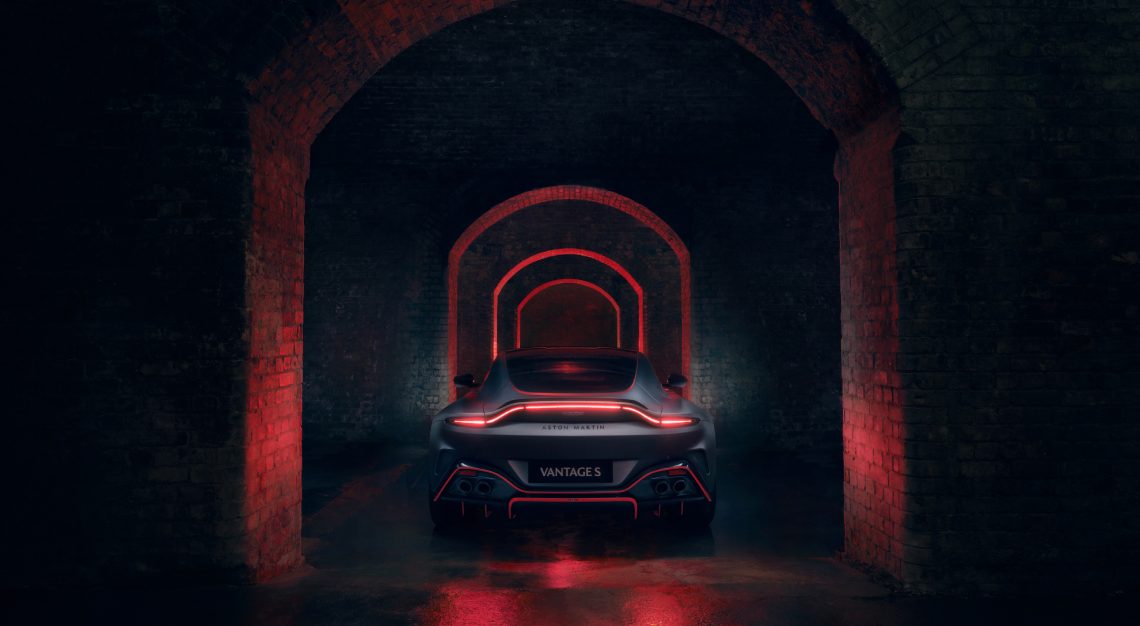


Aston Martin is unusually clear about this with the Vantage S. Yes, it produces 680PS, but the real story is how it keeps delivering that performance lap after lap. A reworked cooling system, anchored by a reshaped grille and revised airflow strategy, increases cooling aperture area by 56 per cent over the previous Vantage. The aim is simple: maintain output without upsetting aerodynamic balance or downforce. Beyond the headline figure, the Vantage S is positioned as the sharpest version of the model to date. Chassis revisions heighten agility and steering response, while subtle recalibration of the throttle pedal improves feel and precision. It is less about chasing a bigger number and more about making the car respond in a way that feels cleaner, more immediate, and inspires more confidence from behind the wheel.
There is an important point buried in all this: adding power is straightforward; delivering it consistently is where engineering counts. The DB12 S makes that case in a way you can sense from the driver’s seat. Output is up and Launch Control now fires through shifts more than 50 per cent quicker, but the more meaningful change is how accessible the performance feels. The car gathers speed without drama, settling into corners with composure and staying balanced as you change direction.
The effect is subtle but significant. You find yourself getting back on the throttle earlier, trusting that the chassis will hold its line rather than fight you mid-bend. It is not simply faster on paper. It feels more resolved on the road.
Then there is the DBX S, which addresses a different challenge: how to make a large, high-performance SUV feel less daunting from behind the wheel. Power rises to 727PS, aided by turbocharging technology that Aston Martin says is derived from the forthcoming Valhalla. You notice it most not from a standstill, but at speed. Ask for an overtake and there is a stronger, more sustained pull towards the top end, the kind that makes the car feel lighter on its feet than its size might suggest. It remains every bit a substantial SUV, but the added urgency gives it a welcome sense of effortlessness.
Even in Singapore’s daily realities—tight car parks, awkward ramps, impatient traffic—the DBX S is easier to place than you’d expect. Steering is quicker by four per cent and the turning radius is reduced to 12m, so manoeuvres can feel like a confident gesture.
It’s tempting to describe Aston Martin’s ‘S’ models as simply giving more bang for your buck. More power, more drama, more edge. That’s only half the truth. The more accurate reading is that ‘S’ is Aston Martin’s shorthand for selective improvement, where engineering choices reshape how the car holds itself together under immense pressure. And that, we think, is the power of the letter. It’s a promise of control, one that makes the car feel faster, more powerful, or intuitive not only because it actually is, but because it never makes you feel like it’s scrambling to keep up with itself.
This story first appeared in the March 2026 issue. Purchase it as a print or digital copy, or consider subscribing to us here