Boucheron scales back the Quatre with the introduction of Quatre XS, a miniaturised interpretation that proves jewellery’s impact has very little to do with size
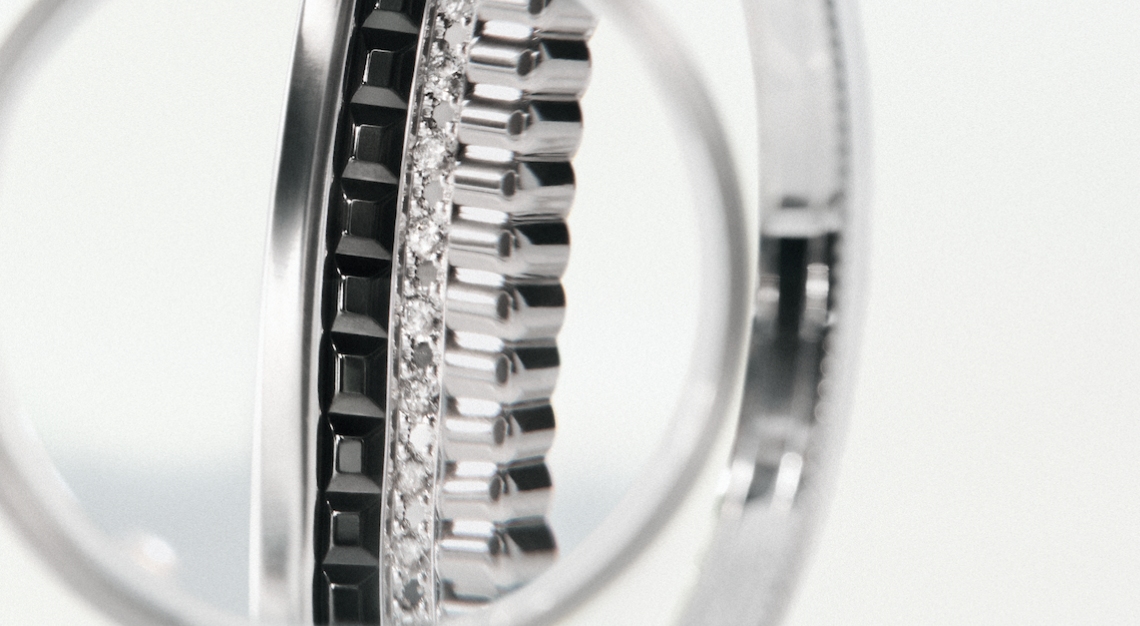
Since its debut in 2004, the Quatre ring has been defined by four stacked bands, each drawing on the maison’s signature design codes: architectural lines, the cobblestones of Place Vendôme, couture-inspired ribbons and a row of diamonds. Together, these elements form a single graphic statement on the hand, instantly recognisable as Boucheron.
Slimmer than the existing Small Quatre, the XS model keeps the collection’s fundamental language intact: Double Godron, Clou de Paris, a row of diamonds and Grosgrain. Each motif remains present, simply translated into a finer, more stackable gauge.
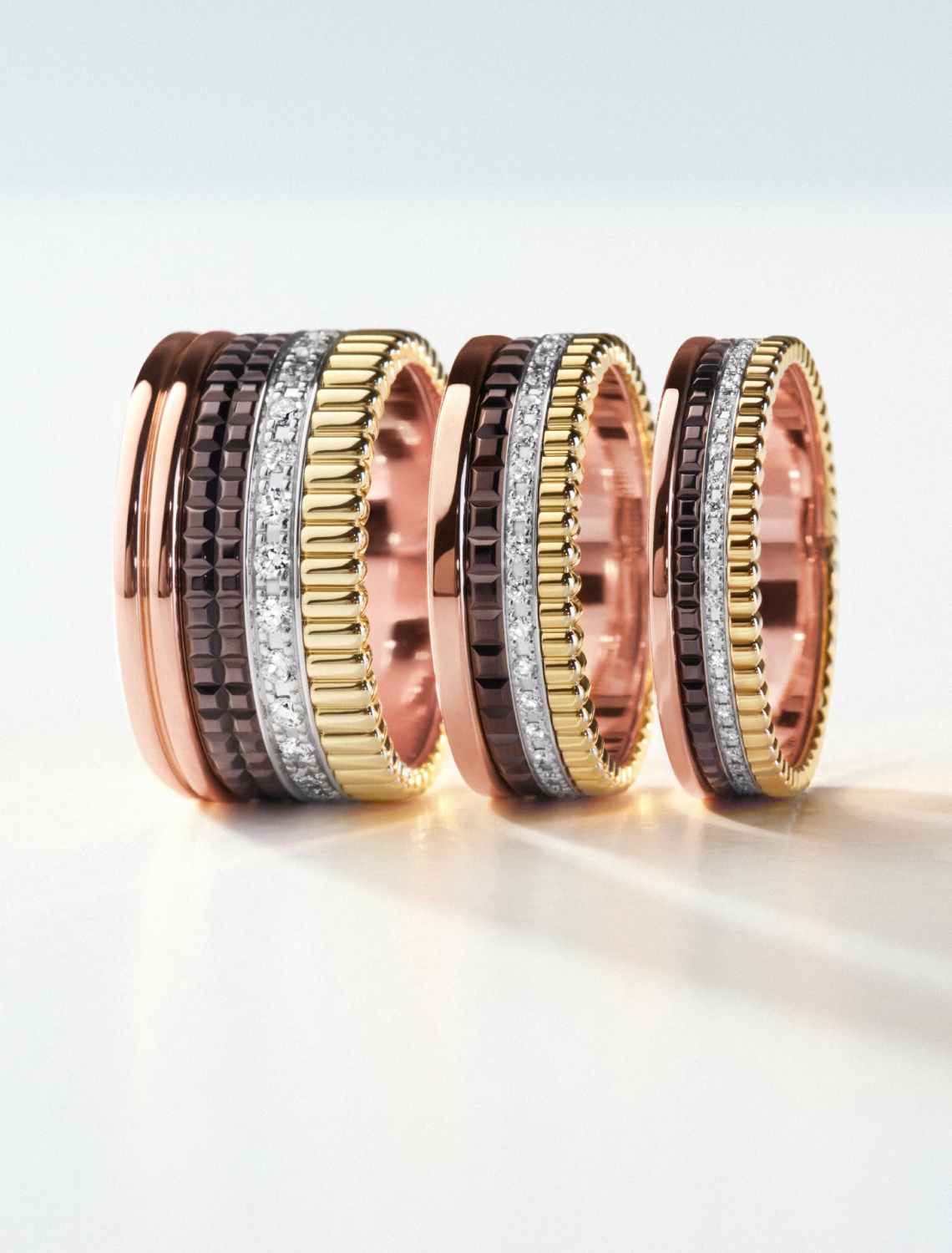
Quatre’s expansion continues to grow with pieces that reinterpret its codes in new ways. Two new bands in yellow gold or platinum isolate just two motifs per ring: Grosgrain on one side, a nod to Frédéric Boucheron’s draper father and the maison’s couture roots; Double Godron on the other, the twin raised rails that have come to symbolise two lives bound together. Turn the ring and the emphasis changes, fabric one day, architecture the next. It is a quietly witty way to wear a wedding or commitment ring while retaining the Quatre identity.
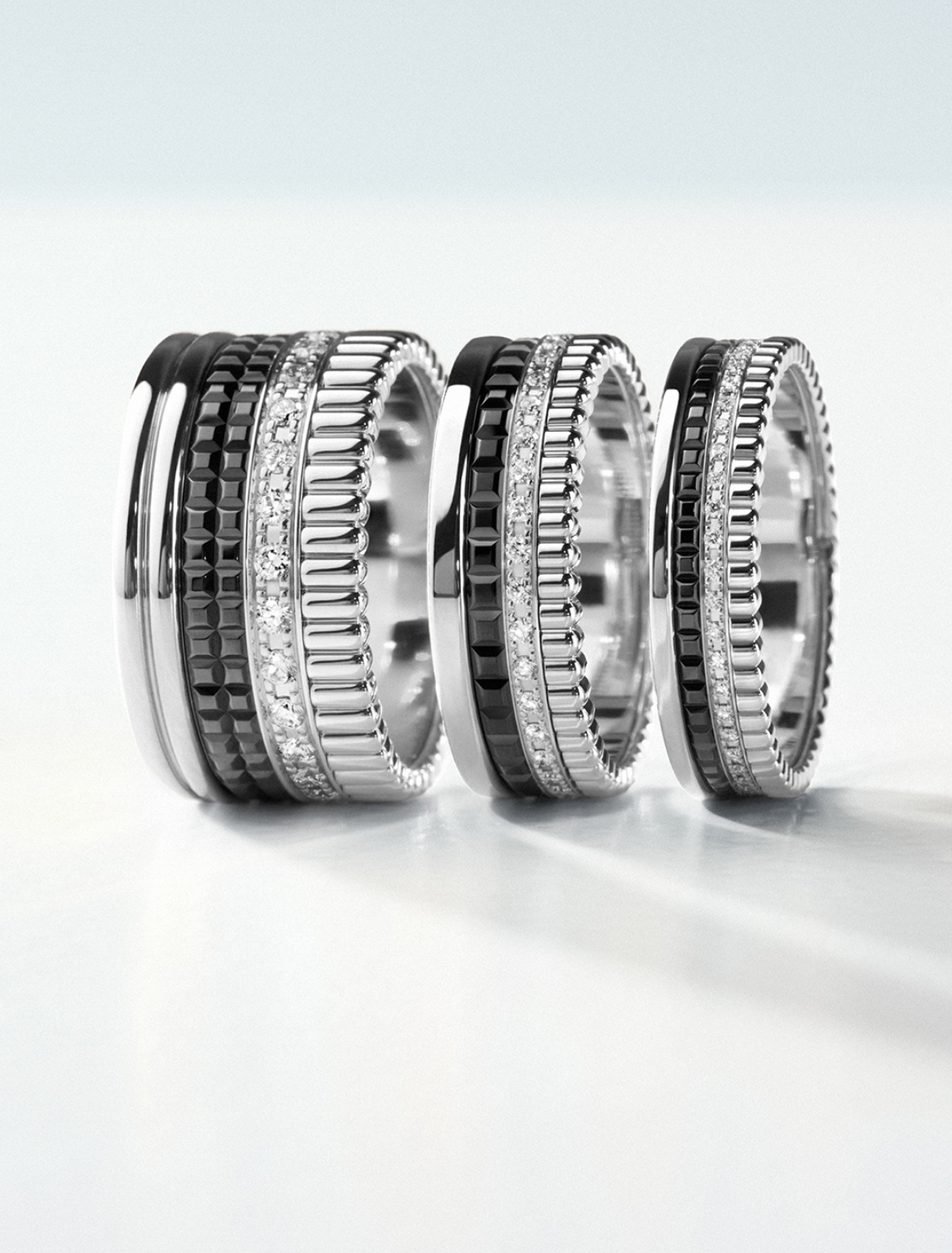
Then there is the Radiant Edition, which Boucheron continues to evolve in monochrome white gold and diamonds. Here, the four codes are translated into four diamond cuts: round brilliants for the Double Godron and linear pavé, baguettes for Grosgrain, and princess cuts for Clou de Paris. Stud earrings appear as tiny relief sculptures for the ear; a tie necklace cascades down the décolletage; and the tubular bracelet introduced in 2025 now appears fully diamond-pavé in white gold.
What keeps all of this coherent is the strength of the original design. Double Godron, first seen in the 1860s, speaks to Boucheron’s fascination with structural form. Clou de Paris, historically linked to the cobbles of Place Vendôme and the maison’s address at number 26, anchors the ring firmly in the city. The diamond row, used since 1892, expresses the pure craft of the jeweller. Grosgrain, borrowed from ribbons in the family’s textile heritage, adds a whisper of couture.
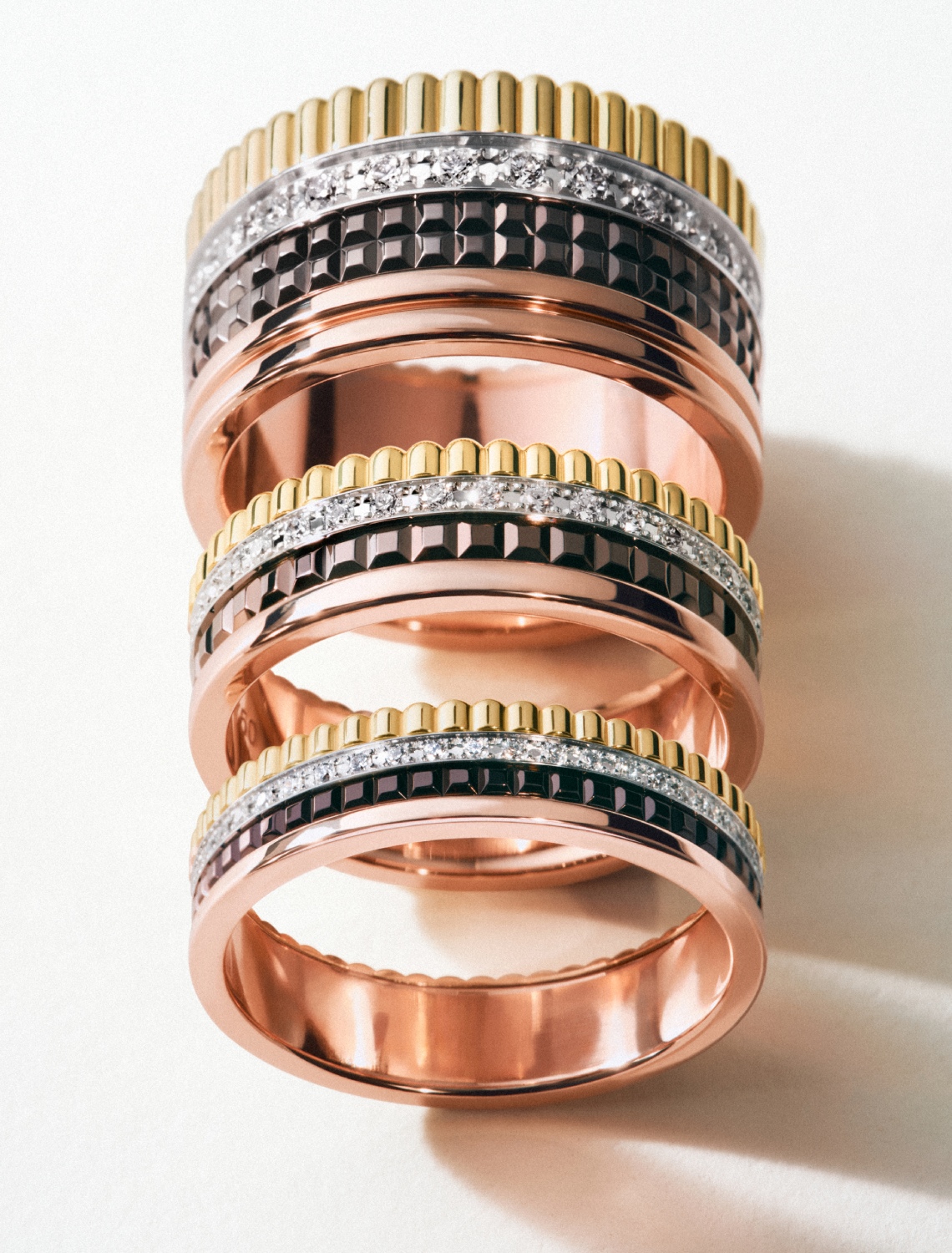
Each ring is constructed from four separate bands, individually fashioned and then pressed together, without glue or solder, until a soft “click” signals a perfect fit. Digital machining sculpts the interior and exterior of each band, while final assembly and finishing remain the work of human hands. Technology here serves Parisian craftsmanship rather than replacing it.