Breguet flaunts its pedigree with an artful pocket watch, a stunning minute repeater, and the groundbreaking Expérimentale 1
Anyone seeking to explore the world of horology with any meaningful depth will quickly come across the name of Abraham-Louis Breguet. The legendary watchmaker, who made his name in the late 18th century, was the man behind some of the most groundbreaking and important horological innovations ever made like the tourbillon, the self-winding watch, and the natural escapement.
Now 250 years since he founded his eponymous brand, it seems his ingenious spirit is still very much alive. It must be said that Breguet, now owned by the Swatch Group, has had quite the year. Celebrating its 250th anniversary, the maison has released an array of sophisticated timepieces including the GPHG-winning (and one of Robb Report Singapore’s favourites of the year) Breguet Classique Souscription.
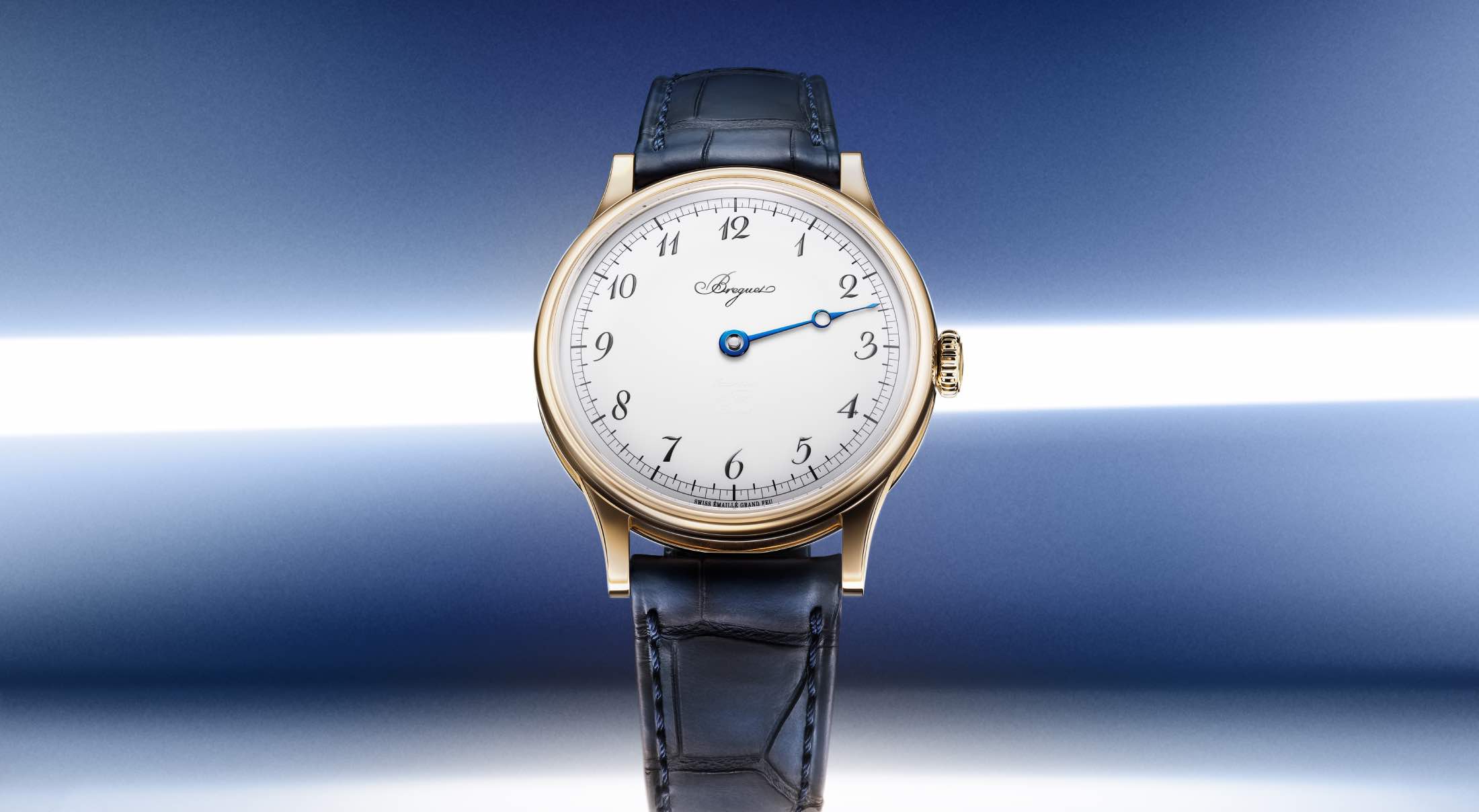
It appears Breguet wasn’t about to let the year end without more watchmaking feats. Flexing both its horological heritage and pedigree, the brand has unveiled three impeccable timepieces that will catch the eye of any true-blue collector. More than that, the three timepieces are eloquent expressions of the brand’s story, innovative spirit, and centuries-old tenets of watchmaking.
This becomes immediately apparent when looking at the Classique Grande Sonnerie Métiers d’Art 1905. A 56.5mm pocket watch that brings together a tourbillon, grande and petite sonnerie, and a minute repeater, the timepiece is, as its name suggests, a true work of art. The regulator-style dial, for example, is a sumptuous ensemble of exquisitely decorated elements, boasting a guilloché 18k Breguet gold base, a white grand feu enamel hour dial, apertures for the minute repeater hammers, and a tourbillon at 4 o’clock.
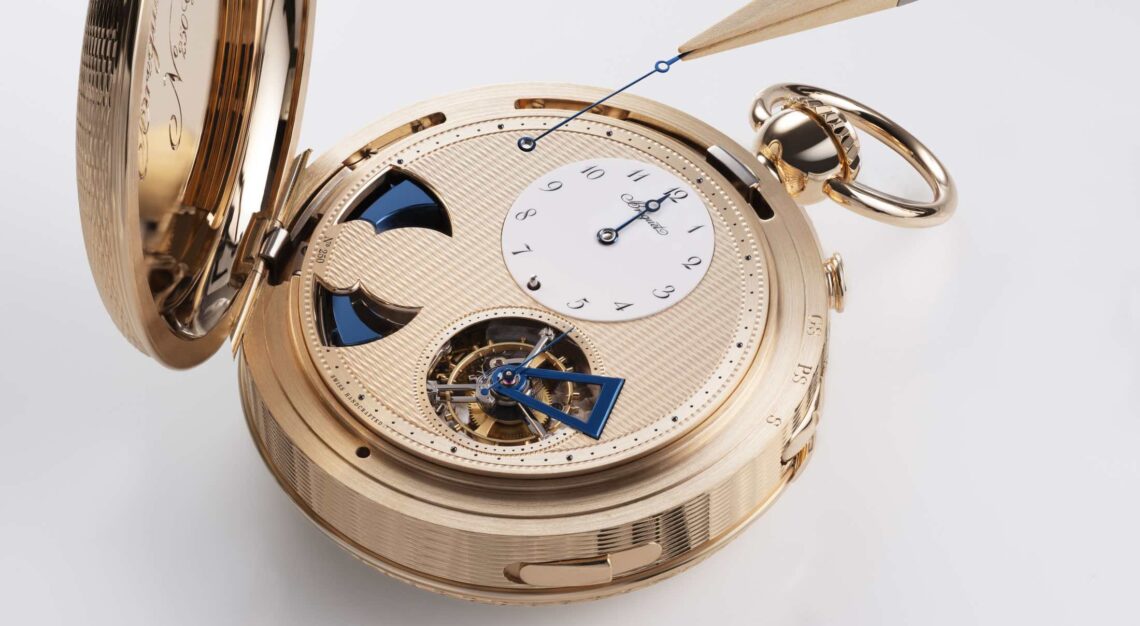

Breguet takes things further by flaunting its mastery of the decorative arts. Made from 18k Breguet gold (the maison’s proprietary gold alloy), the case is hand-guilloche throughout its middle section and caseback. Beyond guilloche, the caseback is also hand-engraved and painstakingly enamelled in a rich blue to depict the banks of the Seine. Powered by the calibre 508GS—which incorporates an ingenious magnetic strike regulator that governs the tempo of the chimes with remarkable consistency—the timepiece will only be produced upon request.
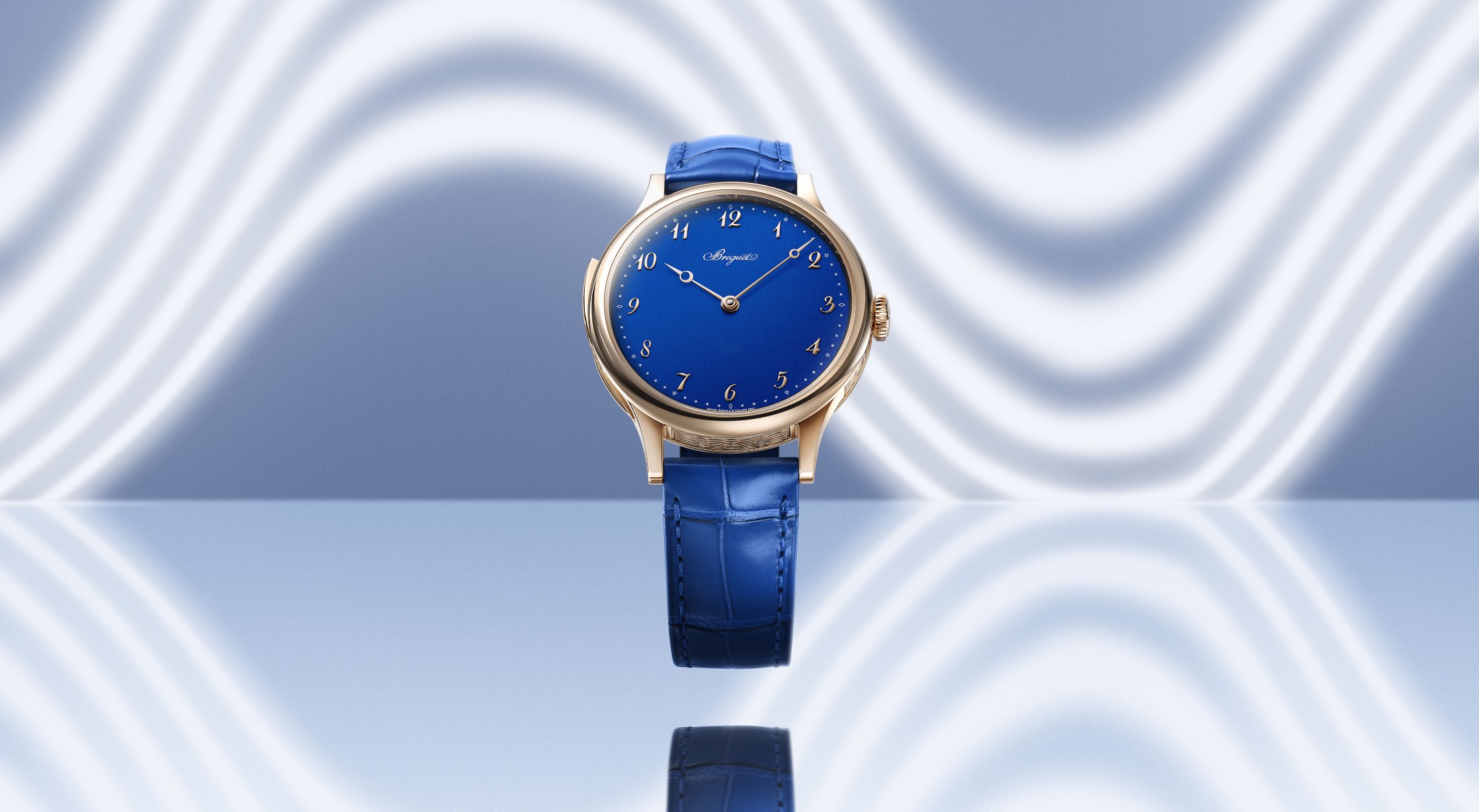
The Classique Répétition Minutes 7365, meanwhile, offers a more contemporary expression of the same heritage-rooted motifs. Rather than the recognisable case and straight, long lugs of the Classique collection of yesteryears, the timepiece is housed in a more rounded and curvaceous 39mm 18k Breguet gold case that’s inspired by the Souscription. Decorated with the Quai de l’Horloge guilloché motif, the case frames a deep blue grand feu enamel dial that is punctuated only by applied numerals, Breguet hands, and the maison’s signature at 12 o’clock.
The aesthetic harmony achieved from the combination of gold and blue may catch the eye, but it is beneath the dial where the maison does its best work. Powered by the manual calibre 1896, a newly developed minute repeater movement constructed entirely in Breguet gold, the timepiece is resistant to magnetic fields of around 600 gauss thanks to the adoption of a silicon regulating organ. The entirely hand-engraved calibre also offers an impressive 75-hour power reserve, made possible through an optimised gear train and barrel design.
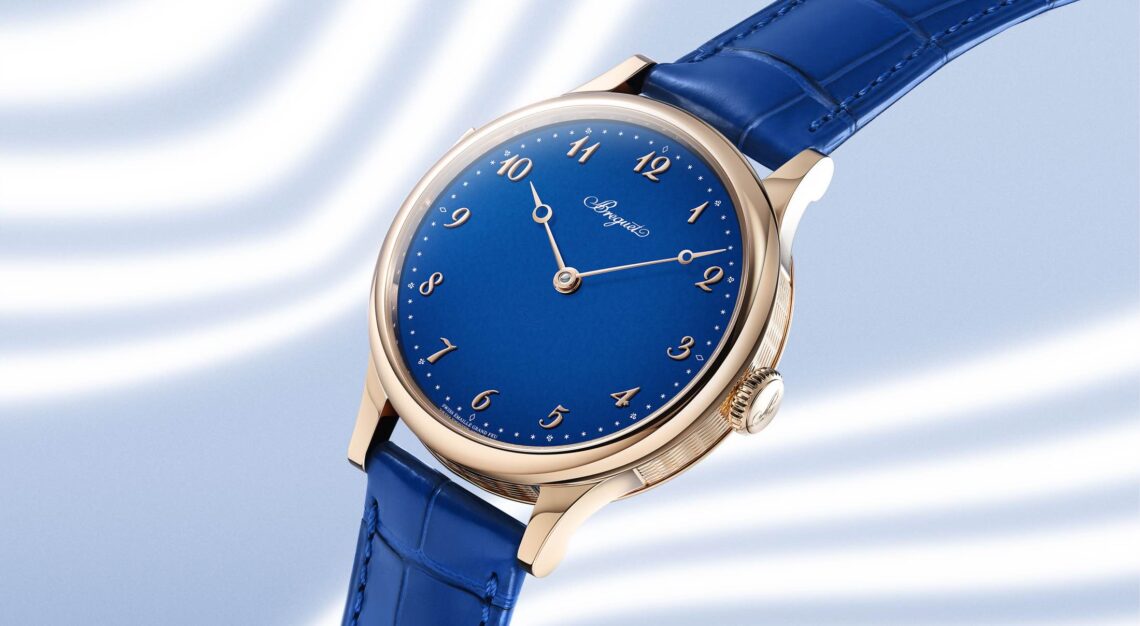
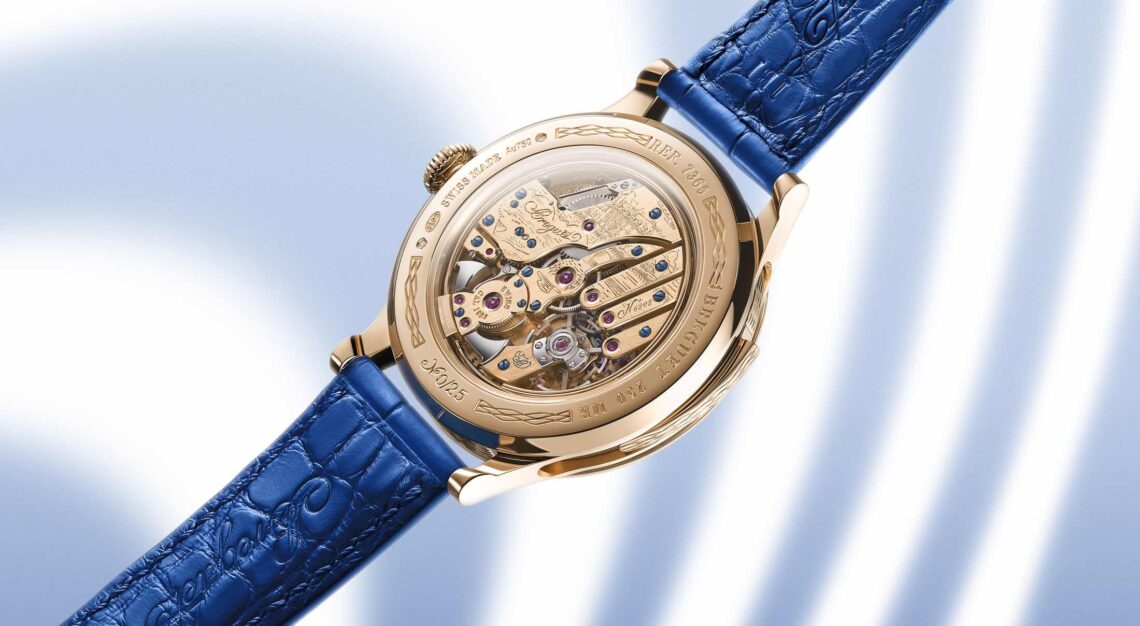
Limited to 25 pieces, the Classique Répétition Minutes 7365 is the maison’s first water-resistant minute repeater, a feat achieved through the use of gaskets fitted within the pusher at 9 o’clock.
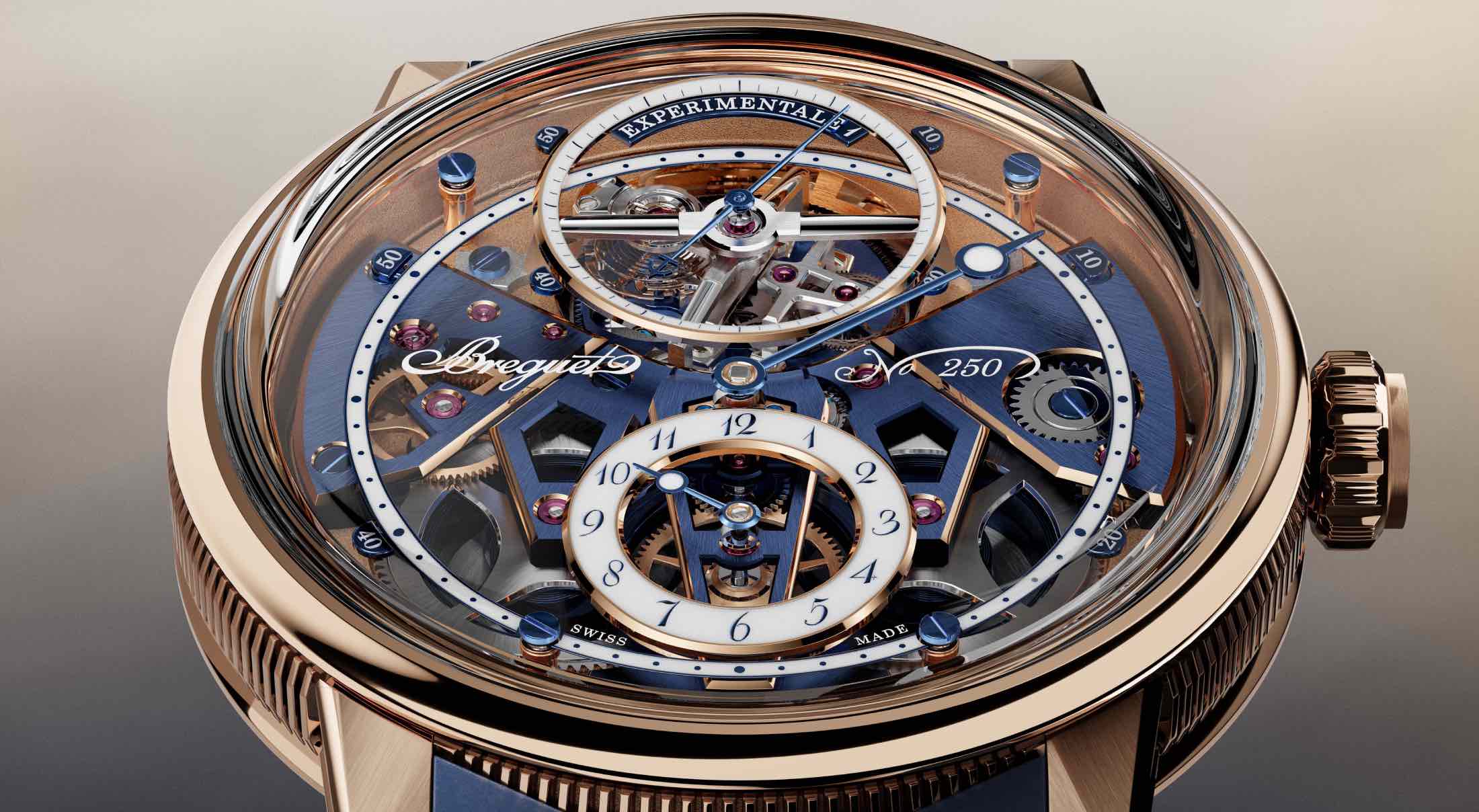
Rounding off the anniversary celebrations, Breguet unveils its most forward-looking and avant-grade creation yet. The Expérimentale 1, the inaugural entry in a new line dedicated to research and development, is—at first glance—unlike anything the maison has created before. In some ways, however, the timepiece might be the brand’s most articulate expression of its ingenious spirit.
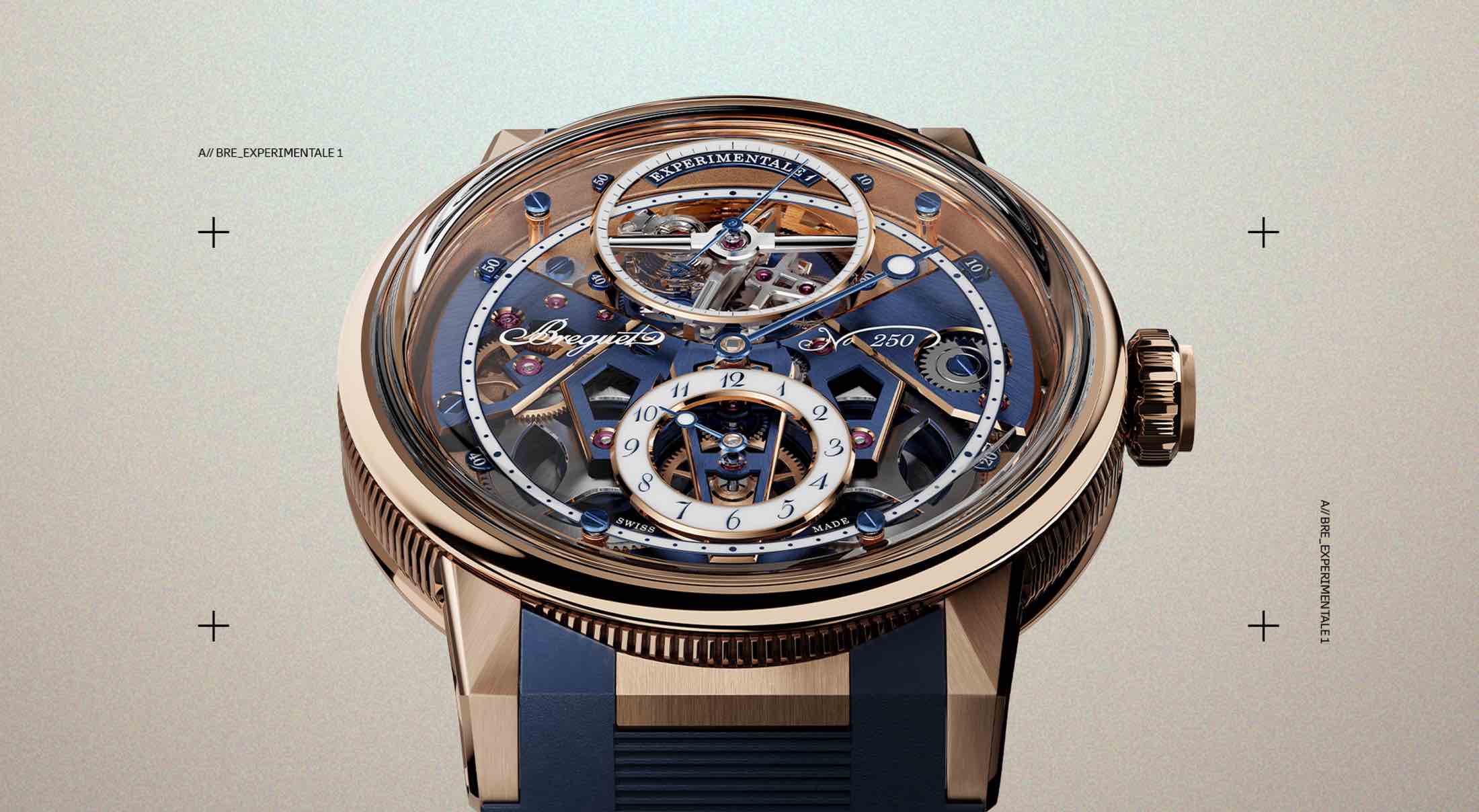
Housed in a 43.5mm Breguet gold case, the Expérimentale 1 presents an open, architectural composition displayed through a sapphire dial. The regulator-style display, with hours at six o’clock, an offset minute track, and seconds carried on the tourbillon at 12 o’clock, as well as the slim coin-edge texture of the case offer a historical touch to an otherwise futuristic design language.
With its satin-brushed bridges, sharp, faceted lugs, and rubber strap, the timepiece is imbued with sportive allure. Add in the angular architecture of the manual calibre 7250—with its twin barrels—and you have a watch that embodies the art of hypermodernism.

It is, however, in the movement where the Expérimentale 1 most clearly signals Breguet’s bid for the future. The manual calibre 7250—with a 3-day power reserve—introduces the manufacture’s first constant-force magnetic escapement, a system that replaces traditional contact-based impulse with controlled magnetic interaction.
Two escape wheels, each with a magnetic track, work in concert with a pallet-lever fitted with magnetic pallets to deliver energy to the balance only when torque is at an optimum level. By decoupling impulse from the rotation of the escape wheels and stabilising amplitude through magnetism rather than friction, the escapement addresses one of the oldest challenges in mechanical watchmaking: maintaining consistent power delivery throughout the movement’s operating range.
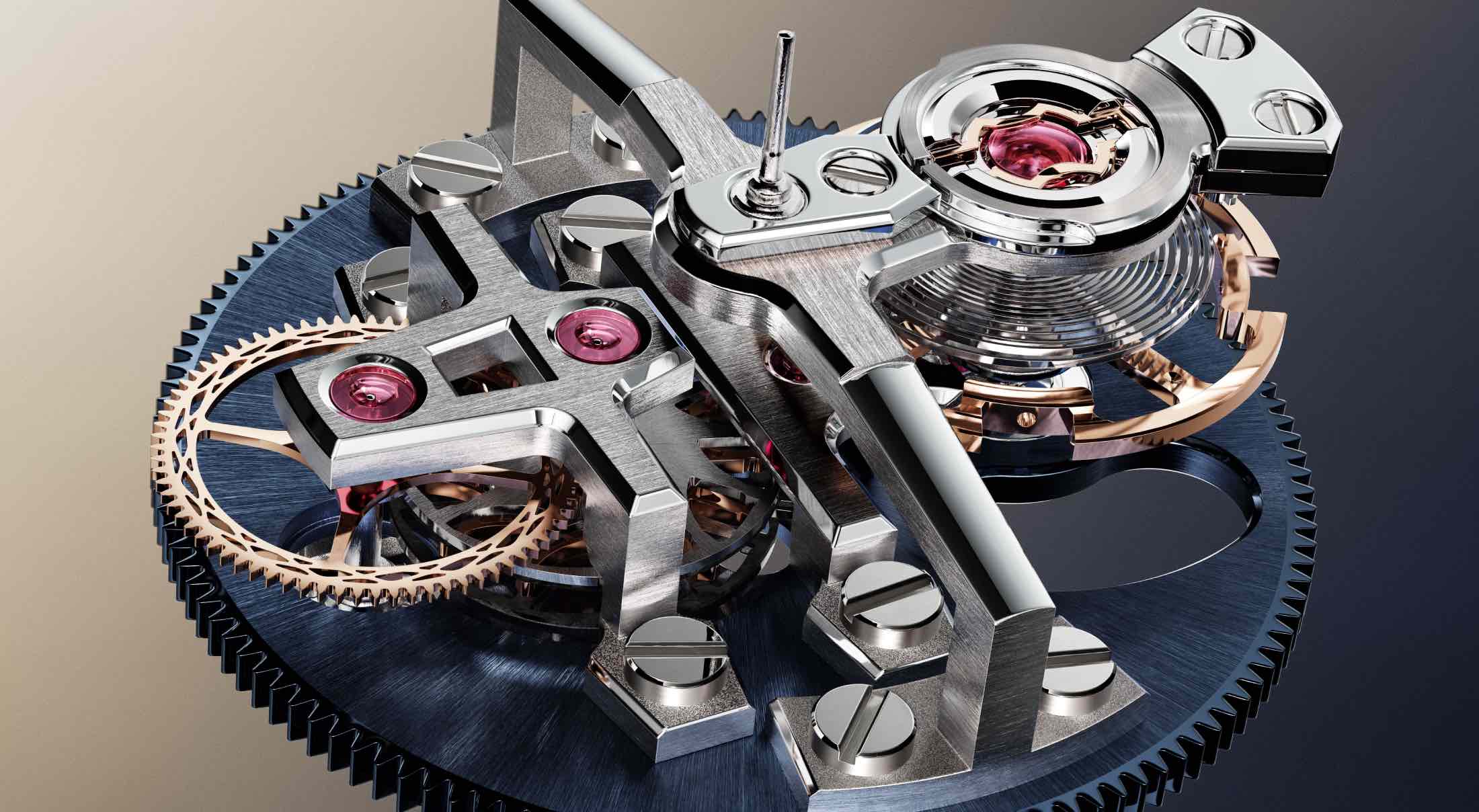
Couple this with a mind-boggling 10 Hz tourbillon, and you have an incredibly complex timepiece that boasts an impressive accuracy of ±1 second per day. And while the Expérimentale 1 hints at what Breguet’s future timepieces may look like, the Classique Grande Sonnerie Métiers d’Art 1905 and Classique Répétition Minutes 7365 show that when it comes to celebrating time-honoured techniques, few do it better than Breguet.