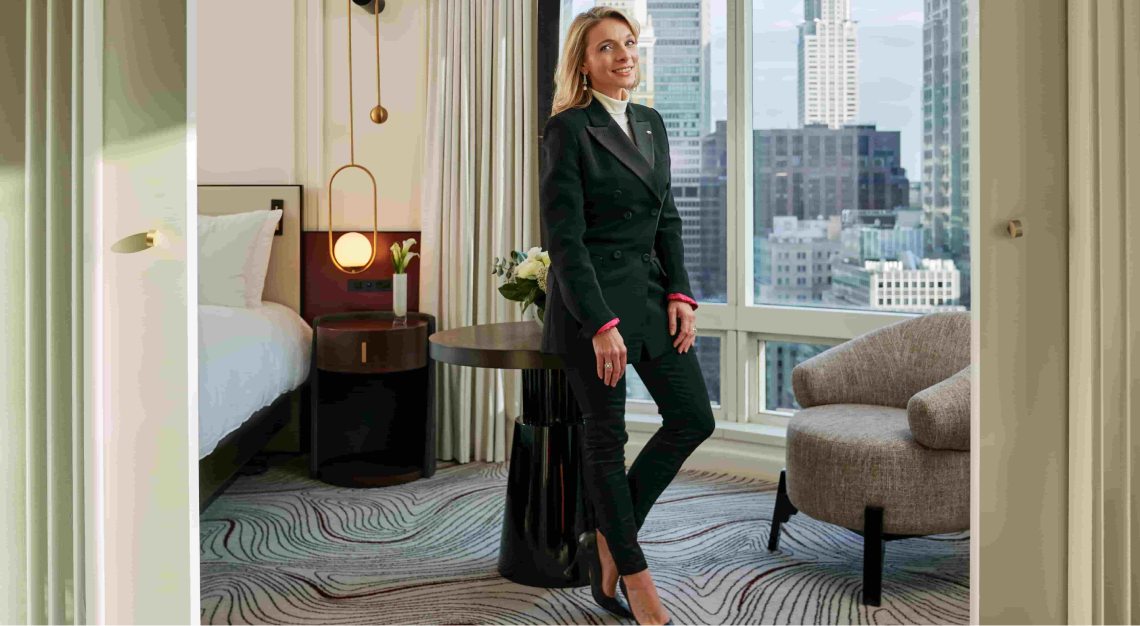
Sofitel, Sofitel Legend, MGallery and Emblems’ Maud Bailly opens up on reviving a French institution, and why it meant believing above all, that a brand could be made to feel loved again
There’s a particular kind of courage required to stand before 170 hotel owners at a black-tie gala and offer them nothing the unexpected. No keynote. No reel of figures. Instead, a catwalk of models and Sofitel employees walking side by side in a bespoke collection by Cordelia de Castellane of Dior Maison, indistinguishable in their poise, neither party performing for the other. For Maud Bailly, global CEO of Sofitel, Sofitel Legend, MGallery and Emblems at Accor, that evening in Paris last June carried its own quiet message. It was proof offered to the people who own her hotels, that the brand they had bet on was not merely surviving, but alive.
That confidence took years to earn, and time is not something Bailly has in excess. She speaks from a moving car when we connect, her thinking keeping pace with the traffic outside, unhurried in substance but precise in delivery. Nine years into Accor, and handed a mandate that shrank overnight from 48 brands to four, she inherited a maison whose visibility ran deep, waiting only to be given fresh meaning. “On one hand, the awareness was strong, but sometimes for bad reasons,” Bailly says. “On the other, ageing products, a neglected brand, and no real worldwide animation.” What is striking is how readily she turns that starting point into momentum rather than complaint. She speaks in the register of renewal, the way one might speak of someone worth believing in again, rather than a portfolio to be managed. “Brands can die. Brands can reignite,” she says. “It’s never a given. It’s never for granted.”
A brand worth rebuilding
That belief dictated where she began, and where she refused to. The first year was spent not on campaigns but on an audit, hotel by hotel, market by market, closing the gap between what Sofitel promised and what a guest actually found on arrival. Renovation conversations were opened with owners; where standards could not be met, properties were exited. A third of the network is now renovated or under renovation, flagships in Bangkok, New York and Hanoi among them, with Singapore’s Sentosa property currently being reimagined. Only once that foundation held did she allow herself the harder question: what, precisely, does the brand stand for?
For Bailly, Sofitel isn’t fussed on to competing with operators charging US$5,000 a night, and pretending otherwise, she suggests, would have missed what made the brand distinct in the first place. The clarity she arrived at instead was more modest and in the end, more defensible: Sofitel as a little piece of France, wherever in the world it lands. Partnerships followed that same logic rather than scale: Bernardaud on bespoke tableware, Air France on business-class bedding, La Tour d’Argent on an in-house culinary series. “The minute you give pride and respect to your brand,” Bailly adds, “people start looking at you differently.”
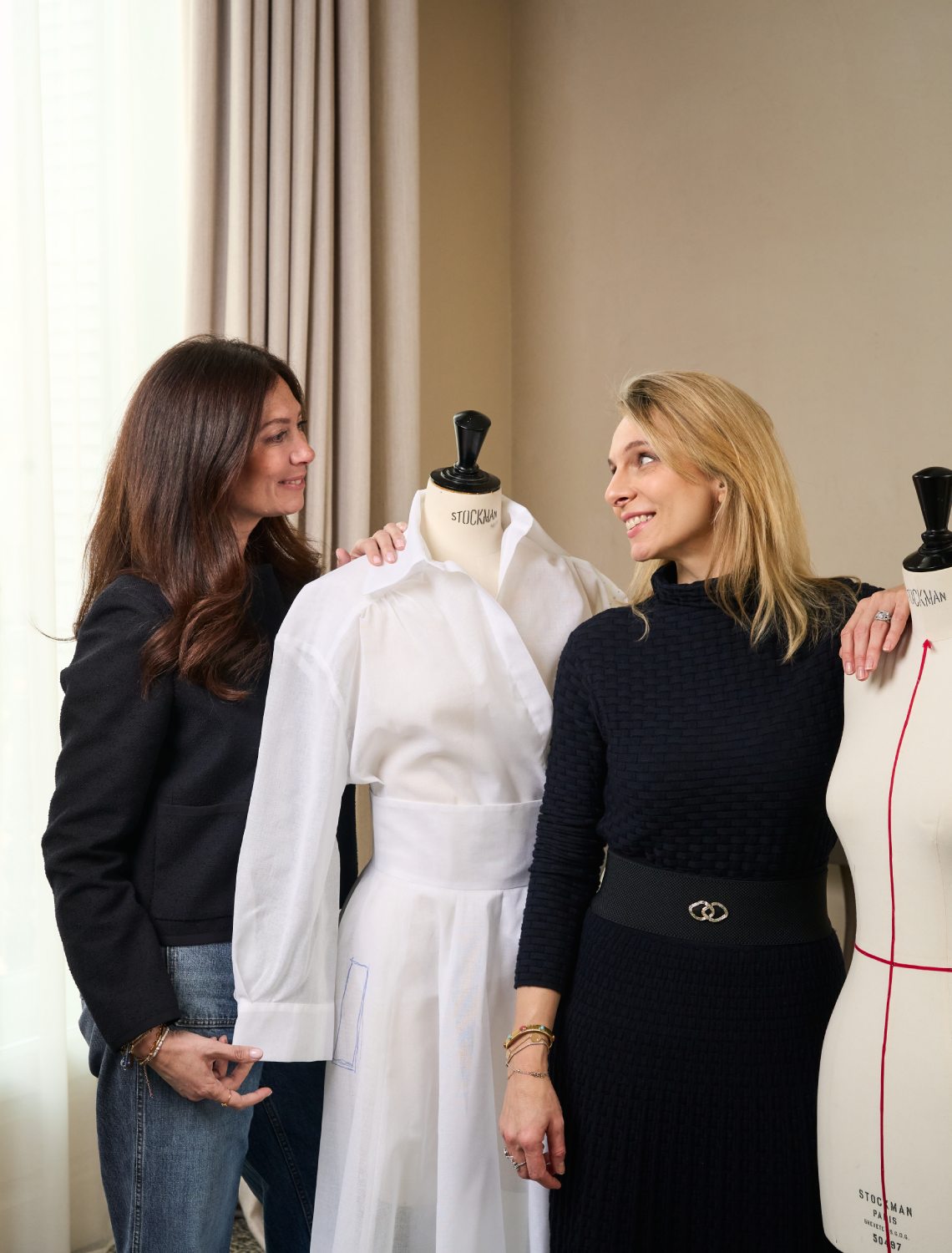
It was somewhere inside that quieter labour that Bailly noticed where her attention was still needed, the kind of gap that only becomes visible once everything else has been put right. The hotels had been restored, the partnerships secured, the story retold with new conviction, and still one constituency had been overlooked. “Luxury is about emotion,” she says. “We were adding beauty and pride back everywhere—to the clients, to the hotel, to the product—but not to the people.” So she returned to de Castellane, this time with an unusual brief: not a uniform in the administrative sense, but a wardrobe that would make staff feel beautiful rather than merely presentable. The result, Le Vestiaire, was co-designed with 110 employees across six regions, who tested fit, pocket placement and fabric weight under the friction of real shifts rather than a fitting room. It begins rolling out across the network from September 2026. It is, in its way, the same conviction applied inward: that dignity, once restored to a brand, cannot stop at the guest and has to reach everyone who carries the name on their back.
The French paradox
That same conviction is what makes the harder tension in Bailly’s work worth sitting with: how a Parisian identity travels the world without flattening every property it touches into pastiche, a franchise of the same idea wearing different postcodes. Her answer is structural rather than sentimental. One constant, the same service culture and sensory markers, “no matter where you are”; and one variable, a local tribute rendered with genuine depth rather than décor. Rajasthani craft in Jaipur, Gaudí’s fingerprints in Barcelona, a partnership with the Saudi royal family in Riyadh conceived as a meeting point rather than an import. “Every Sofitel has the same promise,” she says, “but it’s never commonly the same.”
It’s a paradox that resolves, for Bailly, into a single word she returns to more often than any other: consistency. Not uniformity, which flattens, but an unwavering commitment to the same quality of feeling regardless of market, ownership structure, or distance from Paris. In a category increasingly defined by exclusivity and by the calculated withholding of access, hers is a considered bet on the opposite instinct that generosity not scarcity, is what a legacy brand owes the people who still believe in it.
“The minute you offer luxury and beauty to as many people as possible,” Bailly concludes, “you also encourage peace.”