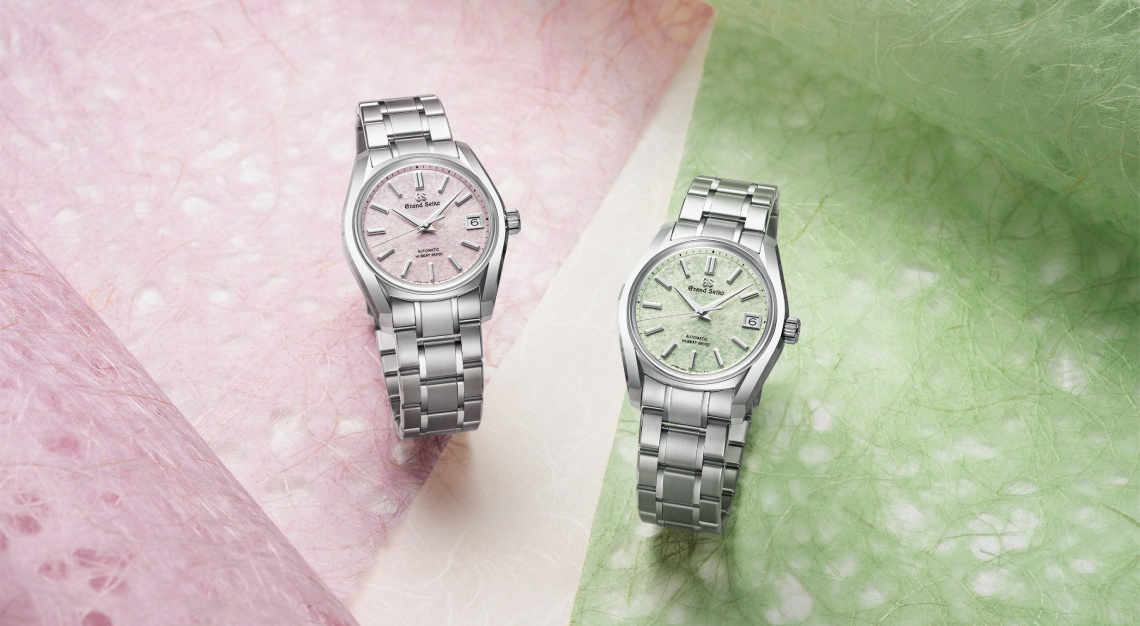
Two new 38mm Grand Seiko Hi-Beat models draw on the ancient “sekki” seasonal cycle to immortalise Japan’s bucolic beauty
Spring arrives softly in the Tohoku region of northern Japan. Around late-March, cherry trees flower and, on some mornings, a light dusting of snow lands on the blooms. Within weeks, however, the pink of the sakura gives way to the appearance of young, pale leaves. This passage of a season within a season lasts about a month, and it is one that Grand Seiko has chosen to express on the dials of its two newest Hi-Beat watches.
The dials of the SBGH341 and SBGH343 take their inspiration from the sekki, an ancient Japanese calendar system that divides the solar year into 24 terms. The SBGH341 “Sakura-Kakushi” (“hiding cherry blossoms”), references Shunbun—the vernal equinox—and captures the moment when late snow settles over trees already in full bloom. The dial is rendered a pale, luminous pink that conveys that fleeting and subtle overlap of winter and spring.
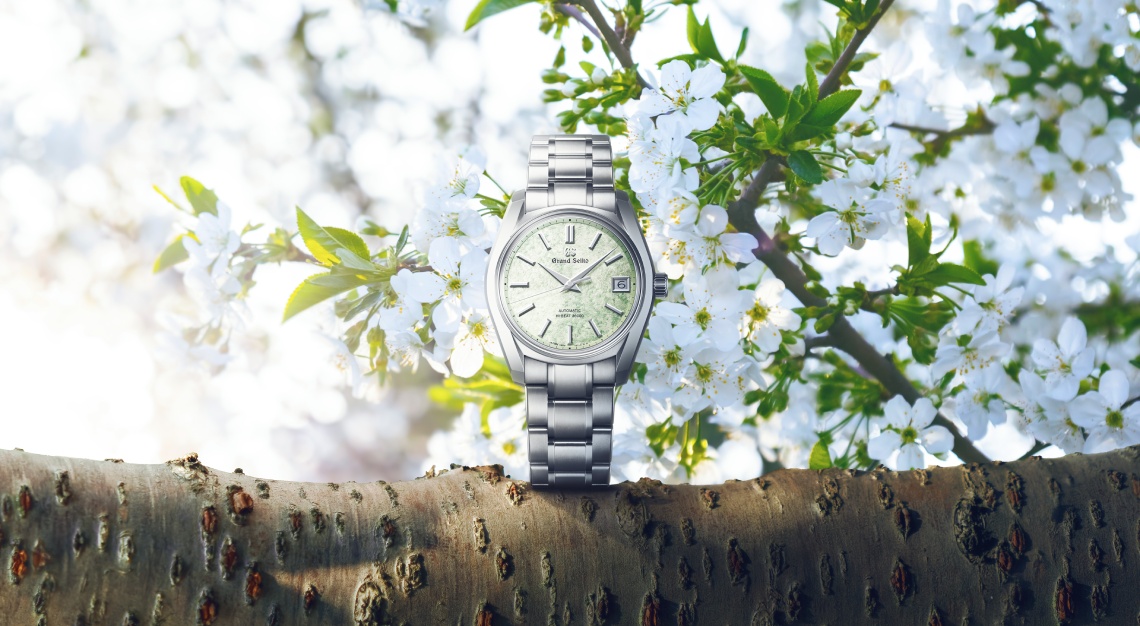
Meanwhile, the SBGH343 “Sakura-Wakaba”, looks to the fifth sekki term in early April. Here, the dial depicts the passage’s emerging green shoots with a lovely pastel shade and lightly textured surface which—like the SBGH341—accords depth that shifts under different light.
Both new creations hail from Grand Seiko’s 62GS collection, which holds a particular place in the brand’s canon. When the 62GS debuted in 1967 as the brand’s first automatic wristwatch, it established a number of aesthetic hallmarks that have evolved and endured to this day, such as a bezel-free design, wide dial aperture, multi-faceted case, and Zaratsu-polished surfaces.
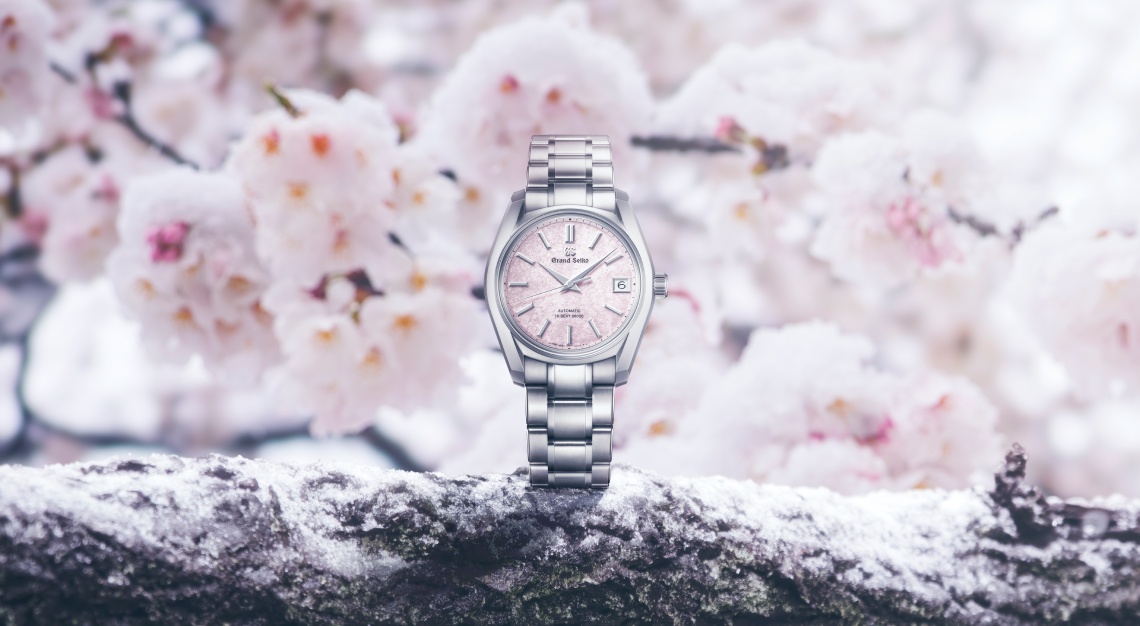
The SBGH341 and SBGH343 preserve all of those attributes while shrinking their high-intensity titanium case from 40mm to 38mm. While the change appears tiny, the new case size opens options up significantly for watch lovers—its unisex dimensions accommodating a broader range of wrist sizes.
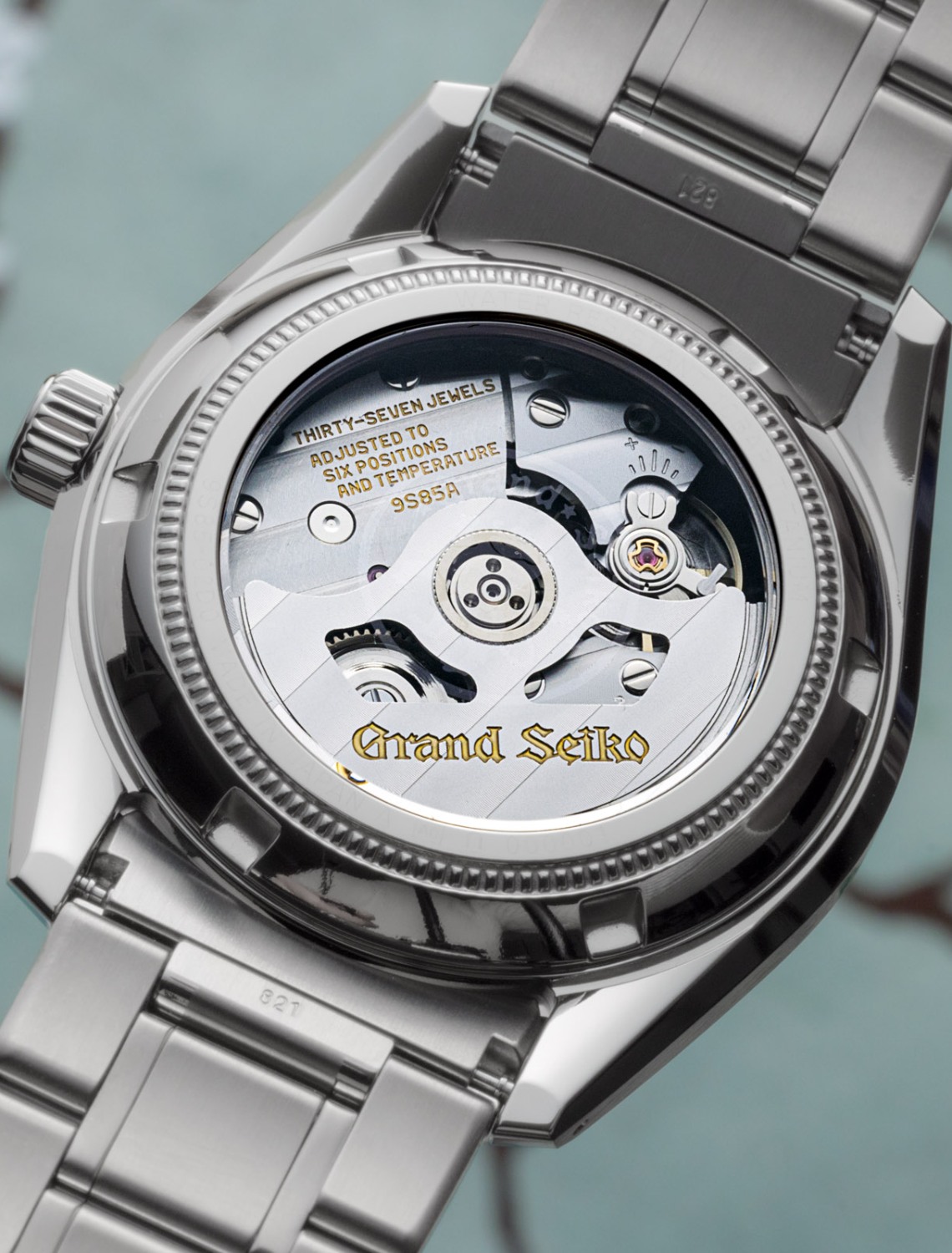
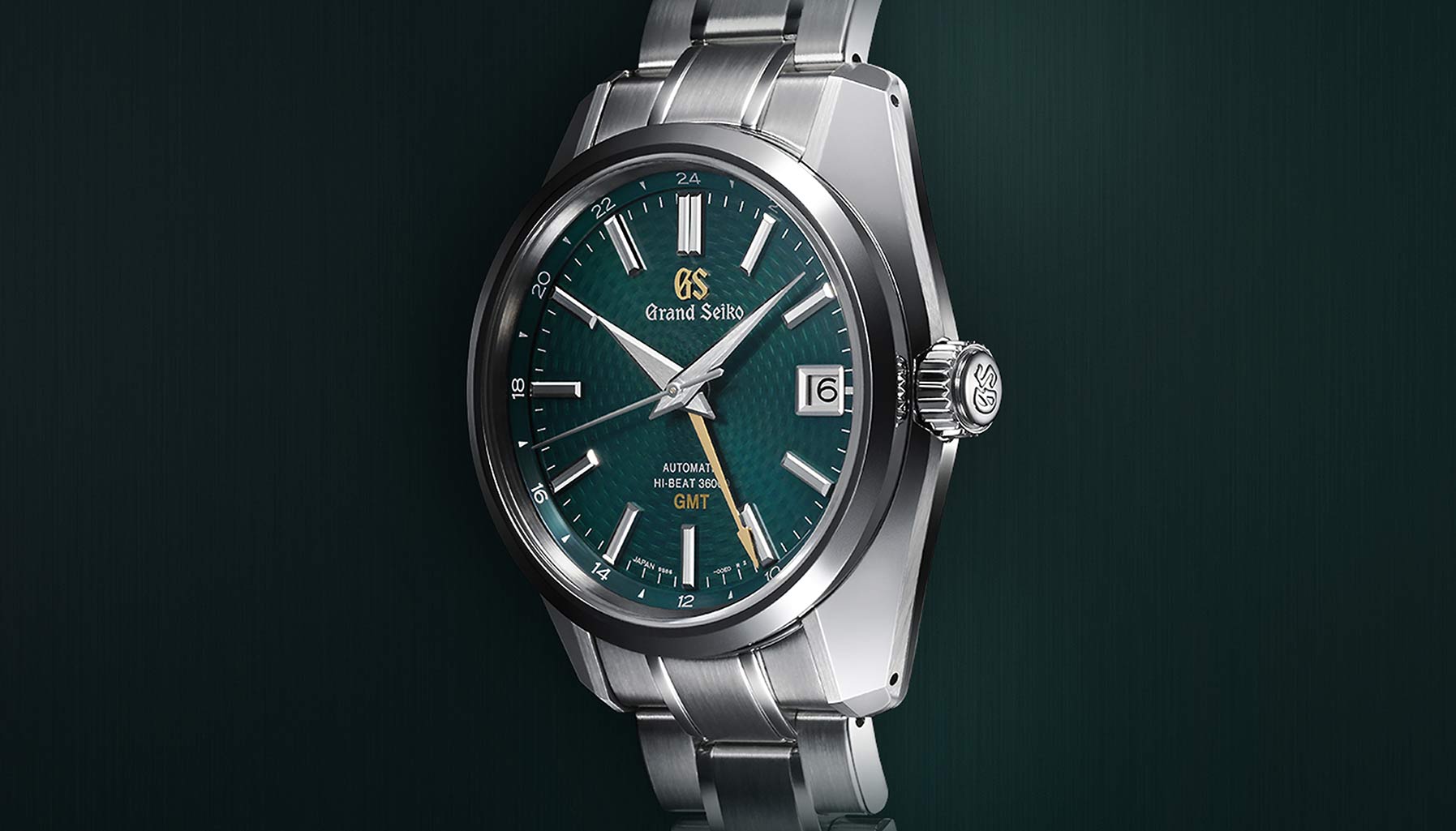
Powering both references is the self-winding Calibre 9S85, a Hi-Beat 36000 movement that ticks at a higher frequency than standard mechanical watches. For context, most mechanical watches beat at 28,800 vibrations per hour (vph). By comparison, the Calibre 9S85 runs at 36,000 vph. This high-frequency oscillation translates to greater precision: the movement is accurate to +5/−3 seconds per day. Further bolstering its performance, the Calibre 9S85 also promises 55 hours of power reserve.


As expected of Grand Seiko creations, the SBGH341 and SBGH343 espouse Japanese fine watchmaking in ways that are both contrasting and compelling. With these watches, the yin of mechanical performance meets the yang of artisanship craftsmanship; high-frequency engines in robust titanium cases combine seamlessly with thoughtful decorations that crystallise moments in time. Which, really, is the best that any watch can give.