
Essentially, an Old Fashioned with an herbal twist
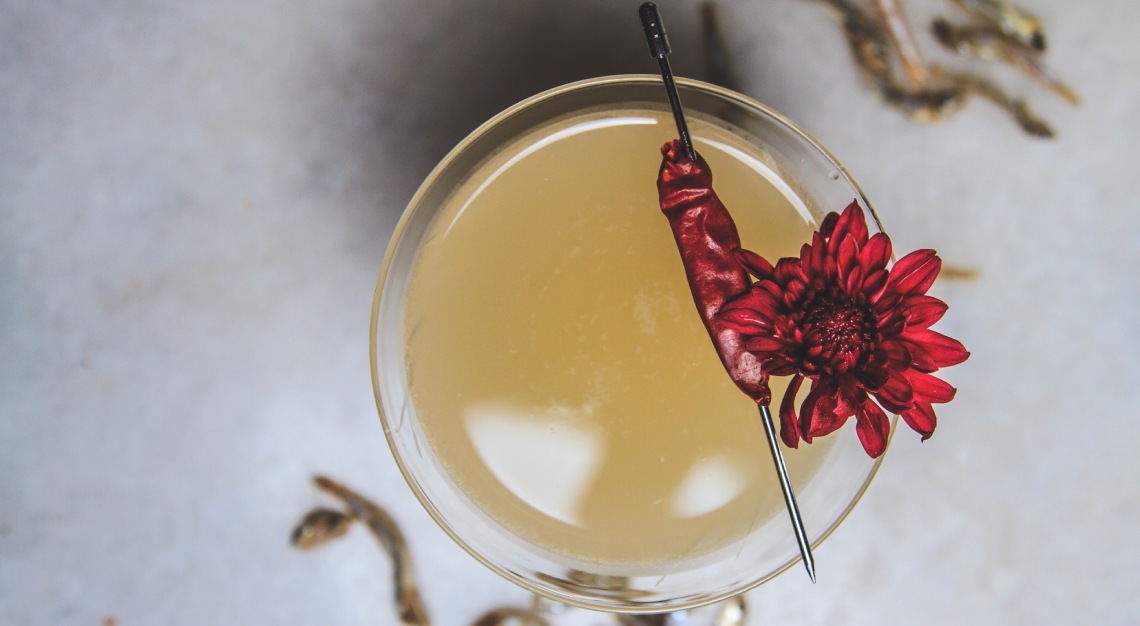
There are, I’d say, two types of January drinks. The first is wellness-based, something for the dry January sort—a bright, light, non-alcoholic thing, a happy little sparkler packed with adaptogens and nootropics, one more sunny asset on the way to a new and better You. The other is something more resembling that first one’s exact opposite—a dark and broody sipper, punchy and robust, liquid mollification reflecting that the best of the season is now officially behind us, and all that lays ahead is the long frigid slog toward spring. And if the image didn’t make it obvious, our subject for today, the Friends Not Enemies, is an example of the latter.
The Friends Not Enemies is essentially an Old Fashioned with an herbal twist. It’s one of those drinks that’s difficult to get people to try, but once they do, they tend to love it. It’s strong and lightly bitter, herbaceous, round, deep, resonant, and delicious, and the reason I’m listing adjectives here instead of ingredients is that I’m going to wait as long as possible before I tell you what’s in it. When you hear what’s in it, you are likely going to think “that’s not for me” or “no thank you” or “I wish I could say no three times,” and I almost don’t blame you. My role here is that of a parent at the dinner table. “What’s in it?” I can hear you saying. “Just try it,” I reply.
Here’s the problem: There are four ingredients in this drink. The main one is rye whiskey—good start. But the issue with the Friends Not Enemies is that I’m not sure there’s an Old Fashioned drinker in America who doesn’t actively dislike at least one of the other three. I would contend that the cocktail overcomes this hurdle easily, but this is the predicament.
This predicament is also where the name comes from. I have in my career spent a significant amount of time with the brand teams for both Fernet Branca and Jägermeister, and both seem to believe they exist in opposition to each other, i.e. rivals in the “dark herbal shot” market. I have tried to convince each that their respective markets—the bars that pour them, the bartenders that recommend them, the drinkers that drink them—are essentially non-overlapping circles. Generally, you either like Fernet or you like Jägermeister. You rarely like both. But a rising tide lifts all boats, and getting drinkers to be more open minded about things they think they don’t like is in both of their interests. They are friends, not enemies.
So, just to be annoying, I endeavored to create a drink that united them in an Old Fashioned style cocktail, and just those three—rye, Fernet Branca, and Jägermeister—worked very well, but it needed just something else, a little boost that could take it from good to great. I found it almost right away, but then spent a week and a half trying every other ingredient I could think of, hoping I could find anything else that worked as well, and I couldn’t. The answer was white creme de cacao, just at a scant quarter ounce, that brought the depth that united the herbal liqueurs and rounded their sharp edges. The cocktail doesn’t taste like chocolate at all, but it’s just that the cacao is the best choice to emulsify the rest of the ingredients and bring out their best selves—it helps both blunt the sharpness of the Fernet and smooth out the licorice in the Jägermeister.
So that’s the Friends Not Enemies: Rye whiskey, Jägermeister, Fernet Branca, and creme de cacao. On a menu it does exactly as poorly as you might imagine—what Old Fashioned drinker is going to order that? But the ones that do get rewarded with a deep, meditative little cocktail, friendlier than a Toronto but still prickly with bitterness and stout with proof, a cocktail worth hunkering down with on these dark and interminable nights of January.
Friends Not Enemies
- 1.5 oz. high rye whiskey
- 0.25 – 0.5 oz. Jägermeister
- 0.25 oz. white creme de cacao
- 0.125 oz. Fernet Branca
Stir all ingredients in a mixing glass with ice for 15 or so seconds, then strain over a big piece of ice into a rocks glass. Garnish with an orange peel.
Notes on ingredients
Rye: This drink is particular about its choice of rye. It was made originally with Redemption Rye, which still is a great choice—it’s 95 percent rye, 5 percent barley and probably 2 years old, and the high rye profile as well as the relatively young age work for it in both cases, as too much oak bitterness can definitely interfere. Other good choices are other 95 percent rye products like Templeton Rye, Dickel Rye, or Bulleit Rye. For others, your mileage may vary.
Jägermeister: Despite its latter-day success in fraternity houses, Jägermeister is a product made with integrity, a “German amaro” from 56 botanicals since 1934. We have, in the past, attempted to rehabilitate its image as a cocktail ingredient, which I still believe and won’t rehash here—all I’ll say is that it has an affection for tropical fruit and orchard fruit alike, and there are lots of uses for Jägermeister, if you were to buy a bottle.
The measurement is in a range because the people who had too much Jagermeister in college will still find the 0.5 oz. measure objectionable, even though I think it tastes great (and I am one of those people). 0.25 oz. is more in line, more hidden, and not objectionable to anybody. Choose your path.
Fernet Branca: There are similarly lots of different Fernets, and I suspect any would work here. It’s only 1/8th of an ounce, used here as bitters, essentially—Fernet Branca is the most popular and most available and my personal favorite, but use whichever you have most readily.
Creme de Cacao: This comes in two flavors, white and dark. White is the distilled essence of cacao, the lighter floral-like “top notes,” and that’s what I use here (my favorite brand is Giffard). The other side is dark creme de cacao, which is roastier and macerated for longer, and brings the weight of chocolate to bear. Dark would work here, but it’ll taste more like chocolate—not a bad thing, I’d argue, but not how it was originally made. In the world of dark creme de cacao, to me the gold standard is Tempus Fugit.
This story was first published on Robb Report USA. Featured photo by MaximFesenko/iStock/Getty Images Plus