
From proportion and presence to the smallest detail, how do emblematic vehicles stay iconic? We speak to the design, engineering, and product teams at Mercedes-Benz about the enduring power of the G-Class’ silhouette
The Mercedes-Benz G-Class is proof that sometimes, the most enduring design is also the most straightforward. Upright, angular, and unapologetically boxy, the G-Class has spent nearly five decades resisting the softening effect of fashion. Its silhouette has barely blinked. The round headlights, exposed spare wheel, side-hinged rear door, and squared-off stance remain instantly recognisable, not as nostalgic decoration, but as evidence of its off-road origins.
That is what makes the G-Class such an unusual luxury icon. It began life as a functional, utilitarian vehicle, yet has since become a symbol of status, taste, and permanence. Even as newer versions embrace electrification, digital technology, improved comfort, and more advanced safety systems, the challenge for Mercedes-Benz is clear: to evolve the G-Class without sanding away the honesty that made it desirable in the first place.
For this section, Mercedes-Benz provided responses with input from its design, engineering, and product teams.
How would you define iconic car design?
A truly iconic car design goes beyond recognition or commercial success. It creates an immediate emotional connection, stands for a clear set of values, and remains unmistakable across decades because its core identity is strong enough to survive changing trends.
In that sense, iconicity comes from consistency, authenticity, and unique power, not only popularity. The G-Class is a strong brand ambassador because its unmistakable design has always been inseparable from its capability and character.
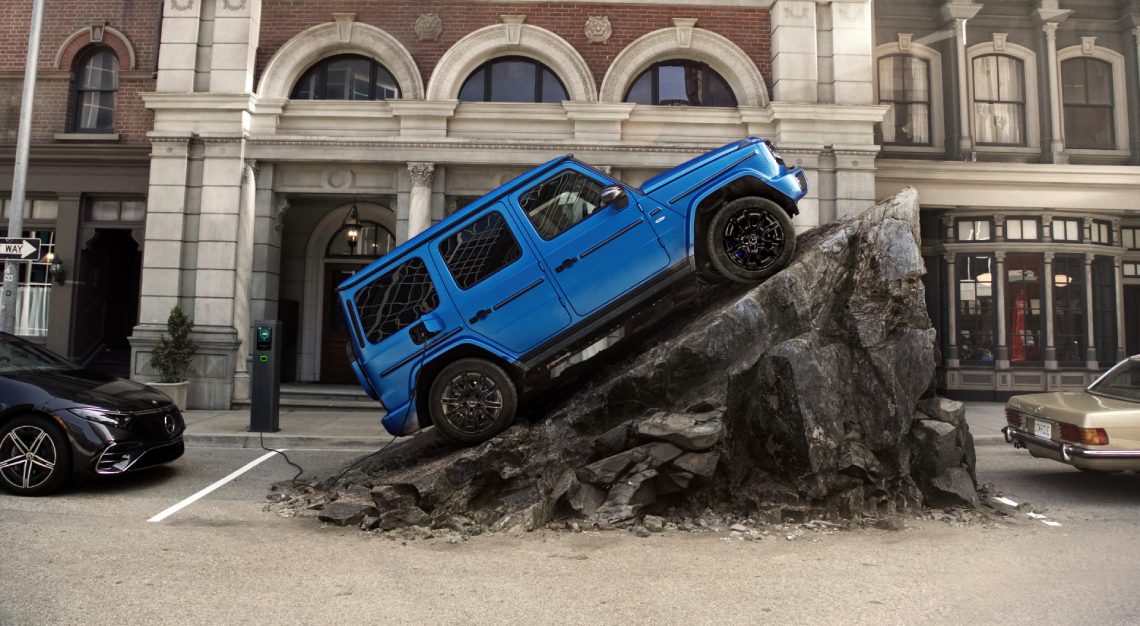
The G-Class has a silhouette that has remained instantly recognisable for decades. From a design perspective, what makes that shape so enduring?
Its clarity. The silhouette is simple, upright, functional, and instantly readable. It has a clear, almost architectural presence, and every major proportion feels purposeful. That clarity gives it timelessness.
The round headlights, exposed spare wheel on the side-hinged rear door, and angular silhouette have become iconic because they are not decorative add-ons. They are part of the vehicle’s identity and link directly to the first G-Class.
The G-Class began life as a functional, almost utilitarian vehicle, but today it is also a luxury icon. How do you balance both facets?
That balance comes from treating luxury not as something superficial, but as something integrated through quality, craftsmanship, and confidence. The G-Class began as a highly functional vehicle, and its character still comes from that origin. Preserving ruggedness means retaining visible strength, clear surfaces, and a sense of mechanical integrity. Refinement is then added through materials, comfort, precision, noise insulation, and digital experiences without diluting the vehicle’s core attitude. The result should feel more sophisticated, but never less real.
How does the team decide where modernity is allowed to show and where it should remain invisible?
Modernity should be visible where it adds value to the experience, but restrained where it would compete with the icon. In practice, that means advanced technology, safety systems, comfort features, and digital functions can be fully integrated, while the visual expression remains disciplined. The best modifications are those that improve performance and usability, yet still allow the G-Class to look and feel fundamentally like itself.
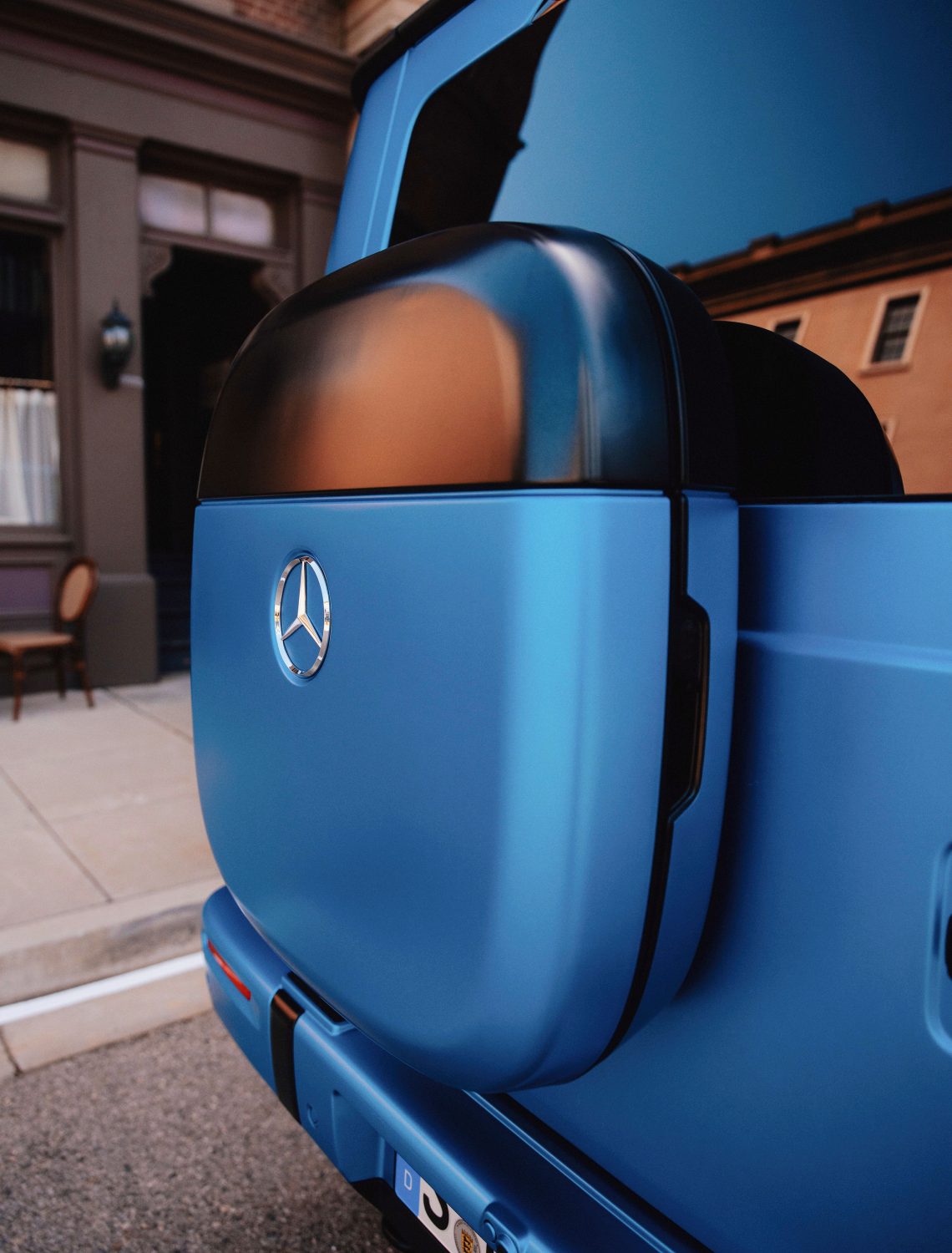
With newer versions of the G-Class embracing electrification and more advanced technology, what are the challenges of introducing future-facing elements to the car?
The challenge is to integrate future-facing technology without making the vehicle lose its sense of continuity. Electrification, for example, should not turn the G-Class into something else; it should express the next chapter of the same idea.
That means respecting the traditional form while finding intelligent ways to package new technology, improve efficiency, and meet future expectations. The ambition is clear: not to build an electric vehicle that resembles a G-Class, but a true G-Class with a new kind of drivetrain.
When you see a G-Class from the past parked beside one from today, what do you hope people notice first?
Ideally, both their similarities and how they have evolved. The similarities should make clear that the G-Class has preserved its identity and remains true to its origins. The evolution should show that it has continuously improved in capability, comfort, quality, and technology. That is the hallmark of a true icon: it never stands still, but it never loses itself either.
This story first appeared in the July 2026 issue. Purchase it as a print or digital copy, or consider subscribing to us here