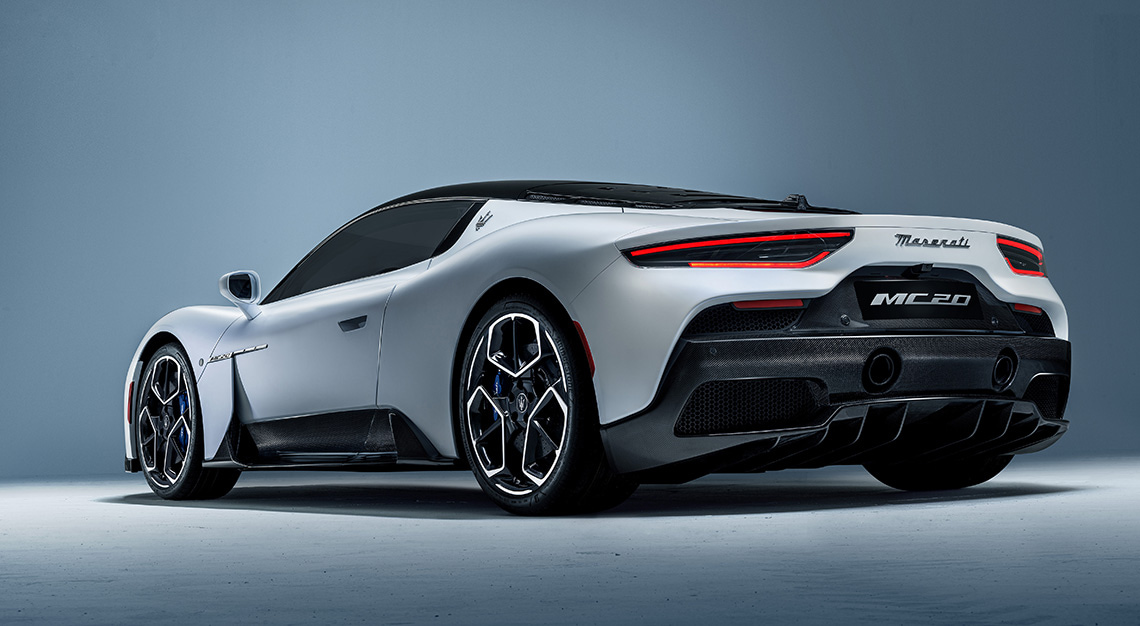
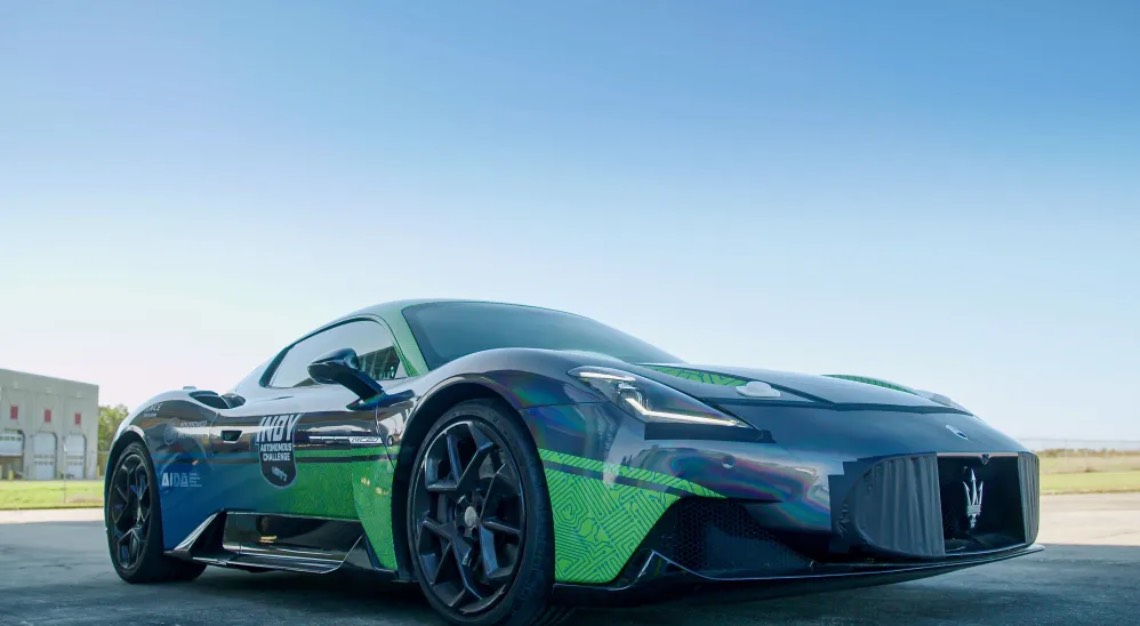
The modified MC20 drove autonomously in Florida to a speed of 197.7 mph (318 km/hr), eclipsing the previous record by 4.9 mph (7.9 km/hr)
Records are meant to be broken, especially fastest-speed records in cars.
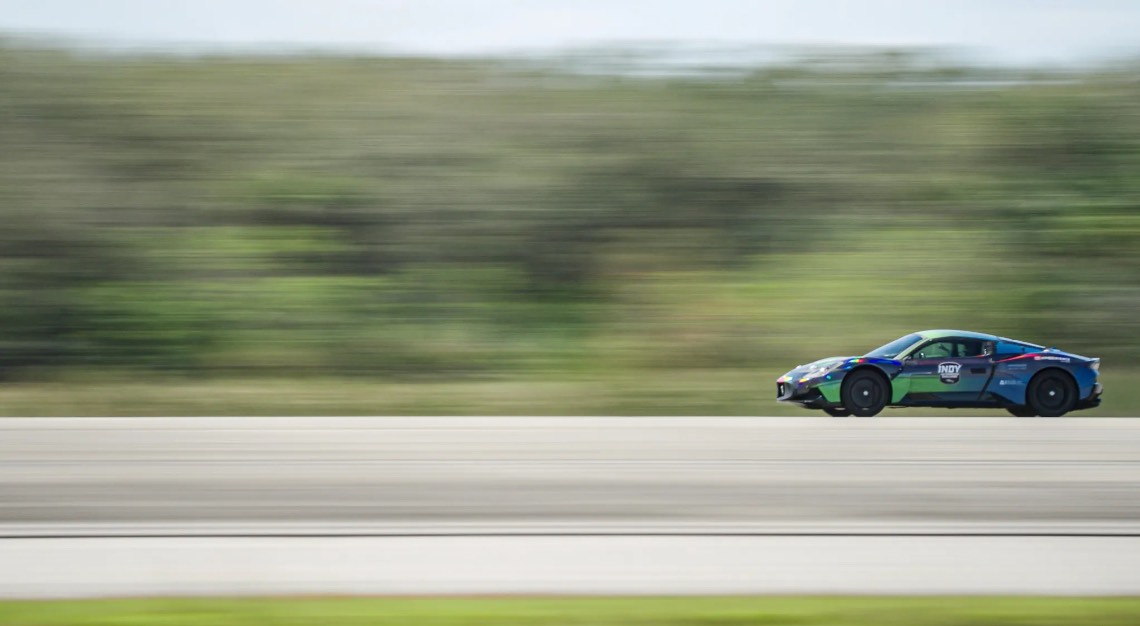
Maserati announced Monday that it set a new record for fastest autonomous car, or 197.7 mph (318 km/hr) in modified MC20, beating the old record by 4.9 mph (7.9 km/hr). The record was set at the Kennedy Space Centre in Cape Canaveral, Florida, on one of the world’s longest runways, the 2.8-mile (4.5-km) stretch of pavement where Space Shuttles landed.
The modified MC20 that drove autonomously—also with help from artificial intelligence—had previously set the mark for fastest autonomous production car at 177 mph (285 km/hr), a record which it set in November. Maserati said that setting the mark was part of its journey to making autonomous driving safe for higher speeds on the highway.
“These world speed records are much more than just a showcase of future technology; we are pushing AI-driver software and robotics hardware to the absolute edge,” Paul Mitchell, CEO of Indy Autonomous Challenge, said in a statement. “Doing so with a streetcar is helping transition the learnings of autonomous racing to enable safe, secure, sustainable, high-speed autonomous mobility on highways.”
The fastest car in the world is the Bugatti Chiron Super Sport, which got up to a verified 304.7 mph (490 km/hr), while the Koenigsegg Jesko Absolut will do a claimed 330 mph (531 km/hr). Anything beyond that begins to enter the realm of jet engines or merely the impractical, which is why automakers focus these days more on acceleration. Acceleration is also getting much quicker thanks to electric motors and their instant torque, making numbers like a zero-to-60 time in two seconds or less seem almost normal.
With top speeds, though, very fast supercars usually top out around 200 mph (322 km/hr), like the new Ferrari 12Cilindri Spider, which goes up to a claimed 211 mph (340 km/hr). That’s true, in part, because getting up to 300 mph (483 km/hr) is exponentially more difficult than getting to 200 mph (322 km/hr), and moving above 300 is exponentially more difficult still. There are also not that many suitable tracks or proving grounds on which to test super-fast speeds owing to the length required, which is why airport runways are often used. The autonomous record will surely fall again, in other words, but it wouldn’t be much of a surprise if it ends up being mostly in line with the human-drive figure.
This story was first published on Robb Report USA