Carry them in your pocket. You can write with them, too
Every great organisation has an elite group of professionals who make the impossible look almost effortless. Lockheed Martin has its Skunk Works division, Pixar its Braintrust, and what would an F1 team be without its pit crew?
That’s the way to think about Montblanc’s Artisan Atelier. Though thousands of people work at the company’s headquarters in Hamburg, this cadre of just over 60 metalworkers, gem-setters, nib-makers, and other specialists creates its most technically demanding and intricate writing instruments.
“There’s a ‘thumb rule,’ so to say,” explains Alexa Schilz, the company’s director of writing culture and brand strategy. “Anything that’s above US$20,000 is developed in the Artisan Atelier.”
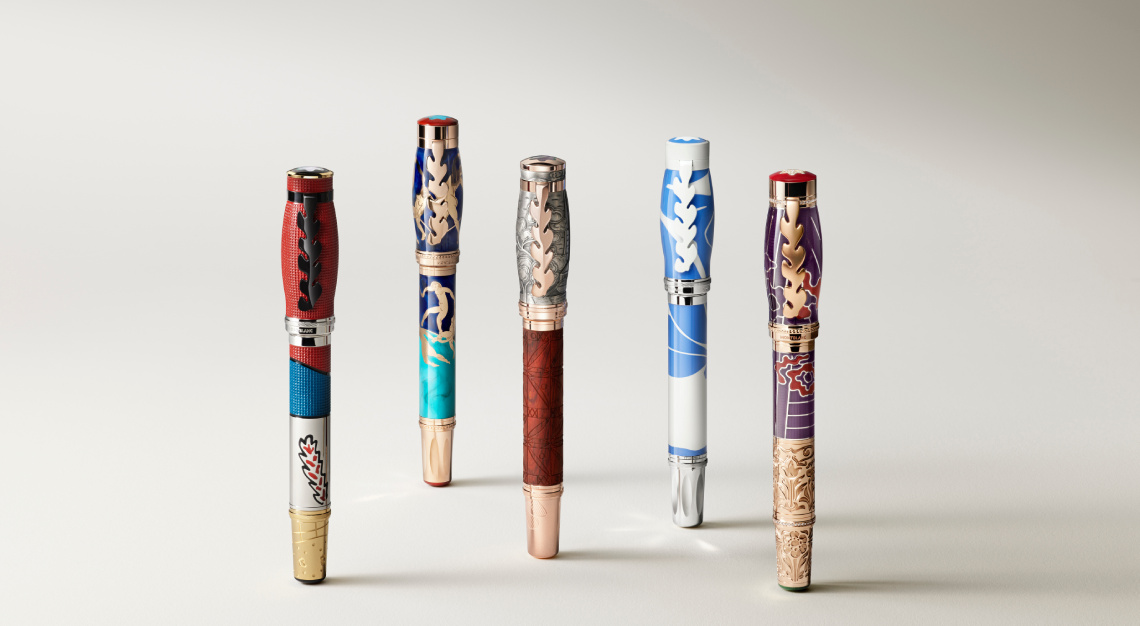
The group’s work is exemplified by its annual High Artistry collection, which draws inspiration from a different place or idea each year. For 2026, the company’s creative director, Marco Tomasetta, pays homage to notable cultural sites in Kyoto, widely regarded as the historical heart of traditional Japanese arts and design. The result is five limited-edition pens that reference or incorporate the nation’s craft traditions.
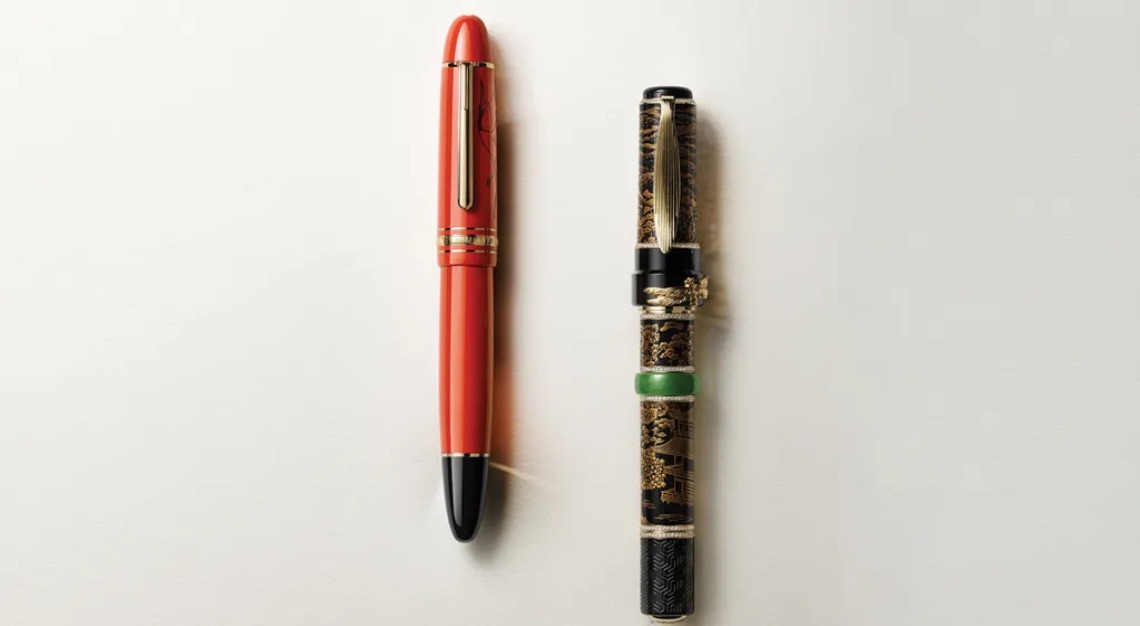
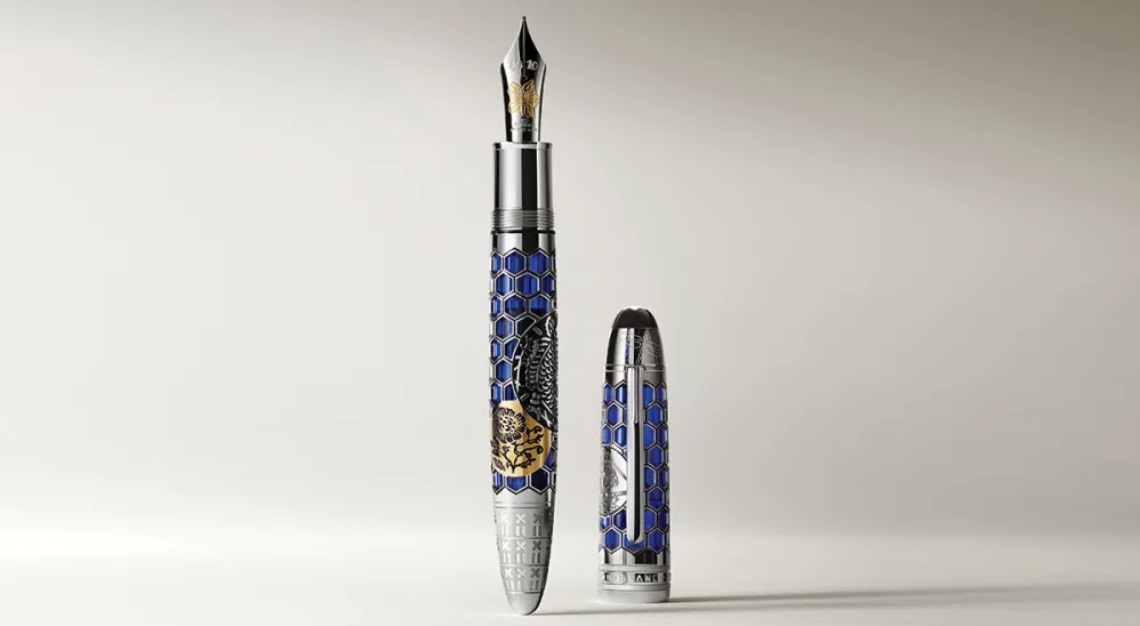
Photo by Montblanc
Take the LE 333 (named for the number of examples that will be produced), seen here. Its hexagonal skeleton evokes a tortoiseshell, a symbol of longevity and good luck in Japanese culture. Other motifs include a chrysanthemum, a koi, and the sakura blossom adorning the nib.
But translating these ideas into something you can hold in your hand—and write with—takes time. Once the atelier’s design team receives Tomasetta’s sketches, it generates a physical prototype to confirm the right proportions. A brass model is also made to gauge the weight and heft of the pen. Then, metalworkers combine C.N.C. machining and hand-polishing to turn solid gold into the tool’s cap and barrel, which is plated in rhodium, covered in black lacquer, and milled to throw the design into sharp relief. (The striking blue portions of the cap and barrel are made from a clear resin carefully coated in translucent lacquer, allowing you to keep an eye on how much ink is left in the reservoir.)
Perhaps most important, though, is quality control. “No writing instrument leaves our manufacture here in Hamburg without having been written with,” Schilz says. The team uses transparent ink to ensure that each pen’s solid gold nib delivers the proper flow and writes smoothly. Which raises a question: What, exactly, gets jotted down with a US$33,000 pen? “You have clients that would write with [one of these] every time they sit down at their desk,” she adds. “You have clients that would never even touch it… and then you have those who use it on very special occasions.” A 50th anniversary, perhaps?
This story was first published on Robb Report USA. Featured photo by Montblanc