Montblanc pays homage to Henri Matisse, the legendary French painter and sculptor whose accidental calling produced some of the 20th century’s most epochal bodies of work
When Henri Matisse exhibited Woman with a Hat, a technicolour portrait of his wife, at the 1905 Salon d’Automne in Paris, the artist was met with howls of derision. A woman depicted with an orange neck, green nose, and brown brows? The painting was labelled scandalous. The critics of the time didn’t take kindly to the unfamiliar use of non-naturalistic colours and loose brushwork. “Cage of wild beasts,” sneered one critic, Louis Vauxcelles, at the works of Matisse and his contemporaries. It was a description that the French artist and his peers gleefully accepted.
Works such as Woman with a Hat and The Joy of Life (1905) helped lay the foundation for Fauvism—the brief yet electrifying avant-garde movement of the early 20th century, of which Matisse was a chief instigator. Employing the use of colour as philosophical rumination, his often exuberantly hued works—whether the crimson-saturated painting The Red Studio or the azure paper cut-outs of the Blue Nude series—attempted to make sense of a world that was filled with noise and dissonance.
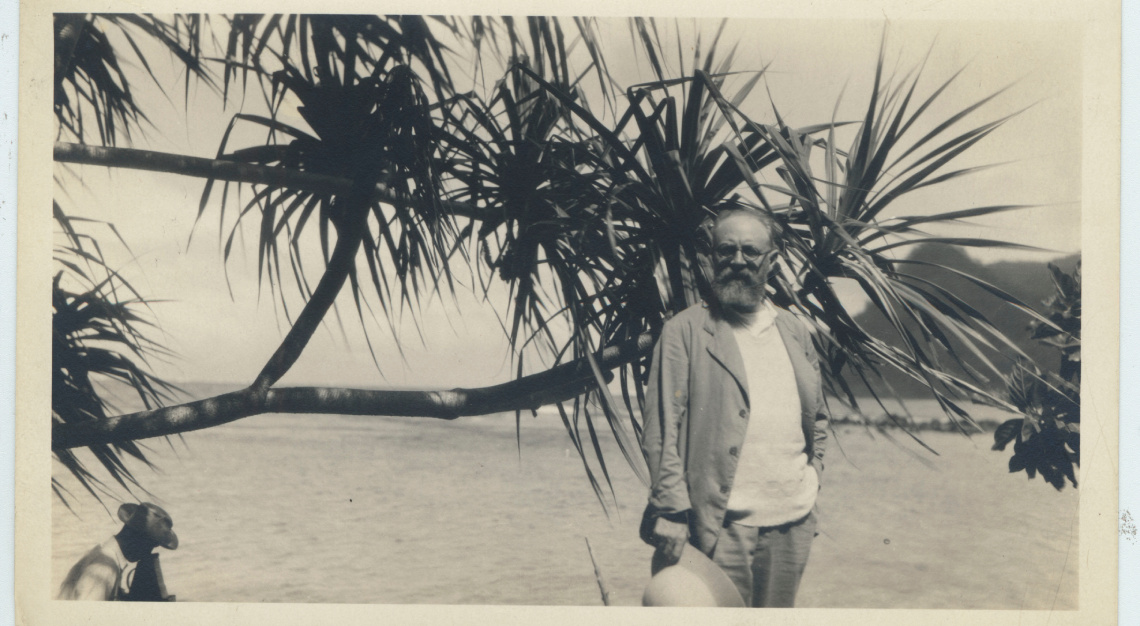
“What I dream of is an art of balance, of purity and serenity,” he once said. “Rather like a good armchair.” One also imagines that Matisse’s pursuit of colour and expressing art as if he were seeing it for the first time was directed by his journey into the creative field. That he had a career as an artist at all was the result of chasing joy and clarity beyond rather dark clouds.
Born into a family of grain merchants in northern France, he first trained as a lawyer, passing his bar examinations with distinction and working as a law clerk. It was only when illness struck—an acute attack of appendicitis at the age of 20—that his trajectory changed. Confined to bed during a long recovery, he began to paint simply to pass the time. What began as a distraction soon revealed itself as vocation. And within a decade, Matisse found himself at the forefront of a movement that redefined modern painting.
Creative Awakening
This spirit of creative awakening is honoured in Montblanc’s latest Masters of Art collection. A series of limited-edition writing instruments that pays homage to influential artists, the collection has previously commemorated the likes of Gustav Klimt, Pierre-Auguste Renoir, and Vincent van Gogh, telling their stories and influence through nuanced motifs and decorations, masterfully expressed through precious materials, heartfelt artistry, and meticulous craftsmanship.
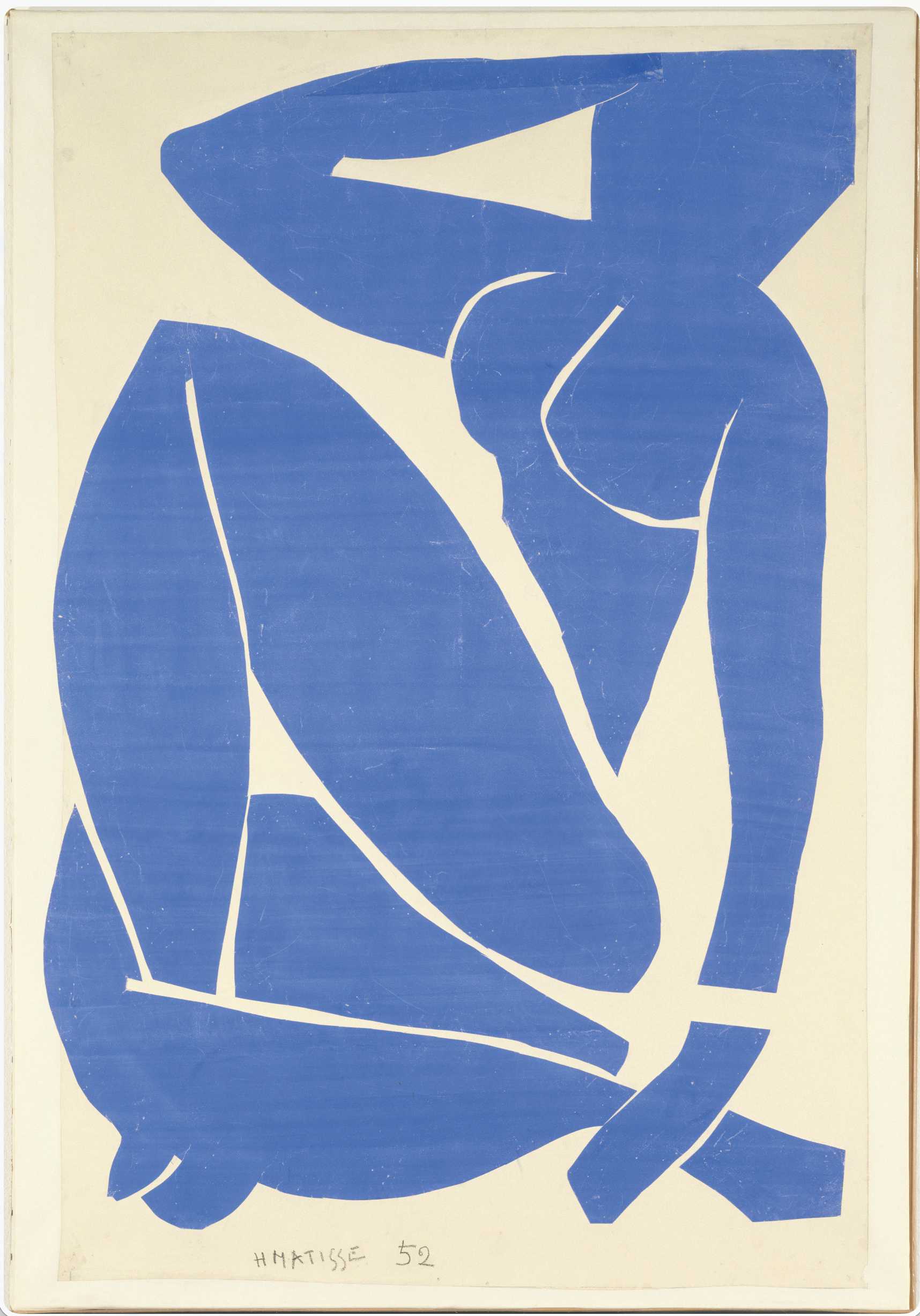
The Masters of Art Homage to Henri Matisse collection is no different. Here, it honours not just a painter of bold colours, but also a man whose vocation arrived entirely by accident. Developed in partnership with Maison Matisse and drawing inspiration from Matisse’s distinctive style—his fearless palette, expressive forms, and poetic spontaneity—the collection brings his story and work to life as a series of evocative and exquisitely handcrafted collectibles. Montblanc has also released a series of writing accessories to accompany the limited editions, including a notebook with a cover featuring Matisse’s painting, Blue Nude III (1952), and a set of inks in red, blue, and green inspired by his penchant for vibrant colours.
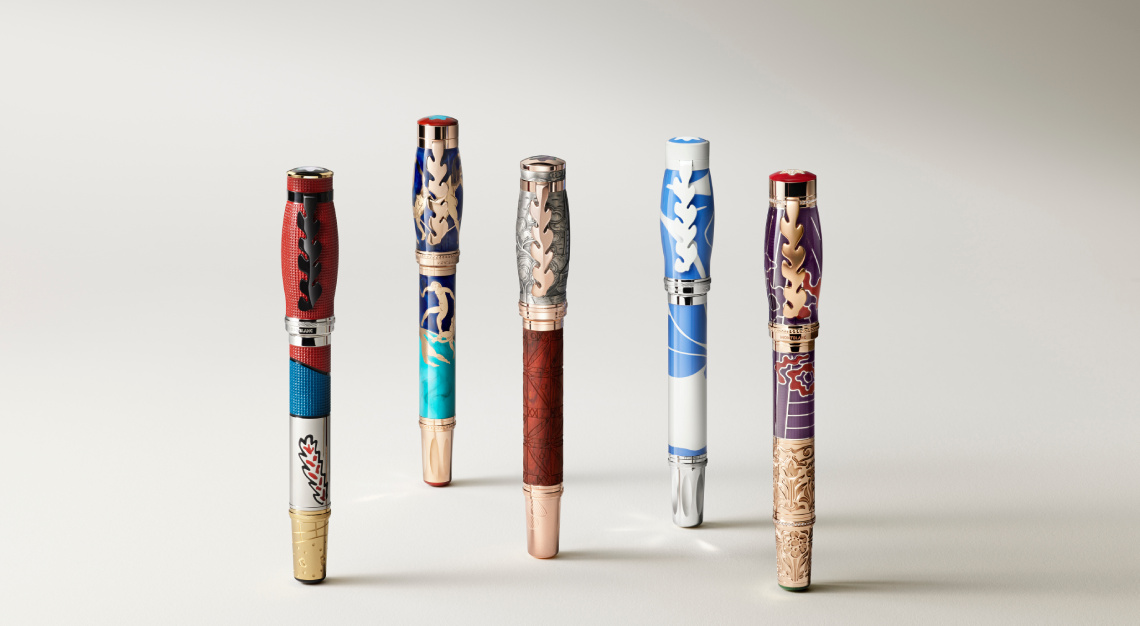
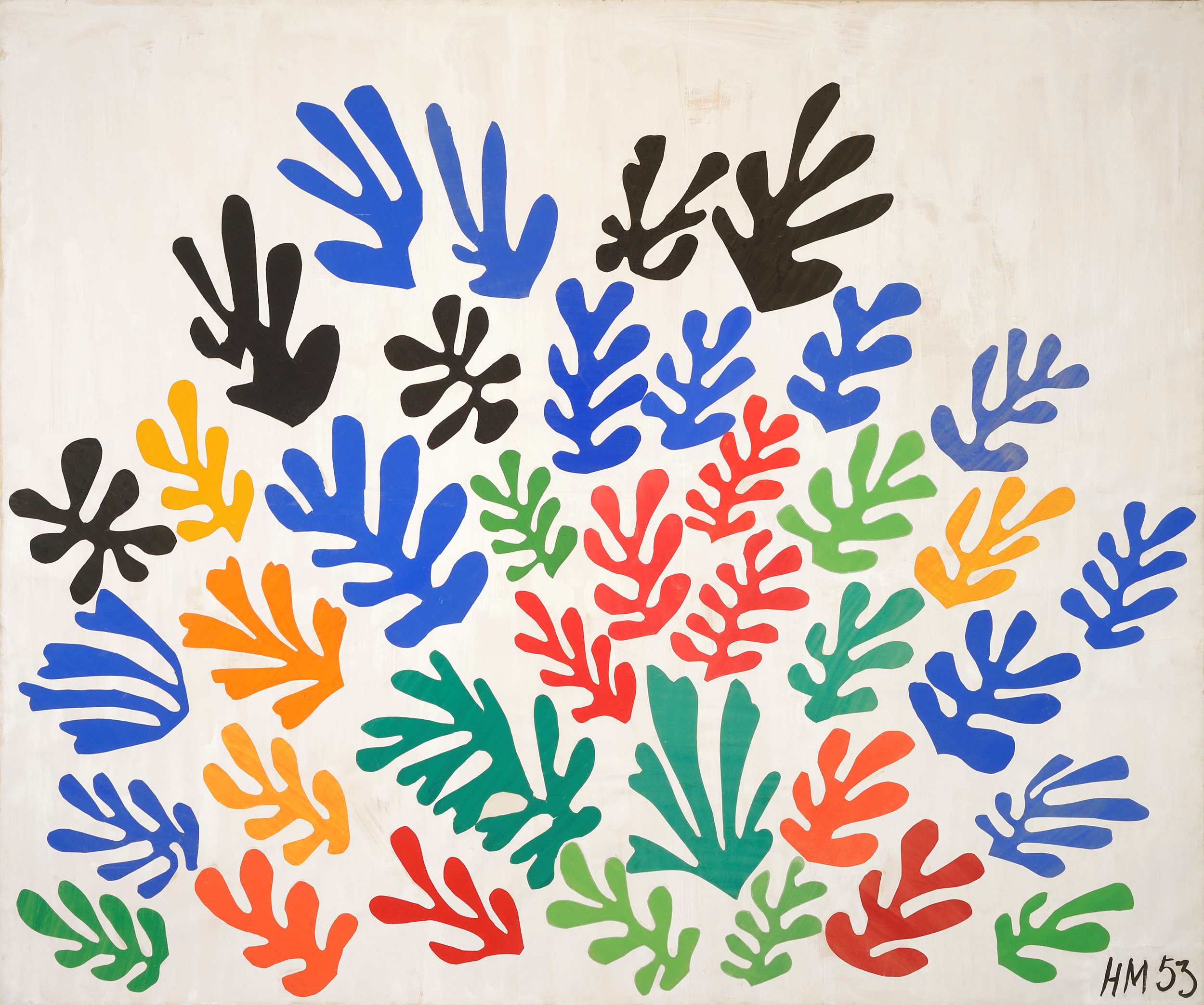
Comprising five editions—limited to 4,810; 888; 161; 96; and eight pieces as denoted by the names of the writing instruments—the collection offers variety with different means of detailed execution, types of materials and levels of exclusivity. At the same time, all the writing instruments are distinguished by unifying characteristics, such as their fluid yet stark silhouette inspired by the artist’s sculptures, a stalk-shaped clip that references his cut-out works—especially The Sheaf from 1953—and design proportions that adhere to the golden ratio, a key feature of every Masters of Art collection.
Bold Expressions
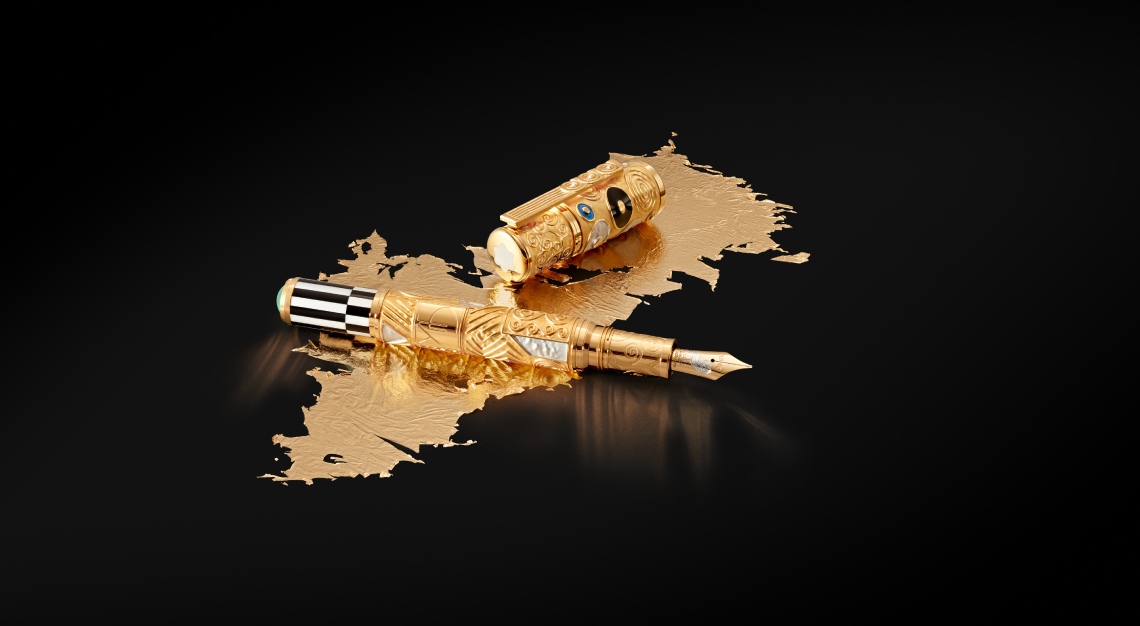
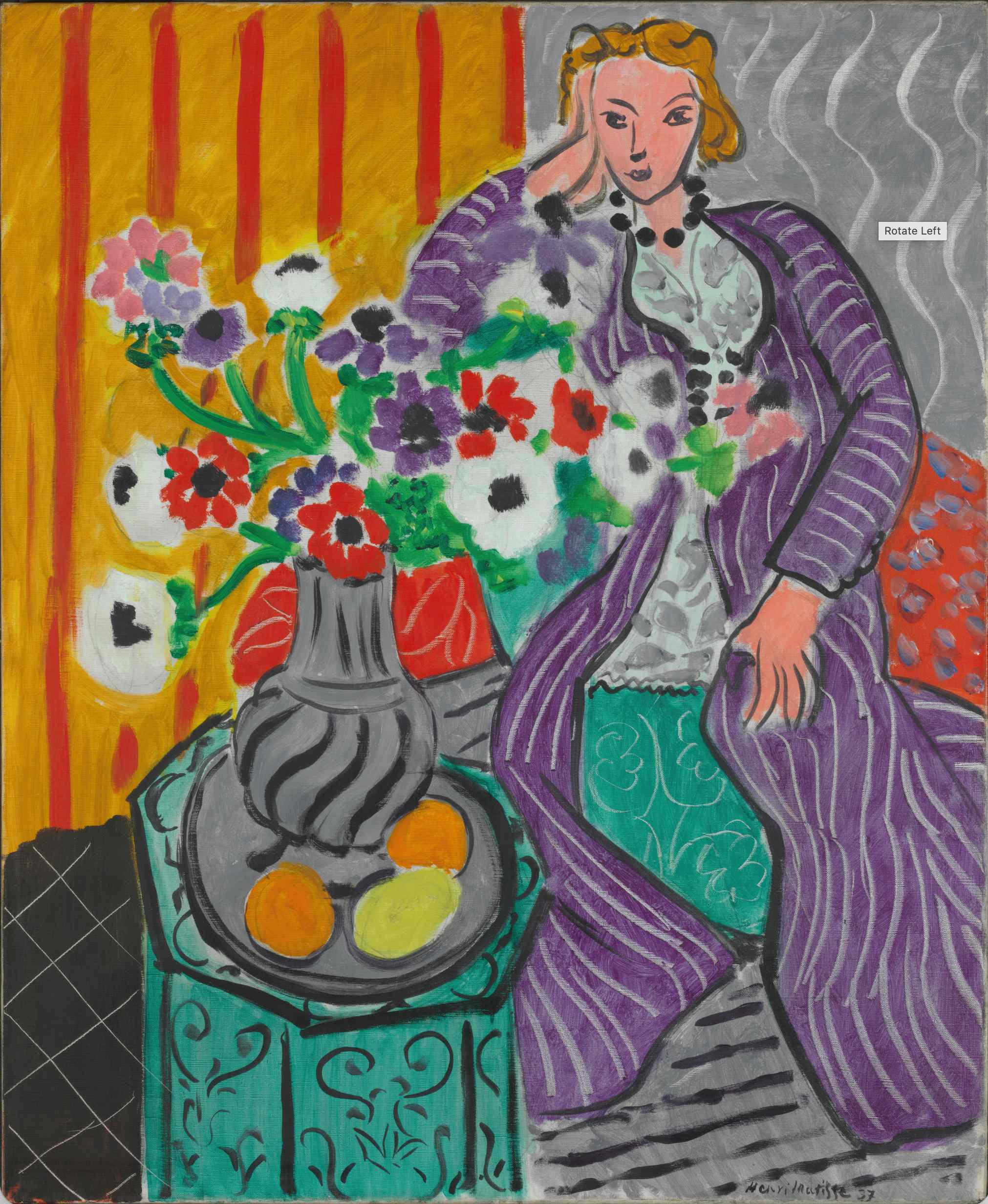
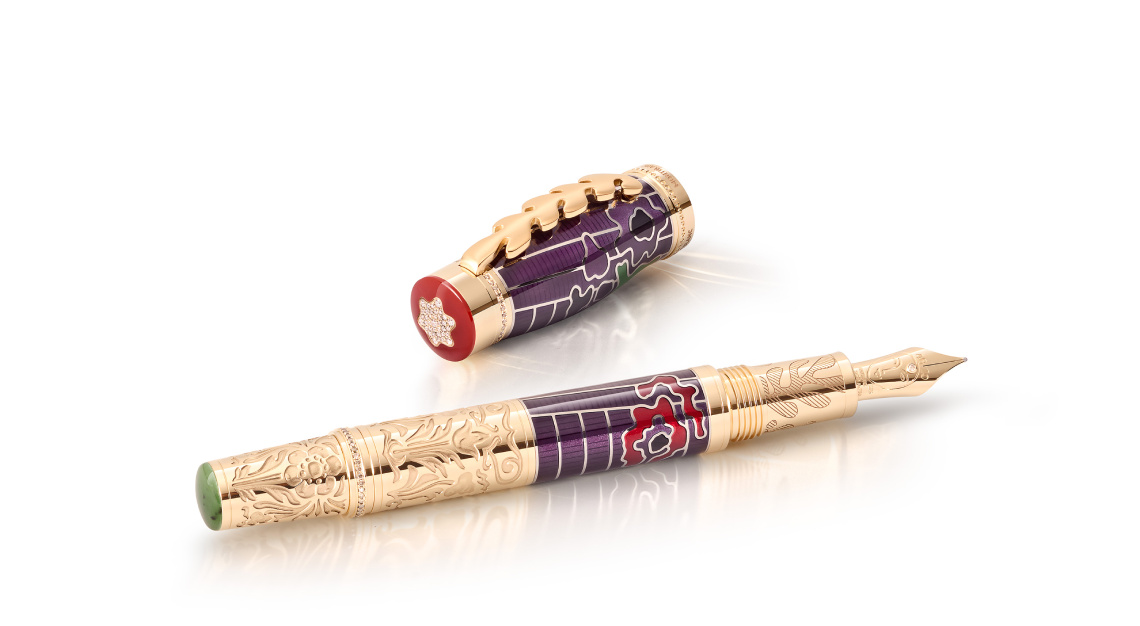
The crown jewel is the Masters of Art Homage to Henri Matisse Limited Edition 8. Inspired by Purple Robe and Anemones (1937), a canvas that distils everything Matisse loved—ornate patterns, exuberant colours, and quiet, domestic beauty—it is a true objet d’art fashioned in white gold, with the cap and barrel decorated with handcrafted enamel. Intricate hand-finished 3D engravings along the lower barrel and cone trace the artwork’s arabesque ornamentation of the flower, while precious stones adorn the rest of the writing instrument, including a green jade stone at the base of the cone, cognac-coloured diamonds on the cap and barrel, the Montblanc emblem rendered in pave-set diamonds; and a brilliant-cut diamond that bears an embossing drawn from Matisse’s Large Face (Mask) on the solid gold nib.
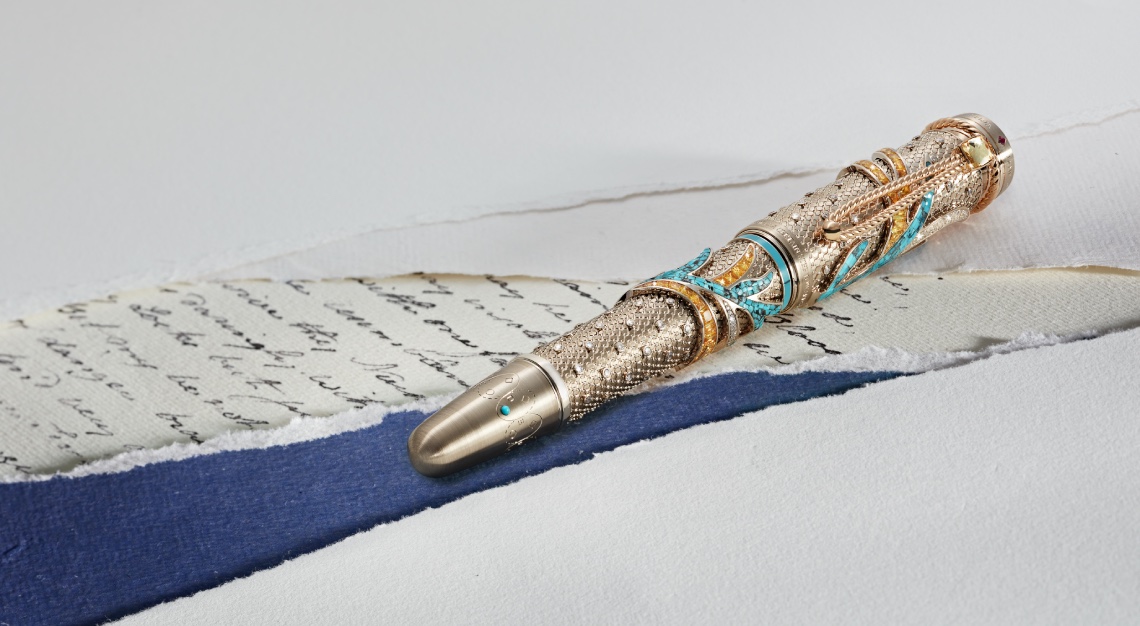
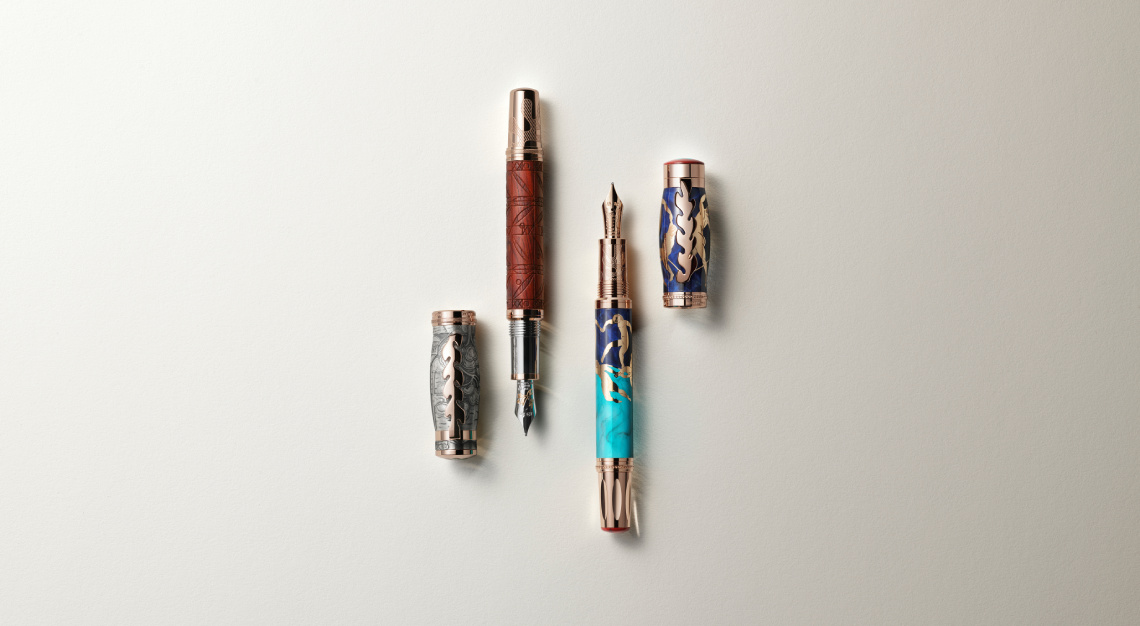
Across the entire series, each Masters of Art Homage to Henri Matisse limited edition artfully expresses a different stage of the artist’s journey. The Limited Edition 96 takes its number from 1896, the year Matisse first exhibited at Salon des Beaux-Arts, and is inspired by the primal energy of The Dance II, sheathed in hand-applied blue and turquoise lacquer, and paired with bronze figures that appear to orbit the cap and barrel. For the Limited Edition 161, the inspiration is Matisse’s revelatory 1930 voyage to Tahiti, a journey that saw the artist freeing himself from the conventions of European art. Constructed from partly blackened sterling silver and warm cocobolo wood, the writing instrument bears a hand-engraved scene from Window in Tahiti, reproducing the trees and boat that Matisse observed from his hotel window in Papeete.
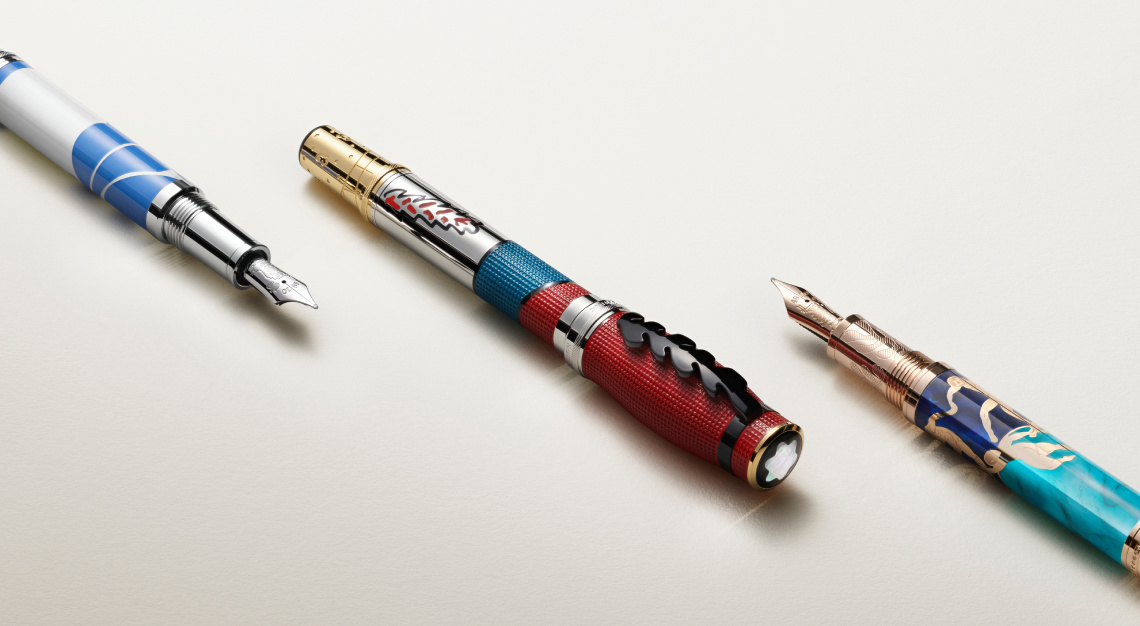
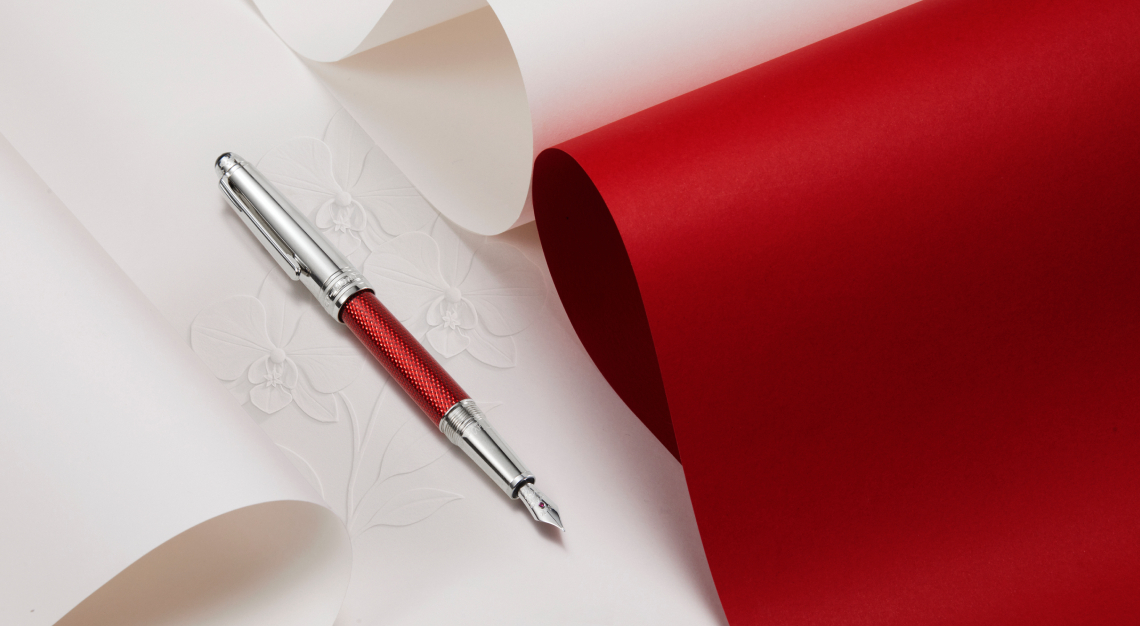
Meanwhile, the Limited Edition 888 recalls The Romanian Blouse (1940), a painting that reveals Matisse’s lifelong captivation with fabric, an expressive force in its own right. Its red and blue lacquered cap and barrel evoke the weave and palette of the canvas, offset by a solid gold cone engraved with the blouse’s embroidered motifs, and a gold nib bearing the likeness of Large Face (Mask).
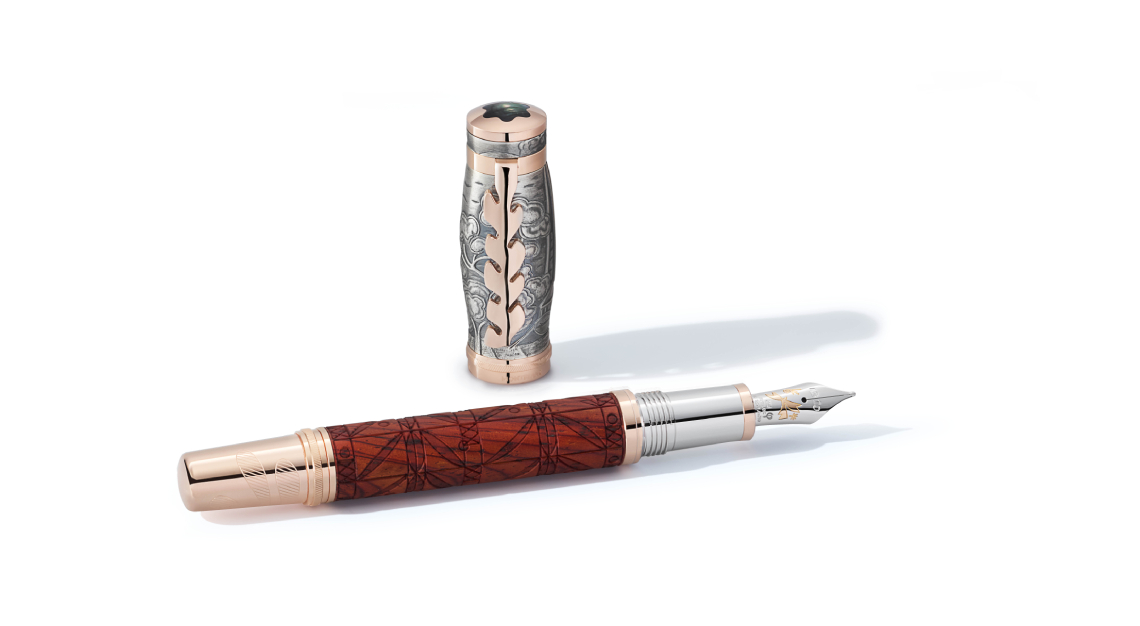
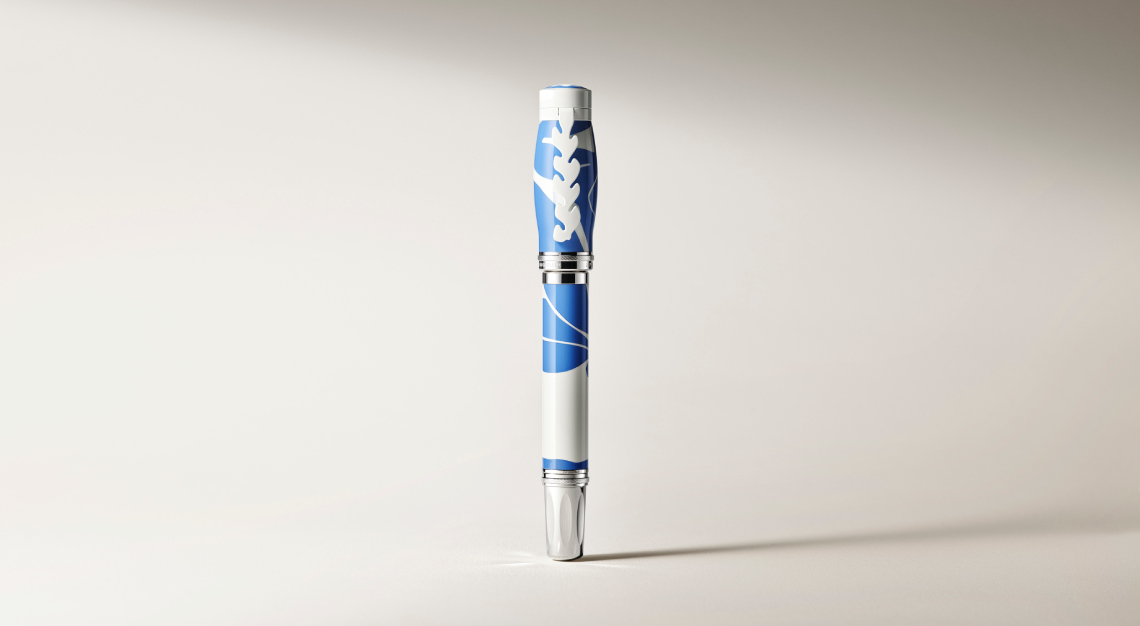
The most accessible entry into the collection, the Limited Edition 4810, draws its imagery from Blue Nude III (1952), one of Matisse’s celebrated paper cut-outs, which he created when illness had made painting physically demanding. What appears at first as an interplay of blue and white lacquer resolves, as the barrel rotates, into the silhouette of a seated female figure. Offered as a fountain pen and rollerball pen, the platinum-coated fittings and a rhodium-coated gold nib, are engraved with the interwoven initials ‘H’ and ‘M’. The limited run of 4,810 pieces also pays homage to the height of Mont Blanc.
It is a fitting irony that a man who painted a woman with a green nose and an orange neck should inspire objects of such refinement. But that was always Matisse’s gift: to find, through apparent wildness, an underlying serenity. With this collection, Montblanc channels that same instinct and the result is something that rewards you with something new each time you return to it.