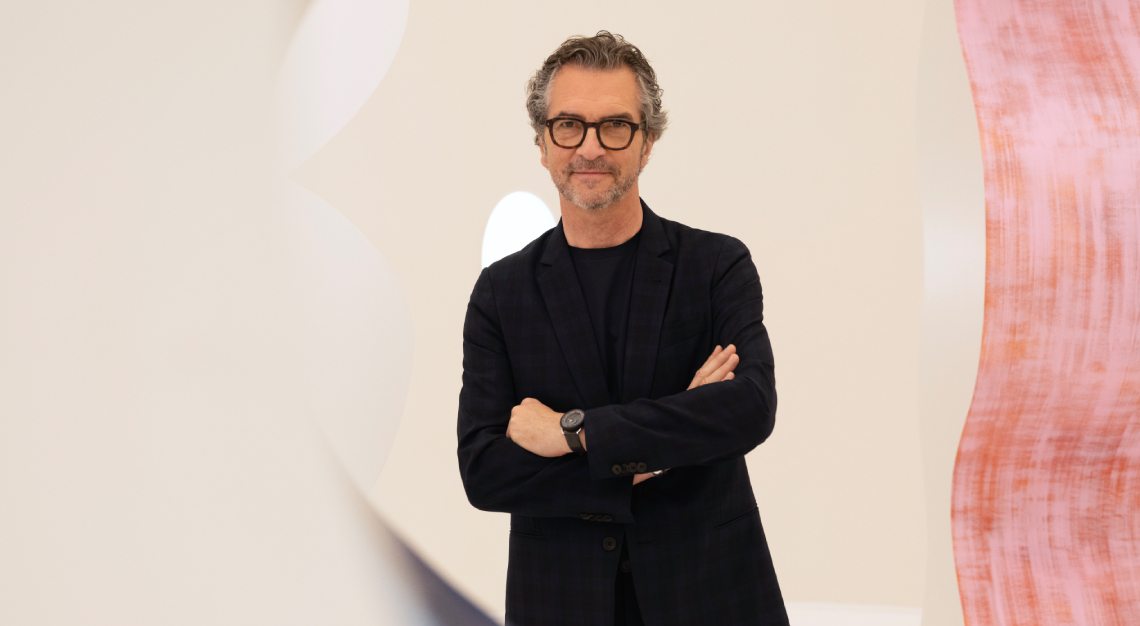
Philippe Delhotal reflects on Hermès’ defining complication as Le Temps Suspendu returns for 2025, anchoring new Arceau and Hermès Cut models that pair technical mastery with poetic watchmaking
Long celebrated for its artistry in fashion and leather goods, Hermès has always approached creation with a meticulous eye for craft and emotion. In the early 2010s, that same sensibility began to shape a new frontier for the brand—high watchmaking. The turning point arrived in 2011 with the debut of the Arceau Le Temps Suspendu, a poetic complication that allowed the wearer to literally pause time at will.
At the heart of this evolution is Philippe Delhotal, creative and style director of La Montre Hermès. This year, he revisits that seminal concept with two new expressions, the Arceau Le Temps Suspendu and Hermès Cut Le Temps Suspendu, both featuring the brand’s signature “time suspended” mechanism. “We’re returning to what first captivated watch enthusiasts,” Delhotal explains. “A watch designed to measure time, yet capable of suspending it at the wearer’s whim. This is rare in watchmaking and we wanted to explore time from a different perspective, using storytelling to express it in a more original way, beyond tradition.”
Can you reflect on Hermès novelties for 2025? What are the highlights?
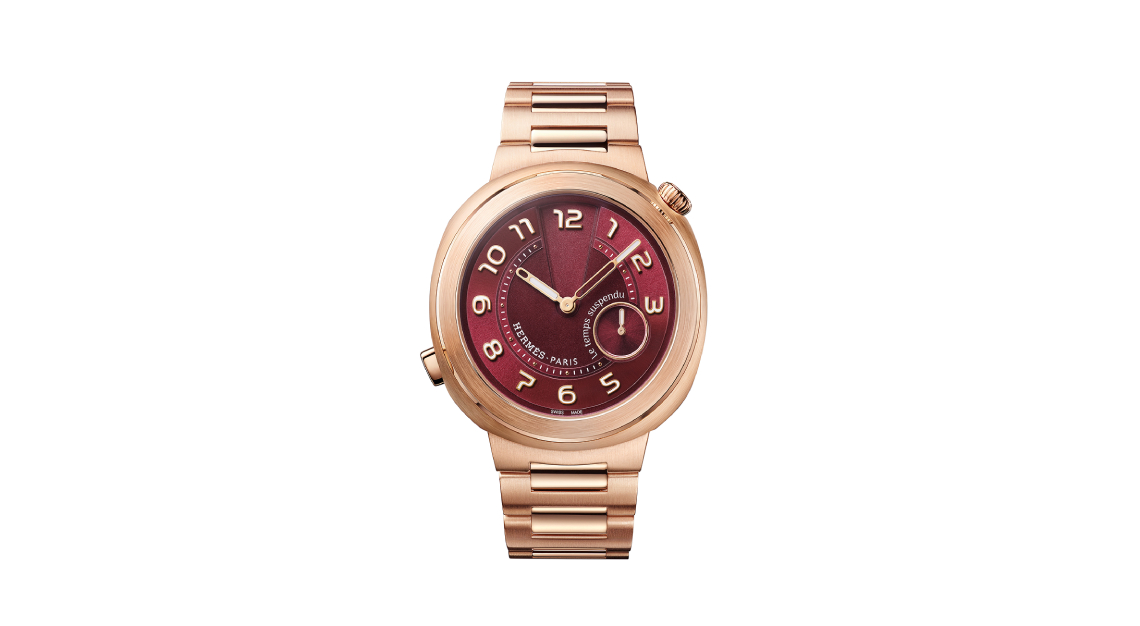
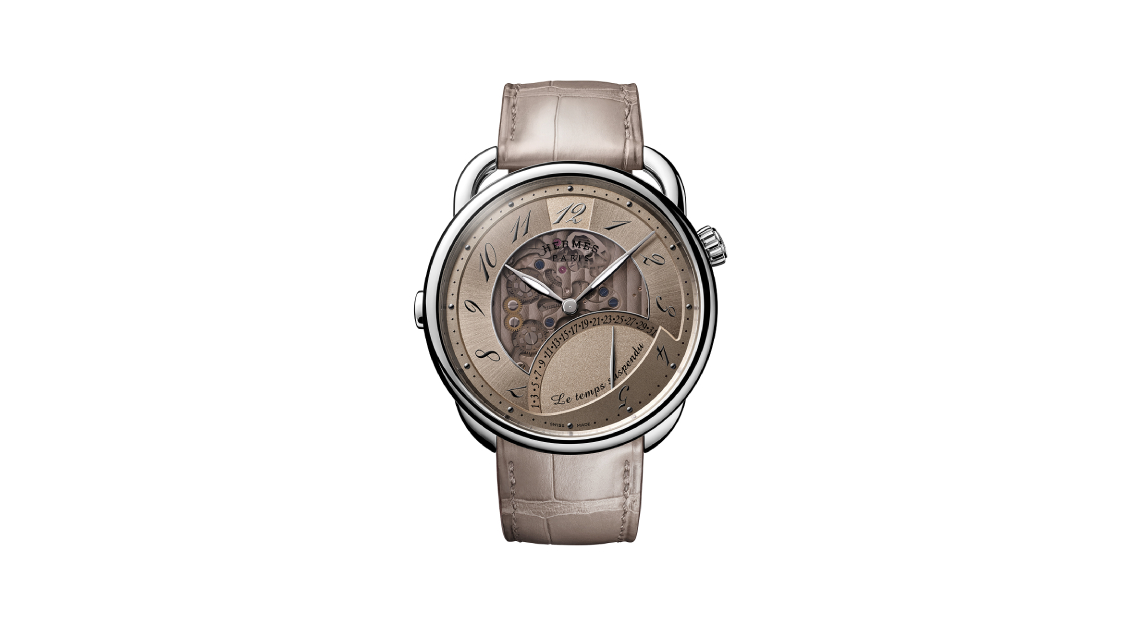
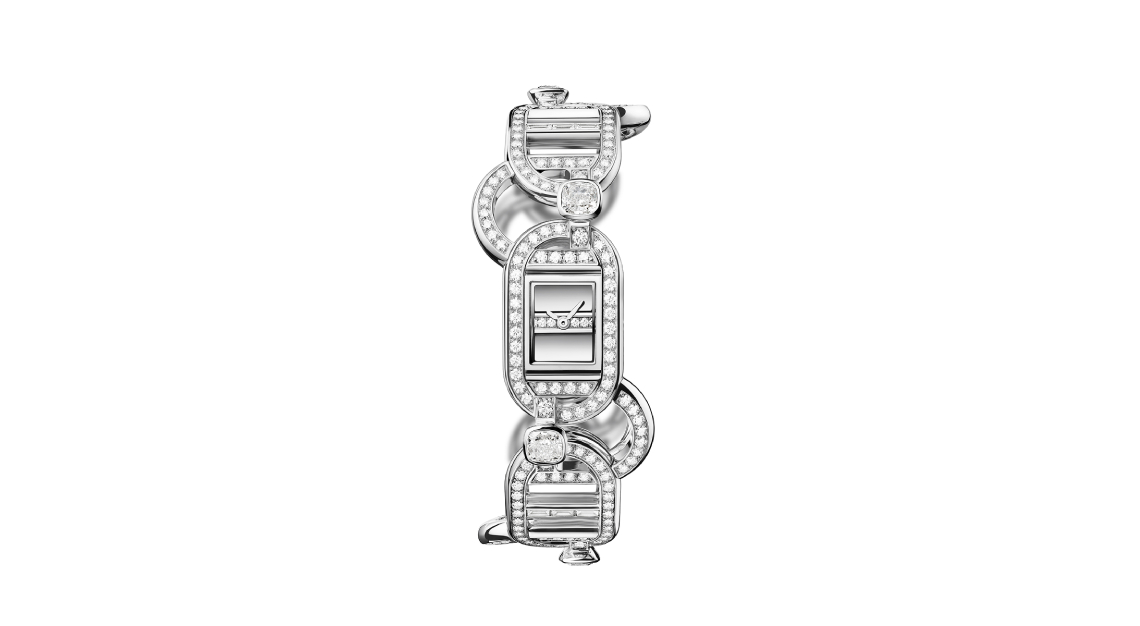
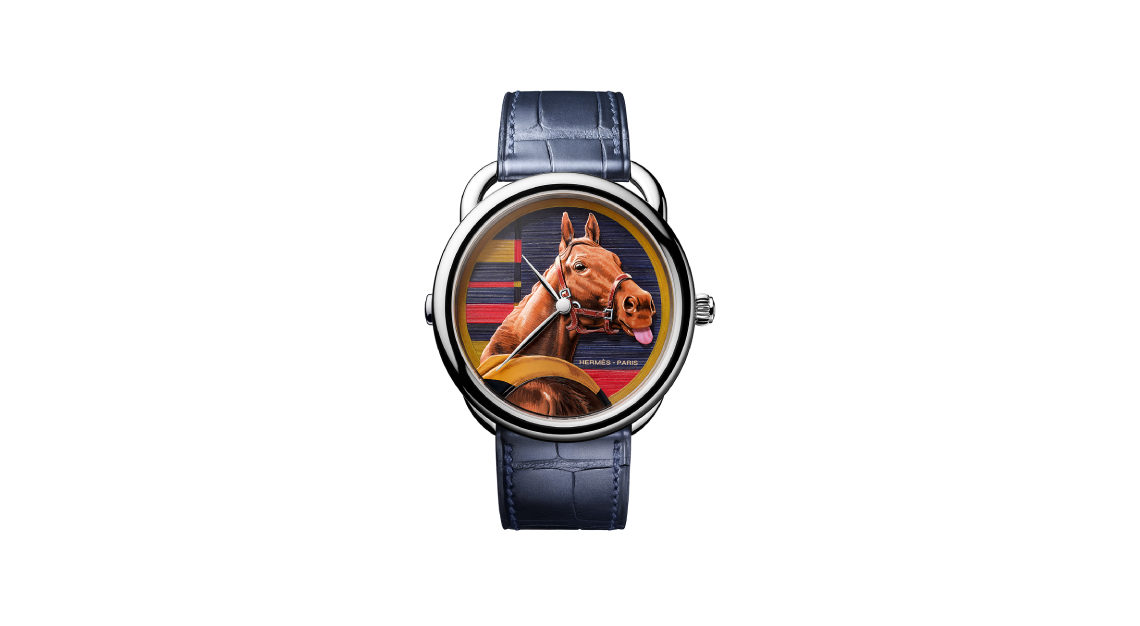
We have three main categories of watches this year: the Arceau Le Temps Suspendu (new edition), Hermès Cut Le Temps Suspendu (featuring the ‘time suspended’ complication), and Maillon Libre (the brand’s anchor chain- inspired wearable watches). Another favourite is the Arceau Rocabar de Rire from our metiers d’art collection. Still, the highlight remains the concept of suspended time.
What were some technical challenges in integrating this component into the sportier Cut watch?
On the Hermès Cut model, the main challenge was its case size. The original case measured 36mm, so fitting the complication prompted an increase to 39mm. While it may seem that a new movement was developed, we actually retained the same movement and complication previously used in the Arceau Le Temps Suspendu 38mm (lady’s size).
This allowed us to maintain the integrity of the design while adapting it to the new dimensions. The Suspended Time complication has always been a dreamlike expression of time. While the display pauses, the watch keeps beating, reminding us that time never stops.
As creative and style director, how do you incorporate Hermès’ design language into watchmaking?

Across everything we do, we return to what makes an Hermès object: singular, simple, and light in feeling. Something that reveals itself slowly and becomes part of your everyday rhythm.
Our metiers d’art watches often start from the world of our scarves. The colour, the storytelling—there’s such a rich language there and translating that into watchmaking lets each dial become its own little universe.
For our core collections and complications, we look to the maison’s archives. The Cape Cod is a good example. It came from the anchor- chain motif, but what makes it Hermès is the lightness and clarity in how that idea was interpreted.
What gives an Hermès timepiece its identity?
Distinctive shapes are fundamental. Most Hermès watches feature unique forms; it’s more challenging to achieve elegance and balanced proportions in non-round cases. The dial and typography are closely linked to each watch’s identity, while materials like leather add the recognisable Hermès character.
Hermès introduced its first in-house movement in 2012. Looking back, does it feel like a vital moment in the brand’s pursuit of authentic mechanical watchmaking?
We faced two main objectives: to develop our own mechanical movement and to express our watchmaking originality. While Le Temps Suspendu had already been introduced in 2011 in collaboration with Agenhor, its concept laid the foundation for Hermès’ distinct approach to time. A simple automatic movement alone wouldn’t have set us apart. Today, our new time suspended features a fully in-house movement, which is a major achievement since our first launch.
Which movements have evolved most since the early collaborations?
Our ultra-flat H1950 automatic movement stands out as the most evolved since its launch in 2015; notably, the Slim Skeleton, which combines technical finesse with visual lightness. In contrast, the H1837 and H1912 movements have remained structurally unchanged, but have grown in versatility, serving as reliable bases for an expanding range of modular complications.
Looking ahead, what innovations or trends excite you most?
Technical innovation excites me the most. My greatest hope for the coming years is to imagine a complication as impactful as suspended time was in 2011. For us, time means craft, creation, and taking the time to do things well, an enduring pillar of Hermès.