
Take a walk through an intimate exhibition, titled “150 Years of Refined Elegance”, that traces Audemars Piguet’s horological journey through time, with a special focus on the art of miniaturisation
While this year marks the 150th anniversary of Audemars Piguet’s founding, the celebrations are far from over. From now through the middle of 2026, Audemars Piguet presents “150 Years of Refined Elegance”, an introspective exhibition that explores one of the Manufacture’s most celebrated horological pursuits: miniaturisation. Visitors will discover some of the smallest timepieces ever created by Audemars Piguet, alongside an exploration of the evolution of its feminine designs.
Hosted at AP House Singapore, the exhibition presents a curated selection of historical, vintage, and contemporary timepieces that capture Audemars Piguet’s pioneering spirit in watchmaking and design. AP House blends the atmosphere of a home, bar, café, art gallery, and boutique, welcoming watch enthusiasts, curious newcomers, and discerning travellers alike.
Exhibition highlights
Miniaturisation: A legacy of precision
The journey begins with a deep dive into miniaturisation, where each decade introduced fresh perspectives and avant-garde techniques. The enduring challenge has always remained the same: to create timepieces that are ever smaller, thinner, more complex, and more accurate.
Journey through key eras of design evolution
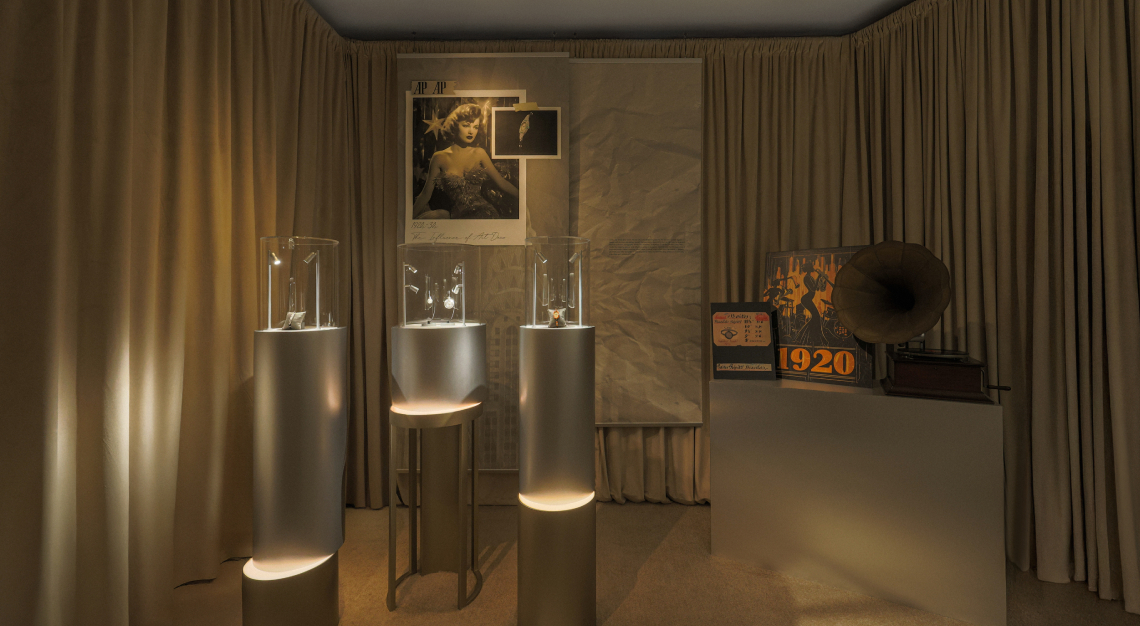
Art deco elegance (1920s–1930s)
The Roaring Twenties were defined by geometric forms, elongated numerals, and bold colour contrasts. Rectangular and square cases broke away from round pocket-watch traditions, while precious gemstones, decorative enamel, and luxurious bracelets shaped feminine designs. Men’s watches, meanwhile, adopted leather and mesh bracelets.
The golden age of design (1950s–1960s)
Mid-century design ushered in an era of modern elegance and functionality, sparking a new creative renaissance at Audemars Piguet. Designers explored organic shapes, braided and woven gold bracelets, and ornamental stone dials, redefining sophistication for the era.
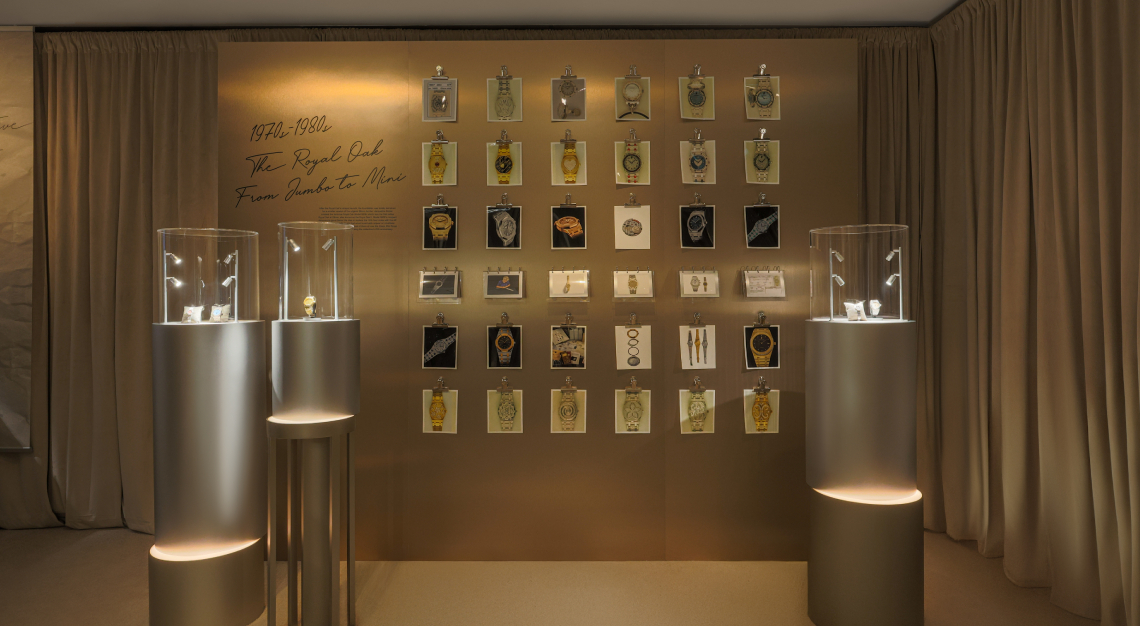
Icons in miniature: Royal Oak and Royal Oak Offshore
This section pays tribute to the evolution of the Royal Oak and Royal Oak Offshore through the lens of miniaturisation. Following the Royal Oak’s groundbreaking debut in 1972, designer Jacqueline Dimier created a 29 mm version for women. The introduction of the Royal Oak Offshore in 1993 further expanded the sport-luxury category, ultimately leading to today’s 23 mm Royal Oak Mini, powered by the Calibre 2730.
Creative freedom in the 1990s and 2000s
Enabled by the miniature Calibre 2601, this period saw Audemars Piguet embrace playful creativity through haute joaillerie pieces shaped like teddy bears, mermaids, model cars, hearts, and other whimsical motifs. These imaginative designs reflected the rise of luxury branding and global fashion culture, paving the way for the brand’s first dedicated women’s collections.
Miniaturisation in the modern age
The exhibition concludes with a focus on 21st-century craftsmanship, where miniaturisation meets high complications. Highlights include the world’s smallest tourbillon, created in 1986, as well as the development of extra-small minute repeaters and ultra-thin tourbillons.
After exploring the exhibition, guests can unwind at the world’s first AP Café, which offers a thoughtfully curated menu of Swiss dishes with a Singaporean twist.