A step into the Prince de Galles transports you to the Art Deco era, where the boundaries between a luxury stay and a living gallery blur, creating a residence that feels less like a hotel and more like a cinematic masterpiece of French history
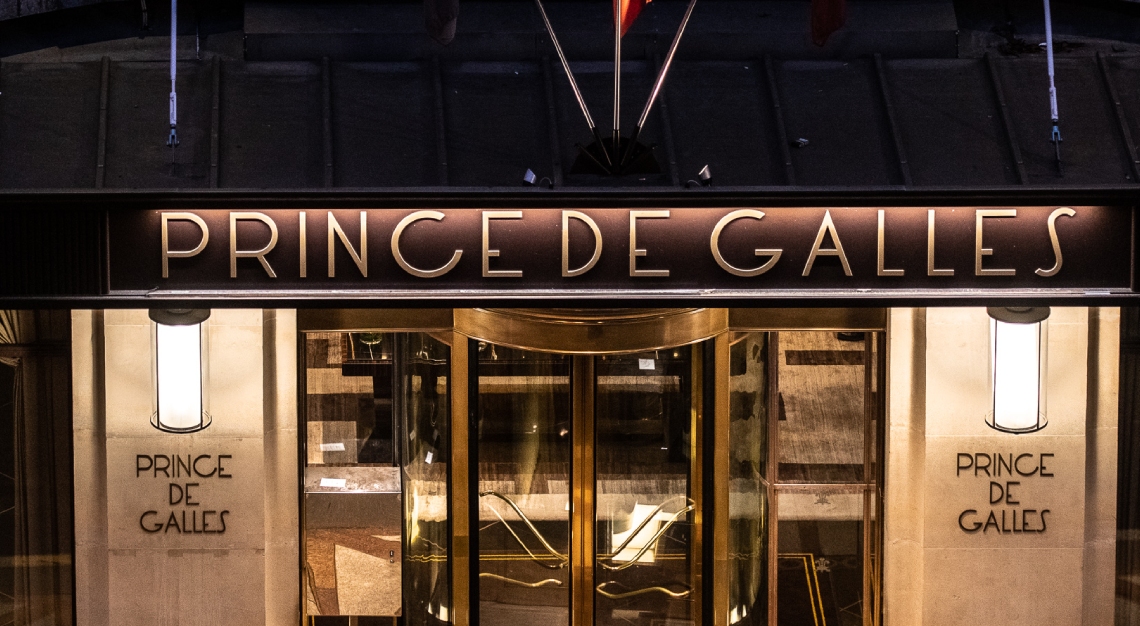
On an avenue where neighbours often compete with increasingly loud displays of opulence, the Prince de Galles, a Luxury Collection Hotel, remains the discerning traveller’s choice for something rarer: soul. Since its inauguration in 1929, this André Arfvidson-designed landmark has stood as a guardian of the Art Deco movement, painstakingly restored for the modern connoisseur.
Set on Avenue George V, in the heart of the Golden Triangle, the Prince de Galles occupies one of Paris’ most coveted addresses—moments from the Champs-Élysées, flanked by flagship maisons and within easy reach of both historic landmarks and business districts. Yet despite its prime location, the hotel feels resolutely inward-looking, defined less by spectacle than by discretion.
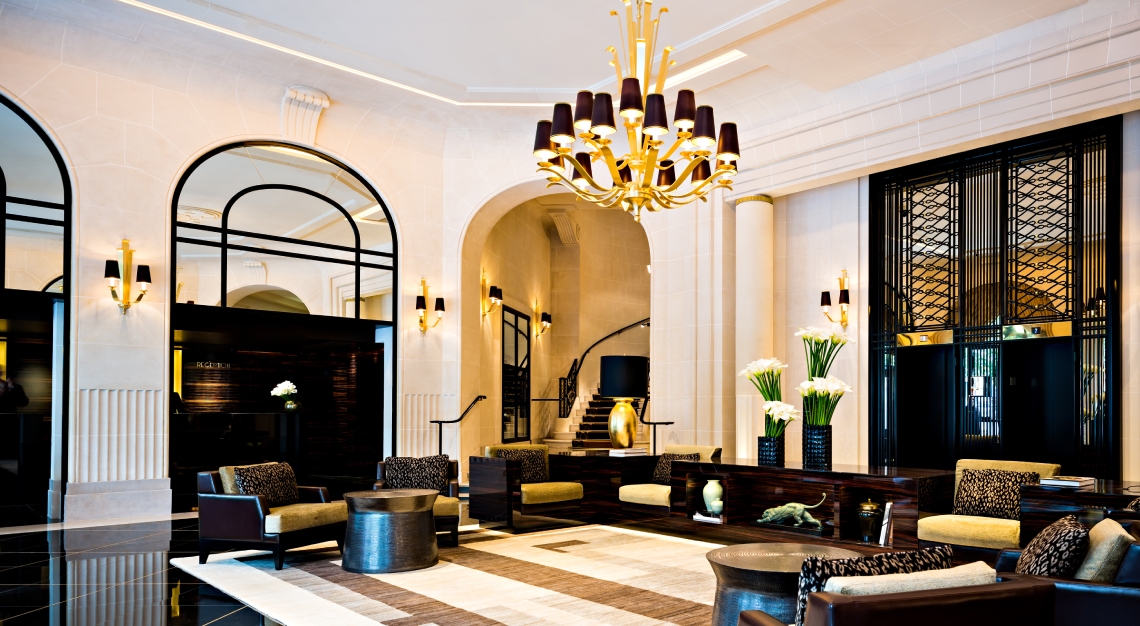
Upon entering, original 1920s elements act as time machines: wrought-iron handrails and wall sconces delicately shaped like the Prince of Wales’s feathers (an emblem intrinsic to the brand’s design language), all preserved with archival precision to safeguard the hotel’s original grandeur. More than decorative flourishes, these details anchor the Prince de Galles firmly in its lineage, reminding guests that they are not just checking in but stepping into a living chapter of Parisian history.
Macassar ebony pairs with sycamore wood, ostrich-feather–inspired chandeliers by Maison Delisle, and veined marble to create a tactile dialogue between past and present. Custom-made furnishings crafted by France’s finest artisanal houses further underscore the hotel’s commitment to craftsmanship and art.
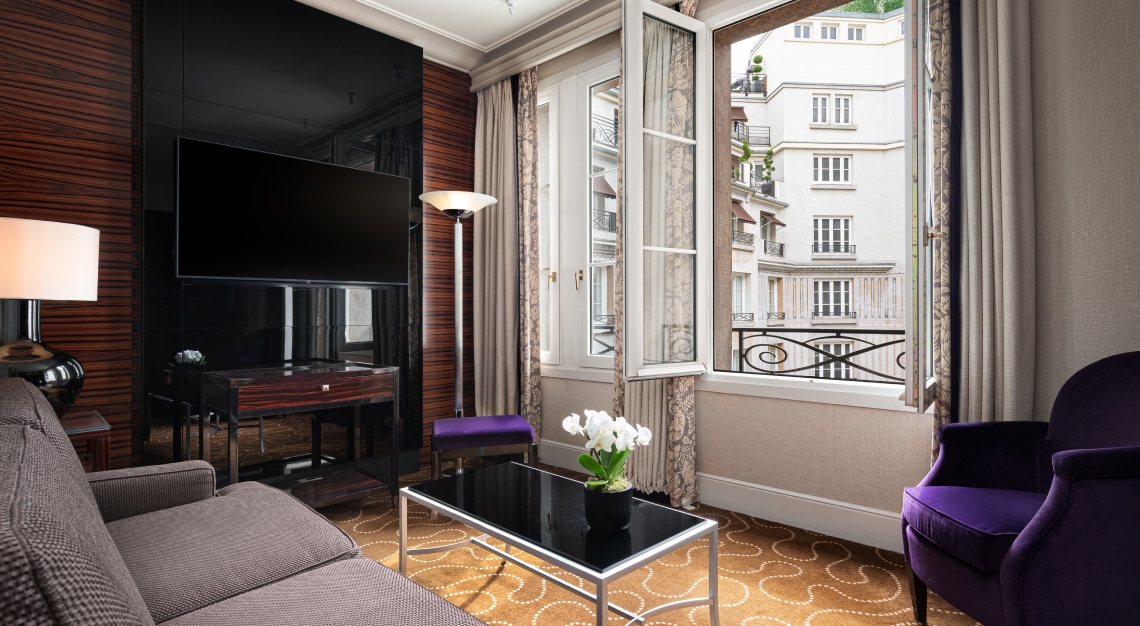
Across its 116 rooms and 43 suites, each space is thoughtfully designed, featuring separate bathtubs and showers, abundant natural light, and, in many cases, terraces overlooking either Avenue George V or the hotel’s legendary patio. Along the walkway, vintage Vogue France fashion editorials from the 1920s line the walls, affirming the hotel’s place in the city of fashion while extending its art-influenced design language.
For travellers seeking a deeper immersion, the suites—particularly those on the upper floors—offer distinct narratives.
The Suite Macassar evokes the Paris of the 1930s, with bespoke furniture inspired by Ruhlmann, Leleu, and Delisle, rendered in a serene palette of blues and creams. The Suite Saphir, located on the seventh floor, revives the exuberance of Art Deco through vivid blue accents, intricate bathroom mosaics, and portraits in the unmistakable style of Tamara de Lempicka. With two private terraces overlooking Avenue George V, it captures both the artistic and urban spirit of Paris between the wars.
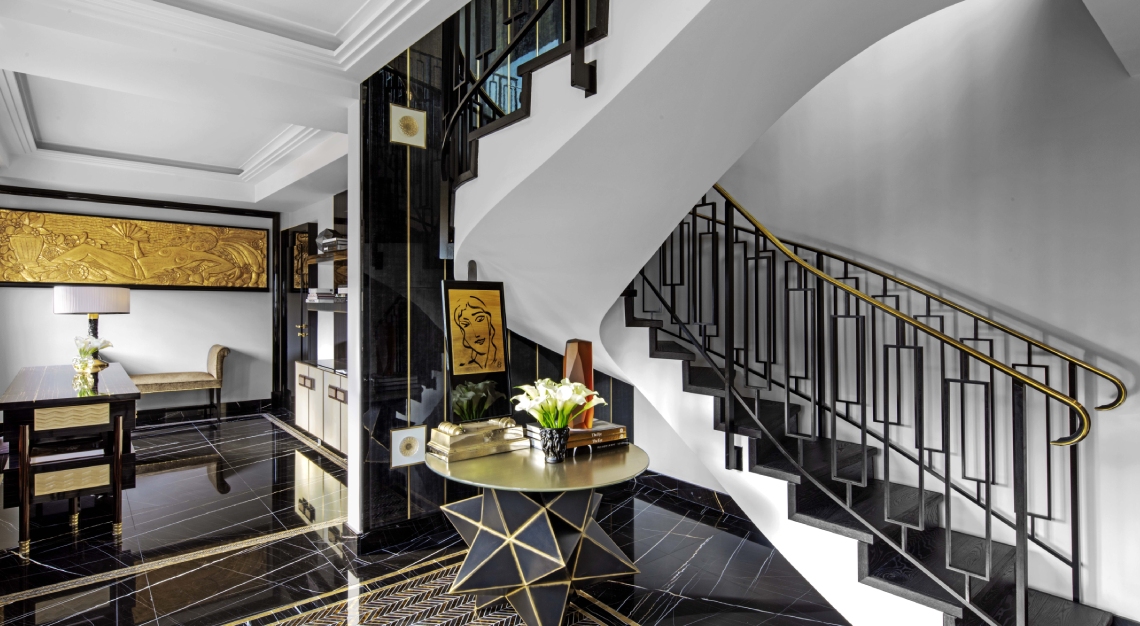
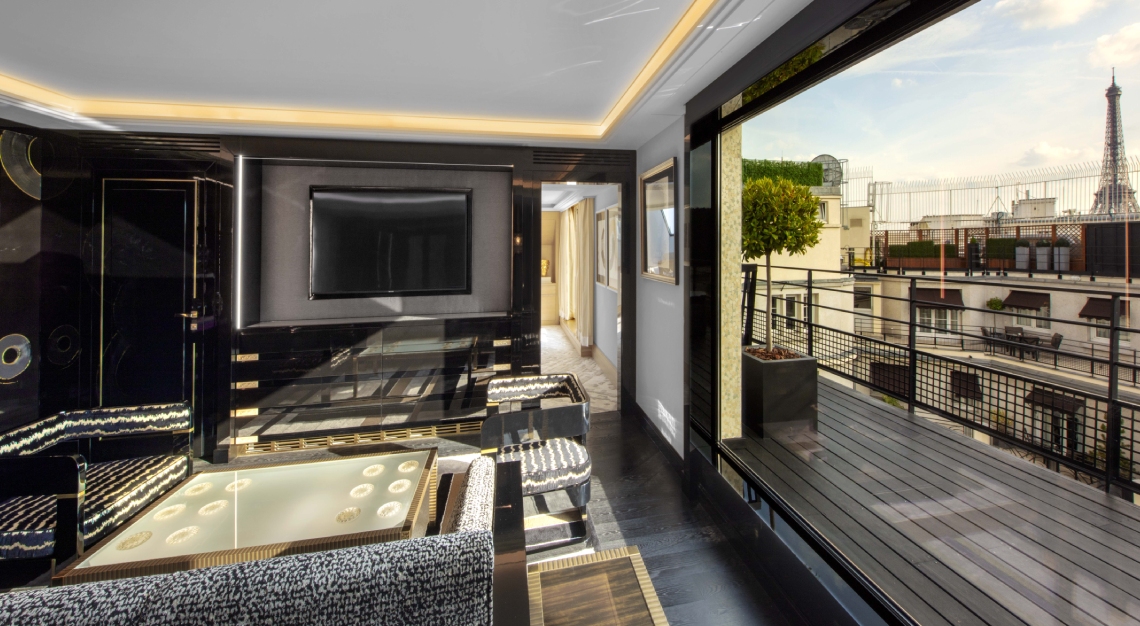
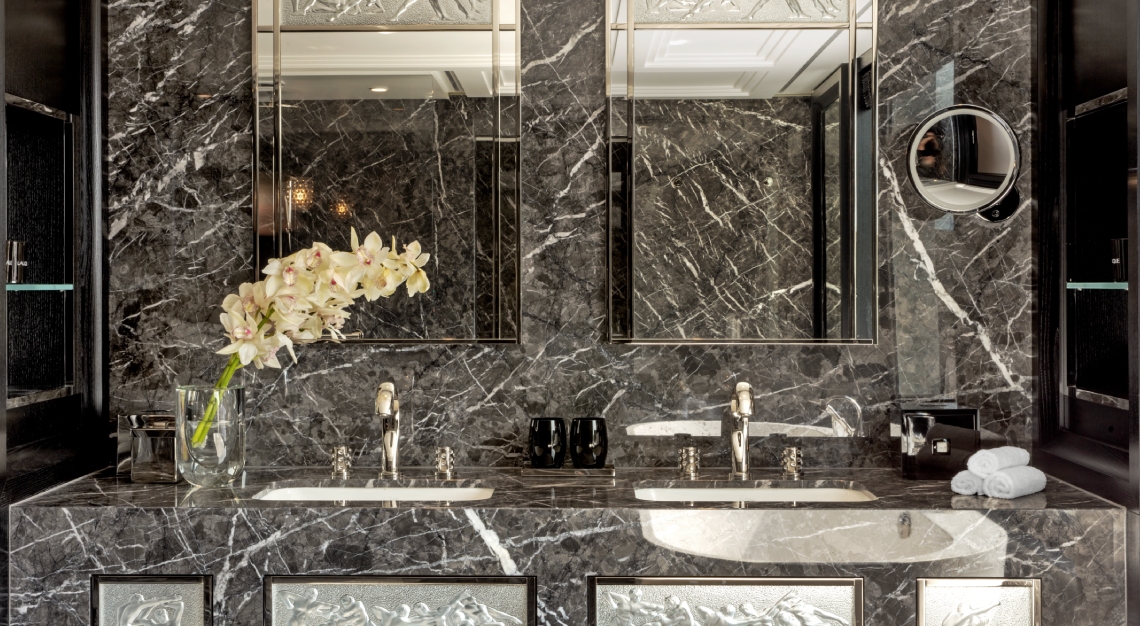
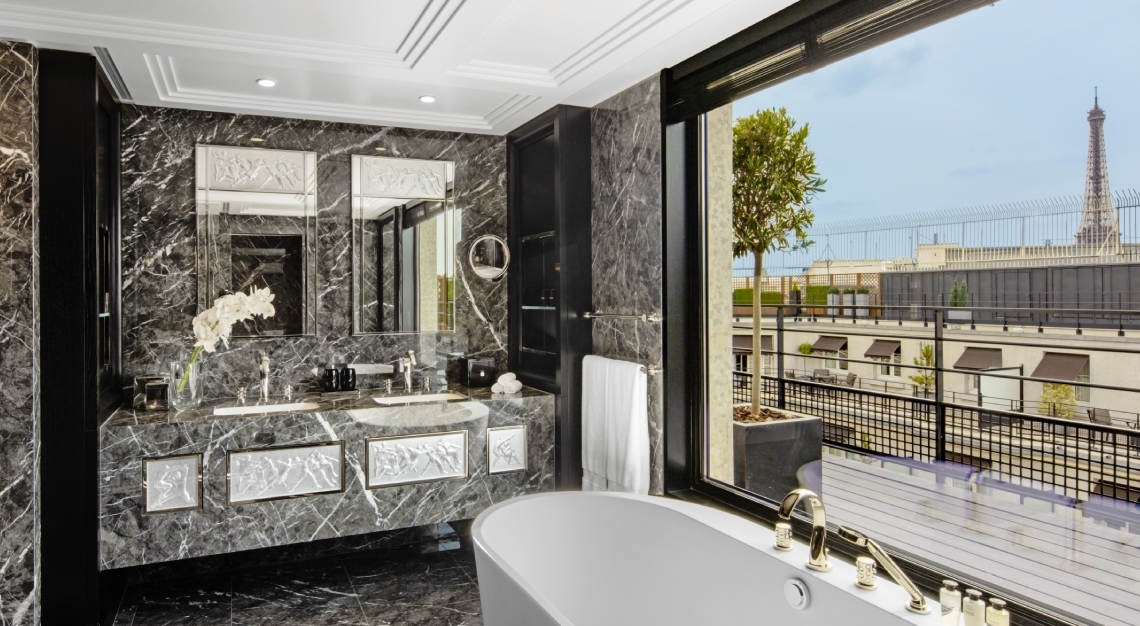
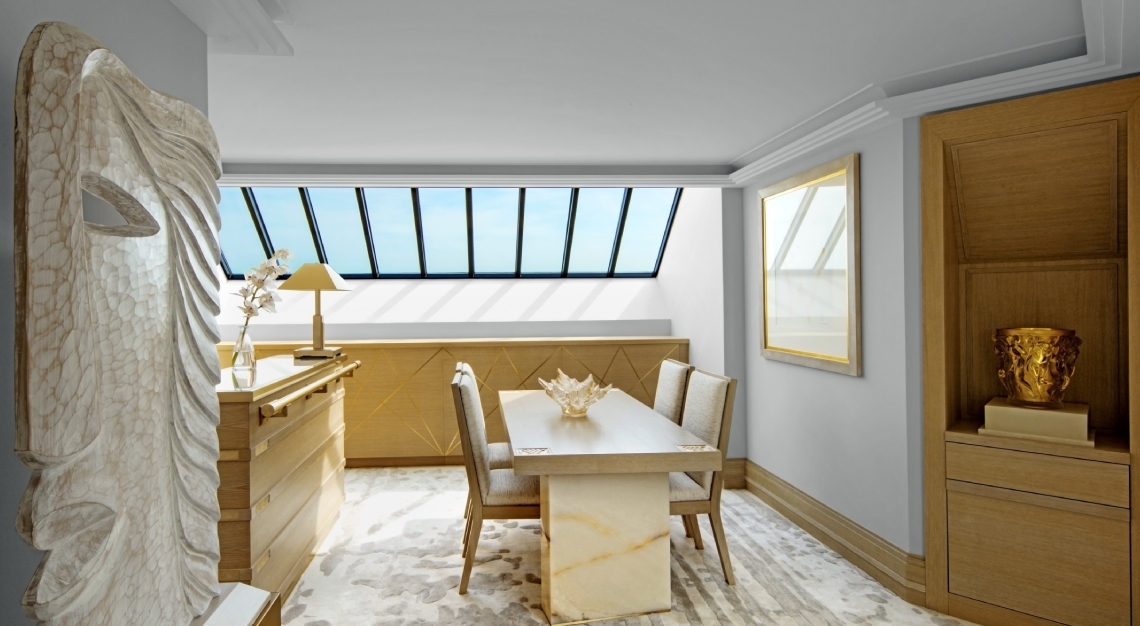
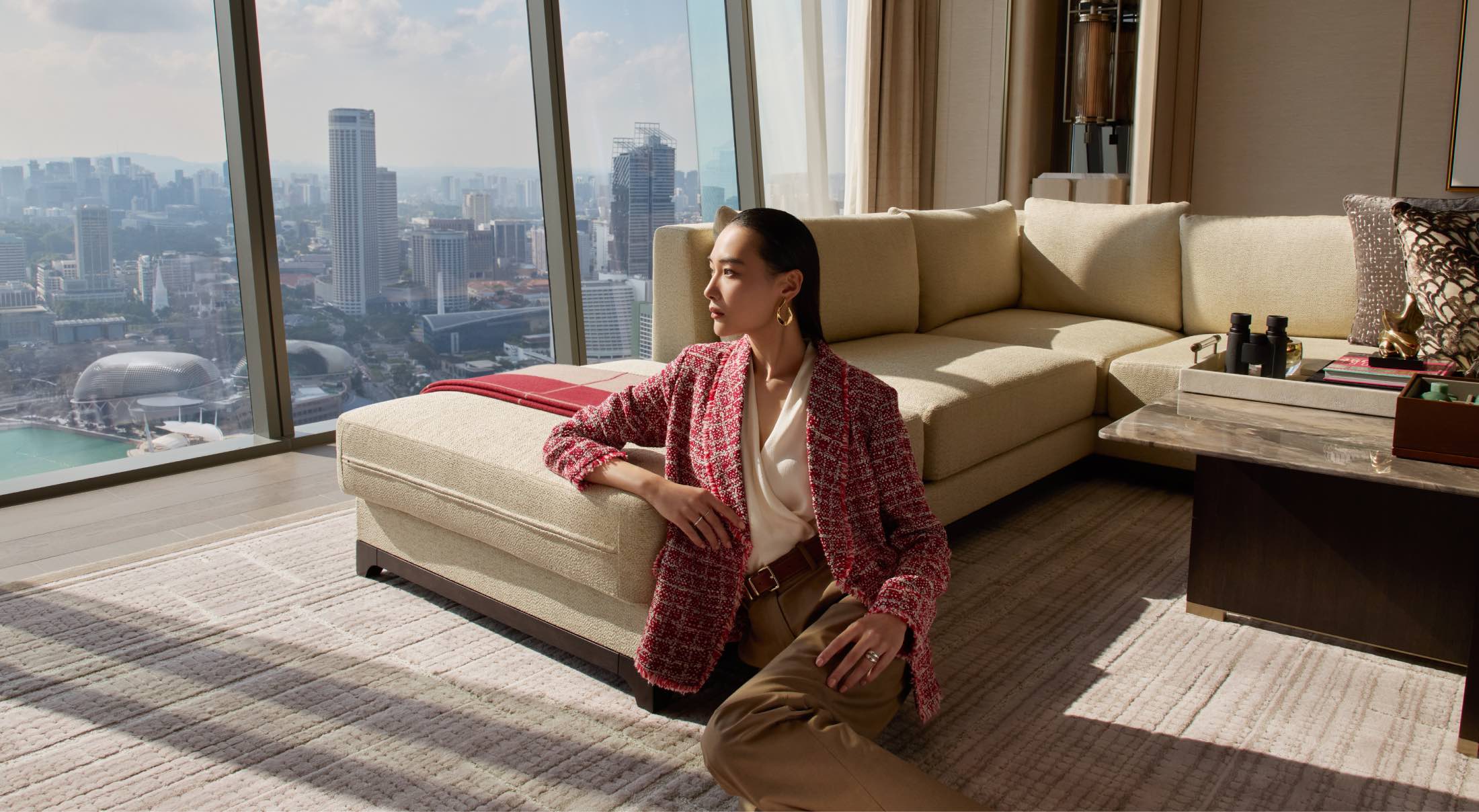
At the summit sits the Suite Lalique by Patrick Hellmann, the hotel’s ultimate expression of contemporary Art Deco luxury. This 180-square-metre duplex, spanning the eighth and ninth floors, was conceived in partnership with Maison Lalique and redesigned by Hellmann to exalt the building’s original lines with minimalist precision. Golden mosaics, black-and-gold living spaces, and a freestanding bathtub perfectly framing the Eiffel Tower culminate in one of the city’s most discreetly spectacular private addresses. A 100-square-metre terrace with 280-degree views over Paris seals its status as a setting for grand, yet intimate, celebrations à la française.
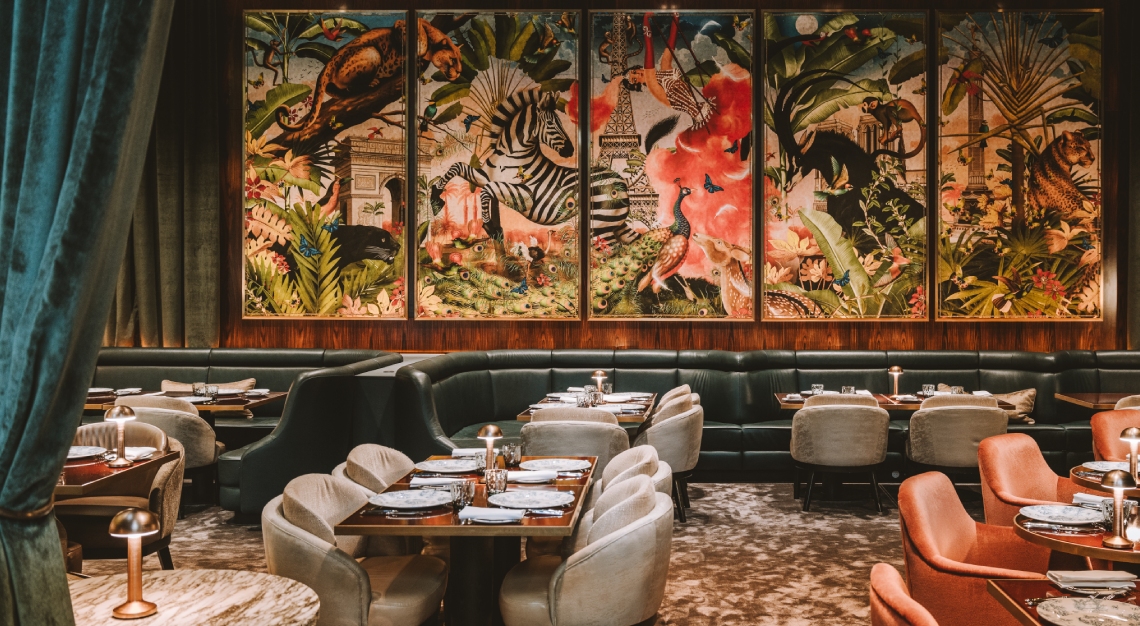
Beyond the suites and rooms, culinary excellence abounds. The hotel’s culinary identity has evolved in step with its revival. 19.20 by Norbert Tarayre, named after the hotel’s founding year, offers a refined interpretation of French bistronomy, rooted in locally sourced ingredients and honest flavours. Tucked within the bar, a private “Table du Chef” with an open kitchen hosts up to ten guests, offering an unusually convivial, behind-the-scenes experience.
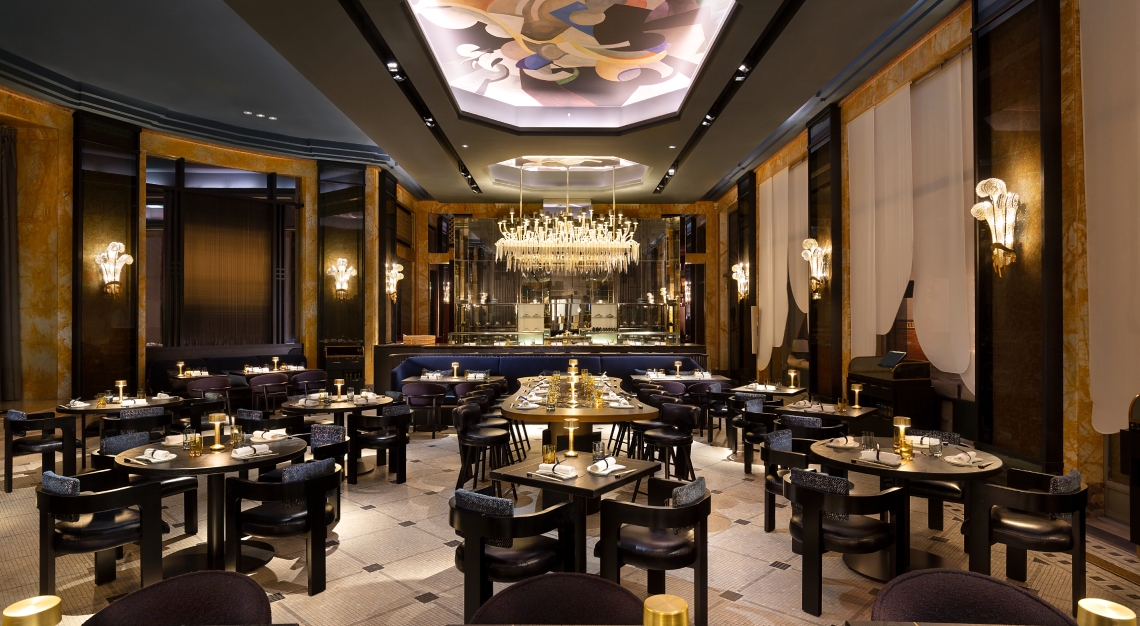
For a more avant-garde evening, Akira Back by Chef Back—the Michelin-starred chef’s first European outpost—introduces a modern Japanese sensibility to the Golden Triangle, balancing precision, memory, and boldness in equal measure. The Art Deco narrative is equally present, expressed through ceiling paintings by Bruno Borrione, who previously collaborated closely with Philippe Starck. While the ceiling itself is not original, Borrione reimagines it with artworks inspired by both the Art Deco movement and the paintings of Francis Picabia.
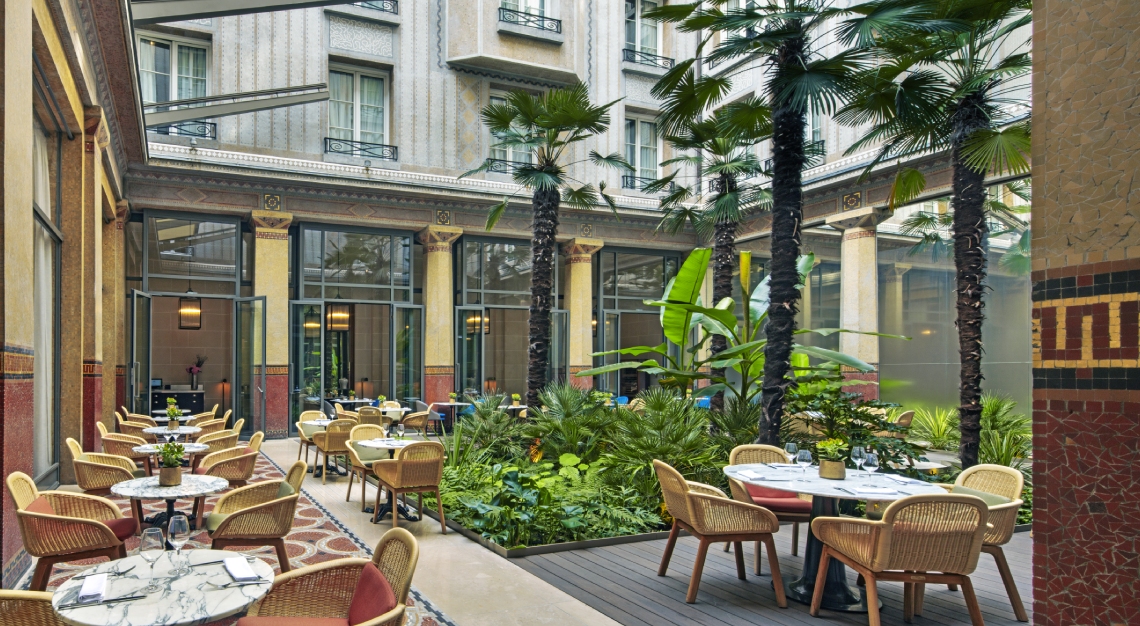
Between meals, the rejuvenated patio—listed as part of the Bâtiments de France and protected for its historical significance—offers a rare Parisian luxury: a tranquil, botanical enclave where the bustle of the city feels worlds away.
The grandeur, however, does not stop there. True to its service motto, Ich Dien—“I serve”—the Prince de Galles excels not only in aesthetics but in human touch. Its Clefs d’Or concierges, trained as Luxury Collection destination specialists, offer access to Paris beyond the obvious: Art Deco landmarks, historic ateliers of French savoir-faire, and lesser-known cultural treasures. Wellness is equally considered, from the 24-hour fitness centre to the private Wellness Suite by Olivier Lecocq, where personalised treatments are offered in complete confidentiality, either in-suite or within the spa’s hammam-equipped sanctuary.
Evidently, the Prince de Galles does not attempt to compete with Paris’ grand hotels through excess. Instead, it offers something more enduring: a sense of belonging to an era defined by grace, discretion, and intellectual luxury. For travellers who value intimacy over spectacle and history over trend, it remains one of the city’s most compelling—and quietly confident—addresses.