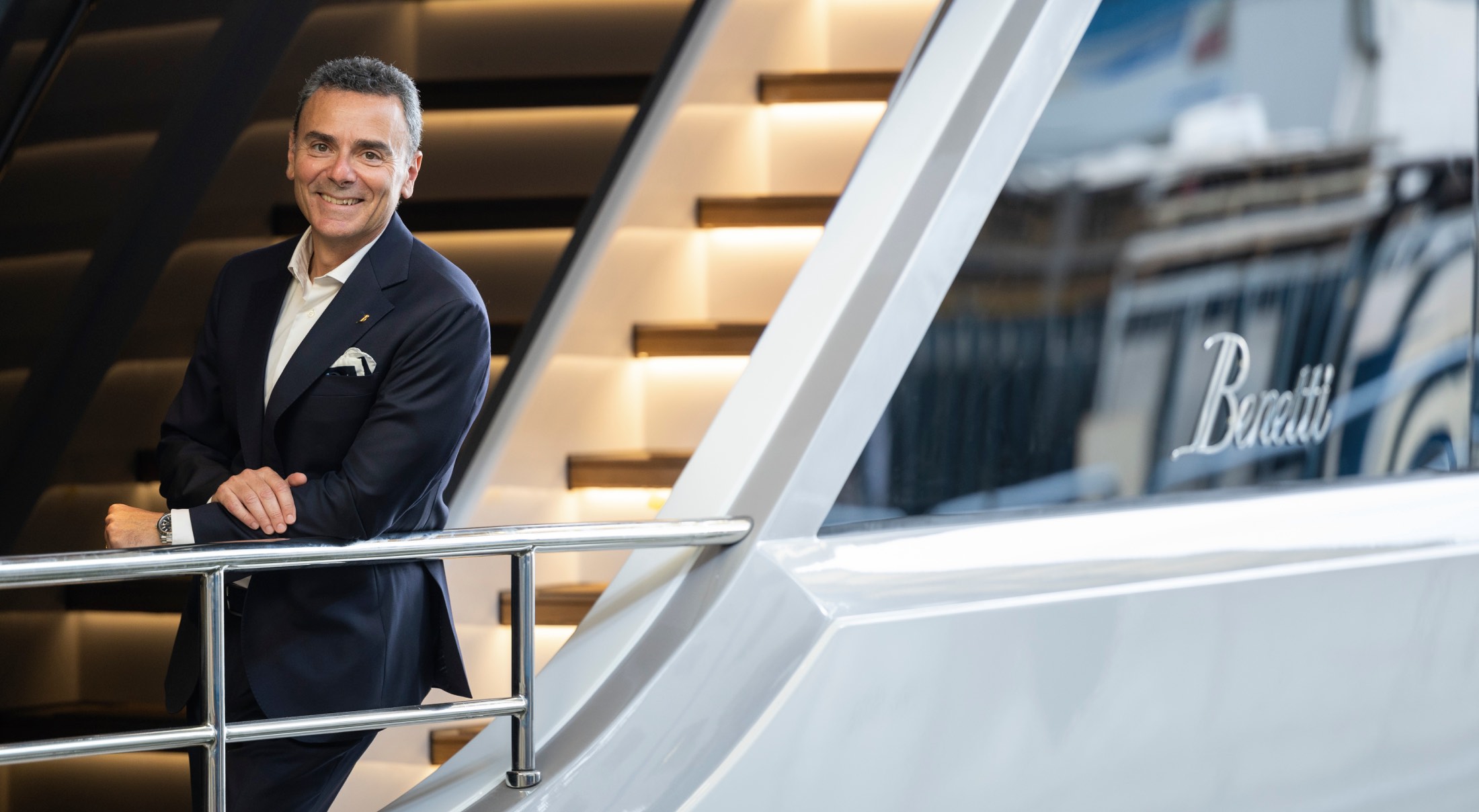
Luxury is built on excess; sustainability demands restraint. Can the two coexist? In the fourth of our five-part series, Voices for Change, we speak to Marco Valle, CEO of the Azimut-Benetti Group
Sustainability is rarely the first thing that comes to mind when one steps on board a 220ft superyacht outfitted with seven staterooms and an elevator linking its multiple decks. Yet the realities of climate responsibility are beginning to reach even the most rarefied corners of the maritime world.
For Marco Valle, CEO of Azimut-Benetti Group, the pressing question is not whether sustainability belongs in yachting, but how it can be used to elevate the experience.
“Sustainable innovation and the enhancement of the on-board experience are intrinsically interconnected,” he says. “To lead the transition is to harmonise technological progress with environmental stewardship, simultaneously elevating the very essence of life at sea.”
It is this philosophy that has guided the Italian shipbuilding group through more than two decades of investment in hybrid propulsion systems, lightweight carbon-fibre construction, and alternative fuels. The group’s early commitment to sustainable solutions, Valle explains, has allowed it to become the “preeminent shipyard for emission reduction solutions”.
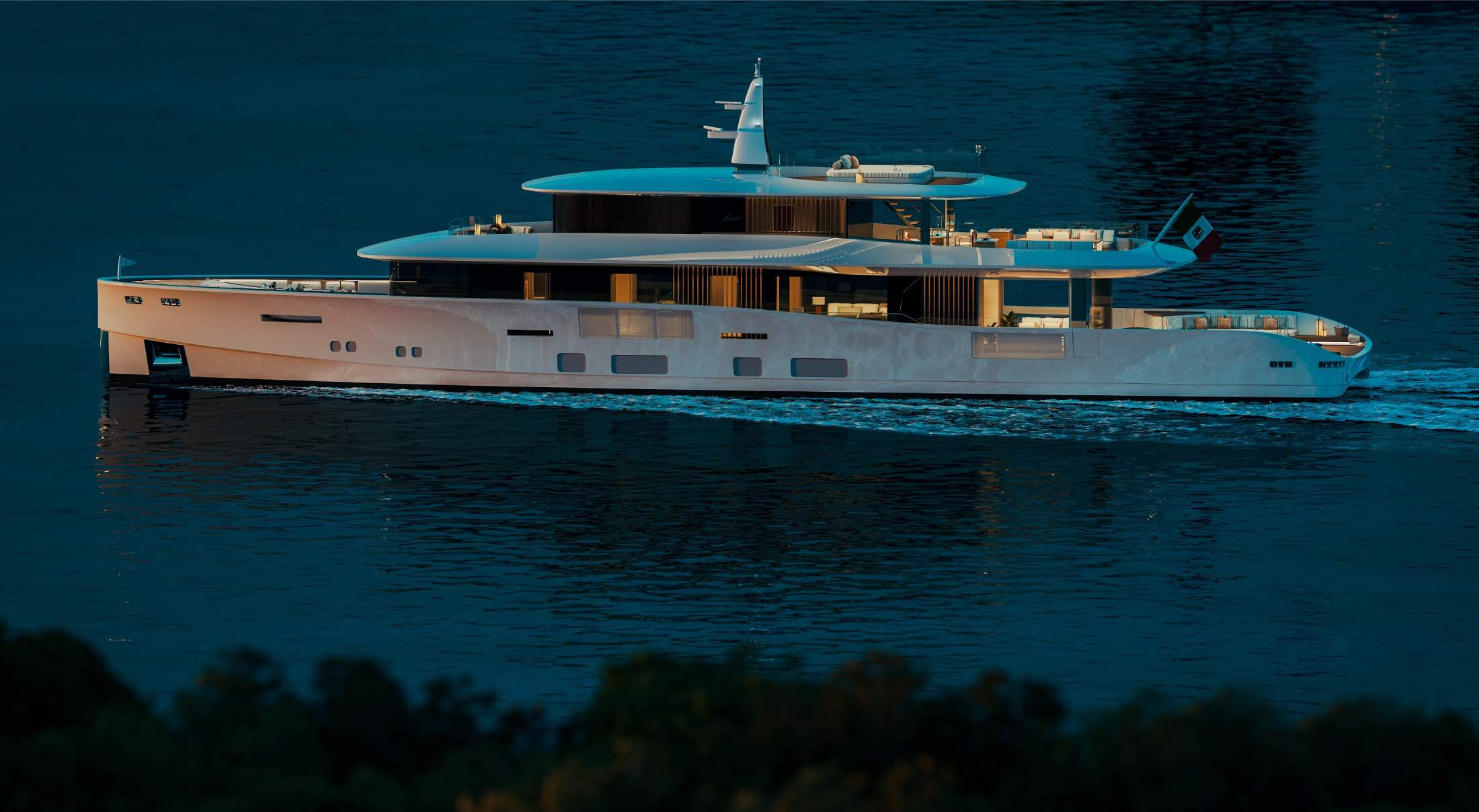
The claim is difficult to dispute when looking at the group’s latest generation of yachts. The Benetti B.Yond series, for instance, is a long-range Voyager yacht that integrates hybrid-electric propulsion with on-board systems that are designed to reduce energy consumption and environmental impact. This allows the vessel to cruise or remain at anchor in certain operating modes with zero emissions, while a direct expansion heating, ventilation, and air-conditioning system can reduce energy use by up to 80 per cent compared with conventional systems.
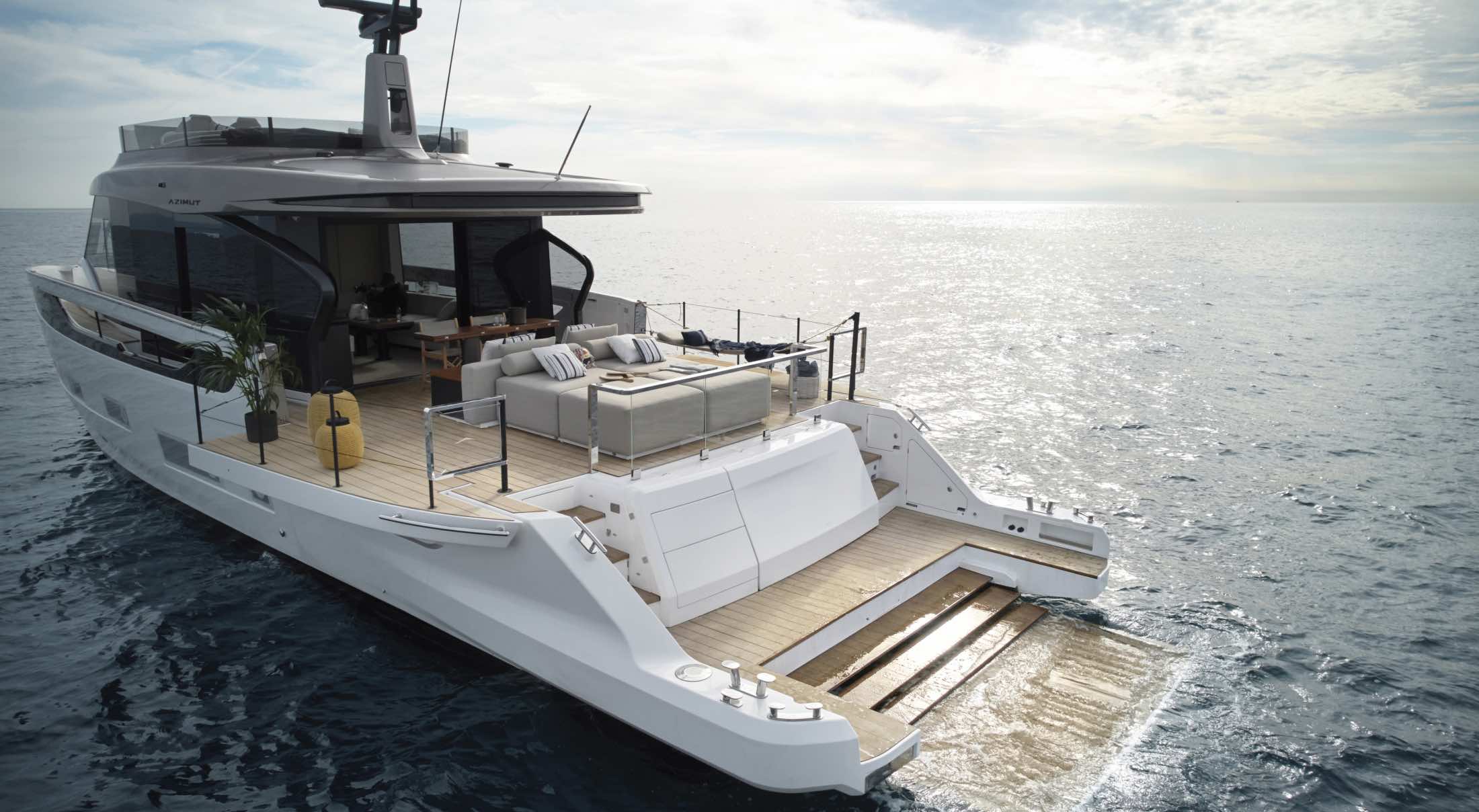
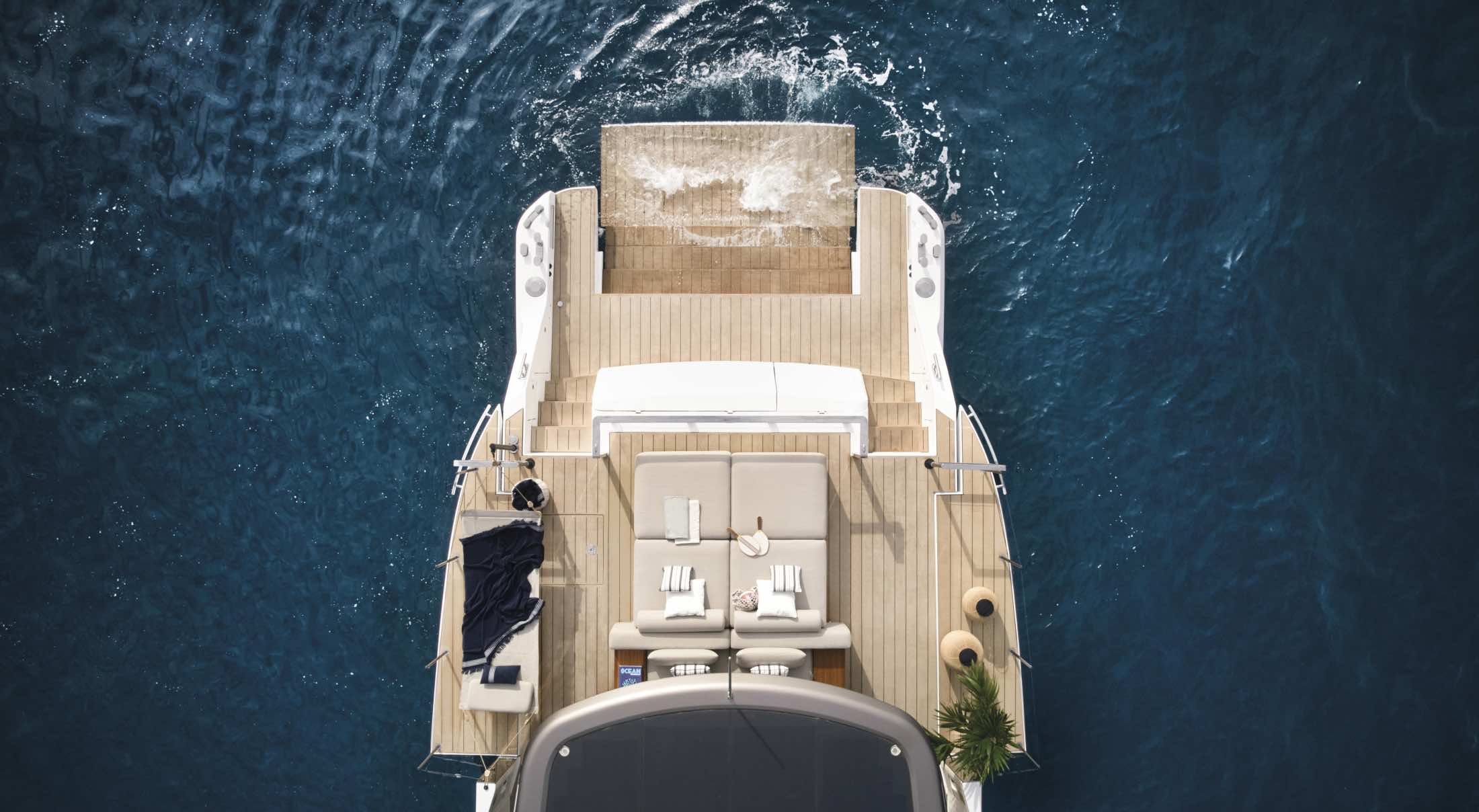
Similarly, the Azimut Seadeck 7 marks a notable step forward, becoming the first yacht to combine hybrid propulsion with Volvo Penta’s IPS system. Paired with a high-efficiency hull and extensive carbon-fibre construction, the design can reduce carbon dioxide emissions by up to 40 per cent over the course of a typical year of use, while also delivering a quieter and more efficient cruising experience.
Beyond individual technologies, Valle believes progress must ultimately be measurable. The group has committed to ensuring that every new model surpasses its predecessor’s efficiency by at least 20 per cent. At the same time, it continues to work with certification bodies such as Lloyd’s, the Yacht Environmental Transparency Index, and the Superyacht Eco Association Index to promote clearer environmental standards across the industry.
From your perspective, what distinguishes a genuinely sustainable yacht?
A genuinely sustainable yacht cannot be defined by a single technology. It is the result of a holistic approach that integrates propulsion systems, on-board energy management, materials, and the overall design philosophy.
Ultimately, sustainability in yachting is not about a single breakthrough. It is about designing an ecosystem where technology, materials, and lifestyle work together to reduce impact while improving comfort and efficiency on board.
You’ve said that for Azimut-Benetti, innovation and sustainability are inseparable. How does this principle influence decisions long before a yacht reaches the water?
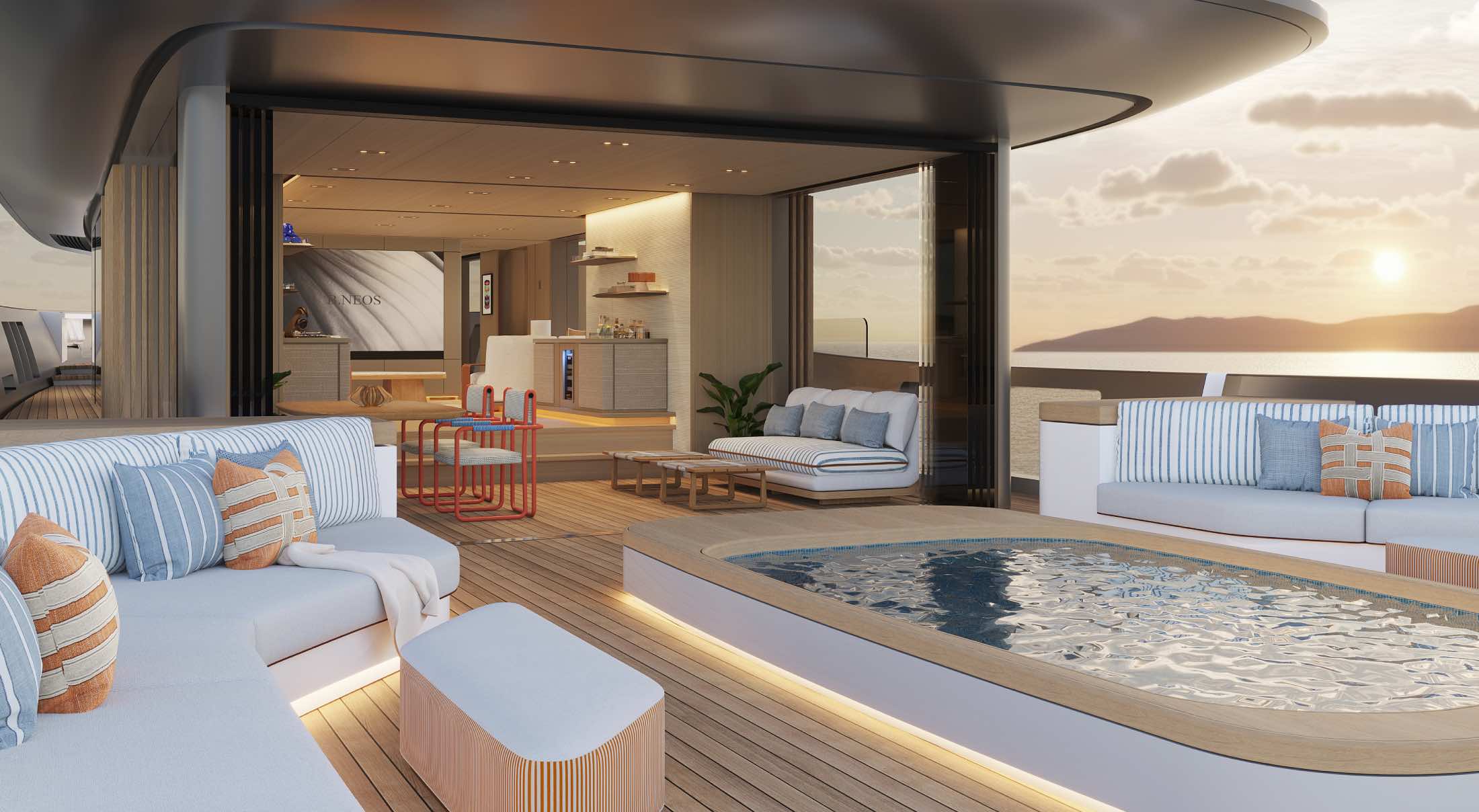
Innovation and sustainability are inherently intertwined and it is embedded in the earliest stages of design and engineering. This is exemplified by the Benetti B.Neos, a 133ft hybrid yacht conceived around the idea of balance between technology, design, and the on-board experience.
Her pure, essential lines are made possible only by the integration of hybrid propulsion, which allows for a significantly more compact engine room that not only improves efficiency but also frees up valuable interior space, enabling new architectural solutions such as a double-height living area that connects the main saloon directly with the aft deck and the water beyond.
The group’s adoption of hydrotreated vegetable oil (HVO) biofuel—both for yacht fuelling and shipyard operations—marks a tangible shift away from fossil fuels. What has this transition revealed about the practical realities of decarbonising yachting today?
Having embraced HVO well ahead of its time, we have demonstrated a concrete path towards decarbonisation. The results are unequivocal: a 78 per cent reduction in emissions when measured against the benchmark of traditional fuel usage.
As superyachts become larger and more complex, which areas pose the biggest challenges for achieving environmental improvements?
It is, in fact, quite the opposite. Larger vessels offer more space for batteries, on-board systems, and greater complexity. Furthermore, there is a higher readiness to accommodate the costs associated with such advanced technology on larger vessels. The true challenge lies in the smaller dimensional segments, which are also the most widespread across our seas.
Beyond technological solutions, where can design, layout, and guest experience make a meaningful difference in sustainable yachting?
For us, sustainability and the on-board experience are never afterthoughts. The Seadeck Series reflects this philosophy. Through open spatial concepts like the Fun Island and the use of responsible materials, the design promotes a gentler way of experiencing the sea, one that places people, nature and long-term sustainability at the centre of the yachting lifestyle.
Through initiatives such as the Water Revolution Foundation and concepts like Blue Wake, sustainability in yachting is becoming more collaborative. What actions must large shipyards take to translate these initiatives into meaningful industry-wide impact?
We should leverage industry associations to establish shared objectives. The inherent complexity arises from the fact that our sector encompasses remarkably diverse categories and business models, ranging from ribs and sailing vessels to custom yachts.
For this reason, we advocate for the public disclosure of objective and certified metrics, ensuring they are shared through a framework that is clear and accessible to all.
This story first appeared in the April 2026 issue. Purchase it as a print or digital copy, or consider subscribing to us here