For brands such as Bvlgari, Boucheron, Cartier and Van Cleef & Arpels, the answer can come from emotion, heritage, architecture and the character of a single jewel
The assumption seems reasonable enough: that a great jewel begins with a great stone. That somewhere in the mines, once the right gem was found, everything followed. The reality, as told by the people who make these things, is considerably more complex.
Cartier treats the stone as a muse, letting it speak before a single line is drawn. Bvlgari follows the gem’s impulse, then builds architecture around it. Van Cleef & Arpels begins not with a stone, but with a story. And Boucheron? The concept comes first and the gem is summoned to serve it. Four brands, four answers.
Cartier
At Cartier, the stone is not the starting point, it is the whole point. A ‘Cartier stone’ is not merely a gem that satisfies exacting standards of purity, cut and proportion, but one with that elusive je ne sais quoi, a tension of character that sets it apart even among exceptional specimens.
Here, the stone is treated as muse, guide, and point of departure. Through its shape, colour, history, and symbolism, it becomes the source from which designers and artisans draw inspiration. In practical terms, that means physical stones laid out before the designer, rather than abstract sketches conceived in isolation.
For Jacqueline Karachi Langane, director of high jewellery creation, listening to a stone is as poetic as it is technical. “Letting a stone speak is to recognise in it a memory of the world, a beauty shaped by time and imbued with eternity,” she says. “Each gemstone is an encounter, an alchemy that resonates with our vision and our quest for the Cartier ideal. The creation serves the stone, revealing its nuances, its brilliance, its sparkle and its inner vibration.”
From the first pencil stroke to the final polish, designers work in constant dialogue with stone experts, lapidaries, gem setters, jewellers, and polishers. “Le Chœur des Pierres is an ode to gemstones, a dazzling symphony in which each gem sings its own melody,” says Alexa Abitbol, director of the high jewellery workshops. She notes that the collection spans more than 125 unique pieces and required over 85,000 hours of work, with craft and aesthetic excellence uniting every discipline in the workshop.
Even the title of the collection, Le Chœur des Pierres, expresses the brand’s position. As Pierre Rainero, director of image, style, and heritage, points out, chœur in French means chorus, while cœur means heart; pronounced the same way, the two words together suggest both harmony and essence.
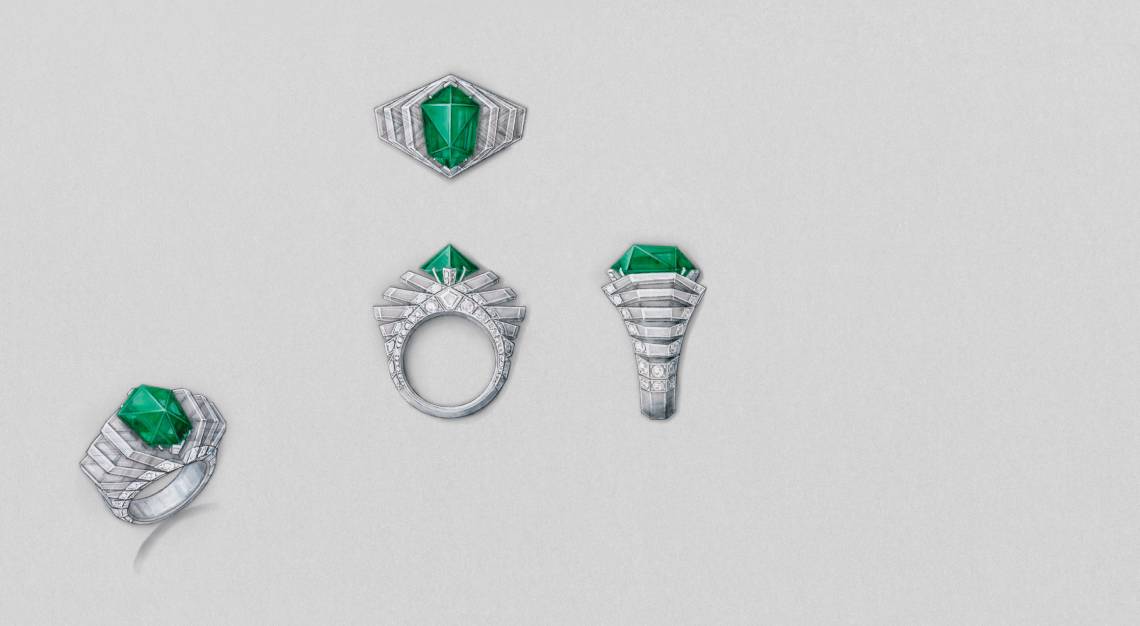
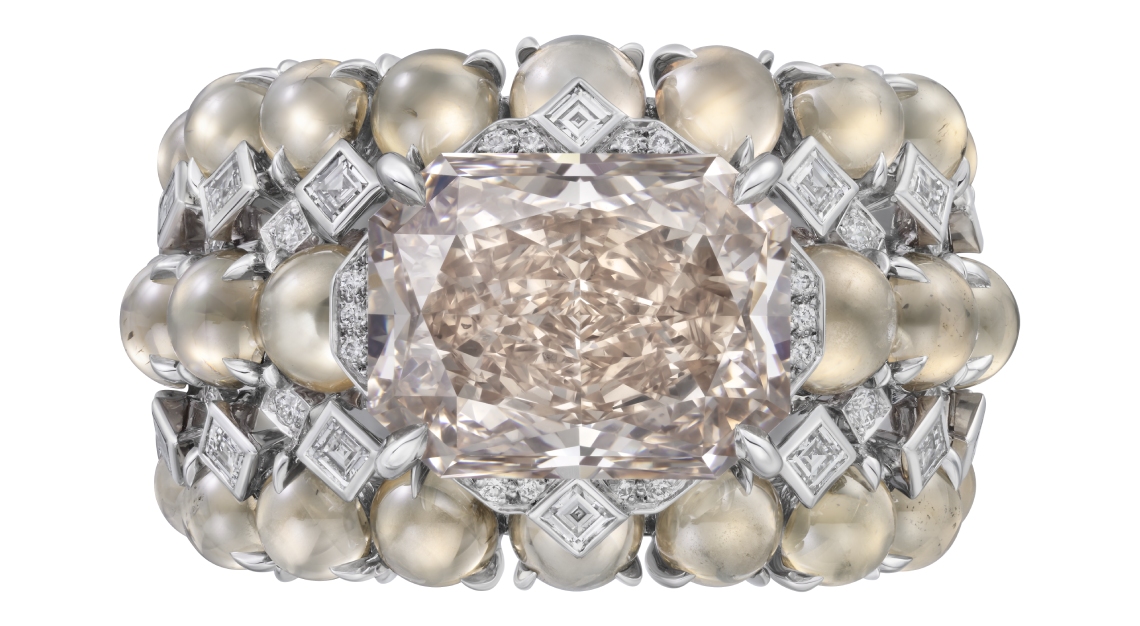
Whether in pieces such as Tutti Kanya, where a carved Zambian emerald is surrounded by rubies, sapphires, and emeralds, or in rings like Keona, Amberis, and Auralis, where rare diamonds dictate architecture and palette, the pattern remains the same: the stone speaks first and Cartier listens closely enough to build a jewel that feels almost latent within it.
Bvlgari
“Everything always begins with the gemstones,” says Lucia Silvestri, jewellery creation and gems buying executive director. “They are the true starting point of our creativity and design.”
Silvestri, often described as the Queen of Gems, does not regard stones as raw material to be slotted into a pre-existing concept. Instead, they are the catalyst for imagination itself. One of the first lessons she learnt from the Bulgari family was uncompromising: never buy a stone unless you already know how you will use it.
“The moment I find the right gem, one that speaks to me through its character and energy, I immediately begin to imagine what it could become,” she says. That process begins at the gem table in Rome. Stones are selected and assembled, colours paired, proportions tested, and only then does the conversation with design fully begin.
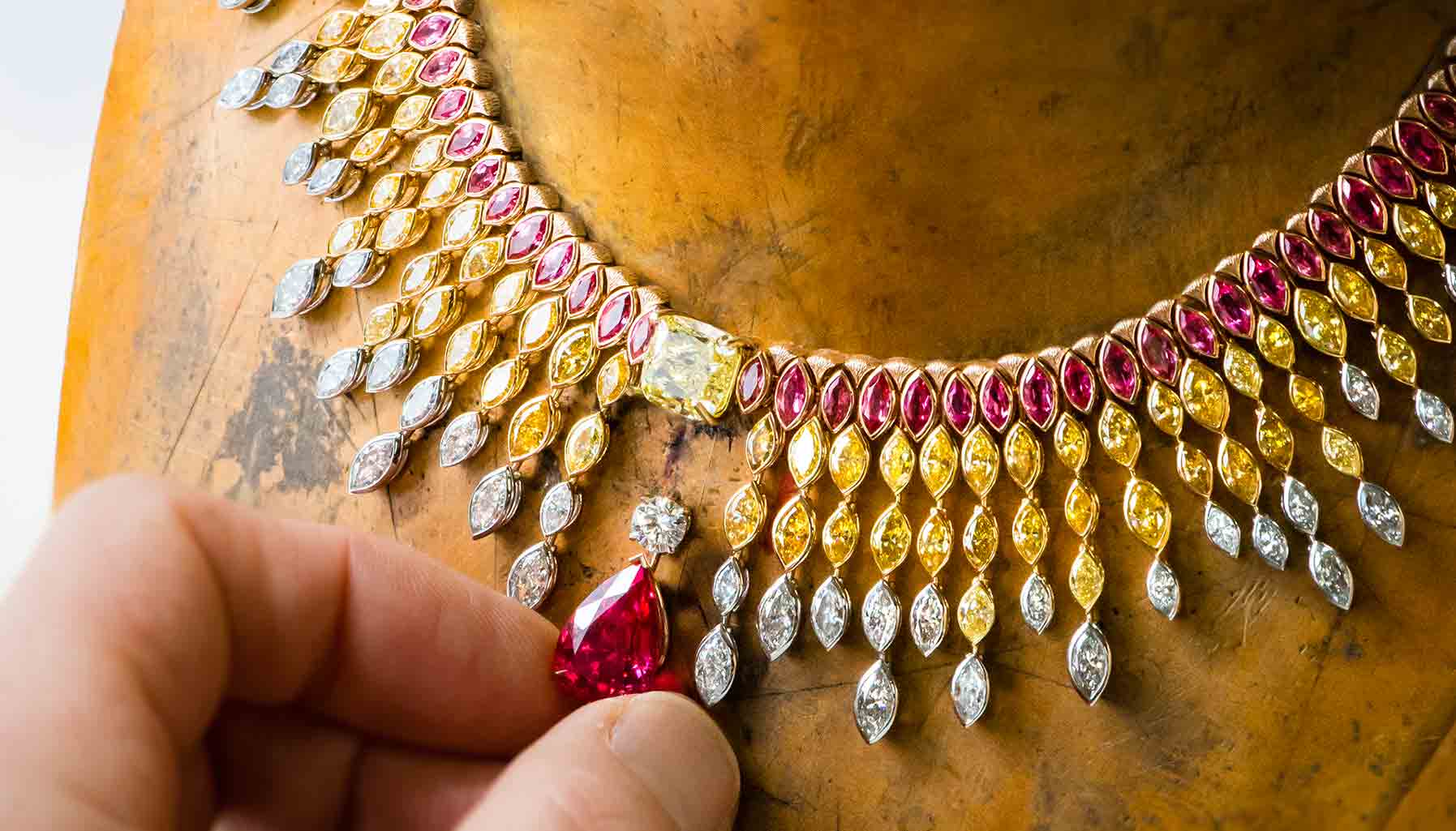
From there, the dialogue continues into the high jewellery atelier, where master goldsmiths transform flat drawings into three-dimensional objects.
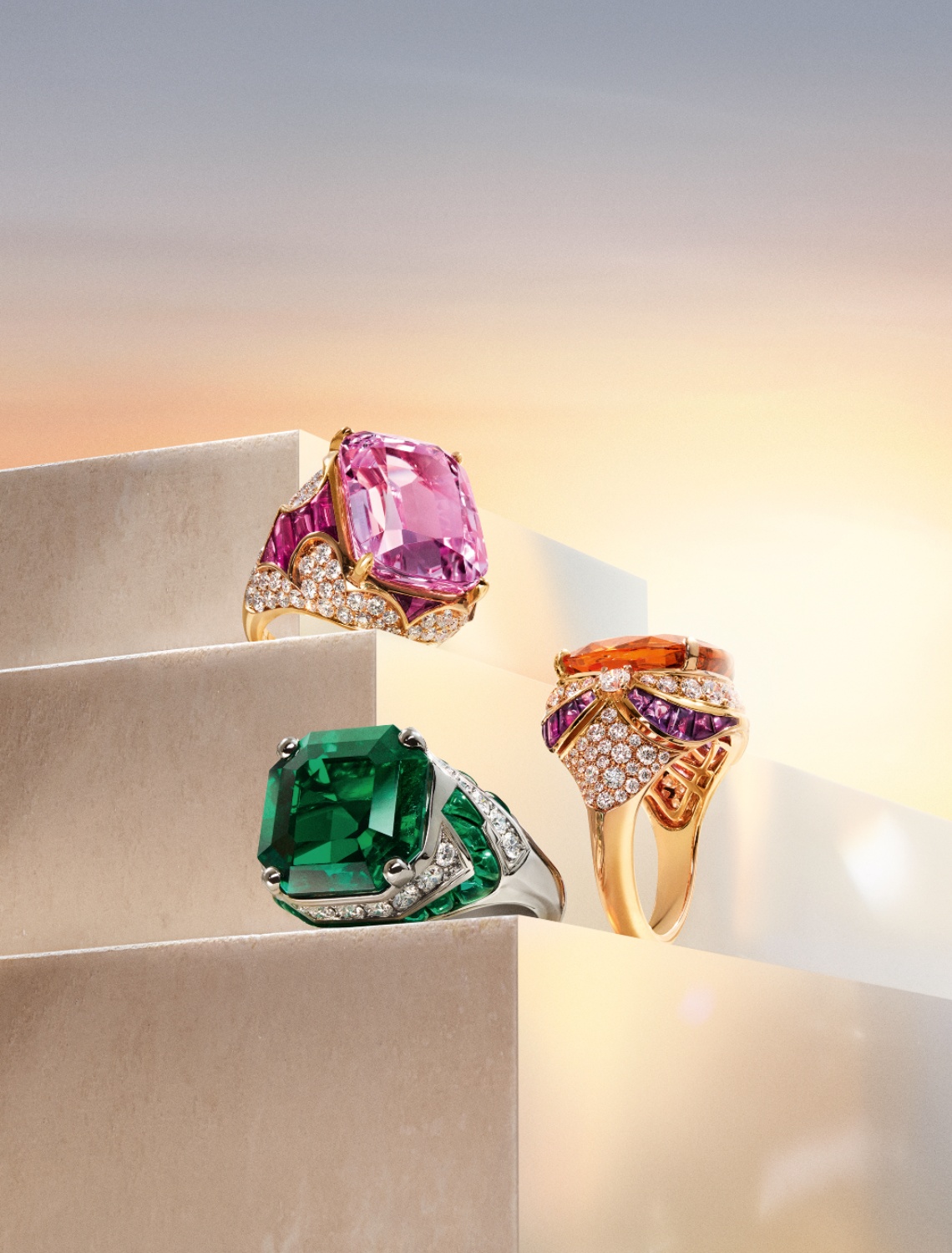
Because the stone usually comes first, the idea of a conflict between gem and design is, in her view, almost beside the point. “This situation does not really occur because everything starts from the gemstone,” she says. “It is the stone itself that suggests the design that will best enhance it.” Colour, inclusions, proportions, and even imperfections help determine the final silhouette. Rather than imposing a design onto a stone, Bvlgari shapes the design around it, almost as though tailoring a garment to a body.
There is, however, one notable exception: diamonds. “In this case, the design often comes first and only afterwards do we search for the stones that will bring the vision to life,” Silvestri notes. Yet even here, she resists the idea that high jewellery should orbit a single hero stone. “In a Bvlgari creation, every element is essential,” she says. “The centre stone, the surrounding gems, and all the inserts — whether pave, onyx, or other materials — together with the gold and the craftsmanship behind it, even the back of a necklace, which often feels like a piece in itself, all play a fundamental role.”
Her aim is “never to have one protagonist and everything else secondary”, but rather to create “a harmonious composition where every detail contributes to the overall beauty and balance of the piece”. That idea feels quintessentially Bvlgari: chromatic, architectural, and always alive to the dramatic power of the whole.
Van Cleef & Arpels
Van Cleef & Arpels approaches the question from another angle. “At Van Cleef & Arpels, the starting point for a collection of this type is the theme and the story we want to share,” says CEO Catherine Renier.
Before a sketch is drawn or a gem selected, the brand’s studio immerses itself in a narrative universe, a process that can take three to four years. Once a theme is chosen—Egyptian civilisation for Fascinations d’Égypte, for example— it is circulated through the studio like a script. “There are no sketches; instead, we compile ingredients such as colours, shapes, significant phrases, and even myths that come together to characterise the contours of the collection,” Renier explains.
These elements are gathered into mood boards, which Renier describes as indispensable and enormously enriching for all involved. Only then do sketches begin. Initial drawings test different interpretations of the theme, and recurring features gradually emerge into an aesthetic framework. These iterations, she says, “serve to refine the explorations and set out a strong artistic orientation for the future collection”.
Gemstones enter early, but always in conversation with story. The stones collected by the brand’s gemologists “always stir deep emotions and spark any number of creative ideas”, she adds.
In most cases, stones are selected in response to the narrative direction already taking shape, though she acknowledges that occasionally the sequence is reversed. For Fascinations d’Égypte, some clips were initially sketched without a centre stone and the gemologists later sourced the materials needed to realise them.
The process, Renier makes clear, is never linear. Each piece presents its own technical and visual complications, particularly when the collection moves beyond the brand’s familiar codes.
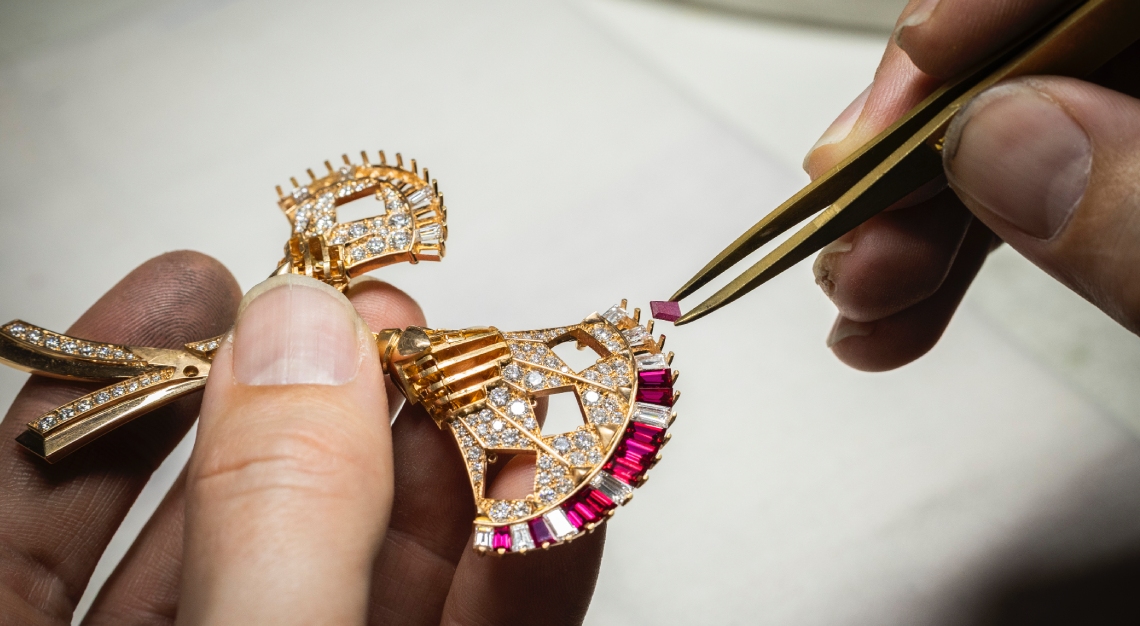
In Fascinations d’Égypte, the studio had to devise feminine figures with crowns and headdresses — a significant departure from the brand’s customary ballerinas and princesses. Another challenge was ensuring that these elaborate headpieces did not overpower the rose-cut diamond faces beneath them. “We had to carry out a number of tests to optimise the radiance of the stone while incorporating the headdresses,” she says.
Despite the complexity of the open mounts required to hold the rose-cut diamonds, solutions were found. The larger lesson, she says, is the “vital importance of continuous dialogue” between gem experts, designers, jewellers, and the other metiers involved. At Van Cleef & Arpels, the question is not really whether the stone or the design comes first. It is whether either can exist meaningfully before the story.
Boucheron
For Claire Choisne, creative director of Boucheron, the answer is the most radical of all: a jewel does not begin with a stone. It begins with an idea. “For me, the dream of the piece always begins with an idea, an emotion, or a story I want to tell,” she says.
That insistence on concept over carat weight has become one of the defining characteristics of her tenure at the brand. In the annual Carte Blanche collections, she pushes a single obsession to its fullest expression. In 2024, with Or Bleu, that obsession was water. Rather than arranging sapphires into a familiar cascade, she pursued a specific shade: the electric, translucent blue of Icelandic glaciers. The result was Cristaux, a necklace built around 24 aquamarines, all nearly identical in tone and size, sourced only after the image had been fully formed in her mind. “We then sourced a set of 24 aquamarines with an extraordinary, vivid shade of blue,” she says. “Each stone is nearly identical, which made the necklace not only technically remarkable, but truly one of the masterpieces of the collection.”
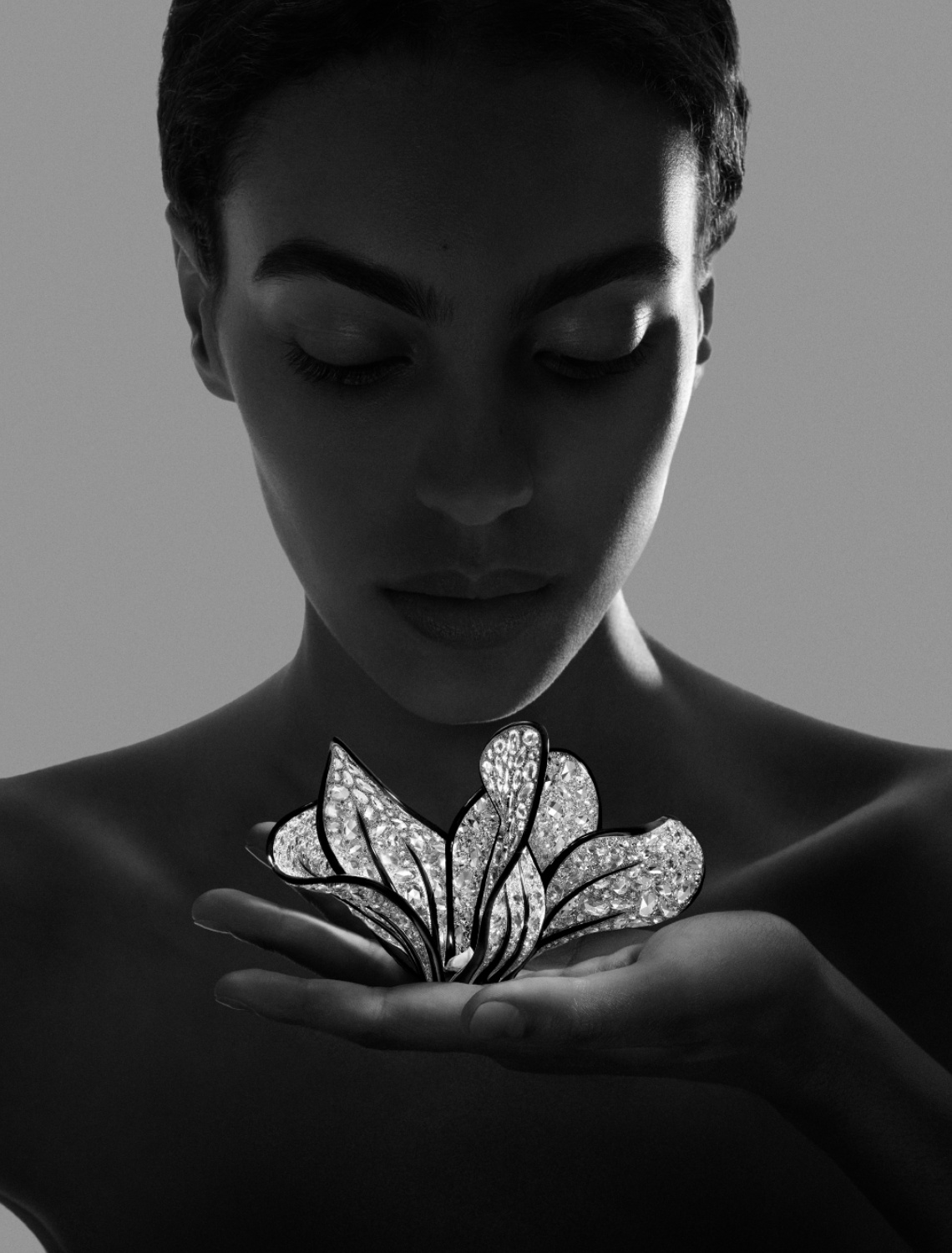
If Or Bleu was about liquidity and light, 2025’s Carte Blanche Impermanence explored nature marked by time. In Composition N4, cyclamens, an oat branch, a caterpillar, and a butterfly form a miniature ecosystem in motion. To render a cyclamen petal convincingly, Choisne required diamonds to follow its undulating edge precisely. “For the cyclamen, I wanted the diamonds to follow the natural undulation of the flower as faithfully as possible,” she explains.
The solution involved nearly 700 rose-cut diamonds, hand-selected one by one in different shapes and sizes, set onto white gold petals until the metal all but vanished. What distinguishes Choisne from her peers is her refusal to allow a centre stone to dominate the narrative. “You may notice that I very rarely design pieces around a large centre stone,” she says. “For me, a jewel is above all a story, an emotion, and its singularity should never rely solely on one central gem.” Instead, she treats pave, colour gradations, and supporting stones as equal protagonists.
One of the clearest examples is Cascade, another highlight from Or Bleu. It is the longest necklace made by Boucheron, measuring 148cm and pave-set with more than 1,800 diamonds in baguette, square, and round cuts. Its impact comes not from any single gem, but from its sense of movement and the extraordinary workmanship required to sustain that visual flow. “The emotion of the piece came not from one dominant stone, but from the fluidity of the composition and the extraordinary craftsmanship required to create this endless cascade of light,” she says. In an era still seduced by carat counts, Choisne proposes an intellectual form of luxury: one driven by narrative, experimentation, and emotional precision. The stones remain exceptional, but they are not the authors of the jewel.
This story first appeared in the July 2026 issue. Purchase it as a print or digital copy, or consider subscribing to us here