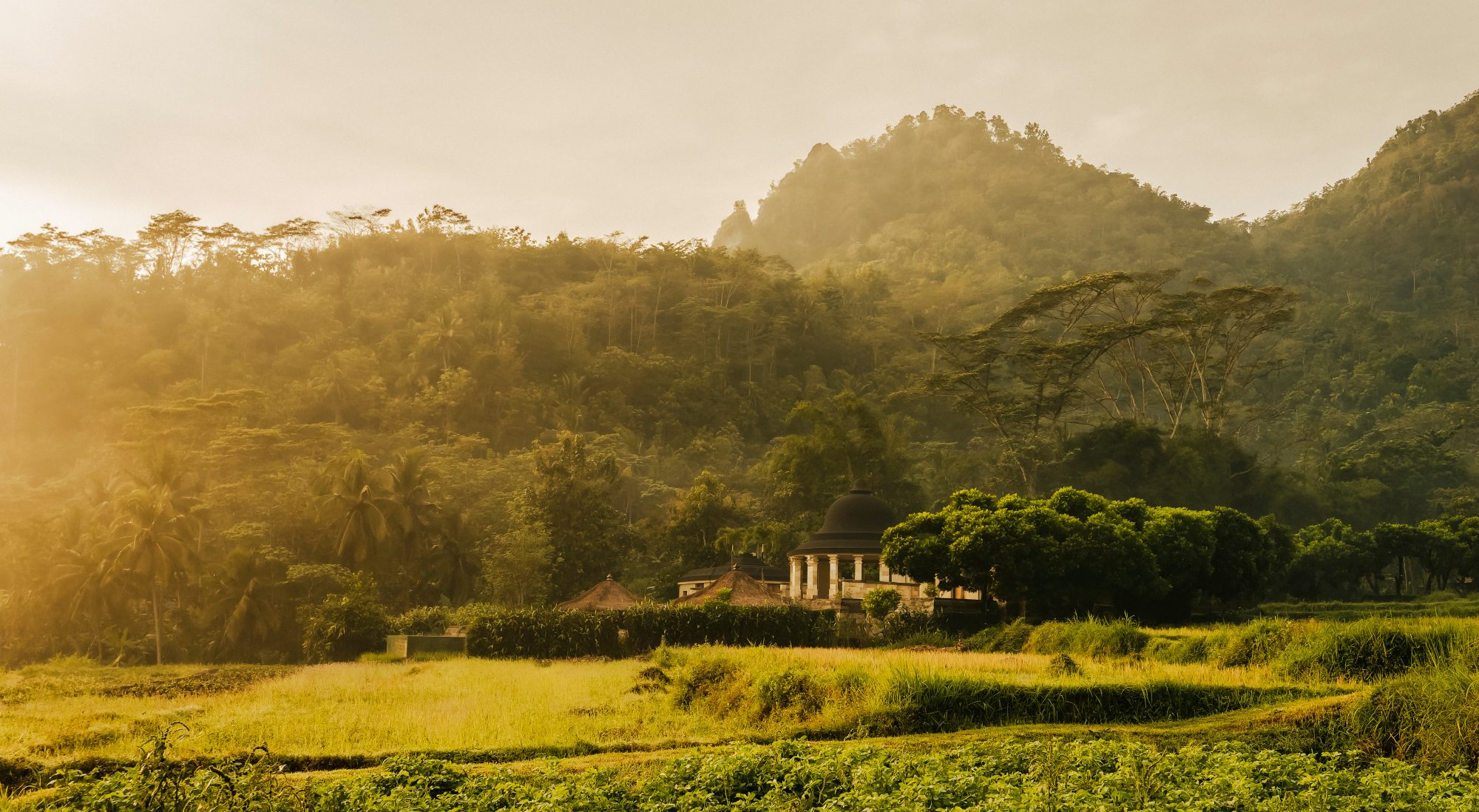
More than just the views of Borobudur, Amanjiwo in Central Java offers the rare permission to slow down, listen closely, and simply be
I could tell you that Amanjiwo was built in 1997, has 33 suites across five different categories, and sits within view of Borobudur, the ninth-century Buddhist monument and UNESCO World Heritage Site. I could also tell you that most of its suites are the same size, save for the two-bedroom Dalem Jiwo Suite, and that choosing one is less a matter of square footage than of perspective: pool or no pool, mountains or rice paddies. But if you only knew these about Amanjiwo, I would be doing it a disservice.
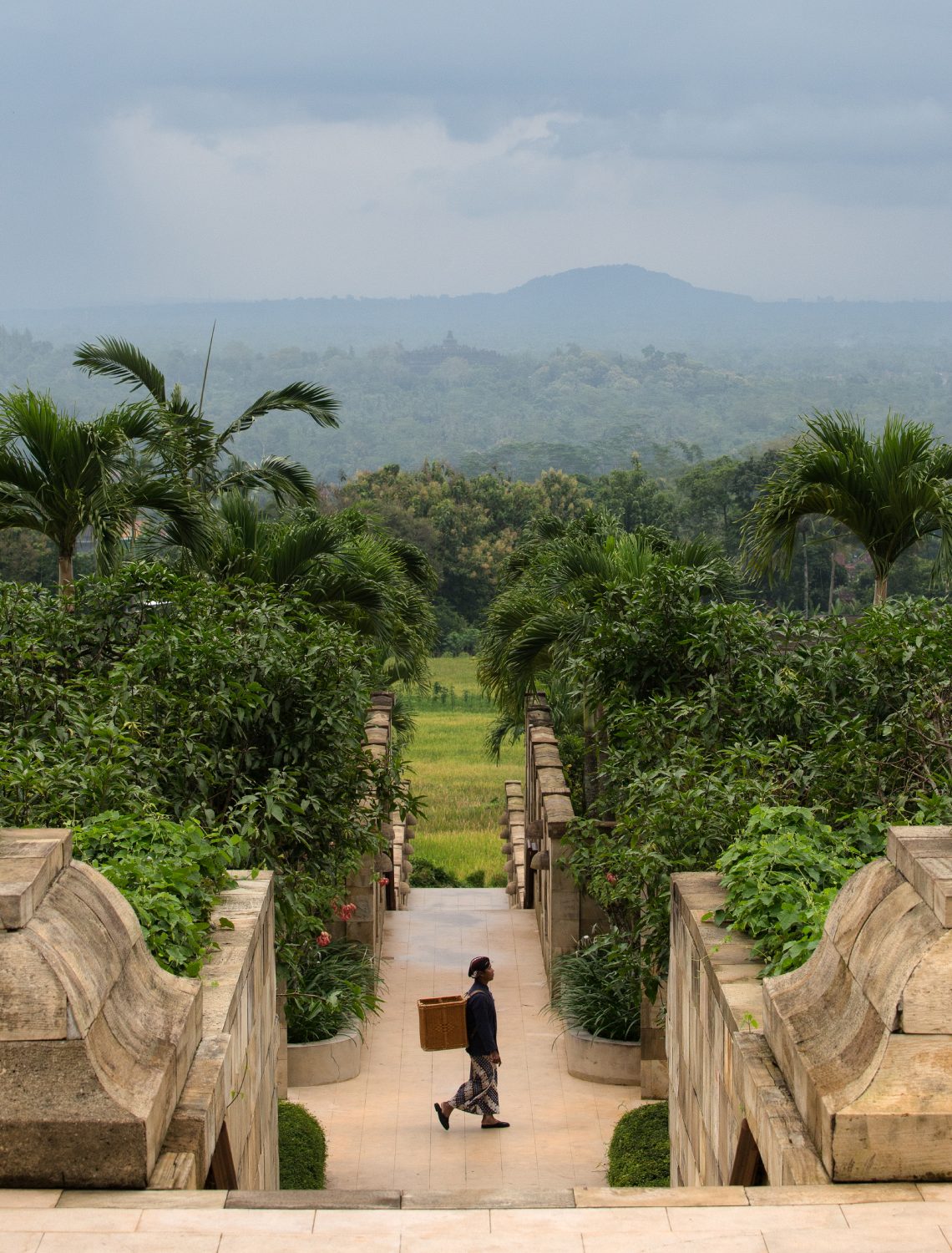
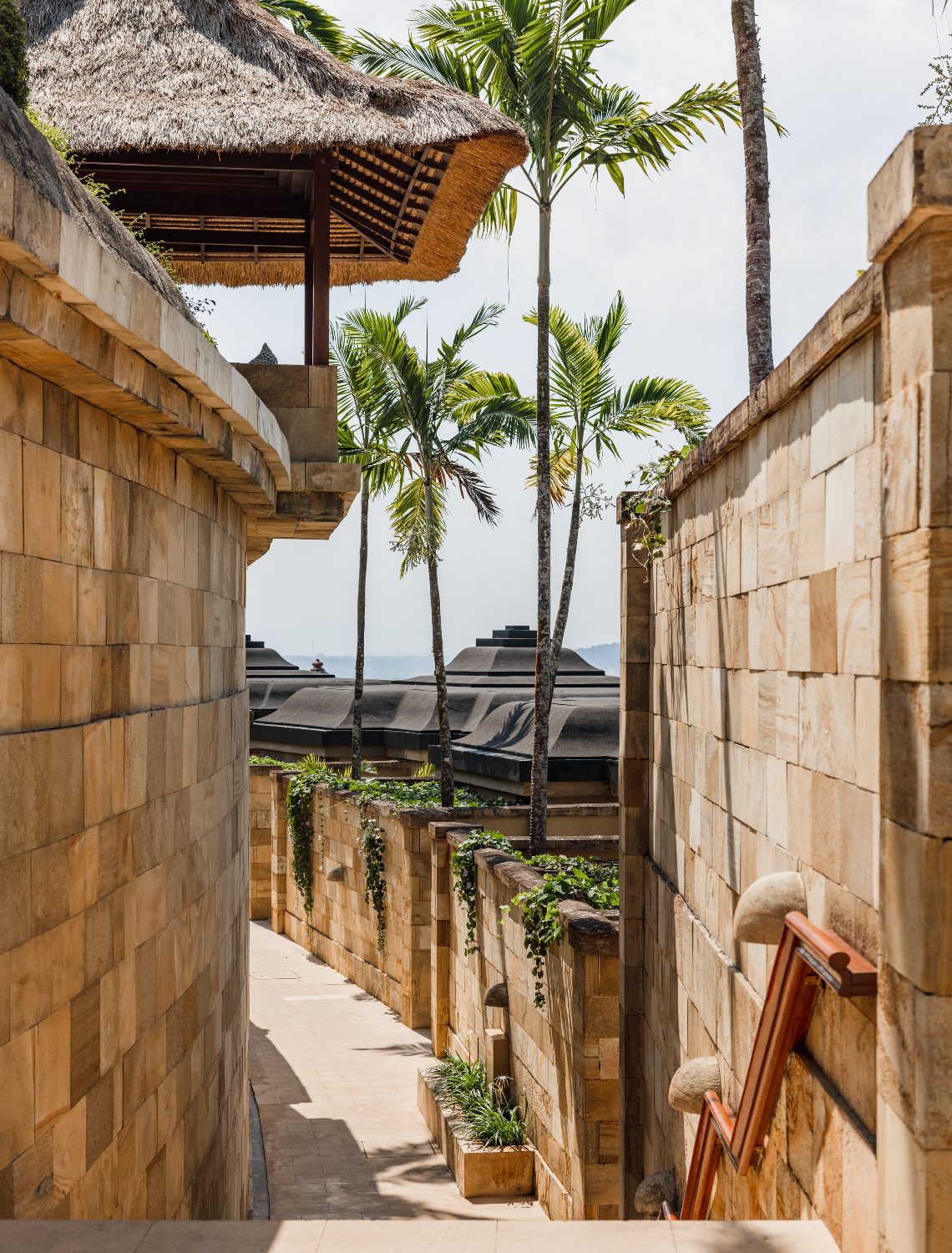
Freshly reopened in April following renovation works, the Central Javanese resort feels much less like a hotel or resort than a state of being. Set within a natural amphitheatre, with the Menoreh Hills rising behind it and Borobudur held in its line of sight, Amanjiwo is built in quiet conversation with the temple. Its domed limestone suites, sweeping colonnades, and pale stone symmetry echo the sacred geometry of the monument nearby, but nothing feels over-explained. Amanjiwo doesn’t tell you to be still; it simply leaves enough space for stillness to happen on its own.
Mountains and greenery envelop two sides of my villa’s courtyard. It should feel exotic, or perhaps even cinematic, but what it stirs instead is memory. The view pulls me back to the forest outside my childhood bedroom window, to a version of myself that had more time to look at trees and less reason to hurry through the day. Even alone, I am never in silence. Crickets call and birds answer, and leaves shift in the breeze. Somewhere between these small, living sounds, I realise that I have not paused to listen to nature in quite some time.
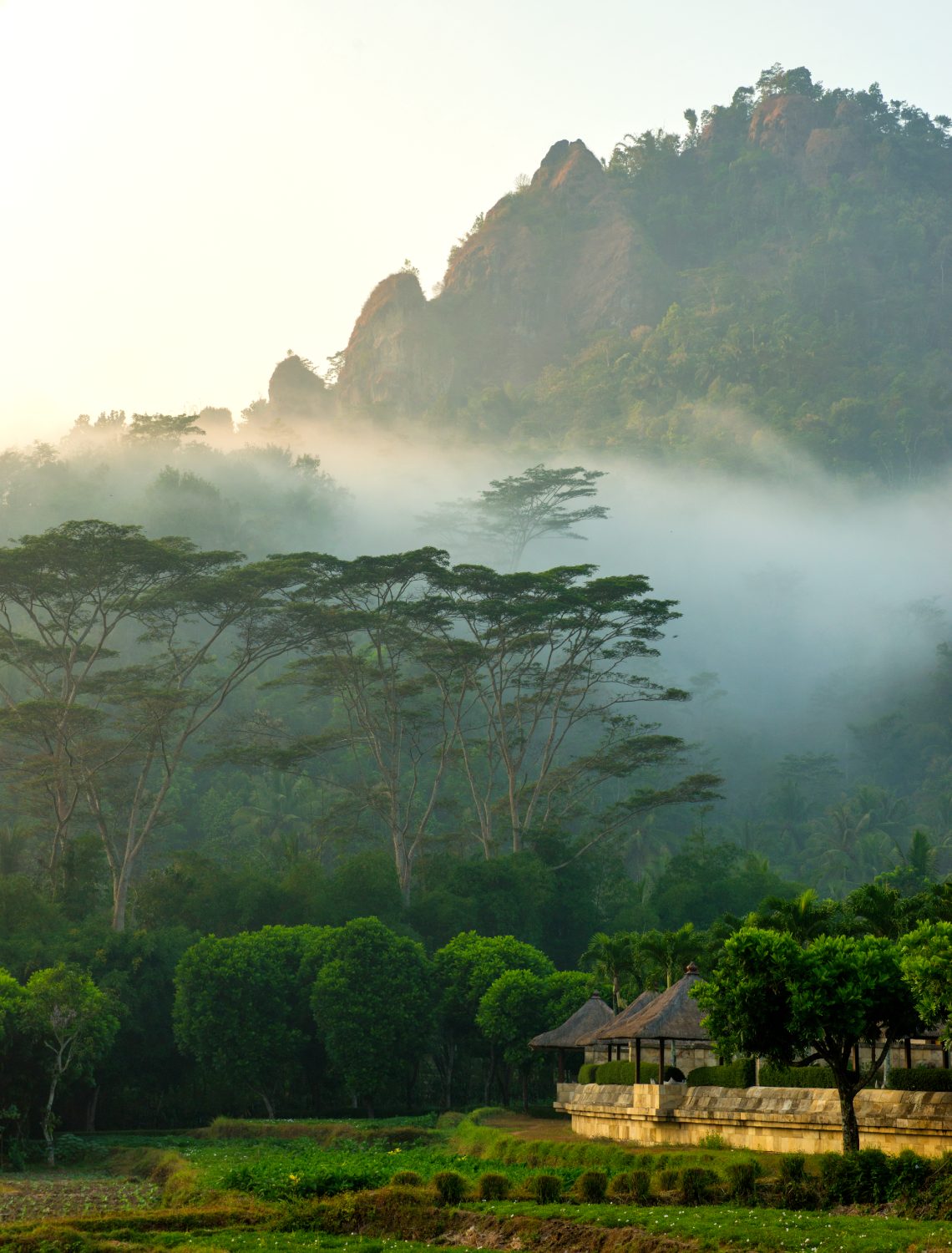
This, perhaps, is Amanjiwo’s truest luxury. Not abundance, though there is plenty of that. Not exclusivity, though there is that too. Rather, it is the resort’s ability to return your attention to things you may have forgotten you once knew how to notice.
Rinse and renew
That intention runs through its renewed cultural programming, which seeks to revive the lost art of Javanese healing and purification through rites, rituals, and activities. There is Ruwatan, a cleansing ritual by the Progo River; there are blessings, meditations, temple walks, and guided encounters with Central Java’s layered history. Yet it is Jemparingan, a traditional form of Javanese archery from Yogyakarta, which stays with me most.
Unlike modern archery, Jemparingan is practised seated. The body is grounded and the eye is not the only authority. In fact, the lesson seems to begin the moment you understand that hitting the target is not entirely the point. Every adjustment matters: how you position the bow, the steadiness of your hand, and the quality of breath. The smallest movement changes the path of the arrow. Focus, then, becomes surrender sharpened into discipline.
There is a lesson in that, one that feels almost embarrassingly useful outside the archery field. So often, we aim with urgency, drawing back as hard as we can in hopes of hitting something remarkable. Jemparingan suggests that we do otherwise: sit properly, breathe first, and not rush the release.
The same philosophy seems to follow me to the Progo River the next morning. After a picnic breakfast by the water (there is a Google Maps pin of the location; look up ‘Amanjiwo Picnic Area’), the other journalists busy themselves with watercolour paintings. I choose to be far less industrious, fixing my gaze instead on a bug caught in a spider’s web between tree branches. It sounds like nothing, which is precisely the point. There is no need to complete anything by a specific time. No performance of productivity and no itinerary to conquer. For once, doing nothing does not feel like a failure of time, but a rightful use of it.
Even Amanjiwo’s service seems designed around this gentle unravelling. You’ll notice, at some point, that the staff do not wear name tags. We are told that this is intentional, as a way to encourage meaningful introductions between guests and staff. Here, hospitality is not scripted into anonymity; you ask for someone’s name because you wish to know it.
On my final evening, my guide brings me to Borobudur Temple to catch the sunset. At the top, he leaves me to myself. “You stay here in the west to look at the sunset. I will go to the east,” he says, before disappearing with the kind of wisdom a good guide possesses: knowing when not to guide.
So I sit there, legs dangling over the highest level of Borobudur, watching the sun slip behind the mountains. Prayer calls rise from neighbouring places of worship. The stones beneath me hold centuries of devotion, weather, footsteps, and time. I think, then, that perhaps this is what travel is meant to do at its best: not merely show us monuments and landscapes, but place us within them long enough to feel our own smallness without fear.
Where I am, too, will one day become history. But in that moment, momentarily shed of need and want, I am not thinking of what came before or what will follow. There is only the dipping sun, the mountains, the call to prayer, the hush of stone, and the unfamiliar grace of being fully present. Amanjiwo means ‘peaceful soul’. It’s a beautiful name, but it is also, if you let it, an instruction.
This story first appeared in the August 2026 issue. Purchase it as a print or digital copy, or consider subscribing to us here