Newly appointed as CEO of WWF Singapore this June, Chew Sutat shares his thoughts on the challenges ahead as the organisation’s Singapore office marks its 20th anniversary this year
When Robb Report Singapore last spoke with Chew Sutat, the affable, erudite gentleman was chairman of Community Chest, a role he had left after more than three years. Given his evident heart for advocacy work, his move to the World Wide Fund for Nature (WWF) Singapore came as little surprise.
Appointed CEO in June, Chew describes himself as a “conservation tourist” who spent decades enjoying nature before turning to environmental advocacy. WWF was established internationally in 1961 and in Singapore in 2006, and Chew is acutely aware of what the Singapore office has already achieved — his focus now is helping a team that has “already achieved so much impact” do even better.
“To give some headline figures, 105,000 hectares of forest have been directly or indirectly protected through the Singapore office over the last 20 years. Beyond that, we’ve built 20 years of meaningful partnerships with corporates,” says Chew.
He brings more than 25 years of experience in the corporate and financial sectors, and has served as a non-executive director and advisor to companies, start-ups, investment committees, foundations, and other non-profit organisations. His connections will no doubt strengthen WWF Singapore’s work, but he redirects credit to the organisation itself.
“I don’t see it so much as what I bring to WWF. WWF has 65 years of conservation science, and is always thinking about how we go beyond nature and biodiversity themselves to protecting and sustaining the communities in and around these landscapes,” he says.
What are some WWF Singapore initiatives our readers should know about?
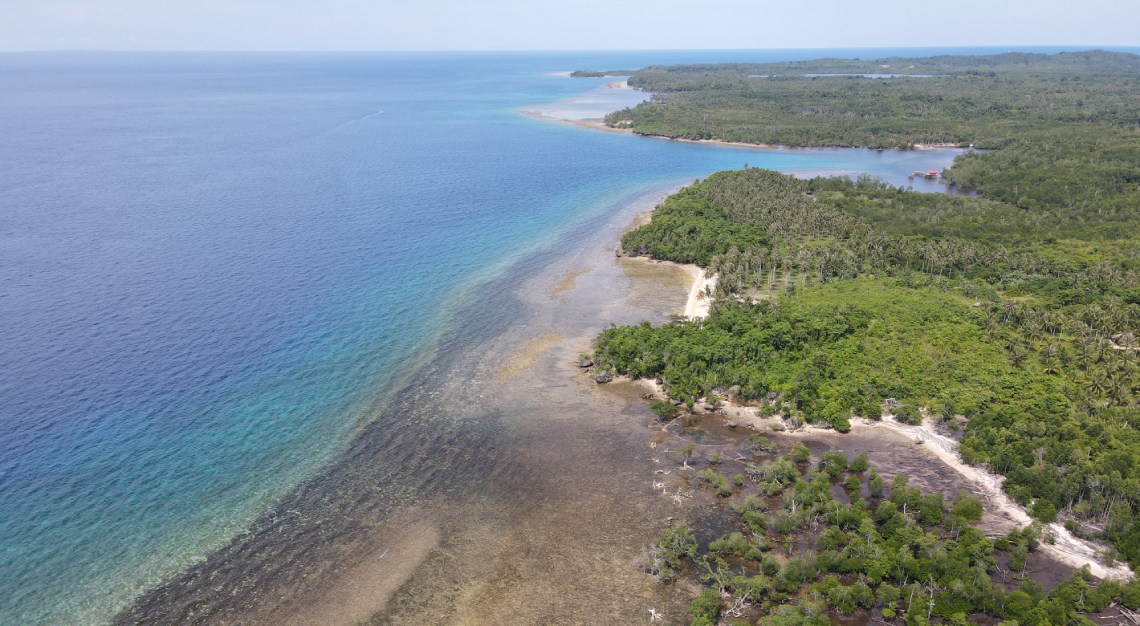
A couple of examples: we partnered with the Cotton On Foundation, which supports our coral restoration work in Singapore — part of our goal to develop the science here so that what we learn about restoring corals in polluted waters can be applied in the Coral Triangle, home to the world’s largest reservoir of ocean biodiversity. Cotton On also relies on us as their delivery partner for work in the Coral Triangle itself.
Since 2017, we’ve also worked with Olam on their supply chains, looking at commodities that could be sourced more responsibly. Beyond their commercial agenda, they’ve relied on us as a trusted partner in supporting the last remaining Javan rhinos in Ujung Kulon. We think of partnerships as a way to use our network, strength, and knowledge to drive systemic change among companies already thinking about their impact on the natural ecosystem.
How do you make conservation meaningful to the communities on the ground?
Take Sarawak, one of our priority sites. We’ve worked with local communities to help them move away from extractive activities — if they simply keep logging, there’s nothing left for their livelihoods. So we help them find other viable pathways: ecotourism, for example, or drying prawns on purpose-built platforms rather than clearing mangroves to do it.
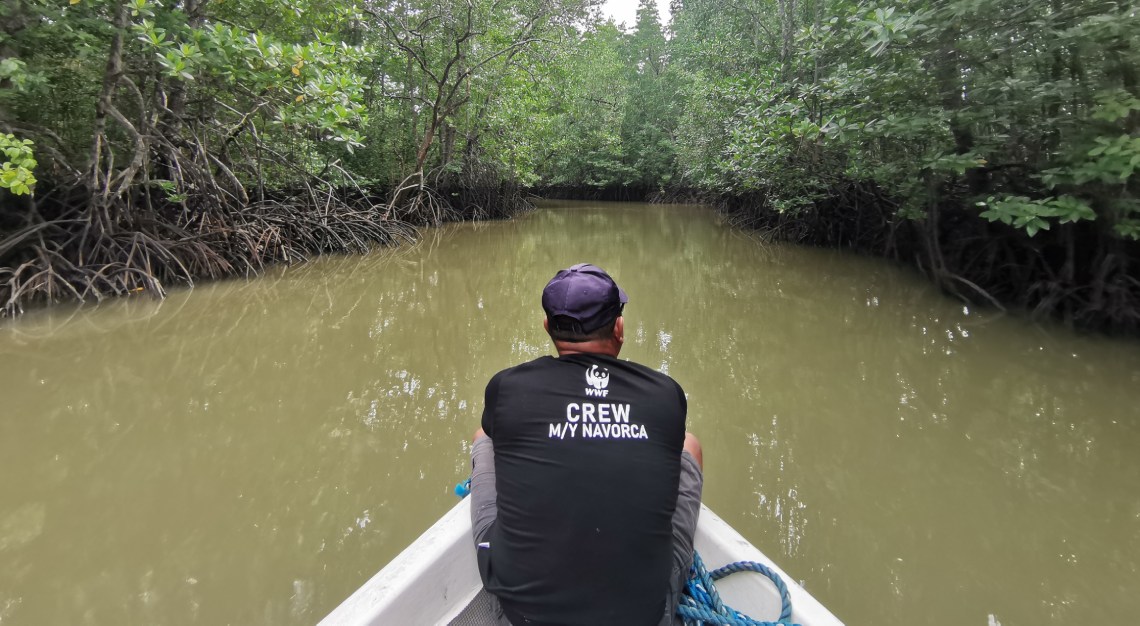
This year also saw the launch of the Blue Carbon Support Programme and Project Canopy. What do these initiatives involve?
The first, supported by UOB, is the Blue Carbon Support Programme, developing technology to improve outcomes in mangrove restoration—mangroves matter because Southeast Asia holds the world’s largest reservoir of them, and they’re the first line of defence against climate change and rising coastal waters.
The second is Project Canopy, seed-funded by the UK’s Foreign, Commonwealth and Development Office along with several French luxury houses, with more Singapore companies now coming on board to fund mangrove replanting in the Coral Triangle. It isn’t just about replanting and improving the technology — we’re building carbon finance models, so that once a project proves successful, we can recycle the resulting carbon credits into further restoration, creating a self-sustaining cycle.
Where do you see the role of philanthropy in conservation work?
Traditional philanthropic contributions will only get us so far. Funding remains fundamental, but we want to augment it with innovation — including in finance — so we can unlock different parts of the capital stack and channel more resources, at scale, into these landscapes.
Does the prospect of financial returns help persuade corporates to invest in conservation?
Yes, but it’s a tricky line to walk. A great deal of conservation work is supported by generous philanthropists who genuinely want to save species that would disappear without that support. When we start talking in corporate and commercial terms about financing, it can feel like a mismatch. The heart takes us a long way, but we need to bring in the hard technology and hard cash that can help us build at a bigger scale.
This is a 20-year milestone for the Singapore office. What does the next chapter look like?
Over the last 20 years we’ve mobilised more than $200 million in capital to support biodiversity across the region, partnering with corporates to help them express their goals around nature and biodiversity. But climate is where the office sees itself heading next, especially given the growing need for nature-based solutions. We hope more companies will look beyond their own decarbonisation efforts to where nature-positive solutions can play a role, and we’re well placed, with boots on the ground built up over many years, to help deliver that.