The most acclaimed restaurants in Asia inspire devotion and, with that, relentless demand. Bookings close months in advance, and the waitlists show no sign of easing. Asia’s Finest Tables by UOB changes that, giving selected UOB Cardmembers priority access to some of the region’s most sought-after dining destinations.
Now in its seventh season, Asia’s Finest Tables by UOB presents an exceptional lineup of MICHELIN starred and award winning restaurants across Singapore, Kuala Lumpur, Bangkok and Jakarta. Each experience is curated exclusively for UOB Cardmembers as a full-course dining journey, with bespoke menus by celebrated chefs that draw on both signature favourites and off-menu creations.
The benefits extend well beyond the booking. Selected Cardmembers dine at a preferred rate for two, each experience paired with a glass of Taittinger Prestige Rosé Champagne per diner.
For this season, each evening now concludes with a Kaluga Queen caviar gift set for each guest to enjoy beyond the table. Kaluga is known for its firm, lustrous pearls and a buttery palate with subtle nutty notes. Featuring a specially packaged Osetra caviar accompanied by a mother-of-pearl tasting spoon and a bespoke opener – it is an exclusive keepsake curated as part of this dining experience.
For discerning diners, Asia’s Finest Tables by UOB is an invitation to unforgettable culinary experiences, offering access into some of Asia’s most coveted dining rooms and the inspired gastronomic creations by the world’s most acclaimed chefs.
Restaurant Zén, Three MICHELIN Stars (Singapore)
Dining at Restaurant Zén unfolds across every level of a historic shophouse, each floor delivering a different course in a format that feels like a moveable feast. The kitchen draws from Nordic and Japanese traditions, producing dishes that are precise and inventive. Regulars describe the atmosphere as high-energy and genuinely fun— a purposeful break from formalities. But what always brings them back is never spectacle, but a menu built on premium ingredients handled with precision.
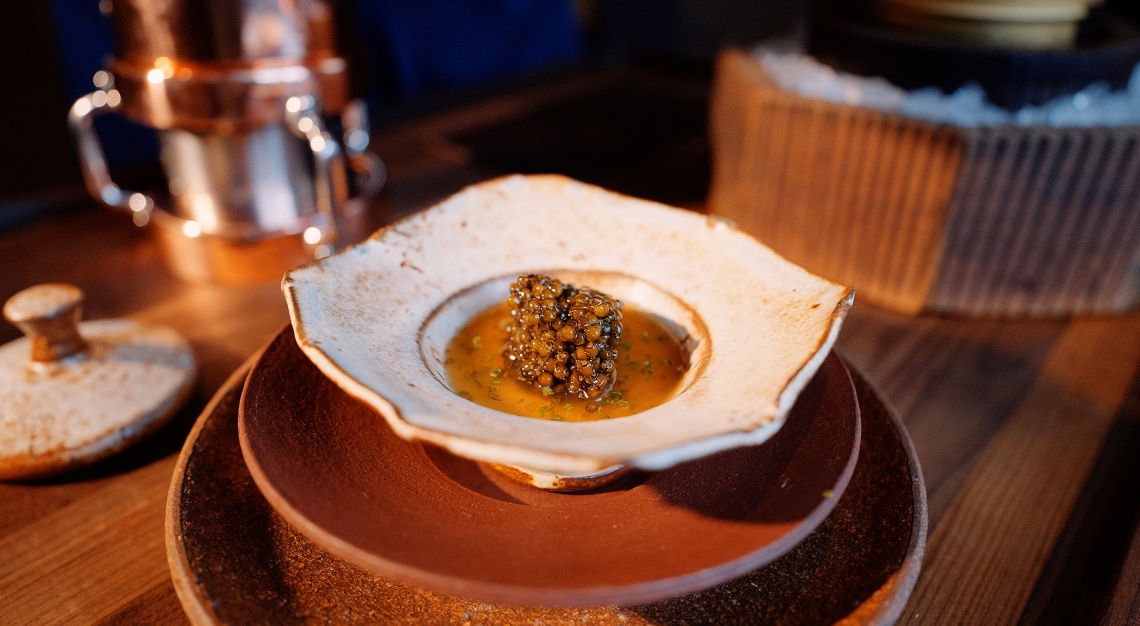
Chawanmushi
Chawanmushi is one of Japanese cuisine’s most deceptively simple dishes, and in the right hands, it transforms into one of its most profound. A satin-smooth custard arrives trembling in the bowl, and that gentle quiver is the first indication of what is to come. The flavour runs deep, built on a 100-day aged pork dashi that envelops the egg in slow-building savouriness—closer in character to a long-simmered broth than any simple stock. One spoonful yields gentle smokiness and umami-rich depth that lingers, before enticing the palate with a taste of the sea in the form of Frantzén Selection caviar.
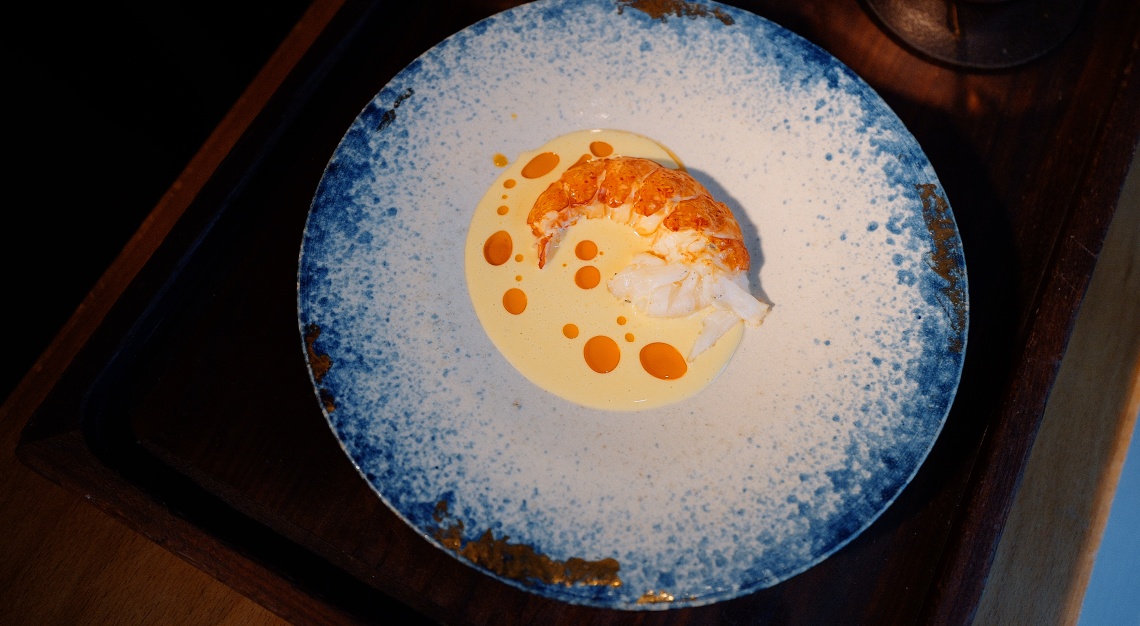
Marron à la minute
Few crustaceans reward careful cooking as generously as the marron (freshwater crayfish), and here it receives exactly the attention it deserves. The marron is seasoned in bouillon, then finished over charcoal until the flesh turns just opaque and the edges take on a faint, smoky caramelisation. A classic beurre blanc provides the base, sharpened with citrus-savoury notes from sea buckthorn and kosho. Each mouthful traces a clean arc: sweet shellfish giving way to subtle smoke, then lifting into a vivid, almost electric acidity that compels another bite.
Na Oh, MICHELIN Guide Singapore 2025
For one night only, Chef Corey Lee – the first Korean chef to earn three MICHELIN Stars for Benu – will helm the kitchen at Na Oh, marking his debut project in Southeast Asia. Na Oh, which translates as “moving from inside out” draws on Korean traditions with quiet conviction, delivering flavours that feel rooted rather than reframed for outside tastes.
Mulhwe
Na Oh’s interpretation of mulhwe makes a strong case for the chilled seafood bowl as a serious culinary form. Sea urchin, croaker, and cuttlefish arrive together in a white kimchi broth that is at once spare and layered, its acidity sharpening the natural sweetness of the seafood without overwhelming it. Cucumber and assorted seaweed contribute freshness and textural contrast, while a drizzle of freshly pressed sesame oil draws everything into focus with soft, nutty warmth.
Eel
Gochujang and eel are two of Korean cuisine’s most iconic ingredients, and this dish demonstrates why they belong together. The river eel is lacquered in a glossy glaze that holds heat and sweetness in careful equilibrium, grilled over charcoal until a subtle smokiness cut cleanly through its natural fattiness. Crisp smart-farm leaves, chrysanthemum muchim, pickled radish, and sesame leaf complete the composition, each element pulling in a different direction while arriving together in a harmony of flavours.
Jook
There is something quietly radical about elevating jook—chicken porridge, one of Korea’s most unassuming staples—into a dish of such exacting culinary mastery. Here, the porridge is enriched with tender abalone from Wando Island, its briny depth settling into the rice. Around it, the banchan unfold: chonggak kimchi, marinated quail eggs, green scallion jang, calabash gourd namul, sesame leaf, and oi sobagi, each a small but important counterpoint to the bowl at the centre.
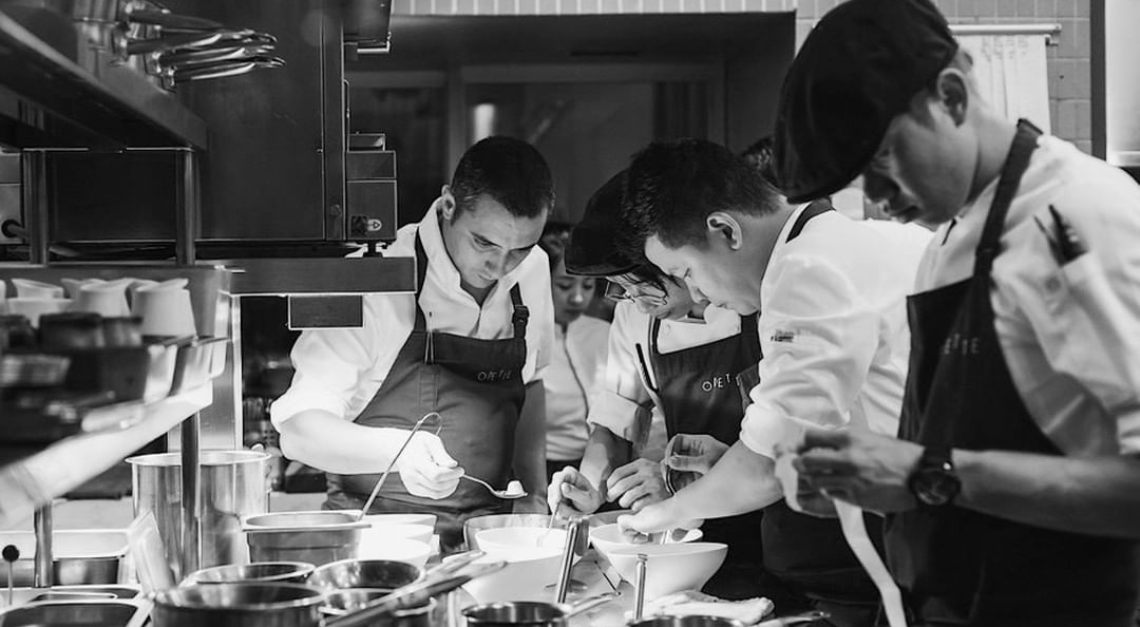
Behind the artistry with Chef Kelvin Ng from Restaurant Zén, and Chef Corey Lee from Na Oh
To book your seats to Asia’s Finest Tables by UOB, visit https://priority-access.com/uob from 26 May (12pm).
Hide, Tatler Dining Malaysia Best 20 Restaurants 2025 (Kuala Lumpur, Malaysia)
In Kuala Lumpur’s fine-dining landscape, few entrances are as deliberately conceived as Hide’s. Guests are directed to press a large grey-and-gold painting in the lobby of The Ritz-Carlton Residences, which swings open to reveal the dining room beyond. The reveal sets the tone for what follows.
A MICHELIN recognised chef’s table restaurant led by Chef Shaun Ng – whose classical training includes time at Le Bernardin and Kato – Hide serves modern progressive Malaysian cuisine, folding traditional flavours and familiar dishes into a contemporary, sharply executed format. The chef’s table seats just 10 to 13 guests at a marble counter facing an open-kitchen, where every course is cooked, plated and served directly in front of you.
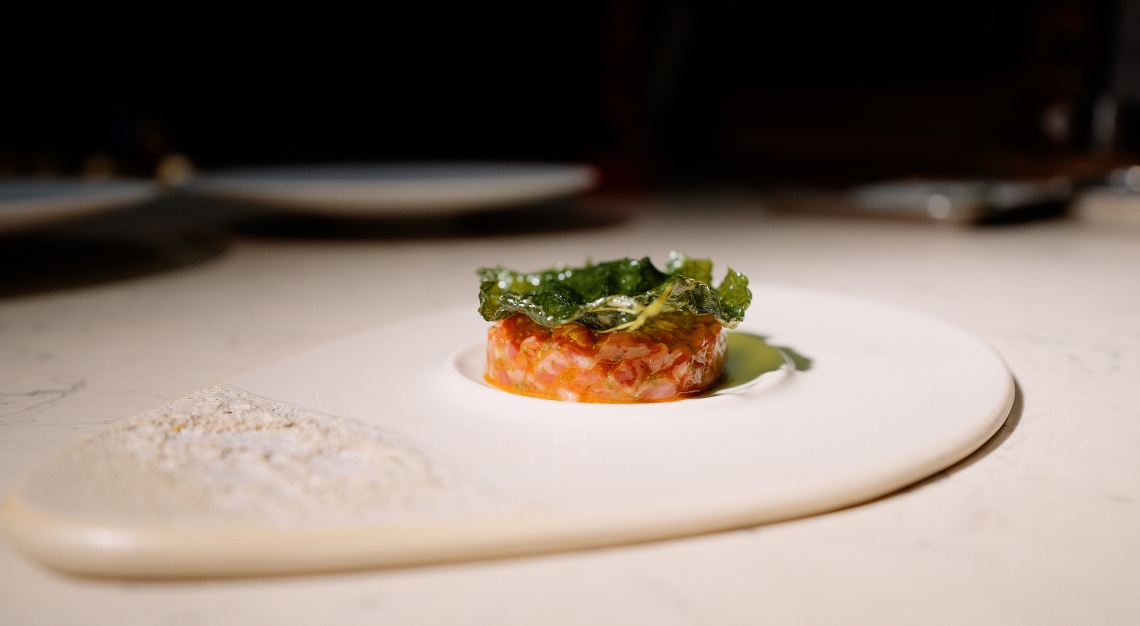
Betel Leaf with Beef Tartare & Herb Dressing
The betel leaf has become one of contemporary fine dining’s more surprising ingredients: a single bite capable of carrying aroma, structure, and cultural memory simultaneously. Here it arrives tempura-fried, its warm, peppery fragrance rising before the plate has settled. On top sits finely cut beef tartare, delicate yet full of depth, its richness drawn together by a silky 63°C egg yolk that threads through each mouthful with quiet authority.
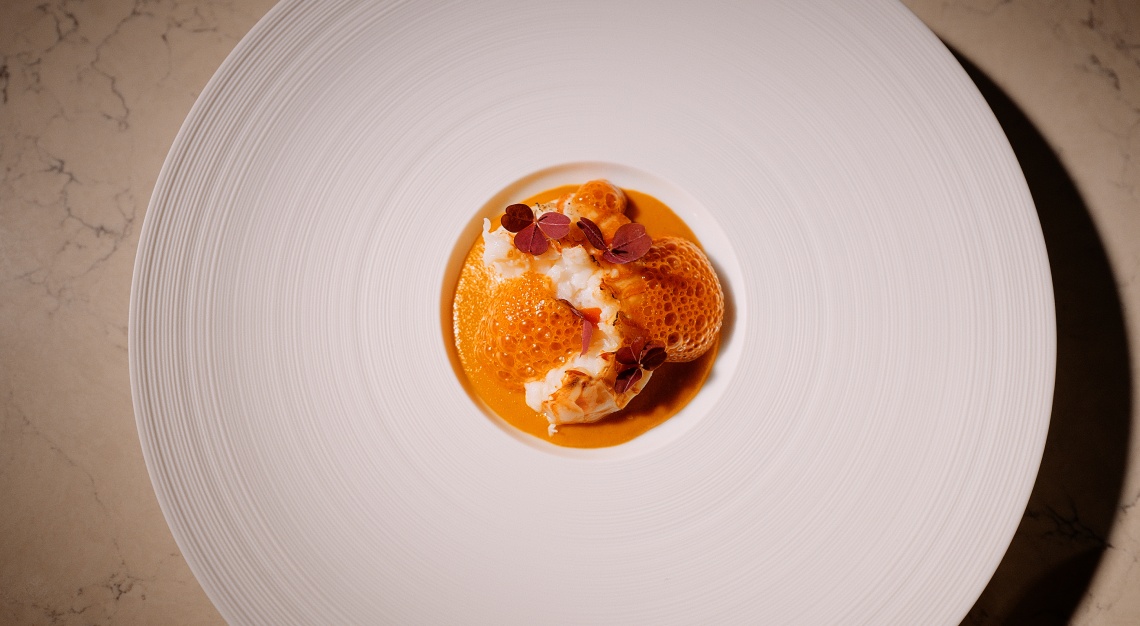
Lobster, Red Pepper Curry & Pickled Habanero
Hide’s kitchen understands that restraint and intensity are not opposites, and this dish articulates the philosophy perfectly. Lobster is gently confit in garlic oil, then finished over binchotan to preserve its sweetness while drawing out a whisper of smoke. Beneath, a red pepper curry unfolds with measured warmth and spice, never tipping into heaviness. A sharp pickled habanero gel cuts through with precision, its acidity and heat kept in careful check, while a light red pepper foam lifts the composition with an airy, almost weightless contrast.
Molina, One MICHELIN Star (Kuala Lumpur, Malaysia)
Molina, led by head chef Guillaume Depoortere and shaped by the mentorship of acclaimed Dutch chef Sidney Schutte, chefowner of Amsterdam’s two MICHELIN-starred Spectrum, sits 51 floors up where the passing wind feels intentional. Its name, taken from the Latin for “windmill,” nods to Chef Schutte’s homeland and reads less like branding than a statement of intent. Here, European avant-garde fine dining is anchored in sea and soil, guided by a firm conviction that the ingredient must always lead.
Green Asparagus
Asparagus rarely commands the centre of the plate. Yet on this dish, it earns its spotlight with aplomb. The grill coaxes out its natural sweetness, achieving a degree of charring that is deliberate rather than decorative. A kataifi cracker and codium, an edible seaweed, are laid over it, inviting the diner to shatter the surface and discover what lies beneath. A savoury snow of sheep’s yoghurt and huacatay completes the dish, contributing gentle tang and herbal complexity in equal measure.
Foie Gras
Foie gras is a test of a kitchen’s confidence, and Molina passes it with authority. Paired with beetroot and cherry, the liver takes on a sweetness that never tips into excess, the fruit lending brightness without diminishing the richness beneath. Roasted sunflower seeds introduce a quiet nuttiness, while tonka bean adds warmth and depth to the composition. The final flourish, a globe of isomalt dusted with Parmesan, dissolves on the tongue to reveal a savoury note that brings the whole dish into focus.
Behind the artistry with Chef Shaun Ng from Hide, and Chef Guillaume Depoortere from Molina
To book your seats to Asia’s Finest Tables by UOB, visit https://priority-access.com/uob from 26 May (12pm).
Wana Yook, One MICHELIN Star (Bangkok, Thailand)
Wana Yook begins with a question that few fine-dining restaurants would dare to ask: what if the most honest expression of Thai cuisine were found not in elaborate tasting menus, but in khao gaeng? The everyday meal of Thailand, quite literally “rice and curry,” khao gaeng is eaten at shophouse stalls where customers point at trays of pre-cooked dishes spooned over a waiting bowl. Chef Chalee Kader’s answer is Wana Yook itself. His project is to take khao gaeng’s structural DNA—its rice anchor, multiple accompaniments, regional variation, and layered flavours—and reconstruct the whole through fine-dining technique.
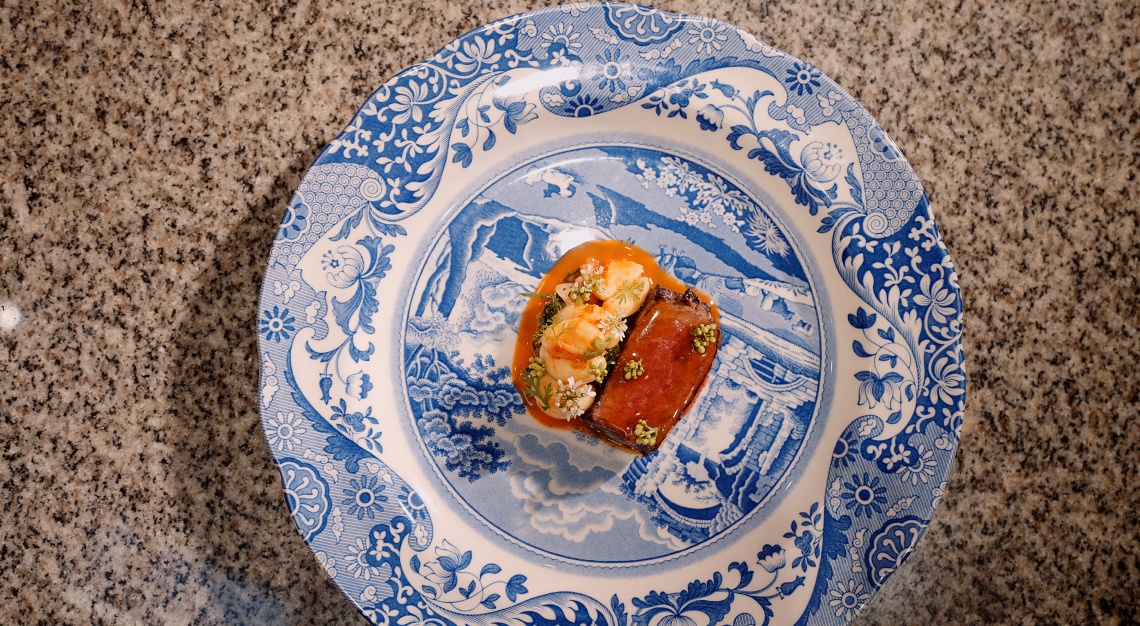
Thai Beef & Nam Pla Waan
Thai Wagyu | Mangosteen | Neem Flowers
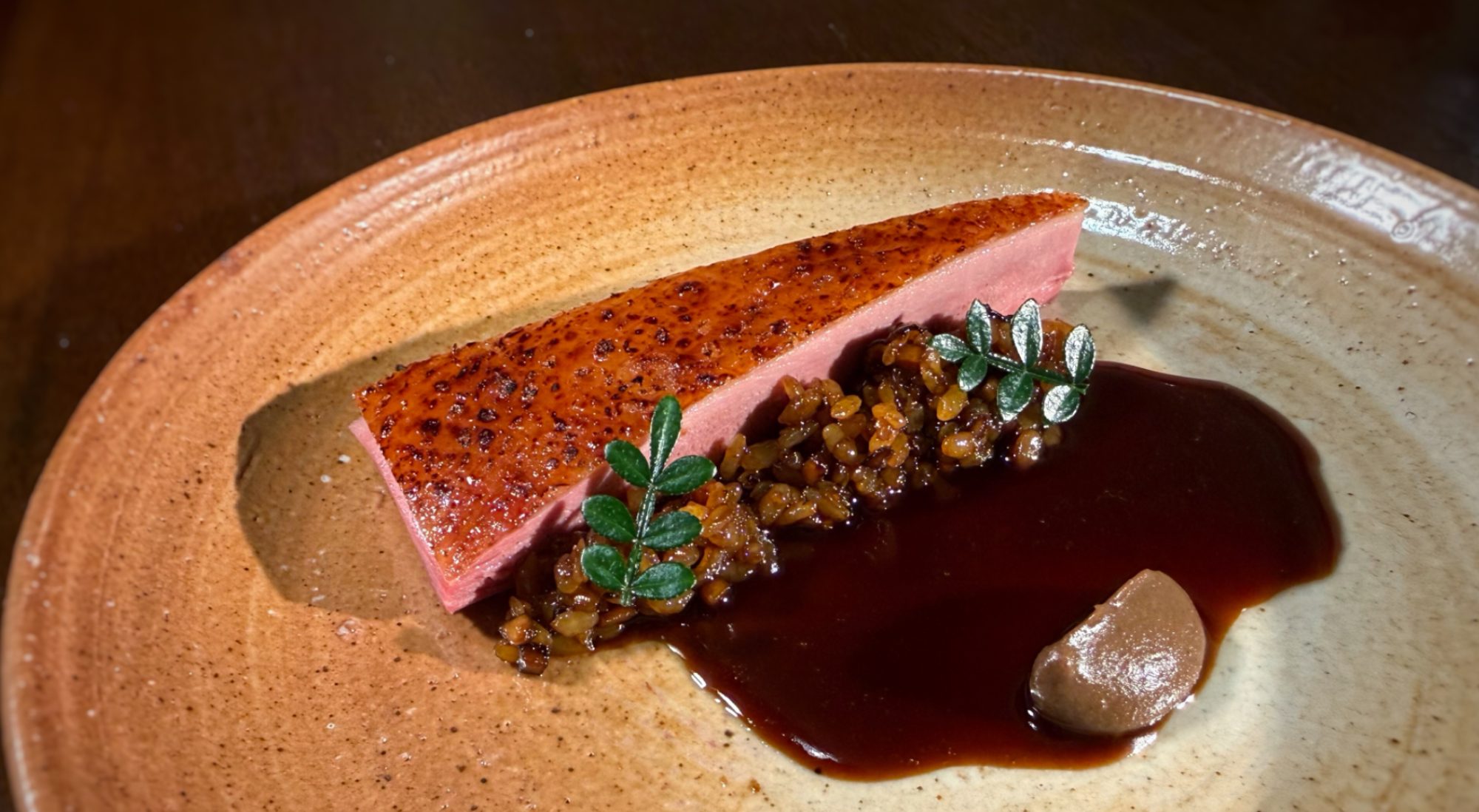
Chef Kader’s cooking rewards diners who pay attention, and this dish is a gripping case in point. The Thai “Dairy X Wagyu” is grilled with care, its surface taking on a gentle smokiness that anchors everything that follows. Fresh mangosteen offers a bright, almost cooling counterpoint, while salted coconut cream softens the arrival of caramelised fish sauce, deepening the flavour with quiet intensity. The final lift comes from toasted neem flowers, their subtle bitterness cutting through the richness with the precision of a well-placed pause.
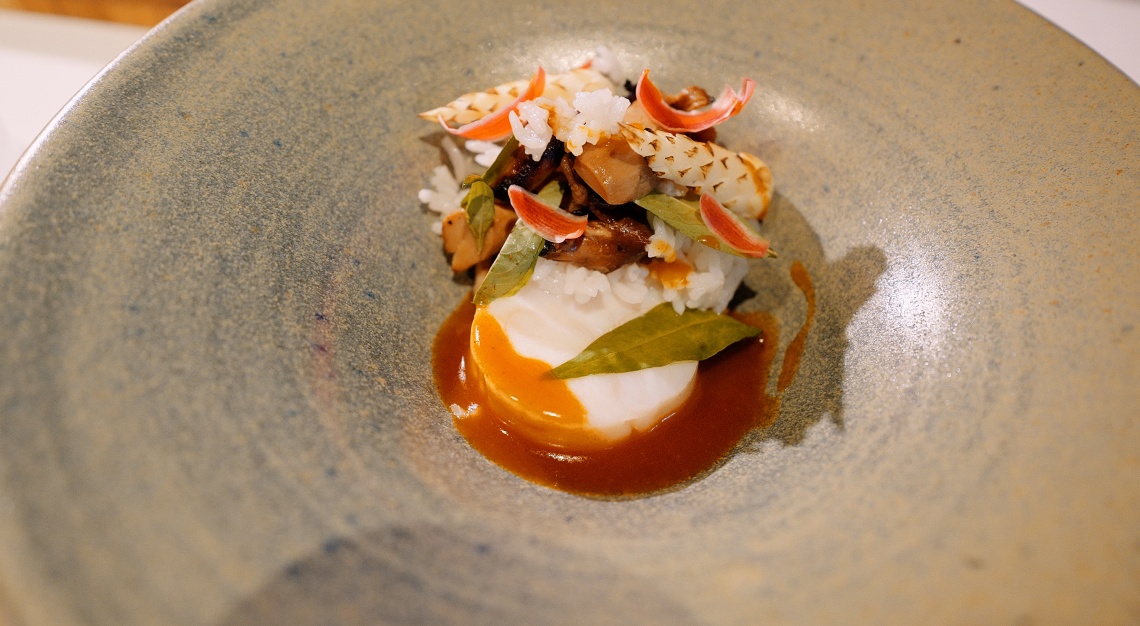
Mokh
Goby | Termite Mushroom | Bamboo Shoot
Restraint is the central principle of this dish with every element earning its place. Freshwater goby is slow-poached to preserve its natural sweetness and delicate texture, the cooking method chosen to protect rather than transform. Grilled and pickled termite mushrooms from Chiang Rai provide earthy depth and gentle tang, lending complexity without crowding the fish. Braised young bamboo shoots complete the composition, their soft sweetness and subtle crunch bringing the whole into quiet, considered balance.
Coda, One MICHELIN Star (Bangkok, Thailand)
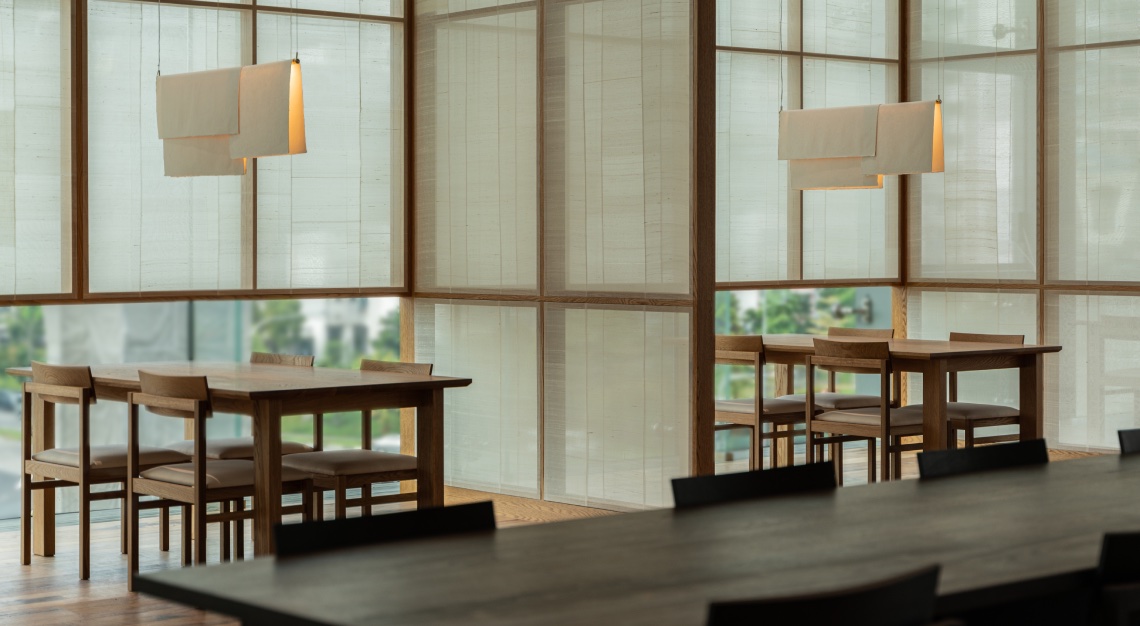
In a city that rewards boldness, Coda has built its reputation on something harder to achieve: discipline. The two-storey space on Lumphini Road is airy and spectacular, its high ceilings and generous windows setting the stage for a format that is deliberately intimate—a small number of diners, a chef’s table component, and a tasting menu that commands the full arc of the evening. A decade of Australian fine dining has shaped Chef Supasit “Tap” Kokpol’s instincts: precision plating, restrained portions, careful sauce work, and a fluency with European technique that allows him to reframe traditional dishes without diluting them.
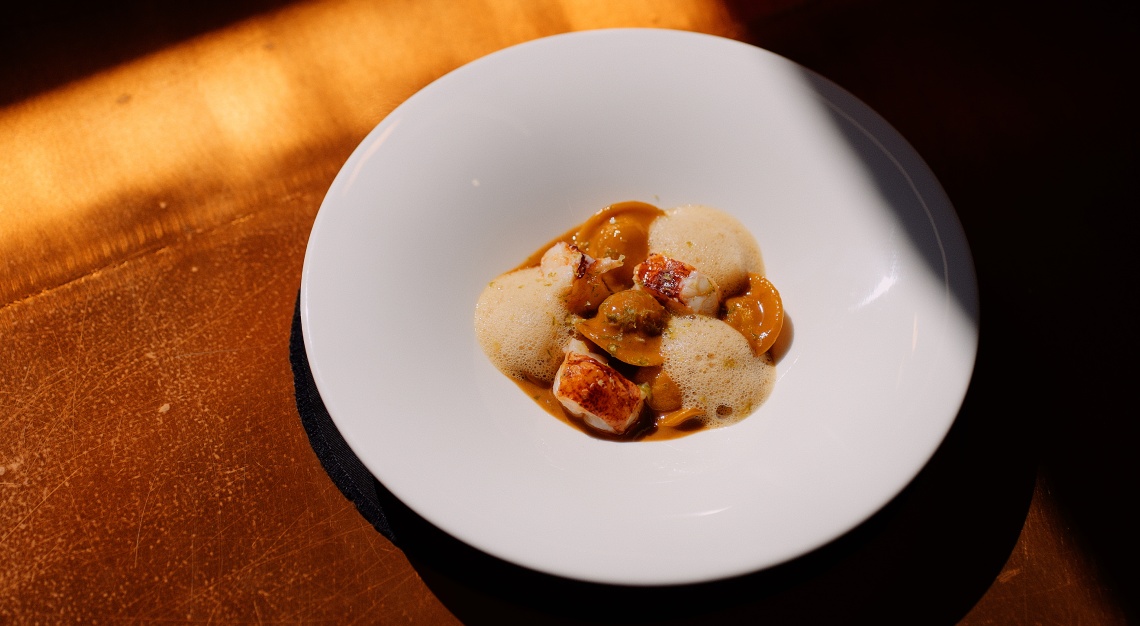
Tom Yum
Lobster | Ravioli | Galangal | Bisque
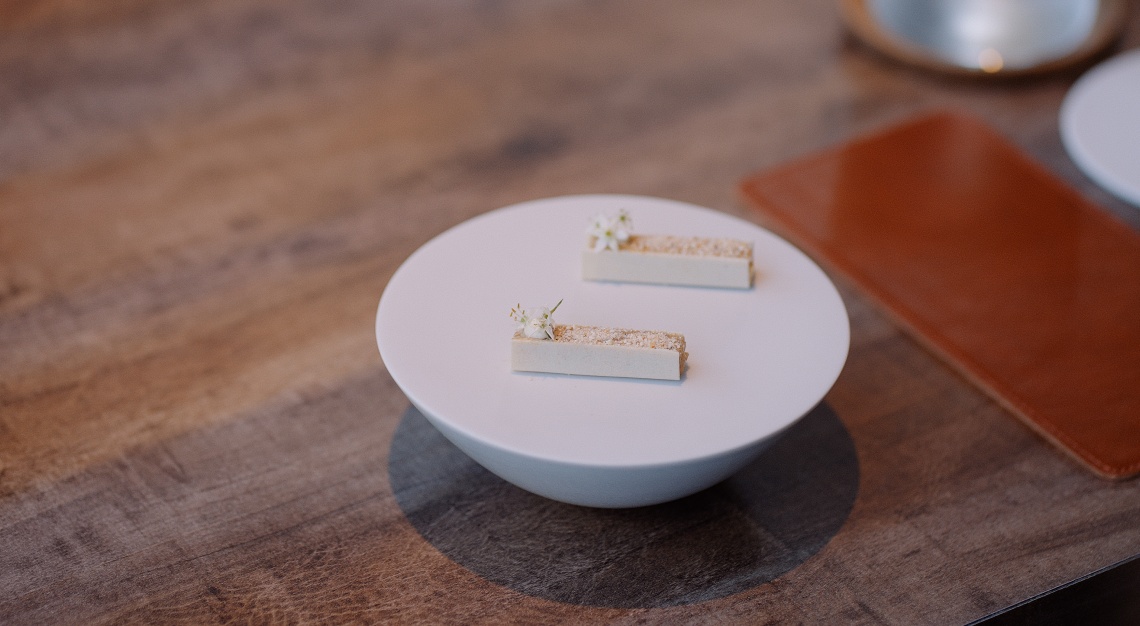
Tom yum is among the most recognisable flavour signatures in the Thai canon, and among the most difficult to improve upon. Here, Chef Tap attempts it with conviction. Sweet lobster is nestled in ravioli parcels and cooked in a bisque infused with galangal, the broth carrying that familiar citrusy warmth while a careful calibration of sweetness and tartness softens the edges. The result is a tom yum dish that is faithful to its origins, yet unmistakably Coda’s own.
Chicken
Toasted Chilli | Toasted Rice
Chef Tap’s meticulous cooking philosophy is perhaps best understood through this single dish. The chicken arrives with a tenderness that speaks to careful preparation, its surface carrying the gentle, lingering heat of toasted chilli rather than any overt punch. Toasted rice introduces a nutty aroma and a satisfying crunch that shifts the texture of each bite with purpose. The balance is quiet yet distinct: savoury, warm, and layered with a distinctly Thai sensibility that has always favoured harmony over excess.
Behind the artistry with Chef Chalee Kader from Wana Yook, and Chef Supasit Kokpol from Coda
To book your seats to Asia’s Finest Tables by UOB, visit https://priority-access.com/uob from 26 May (12pm).
Su Ma, PRESTIGE Gourmet Awards 2026 – Gold Award (Jakarta, Indonesia)
In Jakarta’s increasingly crowded fine-dining scene, Su Ma stands apart by looking inward. The restaurant is built around culinary duo Chef Brendon Chen and Chef Ryan Kim, who present a modern, contemporary Chinese and Korean dining experience through an intimate open-kitchen setting. What distinguishes Su Ma is the clarity of its concept – a commitment to exploring tradition through a modern lens and introducing ingredients and ideas that have rarely found their way onto the plates of Indonesian fine dining.
Shàn Bèi
Hokkaido Scallop | Dried Squid | Snow Peas | Cauliflower
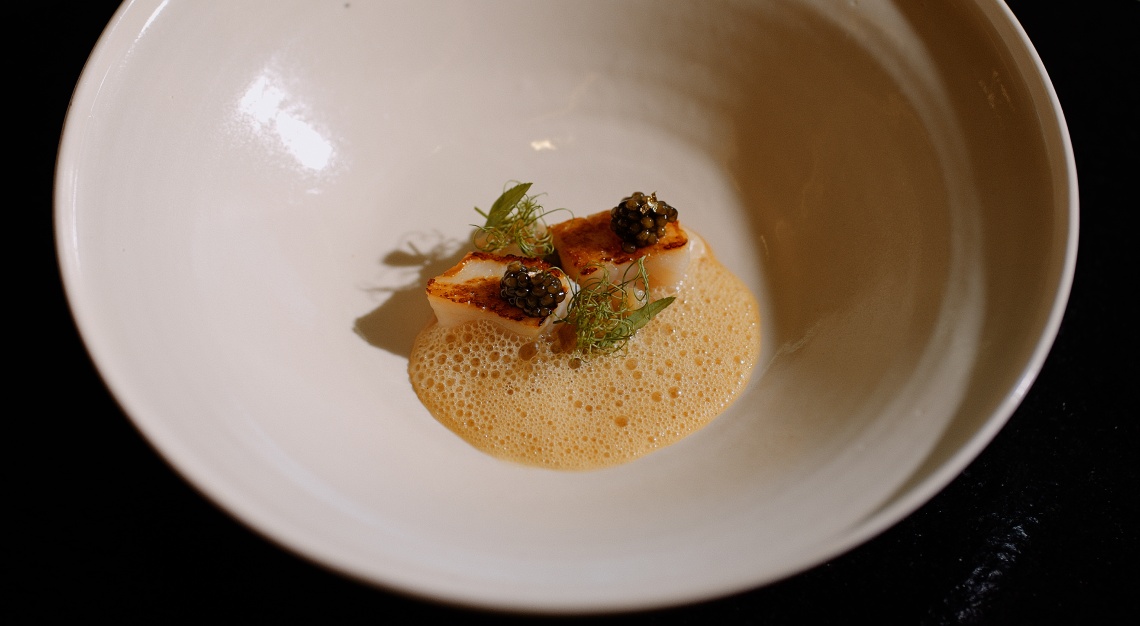
Su Ma’s Hakka-Chinese heritage finds one of its clearest expressions in this dish. The Hokkaido scallop is butter-roasted with care, its natural sweetness drawn out and amplified without artifice. Creamy cauliflower and crisp snow peas, lightly dressed in mint, provide contrast in both texture and tone, their freshness keeping the richness in check. The final note belongs to a savoury dried squid sauce that binds the elements together with a subtle, lingering intensity that outlasts the last bite.
Aged Lemon
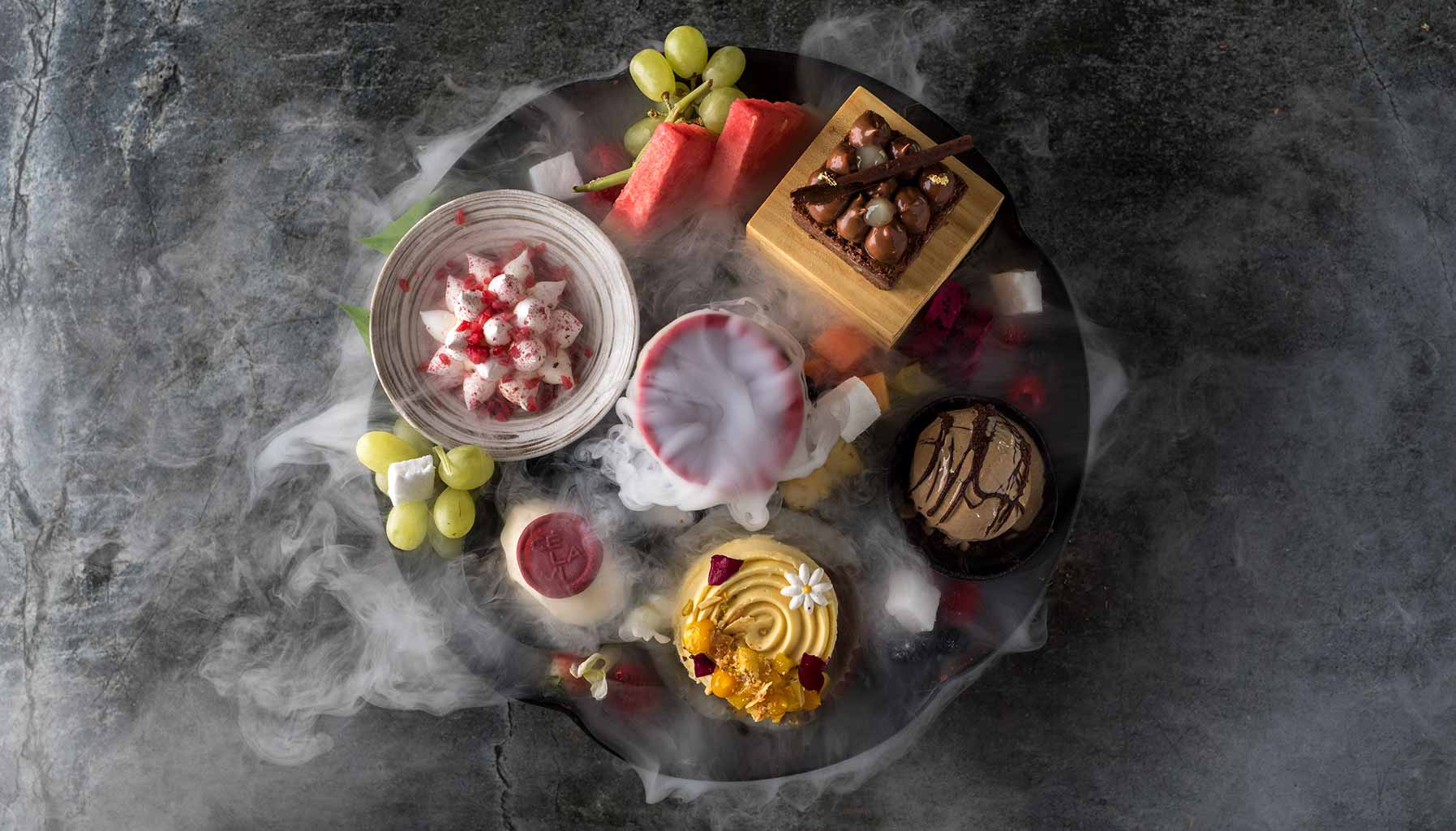
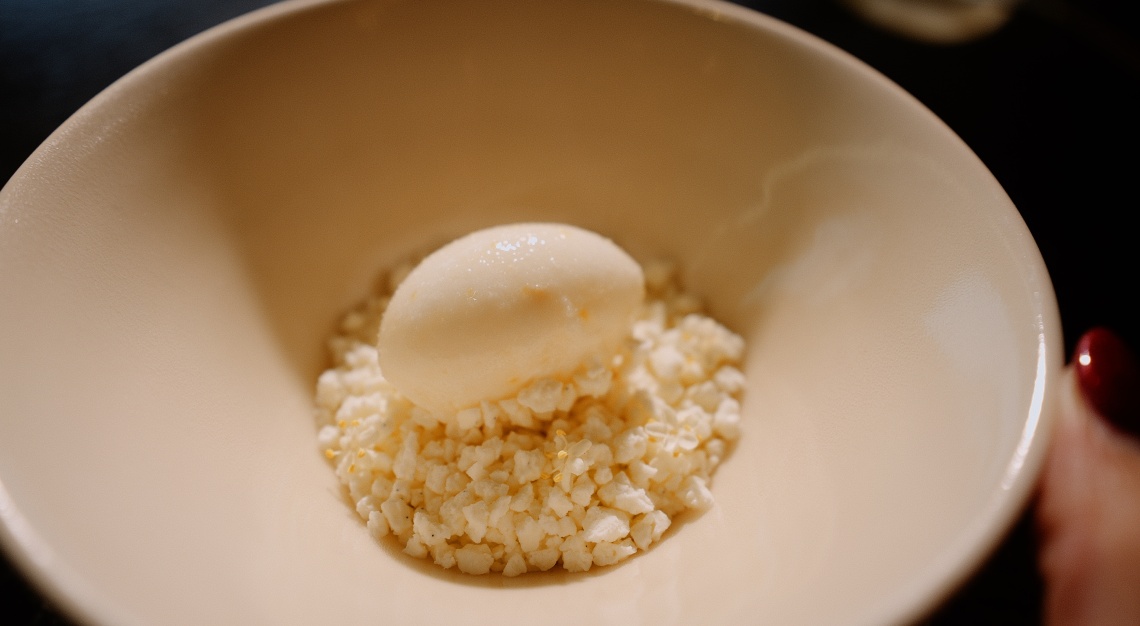
Few desserts manage to hold brightness and warmth in equal measure. Aged lemon anchors the plate with bright, clean acidity that feels both refreshing and precise, its edge softened but never dulled by a light jasmine espuma whose floral notes rise with delicacy. Beneath, a vanilla sponge provides warmth and gentle sweetness, while a rum compote grounds the composition with rounded, mellow depth. The balance, in the end, is the point — and it is achieved with quiet authority.
Behind the artistry with Chef Ryan Kim and Chef Brendon Chen from Su Ma
To book your seats to Asia’s Finest Tables by UOB, visit https://priority-access.com/uob from 26 May (12pm).
Be among a select few to savour culinary excellence at MICHELIN-starred and award-winning restaurants – complete with off-menu creations, signature dishes, Taittinger Prestige Rosé Champagne and an exclusive Kaluga Queen caviar gift set to take home.
To book your seats to Asia’s Finest Tables by UOB, visit https://priority-access.com/uob from 26 May (12pm).
This programme is applicable only to UOB Reserve Cardmembers in Singapore, UOB Visa Infinite Metal or Zenith Cardmembers in Malaysia, UOB Reserve or Infinite Cardmembers in Thailand, and UOB Infinite or Zenith Cardmembers in Indonesia.