Constance Tew on navigating space, emotion, and precision in one of design’s most demanding environments
Luxury yacht design borrows little from the interior designer’s usual playbook. The constraints are different, the stakes are higher, and the client’s motivations rarely stem from aesthetics alone. This is something Constance Tew understood from the moment she took on her first marine project.
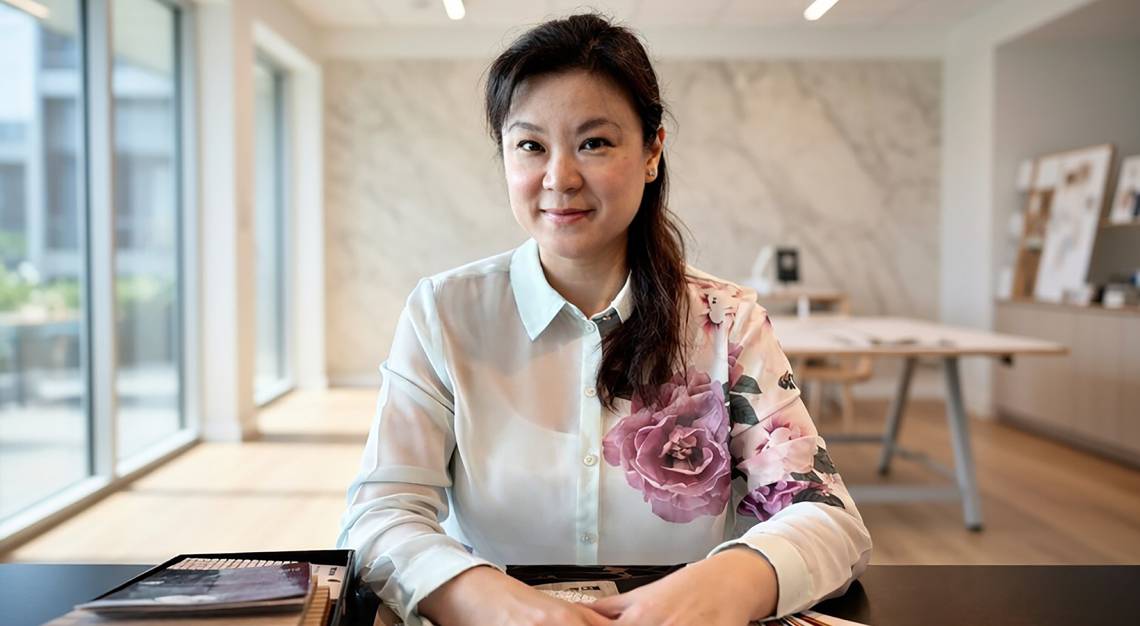
The Singapore-based interior designer and global director founded her studio, Creative Mind Design, in 2007. Her practice centres on user-focused, inclusive spaces, and frequently spans unconventional projects across multiple geographies, requiring close collaboration with C-suite stakeholders. In yacht design, however, the dynamics shift. Understanding ownership motivations, Tew notes, is a distinctly nuanced undertaking. Buyers are driven by a combination of practical and financial considerations, as well as factors that extend well beyond status.
Profiling prospective owners demands a thorough grasp of the asset class and the many variables that shape the decision to invest. “From speaking with brokers, we’ve learnt that these decisions are often driven more by emotion than rationality,” she says. “As designers, we need to know how to evoke those emotions, through thoughtful spatial storytelling and functional artistry.”
Tew holds a Bachelor of Arts degree in architectural studies from the National University of Singapore (NUS) and has pursued executive education in real estate development, negotiation, and real estate finance and asset management at NUS and the Lee Kuan Yew School of Public Policy. Her expertise spans design concepts, space planning, and AutoCAD, alongside core business tools.
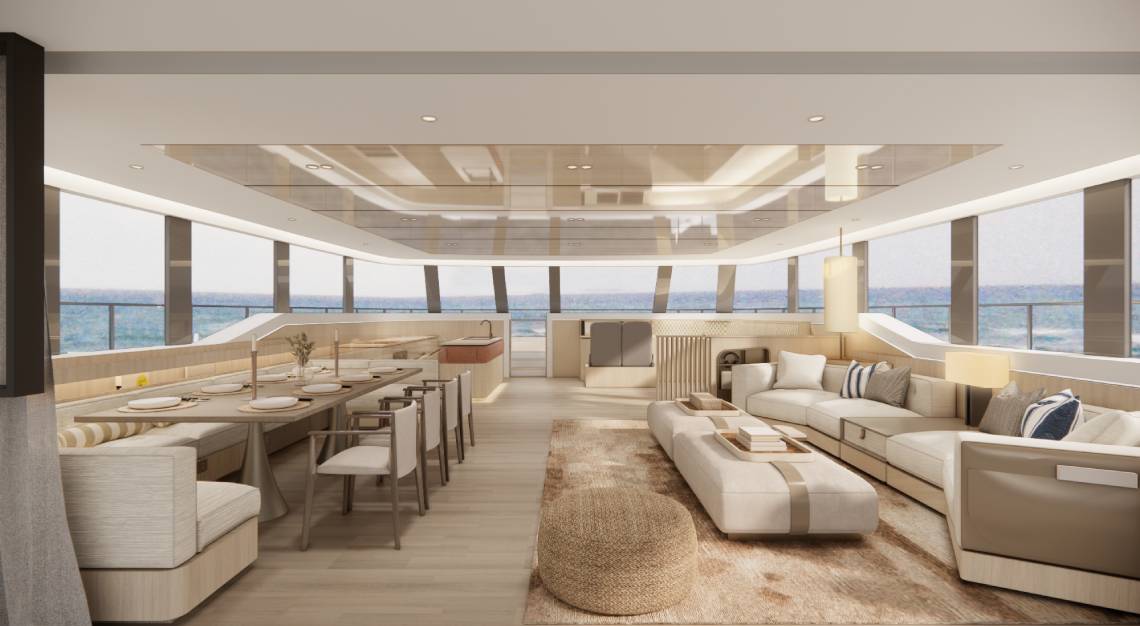
The award-winning designer is currently working on a 66ft catamaran. While she is unable to share details at this stage, she offers candid insight into the challenges of designing such a project. How do you ensure that design remains luxurious while meeting technical and safety demands on a yacht? Our team draws from our experience as users of luxury
cruising. A yacht offers a floating environment in which the living spaces are constantly in motion, making movement like walking tedious or even dangerous. As such, we look into non-slip, comfortable flooring, and integrate rounded edges into our aesthetic, such as in pieces of furniture. We want features that are functional and spatially efficient for both daily and entertainment activities.
How do you translate a client’s lifestyle and personality into a cohesive interior concept?
Understanding different ownership profiles deeply and designing narratively allows us to translate habits into spatial needs, and personal taste into colour palettes and materials. We also weave in signature details like art or wine collections, and even cabinetry provisions for wellness programmes or multiple wardrobe changes for the ladies.
Yacht interiors require materials that can withstand the elements. Do these constraints influence your choice of finishes, textures and detailing?
Selecting materials that are fit for purpose and use is a given for us, especially with our experience designing public areas. We do not see the demanding material requirements of yacht interiors as a constraint, but rather as another creative avenue to express our precision, refinement, and in-depth knowledge of materials and ergonomic proportioning.
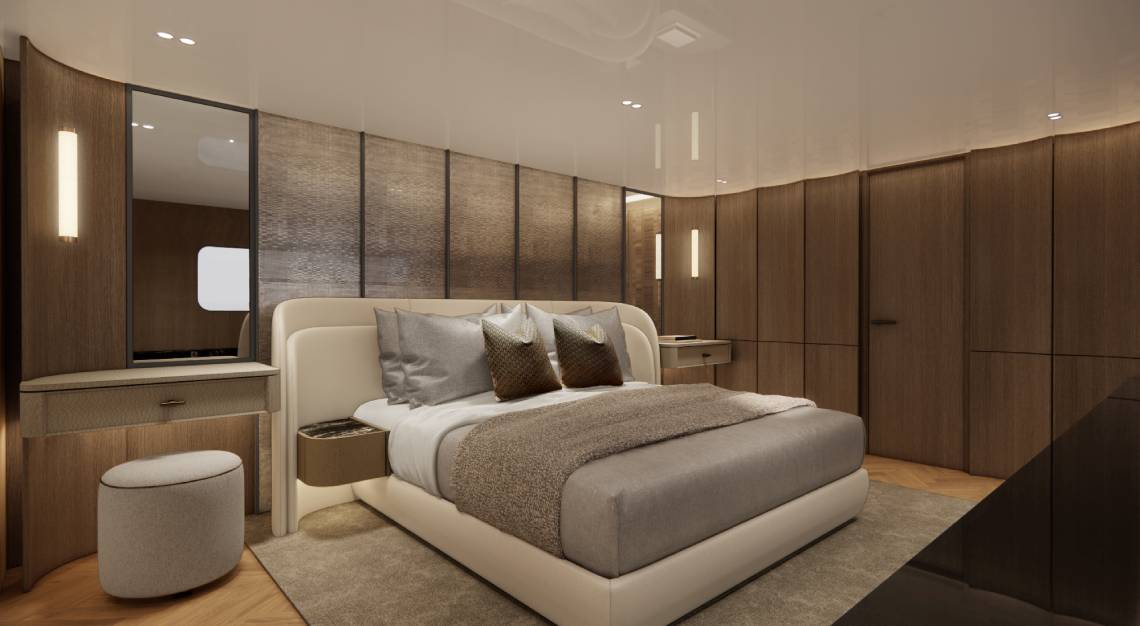
You have worked all over the world. How have these influences shaped your approach to luxury yacht design?
Working across different cultures and regions inevitably shapes our approach. Our design vocabulary broadens and our sensitivity deepens to how people use spaces. The exposure to diverse traditions reminds us to weave subtle cultural references into our spatial planning—even more so because social habits differ. Some cultures value communal dining, whereas others prioritise private retreats. On a yacht, this sensitivity helps us design decks, lounges, and dining areas that accommodate varied modes of living and entertaining
What’s next for the future of luxury yacht interiors?
In my opinion, the future of yacht interiors is shifting towards lifestyle-driven flexibility. The design, while maintaining its luxury, should still provide a relaxed and multifunctional living experience. Lounge and dining spaces could be used as breakfast communal food prep and workstations during the daytime, yet transform into evening social hubs for games or even a cinematic night.
This story first appeared in the May 2026 issue. Purchase it as a print or digital copy, or consider subscribing to us here