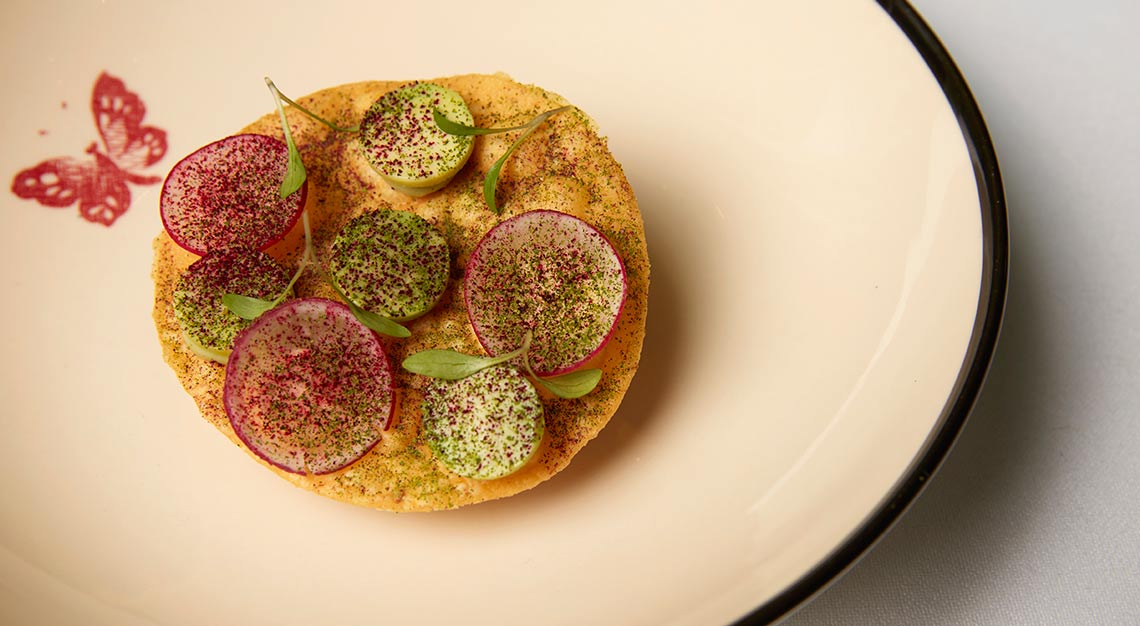
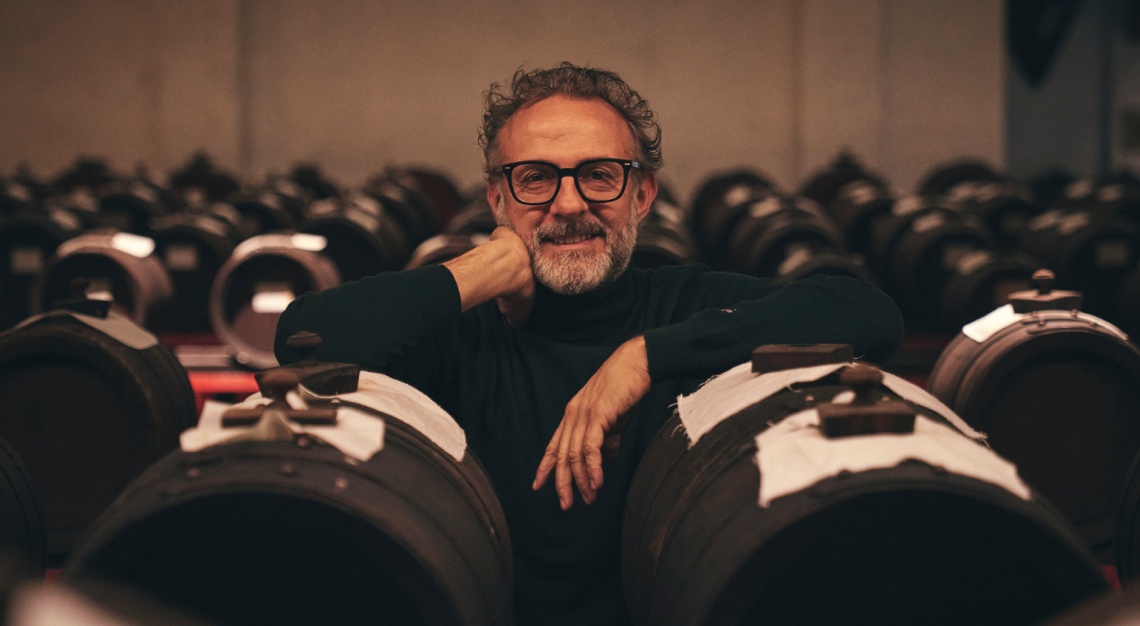
In the Modena countryside, Massimo Bottura, the chef behind the twice world’s-best Osteria Francescana, staged 30 years of one kitchen’s journey as a single evening of gastronomic theatre
The menu arrives as a folded card. No prices, no ingredients, just dish names, each with a year beside it—not the year it will be served, but the year it was born. Mont Saint Michel, 2000. Rice Camouflage, 2012. Five Ages of Parmigiano Reggiano in Different Textures and Temperatures, 1993. I read it like a concert programme. Everything on it had been in rehearsal for years.
Earlier that day, driving through the Emilian countryside, I came to appreciate how deeply this place is rooted in the land. The farmhouse appears at the end of a lane, ringed by green fields, with an orderly and generous vegetable garden designed to feed a kitchen rather than decorate a property. It set the tone at once. I could not wait for the evening’s theatre.
Massimo Bottura’s story begins beneath his grandmother Ancella’s kitchen table in Modena, where he hid from his older brothers while she rolled pasta overhead and tortellini fell like small stars. “That was my safe place,” he recalls. He left law for the kitchen; three Michelin stars followed, and The World’s 50 Best named Osteria Francescana the best restaurant on Earth in 2016 and 2018, after which it joined the permanent Best of the Best.
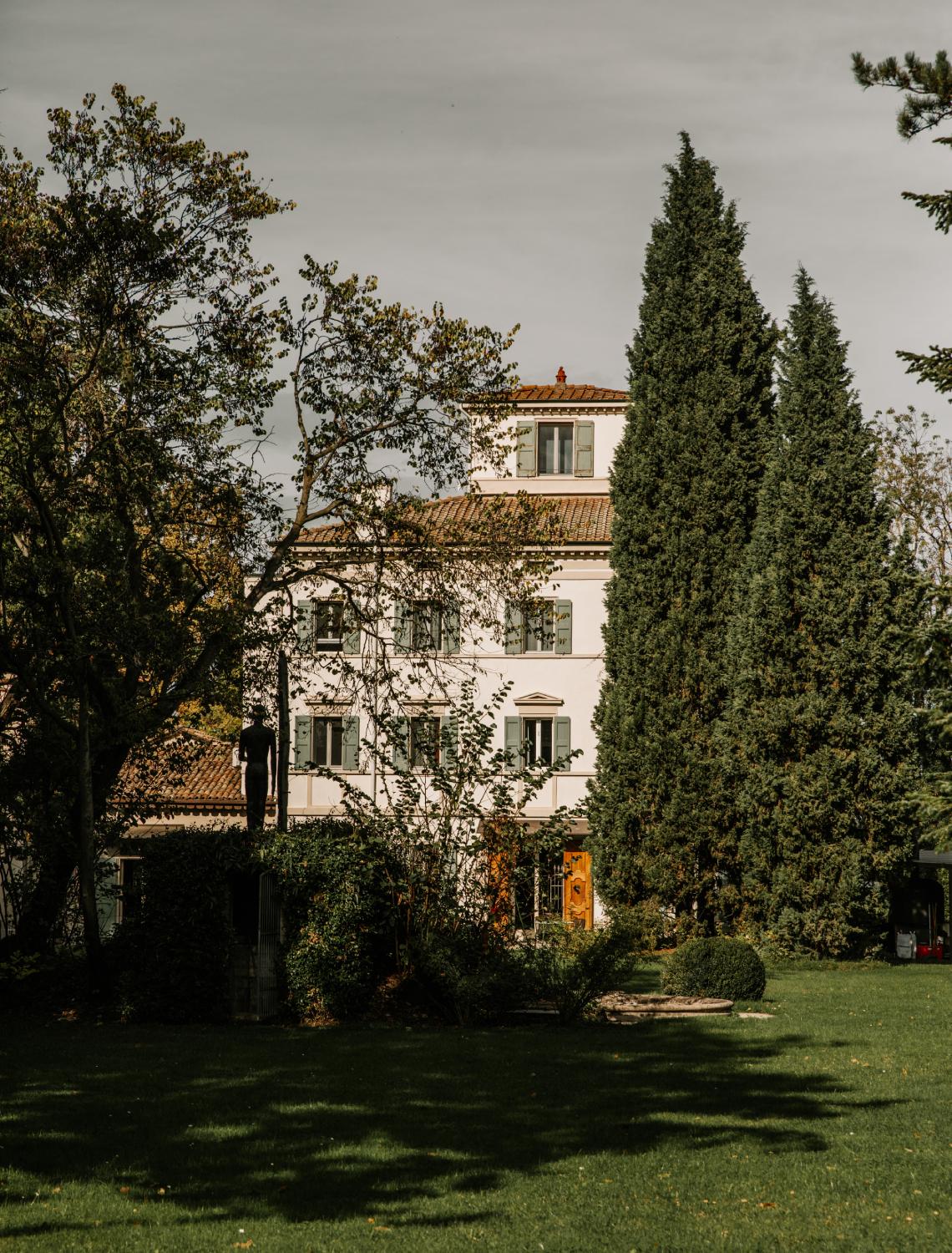
Francescana at Maria Luigia is not that original restaurant, which sits a short drive away in Modena’s medieval centre. Here, in an 18th-century farmhouse named for Bottura’s mother and opened with his wife, Lara Gilmore, as a guesthouse in 2019 (earning three Michelin Keys in 2024), the mood is closer to a fairy tale: a living archive of three decades of culinary imagination. The card put it best: “This menu is a time capsule. Welcome to our Theatre of Flavour.”
The meal opened with Mont Saint Michel and a memory: Bottura at 16, trailing his three older brothers through France, discovering flavours he had never encountered before. The result is a bridge between land and sea: an oyster shell filled with lamb tartare, blanketed in an oyster emulsion and finished with a touch of apple cider vinegar.
Then the night became a conversation between Northern and Southern Italy. Mare Nostrum, named after the ancient Roman term for the Mediterranean, features salt cod from the north dreaming of swimming south. On its journey down the coast, it encounters lemon from Sorrento, tomato, olive oil from Puglia, and capers and almonds from Sicily. The cod rests on a bed of dried tomatoes and roasted almonds, surrounded by a delicate tomato water infused with capers and olives.
Rice Camouflage followed: three risottos representing three landscapes of Emilia-Romagna in a single dish. It starts in the mountains with a rich brown risotto of porcini, descends into the valley with a vibrant green herb risotto, and finishes at the Adriatic coast with a black risotto flavoured with shellfish. The dish served as a culinary map, yet it felt as though I had chosen the route myself.
Then came the dish I will never forget. Five Ages of Parmigiano Reggiano, crafted from cheeses aged 24, 30, 36, 40, and 50 months, arrived in five states simultaneously: a soufflé warm from the oven, an ethereal cold foam, a crisp chip, a velvety sauce, and a smooth cream. Each element expressed its distinct age, texture, and temperature. Together, they achieved what no single version of the cheese could. I have eaten Parmigiano Reggiano countless times, yet I had no idea it was capable of this.
The joy of sharing
And then the mastermind himself appeared. “I like sharing joy and happiness, and this is about that,” he said. You could instantly see where his delight truly lies: not merely in constructing the food, but in the precise moment a guest understands what a dish is doing. “Passion pushes you forward,” he has said. “Love makes you ask who you are moving forward for.” By then, I was thoroughly enchanted.
Art, he explains, is the key. “I do not use art to decorate my plates. I use it as a lens through which I can reconsider an ingredient, a memory or a tradition. It gives me the courage to break an idea apart and rebuild it with a new meaning—to make the invisible visible.” The Beautiful Psychedelic Spin Painted Veal arrived as charcoal-grilled meat at the centre of a white plate, bordered by wide, sweeping arcs of green, orange, yellow, and deep red sauces. The plate had transformed into a vibrant canvas, with no two splashes alike—a clear nod to Damien Hirst, resulting in spectacular dining.
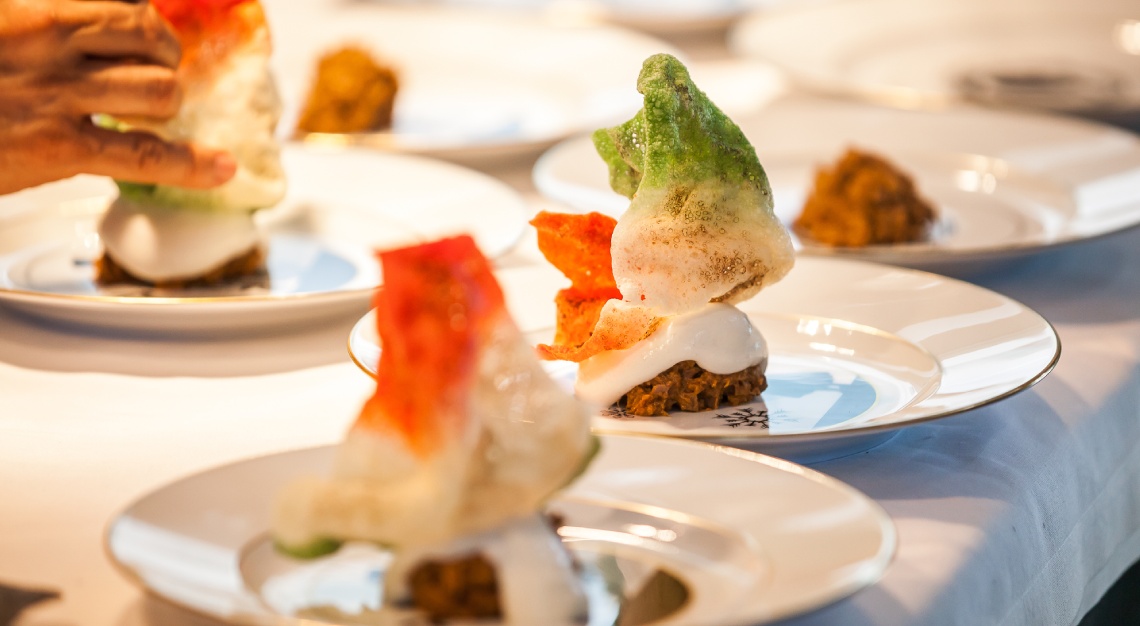
The Crunchy Part of the Lasagna traces back to Sunday lunches in Massimo’s childhood, where the children vied for the crisp corners—four corners, five kids, and a lasagne that couldn’t stretch. That night, each portion arrived crowned with a crunchy chip painted in the colours of the Italian flag. Naturally, I held mine a little closer.
Next came a whole banana served on a white plate, bearing a title to match: Not Warhol, Not Cattelan, Just Banana and Château d’Yquem. Beneath a white chocolate shell lay a delicate banana foam and a reduction of Yquem, the legendary Sauternes. The punchline arrived with the very first bite.
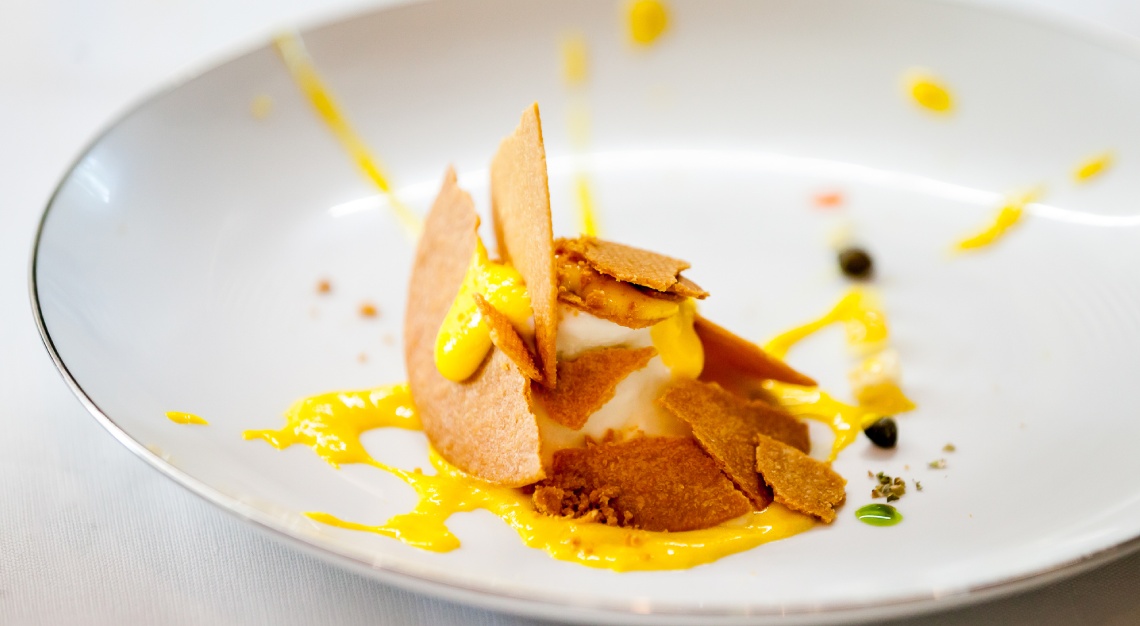
Oops! I Dropped the Lemon Tart arrived artfully broken—a nod to the 2010 kitchen accident that became a global signature, retaining all the delight of something that theoretically shouldn’t have worked. Finally, aptly named Surprise, Surprise!, the final dish proved to be savoury: a bowl of tortellini in Parmigiano cream, echoing the small stars from his childhood table. I certainly wasn’t about to complain.
Outside, the acetaia slowly ages balsamic vinegar in progressively smaller wooden barrels. In the adjacent building he calls his playground, Ferraris, Ducatis, Maseratis, and Lamborghinis share space with sculptures by Joseph Beuys. Slow food and fast cars: two distinct facets of one city’s culture, driven by the same desire to transform precision into pure emotion.
“When I say that cooking is an act of love, I truly mean it,” Massimo says, “whether I am cooking in a three-Michelin-star restaurant, or at home for my family. The technique may change, but the purpose never does: to care for another human being.”
Bottura will return to Singapore in November. The city stays with him, he says, not merely as a recipe, but as an enduring spirit. “Singapore is a place where many cultures, traditions and flavours live side by side,” he says. “That idea has followed me home: the energy of the hawker culture, the intensity of the flavours. But most of all, the sense of openness.”