
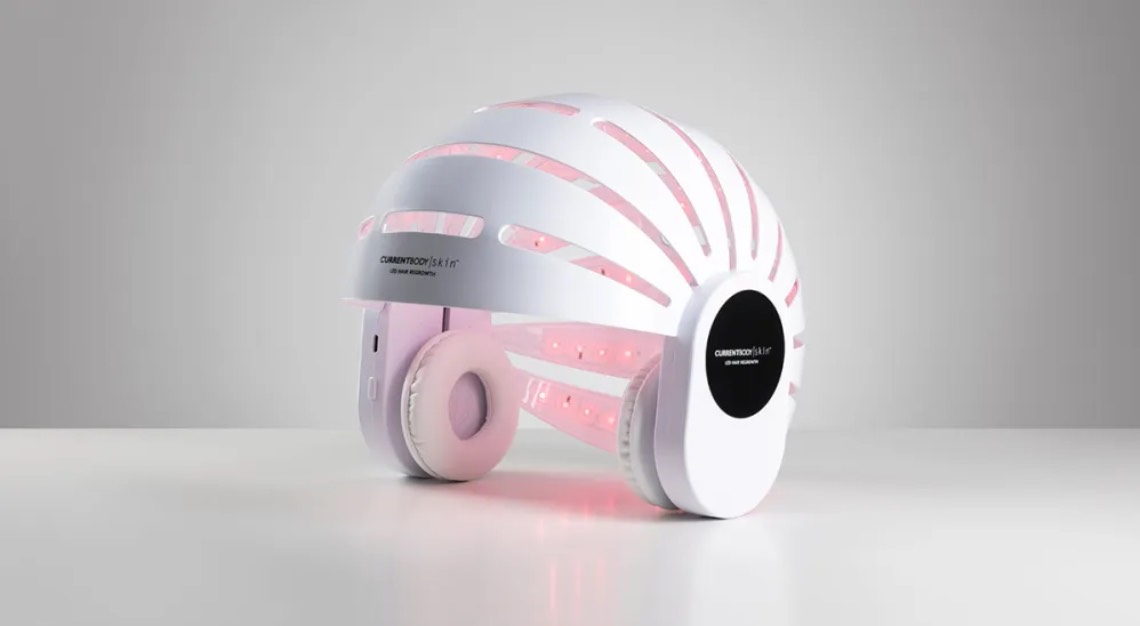
Effective red light therapy from the comfort of home
You’d be hard-pressed to find a guy who doesn’t want to keep the hair he has — or get back some of what he’s lost. And we all want it to look as full and healthy as possible. There are a lot of solutions out there: minoxidil and finasteride, PRP, hair growth supplements, and laser caps. But some are more supplemental in nature, and laser caps largely fall into that category.
That’s not a knock on them — I’ve been using one for the better part of a decade and consider it essential to my routine — but it’s about knowing what expectations to set for different parts of your hair-retention and hair-maxxing goals. Low-level laser therapy, or LLLT, is the clinical name for these diode-based devices, and as NYC dermatologist Dr. Robert Finney (founder of Soho Skin and Hair Restoration) puts it, the key word in low-level laser therapy is low.
Still, despite some measured skepticism around LLLT as a whole, Finney’s view is that at-home devices compete surprisingly well with far more expensive clinical treatments, and offer many of the same potential benefits at a fraction of the cost.
How LLLT is designed to work
Here’s a word we won’t ask you to memorize beyond reading this article: photobiomodulation. Instead, you just need to know how it works to understand LLLT. As Finney explains, “our hair follicles have photoreceptors that can be activated by certain wavelengths of light, which help support follicle vascularity and health. That activation can help reduce oxidative stress and inflammation, which is higher in androgenetic alopecia (male pattern hair loss).”
In other words, the goal is to improve the environment around the follicles you still have by enhancing circulation and reducing inflammation, thereby helping fortify them.
Lasers vs. LEDs
You might notice that different laser caps aren’t advertising lasers at all. Instead, they might be touting LEDs. The key difference is in their wavelengths… the nanometers.
Lasers emit a single precise wavelength (630 nanometers); LEDs emit a broader range clustered around a target wavelength, making lasers more precise while LEDs are more diffuse. “If it is LED, it has mostly 630 nm, but will also contain rays that are close to but not quite up to 630,” says Finney.
In theory, that precision gives lasers an edge. “In the event that we know the exact wavelength for a specific task, laser will always outperform LED,” he says. But in practice, the science is still evolving. For that reason, Finney places less emphasis on choosing one over the other and more on whether the device delivers the right kind of red light, at the right energy, in a way that’s easy to use consistently. (Subtext: in a way that keeps you in the habit, in order to yield potential results.)
What to look for in a laser cap/LLLT device
First things first: Make sure your potential device targets male-pattern hair loss (by promising follicle-boosting benefits). And start by comparing its nanometers against Finney’s advice: “Ensure it has red light between 625 nm to 660 nm with fluence ranges in the 2–8 J/cm² and pulsed rather than continuous.” Beyond that, he’s less concerned with headline specs like diode count. (I always thought something in the high 200s and into the 300s was imperative, but Finney says “more diodes” hasn’t been shown to change much.)
What does matter is whether the light actually reaches the scalp, though. And thus the design of the cap is most important. “If you have hair in the path of the laser or LED, guess what? It isn’t penetrating the skin of the scalp effectively,” he says. “In order to photobiomodulate, it should be as close to flush on the scalp as possible.”
All of this reinforces the key argument: LLLT is a supporting player. Used consistently alongside proven treatments, it can help optimize follicle health and improve results at the margins. Used alone, it’s unlikely to justify any investment.
So remember: If a device calls for five minutes daily or 30 minutes a few times a week, that cadence is tied to how the device delivers energy. Skip sessions, or freelance your own schedule, and expectations need to be adjusted accordingly. Like anything in the hair-retention game, results hinge on consistency.
The best laser caps for hair growth
Below, a closer look at the caps worth trying—based on personal reviews and an incisive look at each helmet and cap’s stats.
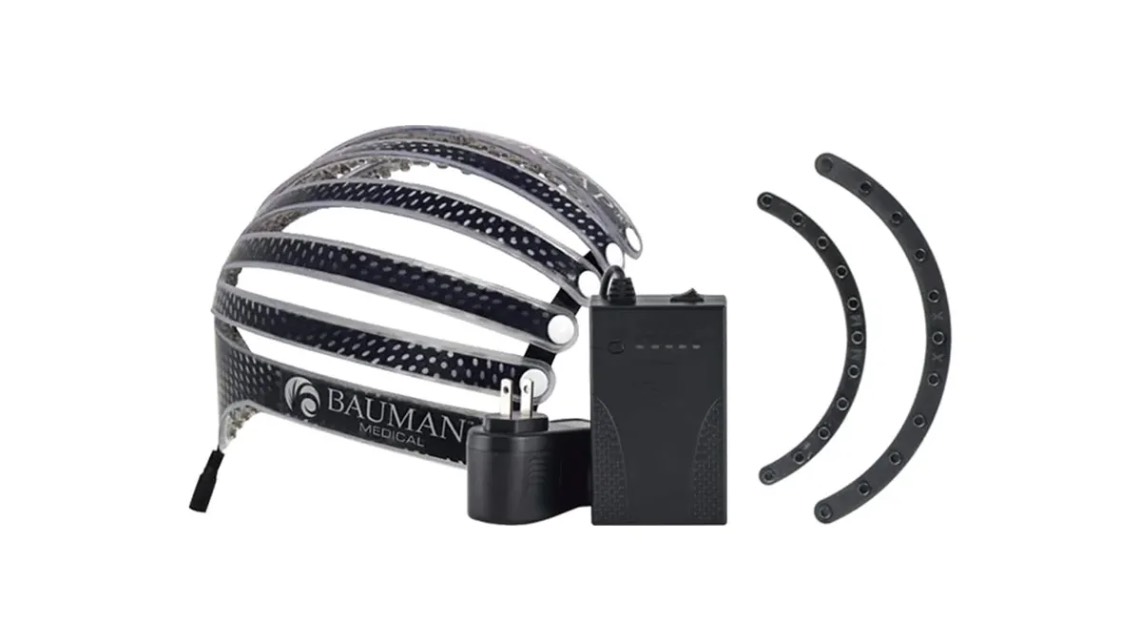
Best overall: Bauman Turbo LaserCap
Laser or LED? Laser
Diodes: 300 (650nm)
Cadence: 5 minutes daily
Key Features: Folds flat for travel, full scalp coverage, well ventilated, high-power battery, built to mimic in-clinic power in a wearable format
I have a yearslong relationship with my Bauman TURBO, and even penned a love letter to it on this very site. This one’s portability, breathability, maximum coverage, and ease of daily integration all make it my go-to. It’s the fastest of the lot and requires just 5 minutes daily. It doesn’t turn off automatically, so be sure to set your time or watch the clock. They also offer various frame sizes so you can custom-fit the cap to your head. I love any device that lasers the rear of my head too, because hey, I want those follicles as enriched as possible too, even if they aren’t going to fall out from male pattern loss.
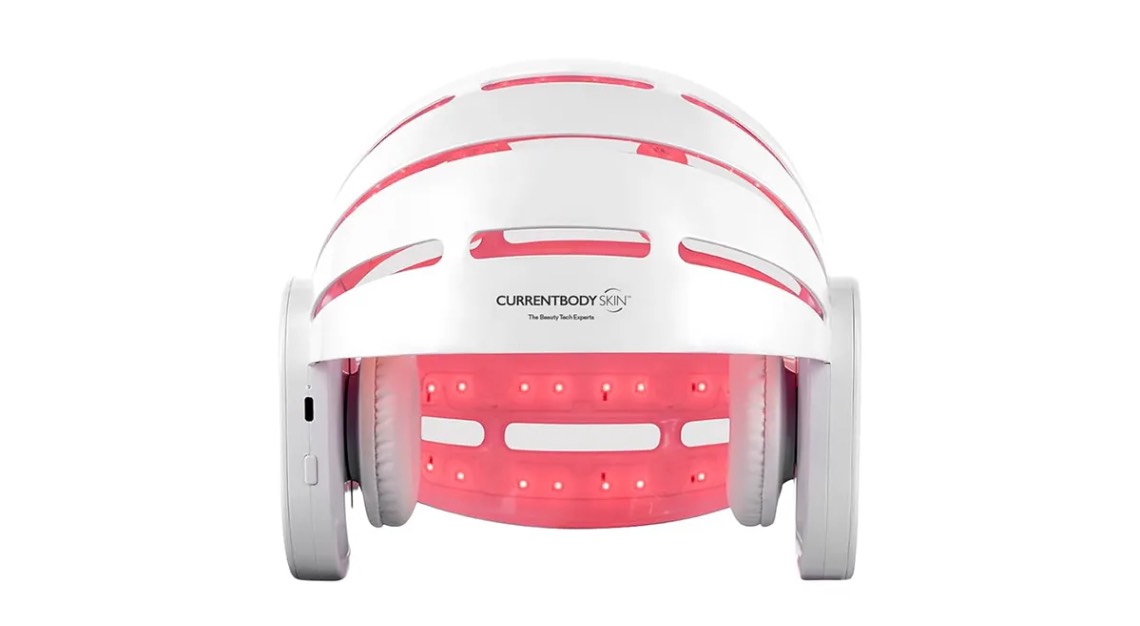
Best features: CurrentBody Red Light Therapy Hair Growth Helmet
Laser or LED? LED
Diodes: 120 (620-660nm)
Cadence: 10 minutes daily
Key Features: Lightweight helmet comes in medium and large sizes, full-scalp coverage, integrated timer, and built-in Bluetooth headphones
Is it the most juice-up device on this list? No, not in terms of diodes, or speed, or lasers. But in terms of evening integration? Yes, definitely. This astronaut-like helmet features padded Bluetooth headphones that make it easy to get lost in your music, podcast, or movie while you incorporate the 10-minute LED session. Most guys should opt for the large helmet unless you know your head is on the smaller/medium side.
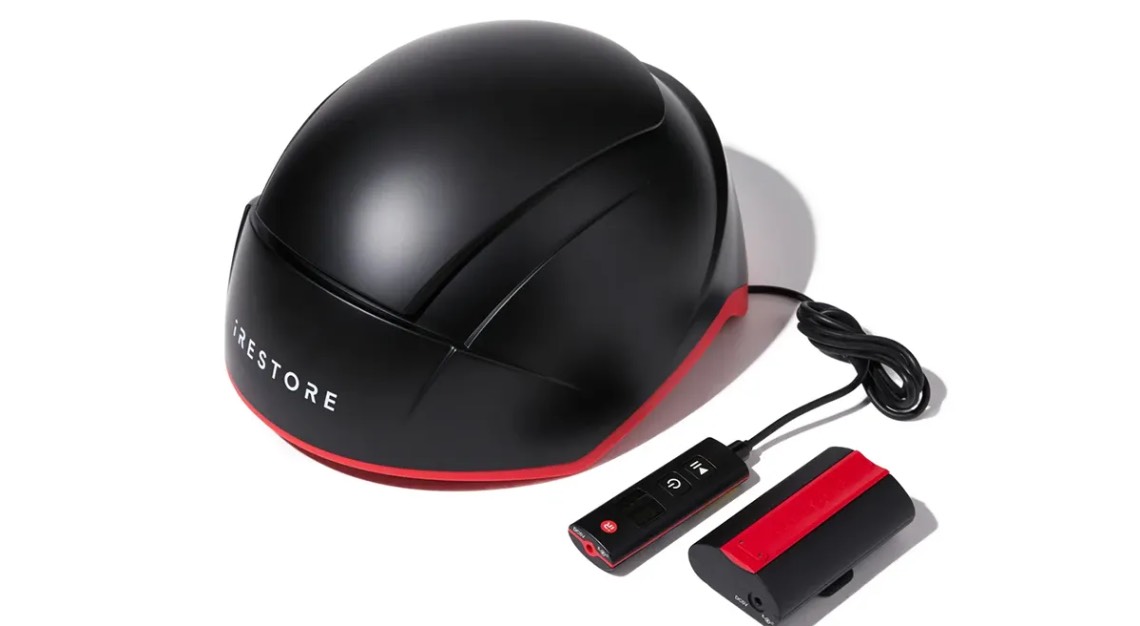
Best hybrid: iRestore Elite
Laser or LED? Hybrid
Diodes: 500 (300 lasers, 200 LEDs; 625 / 655 / 680nm)
Cadence: 12 minutes daily
Key Features: Triple-wavelength output, reputable clinical alignment, the wireless version costs $99 more and is worth it
I more or less associate iRestore with “highly networked inside clinics,” and I say that favorably, as I like that many professionals align with this brand. That cosign goes a long way for me, and even though it’s a 12-minute runtime compared to 5 or 6 minutes for other examples on this list, I still find it easy to integrate into a nightly regimen. Its sensor turns off when it’s not on your head, and automatically shuts off after. I’ll give it bonus points, too, for not trying to be an actual hat; it’s an at-home helmet, and that’s just a fact.
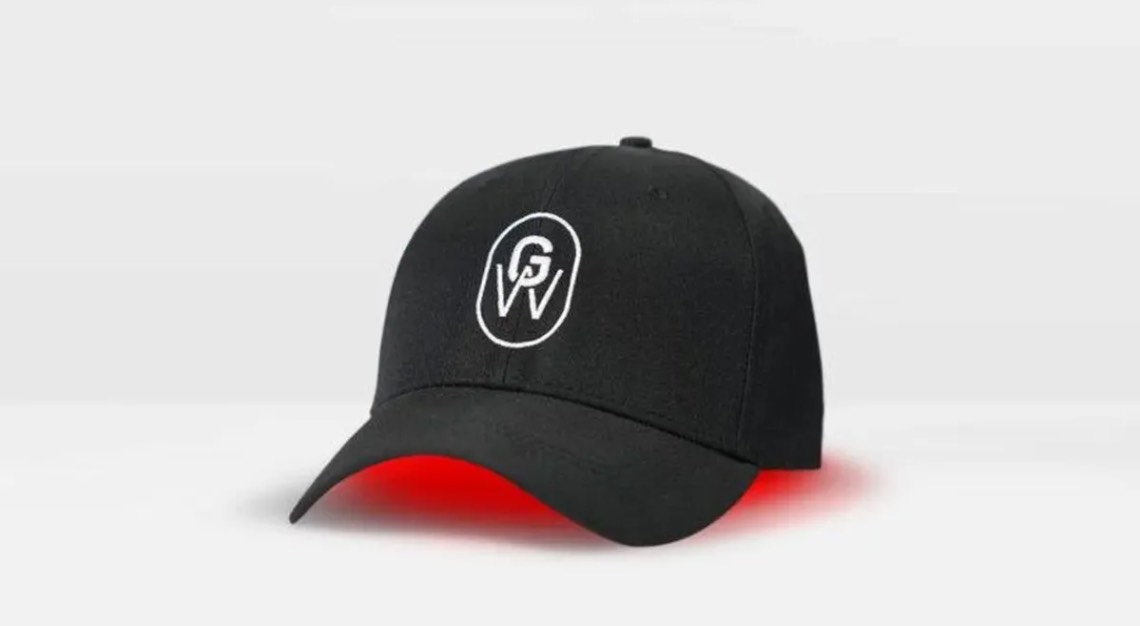
Best value: GroWell Cap
Laser or LED? Hybrid
Diodes: 63 (650nm)
Cadence: 25 minutes, three or four times weekly
Key Features: Soft-cap design (wear it under a hat), removable light insert, adjustable fit, automatic sensor (only turns on if worn, turns off when removed), various color options
If you want an easy buy-in for your first LLLT device, then look to GroWell’s wonderful value. It has the sensors to only be on when you’re wearing the cap, and it’s easy to fit the flat light panel inside the cap when it arrives; that cap is soft and more flexible that most others in this category, and together it feels like you could travel easily with them, even if you choose to remove the light panel and lay it flat while the cap gets condensed too. It must be said that this one has far fewer diodes and is a hybrid LED device requiring 25 minutes of use per session, but that’s the whole “low-cost” tradeoff: If you have your nightly TV shows, cooking, books, etc, it’s an easy way to add some follicle fortification to your winding down. You can also choose from a few different colours for your cap.
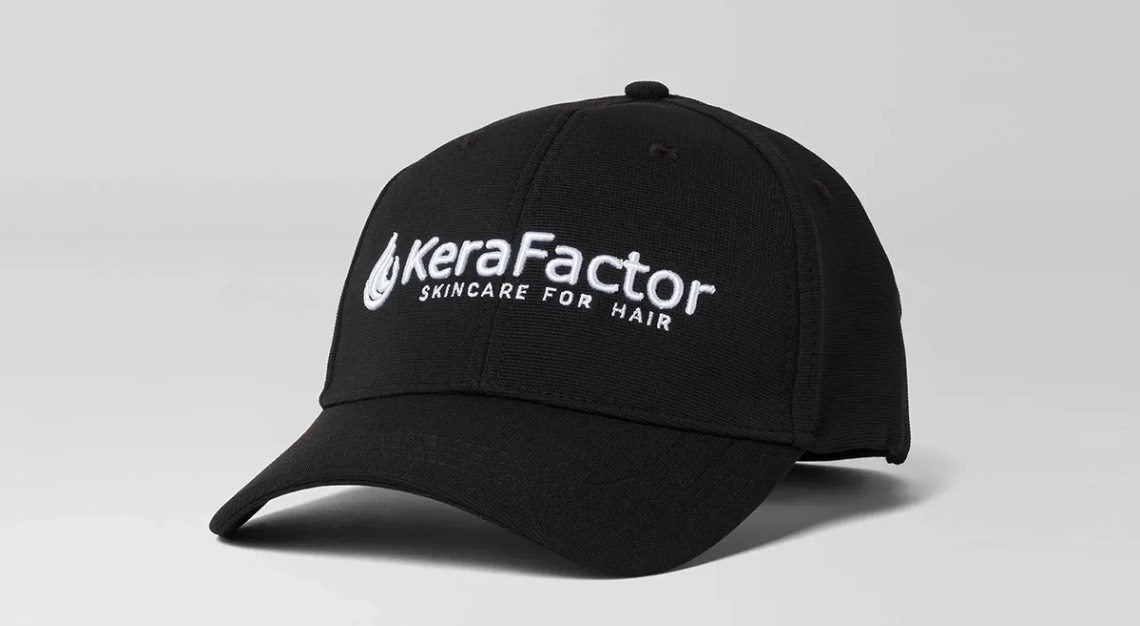
Best for most guys: KeraFactor Laser Cap
Laser or LED? Laser
Diodes: 302 (650nm)
Cadence: 6 minutes, three or four times weekly
Key Features: Flexible cap, automatic sensor (only turns on if worn, turns off when removed)
This is the perfect “down the middle” device that checks all the boxes: it still feels like an upgrade, it gives you over 300 diodes, and it’s as easy to slip on as a baseball cap. I even love the hard, zip-up hat-shaped shell it comes in, so things don’t get smushed in travel. It senses when it’s on your head, so you won’t get any blinding lights in your eyes before or after, and it automatically turns off after each timed use.
This story was first published on Robb Report USA. Featured photo by CurrentBody