
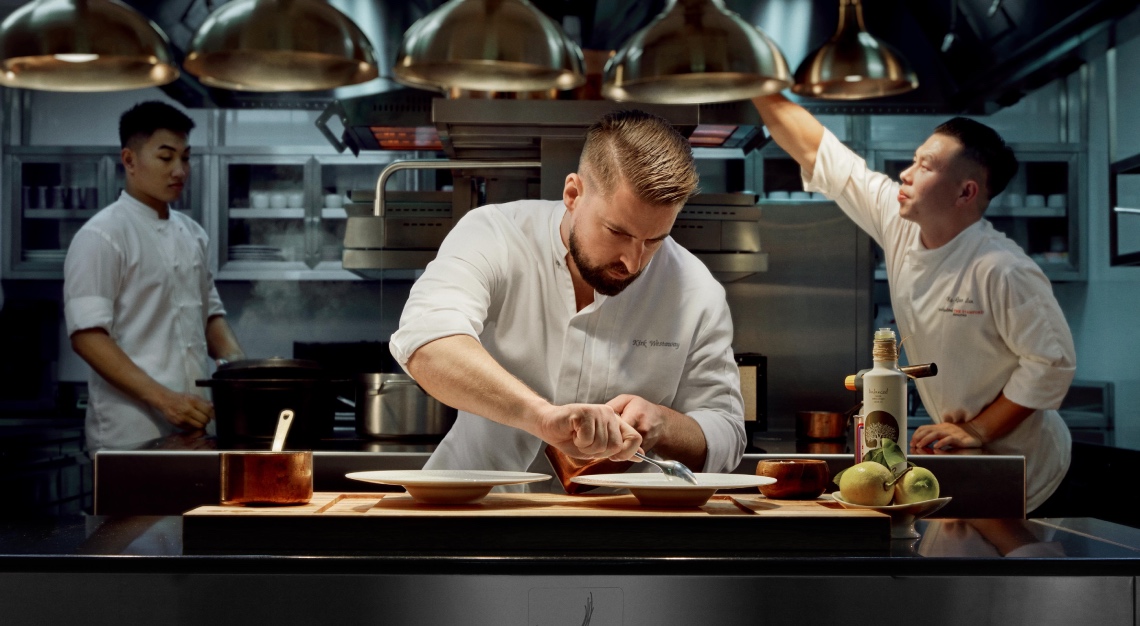
We ask three chefs about their personal health regimens that help them survive in one of the world’s most demanding professions
The kitchen is one of the most physically punishing environments in professional life. Long hours, late nights, and relentless pressure conspire against good nutrition. Meals become irregular, proper eating gives way to calorie-dense snacks, and cooking for others while neglecting oneself is commonplace. Three well-regarded Singapore-based chefs offer answers to the same question: how to stay strong, sharp, and energised in an industry that grants no off-season.
Kirk Westaway, executive chef of Jaan by Kirk Westaway
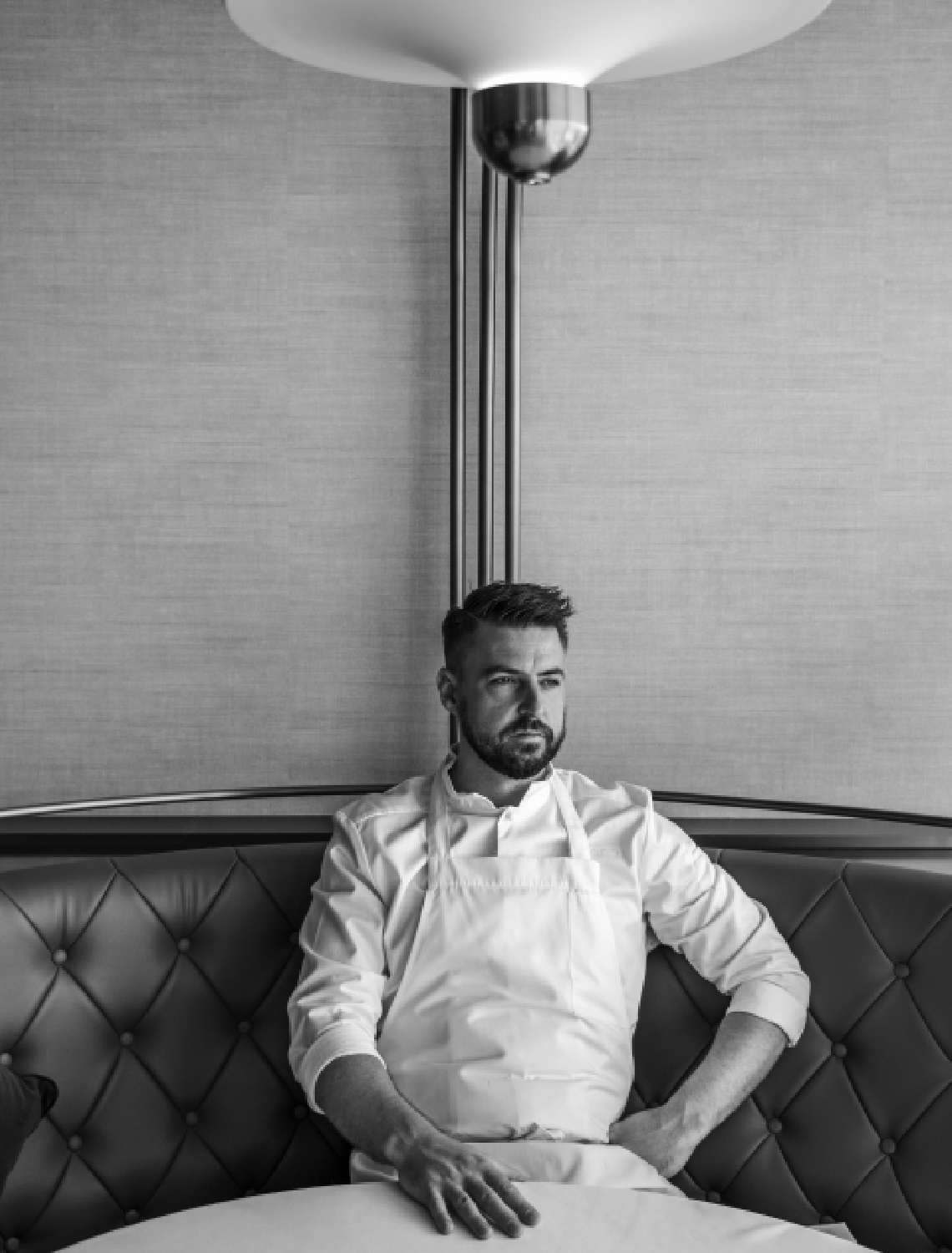
The kitchen makes it easy to eat badly and sleep less. Which non-negotiables have you built around your health?
I have always had a fairly healthy diet, growing up as a vegetarian, and working in kitchens and restaurants. One area I am working on is consistency. In a fast-paced environment, it is easy to skip meals, and having three proper meals a day is still rare. It is something I am trying to be more mindful of, and a habit I hope to build over time.
What is a favourite food?
I am a keen fanatic of sourdough. I make a kilo loaf at home using 85 percent organic, strong English bread flour and 15 per cent dark rye. The dough is prepared overnight, left to rest and prove, then baked in the morning. It is a large loaf, so I slice and freeze it, which means I always have homemade rye sourdough on hand.
Beyond the physical grind, what limits have you had to draw around your time and energy to stay sustainable in this career?
It is a hard job, but without fully committing to your craft and your career, it is difficult to see a return. There are late nights and early mornings, and at times feelings of missing out on other parts of life. But I have created something meaningful through what I love to do. I value being with the team and the guests, and the appreciation that comes with it.
Mental health is a real issue across many industries, and the F&B industry has been particularly affected. It is something that needs to be addressed more openly, and I welcome all to assist where I can, to be a voice that connects with those who are struggling. For me, it comes down to having an outlet. Running is mine. Avoid relying on quick fixes like a drink each night. Instead, find a form of exercise and put your energy into that.
Was there a moment that made you fundamentally change how you approach work and your body?
I have not had a health scare or burnout. Many people I know have, and it is something to be mindful of. If you feel yourself getting close to that point, step away, reset, eat well, sleep well and return with a clear mind. It is far easier to manage it early than to recover once you have hit that wall.
Looking back at the chef you were starting out, what do you know now about staying healthy in this industry that no one thought to tell you then?
Younger chefs today are generally more health-conscious than they were over 30 years ago, so it is moving in the right direction. Do not worry too much about the hours. From hard work, you gain growth, education and life lessons. Embrace them and the colleagues around you. Eat well, sleep well, drink plenty of water, stay active and enjoy the experience.
Chen Kentaro, chef of Shisen Hanten
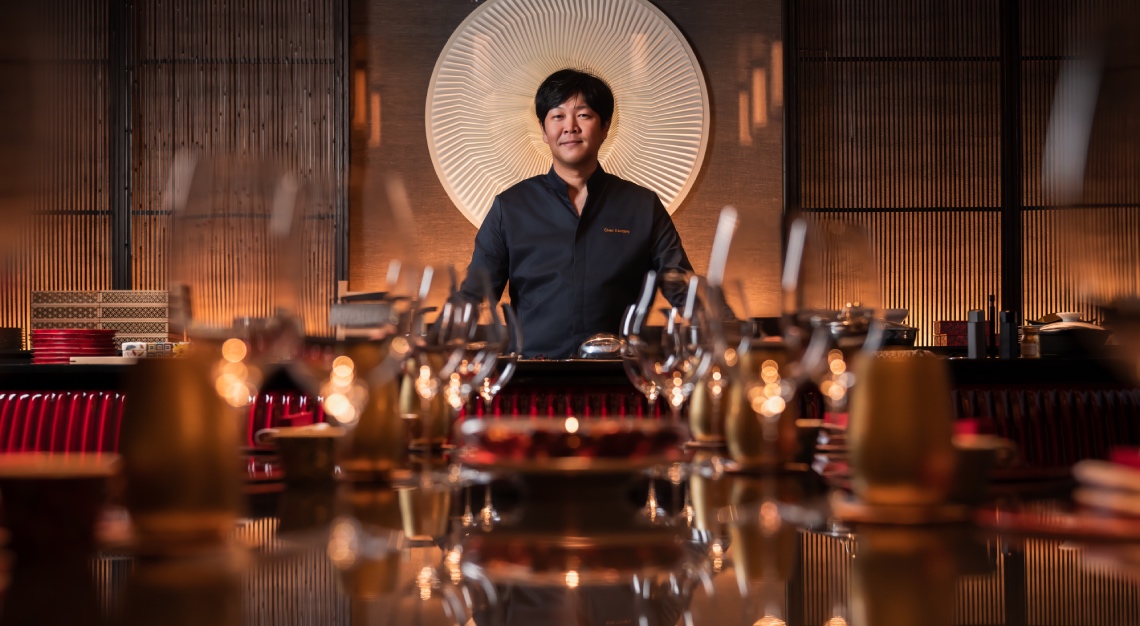
What personal health commitments have you stopped compromising on?
Because tasting and late-night work are part of my daily routine, one rule I never break is not carrying fatigue into the next day. That means avoiding unnecessary late-night eating, and ensuring I get a minimum amount of sleep and recovery time, no matter how busy things get. In the past, I prioritised work over my physical well-being. Now, I believe that good work can only come from being in a good condition.
What does a realistic day of eating look like for you?
On double-shift days, my approach is less about ‘eating’ and more about ‘refuelling’ to maintain condition. I keep breakfast light, I choose easily digestible foods during the day and limit myself to small tastings during service. After service, I avoid heavy meals late at night and keep intake to the absolute minimum necessary.
Kitchen culture has historically glorified overwork. What boundaries have you had to impose on yourself to protect your well-being?
I used to place value on working long hours, but now I am very clear about where to draw the line. For example, I no longer push through when my performance is clearly declining, and I make sure to secure regular time to reset my physical condition. Ultimately, I have found that this approach has a positive impact not only on myself, but also on the team.
Tell us about what you do for exercise.
A major turning point was when I started training for weight loss, which naturally led me to take running more seriously. I have found that training schedules have a lot in common with business planning in management. Things rarely go exactly as planned, but if you clearly understand your objectives and methods, you can adapt flexibly. Above all, the sense of achievement when reaching the goal is incredibly rewarding.
If you could sit down with a young cook on their first week, what would you tell them about protecting their health?
To young chefs, I would say: your body is your greatest asset. It is not something to be consumed. In this industry, pushing yourself is often seen as a virtue, but to sustain a long career, managing your condition is also a skill. If I had understood this earlier, I believe I would have approached my work differently from the start.
Stephanie Istel, chef/owner of Bar-Roque Grill
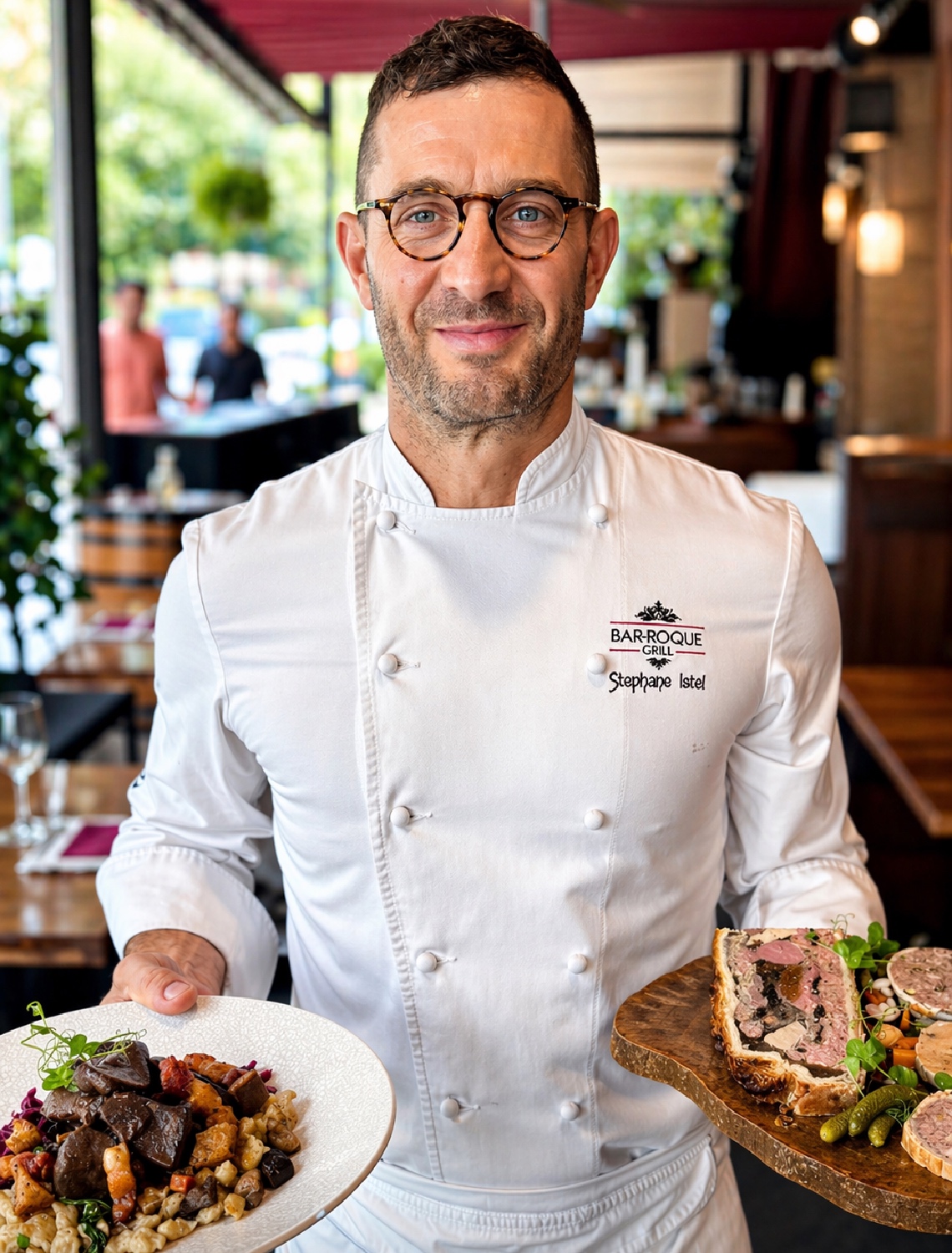
In a profession that is built around tasting and late nights, what personal health rules do you refuse to break?
In this industry, it’s easy to fall into bad habits. Late nights, constant tasting, irregular meals. For a long time, I told myself that came with the territory. But at some point, I realised that if I wanted longevity in this career, I had to take responsibility for my own discipline. Now, my biggest non-negotiable is consistency. I train no matter what; whether I feel great or completely drained. It’s not about motivation anymore. It’s about routine.
What does a ‘normal’ day of eating look like for you on a double shift, on and off service?
With the amount of training I’m doing—preparing for Hyrox races, triathlons and others—I need a high-calorie intake. That’s about 3,200 calories per day. I usually split this into four meals. I start at 5am, before training, with bananas and eggs. After training, around 9.30am, I have oats with berries. Lunch is at around 3pm. Typically carbs, protein and salad. Then at 10pm, I finish with another balanced meal of carbs, protein and vegetables.
How do you motivate yourself to train with such consistency?
Of course, some days are more challenging than others, but no matter what, I show up and get it done. If I don’t train, something feels missing. Exercising every morning gives me the energy and stamina I need for the rest of the day. If I want to perform well in races and competitions, I have to stay consistent. This doesn’t just apply to fitness, but to everything in life.
How did you get into Hyrox and what is your advice for interested beginners?
I got into Hyrox through my personal trainer, Phil Snowden. About six months into my fitness journey, he encouraged me to participate. Since then, I’ve completed 11 races around the world: competing in doubles, solo, and now solo pro divisions. I’ve achieved three first-place finishes and four third-place finishes, competed in a World Championship, and I’m heading to Sweden in June for another one. It’s been an incredible journey.
My advice for beginners is simple: just sign up. No matter your age or fitness level, having that goal will push you to train and build consistency. It doesn’t matter how long it takes you to finish—you’ll be incredibly proud of what you achieve.
Long hours are a given in kitchens. What boundaries have you learnt to set?
About three years ago, I made the conscious decision to stop drinking alcohol. I realised that trying to balance drinking with a fitness-focused lifestyle made it impossible to stay consistent. It’s one of the best decisions I’ve made for myself.
Has there been a health scare or burnout moment that forced you to rethink how you work and live?
About four years ago, my doctor told me my health was in poor condition. I had high cholesterol, was pre-diabetic and had a fatty liver, among other issues. After I stopped drinking, it took about a year to bring my health back to a good place. It’s incredible how the body can recover when you start doing the right things.
What advice would you give young chefs on staying healthy?
My advice would be to find balance early. Make fitness and movement part of your routine, take care of your mental health and prioritise your overall well-being.
This story first appeared in the June 2026 issue. Purchase it as a print or digital copy, or consider subscribing to us here
