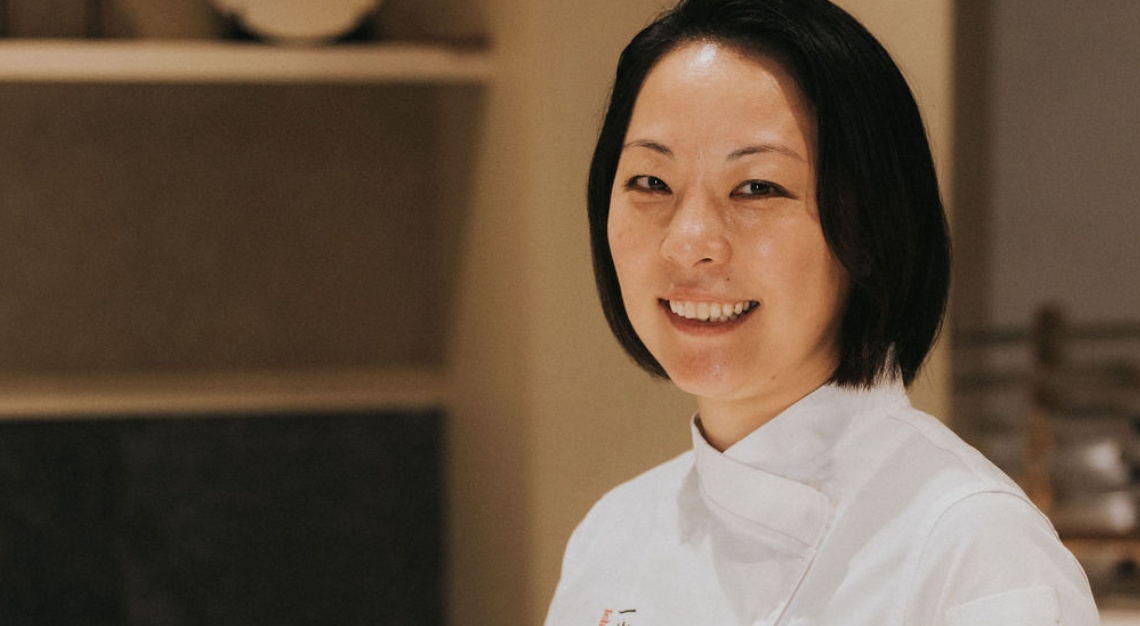
Akane Eno, chef of Ichigo Ichie, is among the few chefs in Singapore certified to prepare fugu, the Japanese pufferfish prized as a delicacy despite its toxic organs
To eat fugu is to place your life in the hands of the chef who is preparing it. The liver, ovaries, skin, and other organs of the pufferfish may contain enough tetrodotoxin to cause paralysis and death by asphyxiation and there is no known antidote. Fugu—the Japanese name for pufferfish—refers to a family of fish whose flesh is edible but whose organs harbour this powerful neurotoxin. Despite the risks, it is considered a luxury delicacy.
To ensure safety, Japan and other countries require chefs to undergo years of supervised training and pass rigorous written and practical examinations. These assess their ability to identify different species, remove poisonous parts without contaminating the meat, and adhere strictly to hygiene and safety protocols.
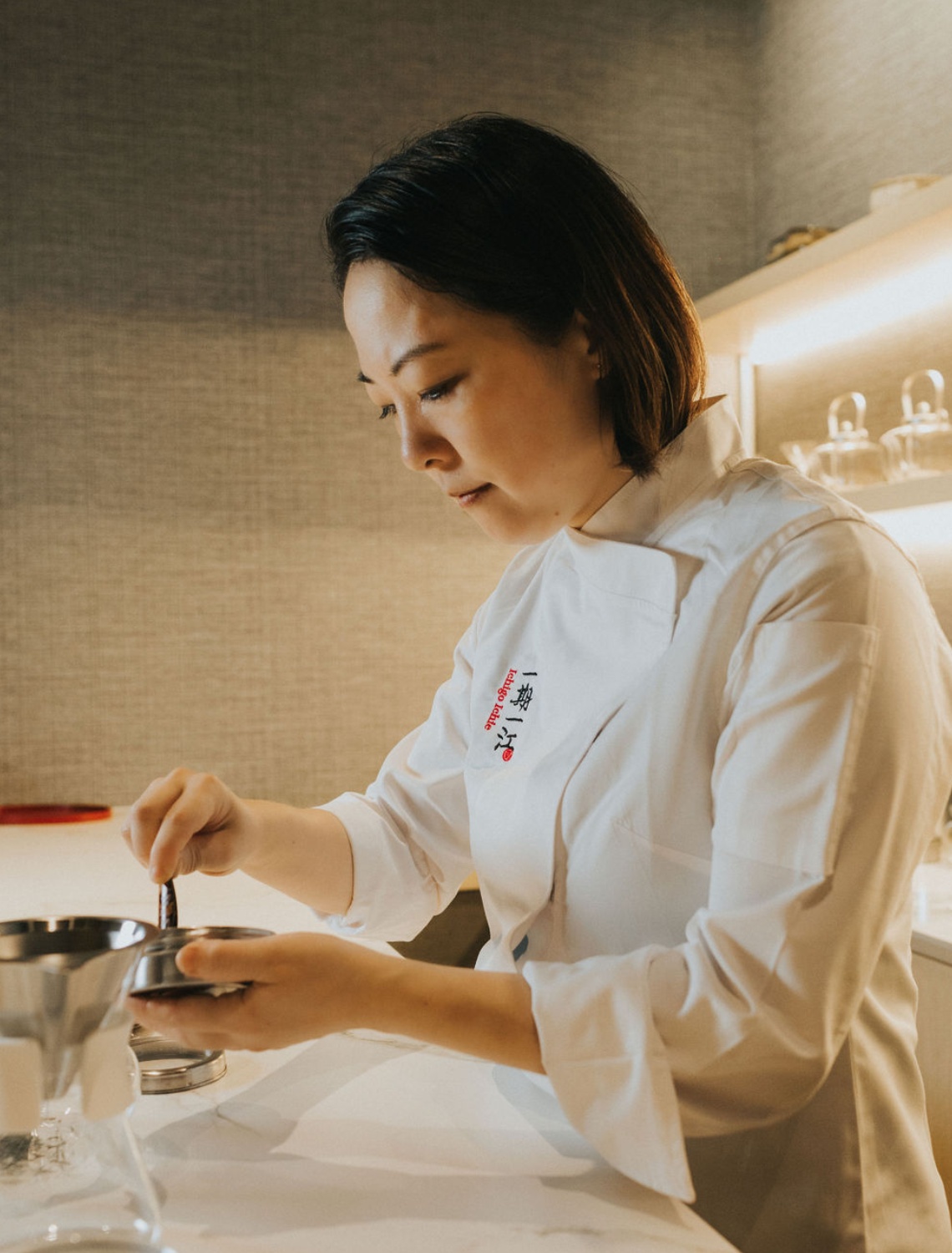
Akane Eno is among the few chefs in Singapore certified to prepare fugu. “For me, fugu is one of the most special ingredients to express the feeling of winter,” she says. “When the season comes, I naturally want to work with it and share that sense of the colder months through my food.”
Born and raised in Tokyo, Eno grew up in a household where family celebrations often unfolded in French restaurants and Western steakhouses — experiences that left a lasting impression. What stayed with her, however, was not simply the pleasure of eating, but the question that followed: how were these dishes made?
That curiosity led her down an unexpected path. With a natural inclination towards painting and culture, she read art history at university before beginning her formal culinary training at the prestigious Tsuji Culinary Institute in Osaka. It was in Tokyo, however, that her craft truly took shape. After graduating, she secured an apprenticeship at a kappo restaurant in 2001, where she encountered its master chef Masaru Furusawa, a mentor who would prove defining. She arrived in Singapore in 2015 and considered returning to Japan after two years. But she met another master chef, Tomoo Kimura, who asked her to join him at his new restaurant. In 2017, Eno joined Sushi Kimura as head chef, contributing to its one Michelin star in 2018 and 2019. Ichigo Ichie began as a Monday night pop-up in early 2019 and became a full restaurant in February 2020, led by Eno.
The name Ichigo Ichie (one time, one meeting), reflects the conviction that each encounter is singular and unrepeatable. Every meal is shaped by seasonality, intuition, and the moment.
That philosophy extends to her use of fugu. At the restaurant, Eno works exclusively with farmed pufferfish sourced through a tightly controlled process. The fish are raised on certified farms in Japan, and all innards and potentially toxic parts are removed before export. What arrives in Singapore is already cleaned and safely packed.
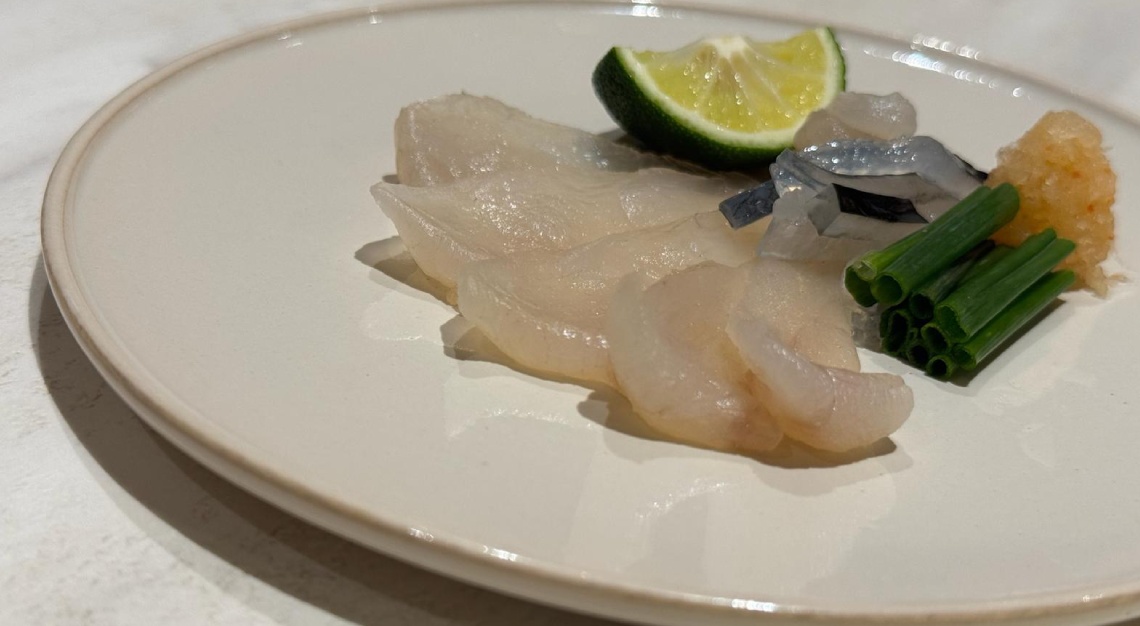
“On the Singapore side, suppliers also need special certification to import fugu, so not every supplier handles it,” she explains. “We are fortunate that one of our partners is proactive, which allows us to serve fugu properly and legally.”
Her position on this is unequivocal. While she is aware of establishments that have handled fugu unofficially, her own approach admits no ambiguity. “My policy is clear. I will only serve fugu in the right way. With this system in place, there is actually no ‘risk’ for the guest.”
Eno’s licence was obtained in Tokyo, one of the strictest jurisdictions for fugu certification, and reflects the rigour of her training. The practical examination requires candidates to break down a whole fish within 20 minutes, separating poisonous from non-poisonous parts with complete accuracy before preparing sashimi from the edible flesh.
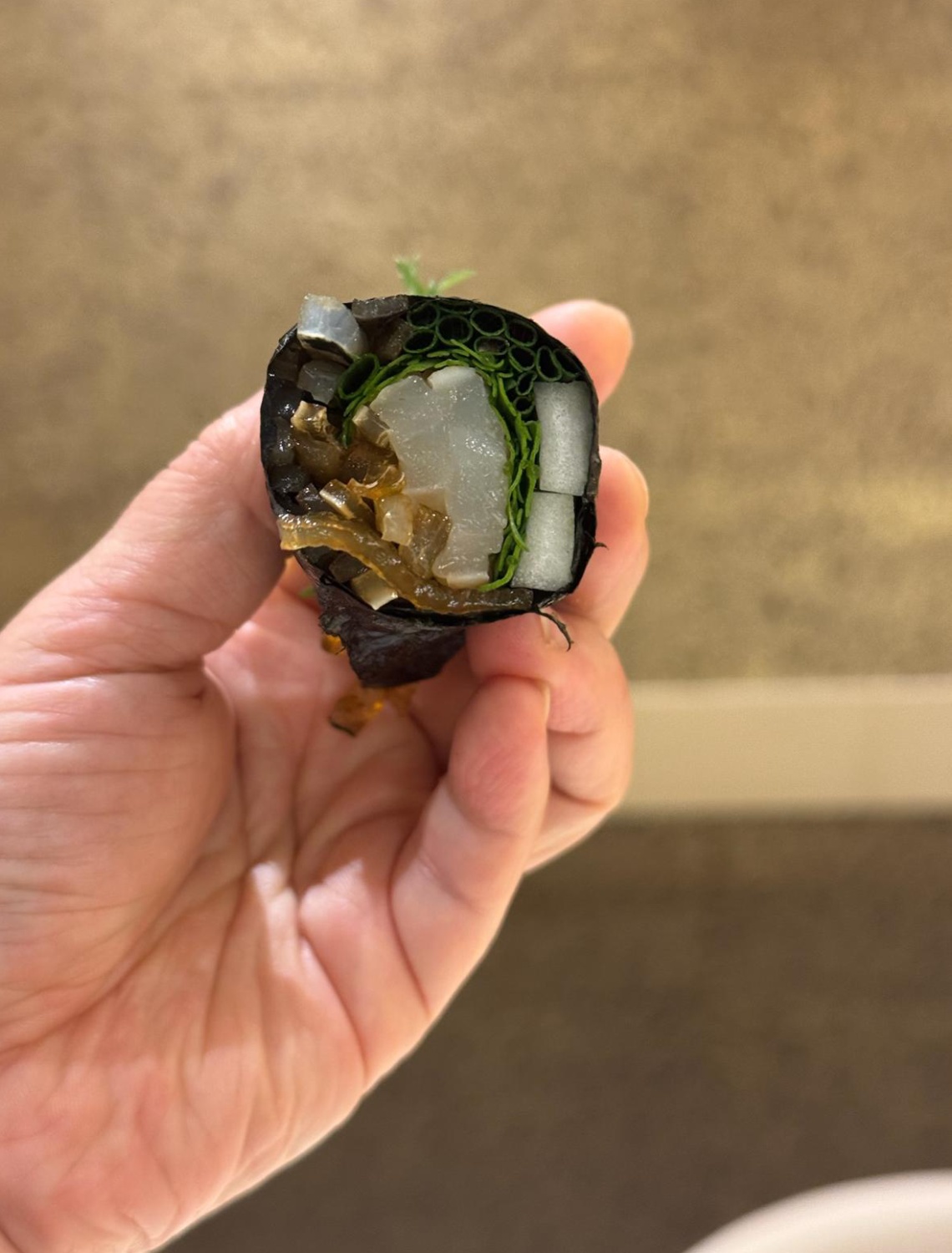
“The fish used for the test is not fresh, so it’s not meant to be eaten, but the technique must be precise,” she says. “We practised extensively, often using fish that were already close to spoiling. Even after that, disposal had to be handled carefully as it is still considered poisonous waste.”
Central to that training is a thorough understanding of species variation. Though many are familiar only with tora fugu—the tiger puffer—there are numerous varieties, each with different toxic parts. Eno studied between 15 and 20 species, learning precisely which portions are safe to consume. In some cases, even the flesh can carry toxins.
“In Japan, there are still occasional deaths when people catch fugu and eat it without proper knowledge,” she explains. “So the most important part of the training is knowledge:
knowing exactly what is safe and never making a mistake.”
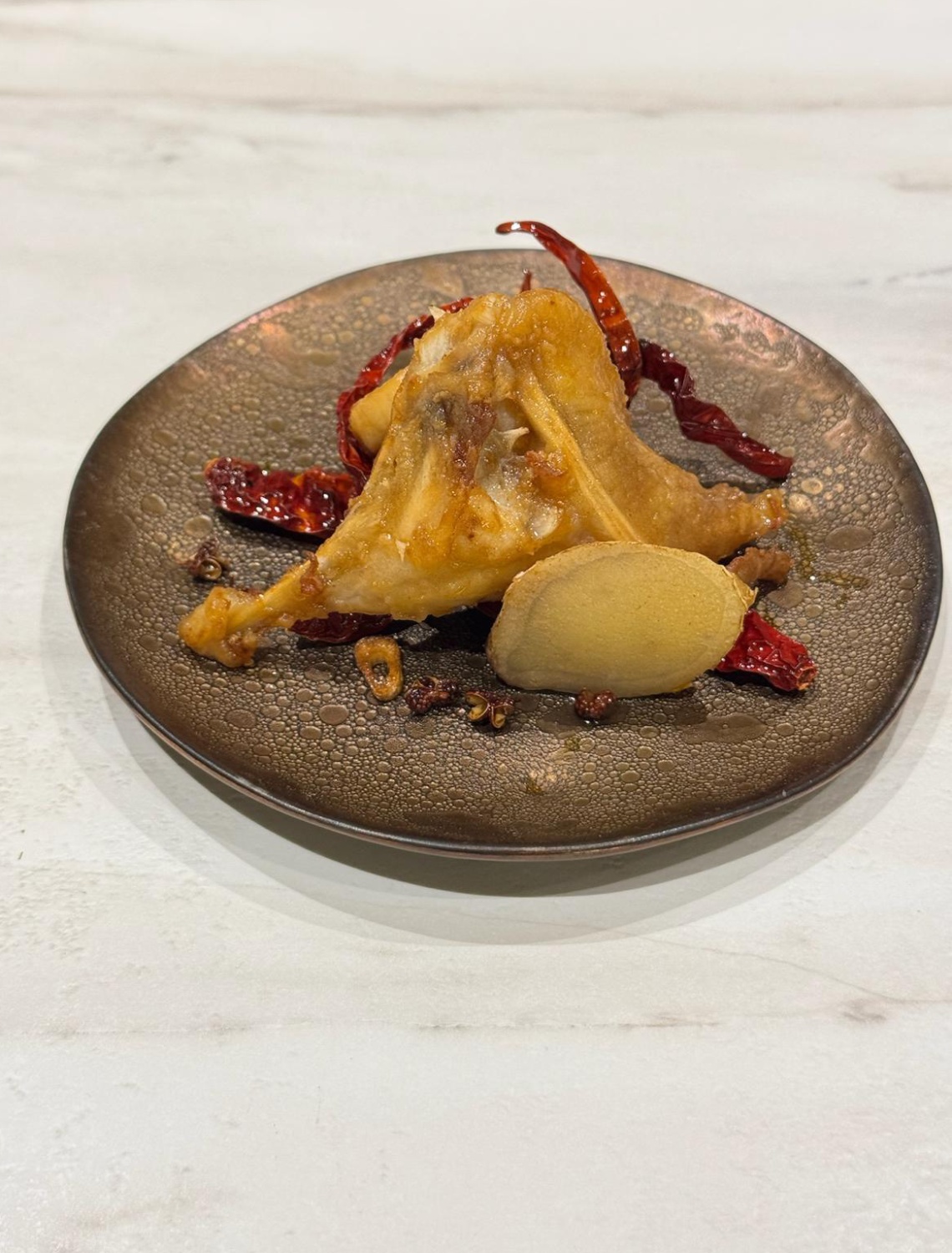
Her background in art history continues to inform her approach. In Japan, fugu is traditionally presented in particular ways. “Here, we are not a dedicated fugu restaurant,” she says. “For me, fugu is one ingredient among many. That gives me more freedom. I can treat it like a canvas and approach it in a more freestyle way.”
Ultimately, Eno hopes to reframe how diners think about fugu altogether. “First, I want people to know that fugu is a delicious fish,” she says. “And second, that it is very safe in this context.” For her, the deeper story is one of respect. Respect for the ingredient, for the discipline required to prepare it, and for the season that gives it meaning within Japanese cuisine.