The Dior Men Winter 2026/27 collection views menswear as a statement of individuality and authenticity, rather than a mere display of luxury
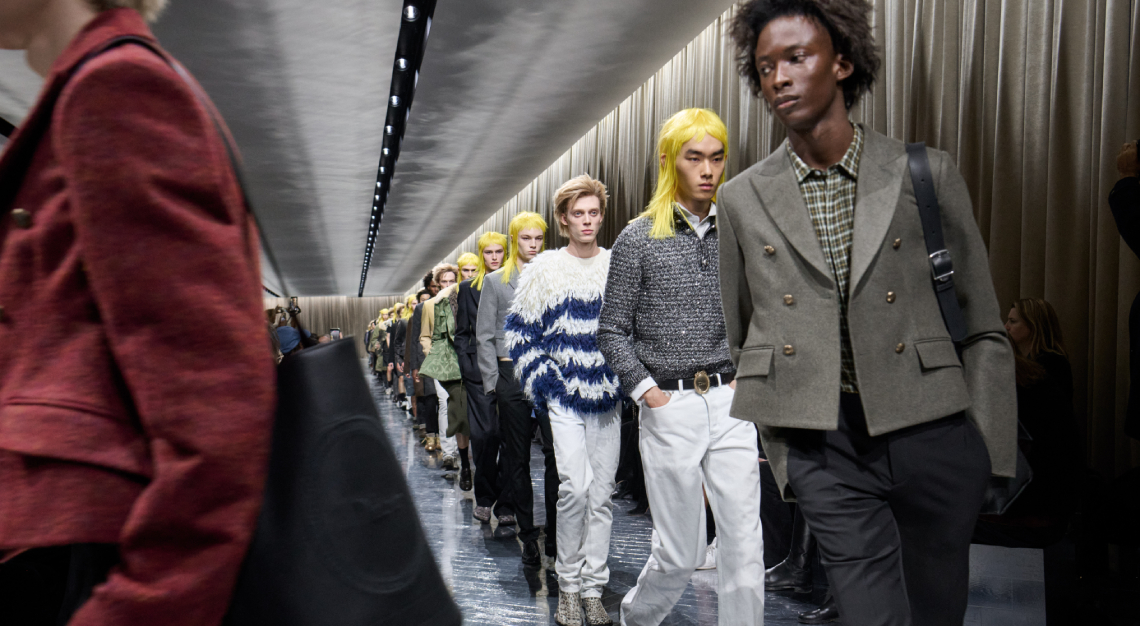
At a moment when many luxury houses are oscillating between reverence for heritage and the pressure to innovate, the Dior Men Winter 2026/27 menswear collection stood out for its confident collision of both. Under the creative direction of Jonathan Anderson, the runway reveals a wardrobe that reimagines Dior’s storied codes through a prism of rebellious energy and sartorial curiosity.
Anderson’s vision centres on a new Dior archetype: youthful, affluent, and inquisitive, moving through the capital with the casual curiosity of a modern flâneur. The collection’s conceptual spark is rooted just outside Dior’s own doors on Avenue Montaigne, where echoes of couture history linger–most notably that of Paul Poiret, whose early-20th-century experiments with fluidity, ornament, and global references subtly inform the season’s spirit. Rather than quoting Poiret directly, Anderson channels his ethos: freedom of form, cross-cultural curiosity, and a refusal to dress conservatively simply because tradition demands it.
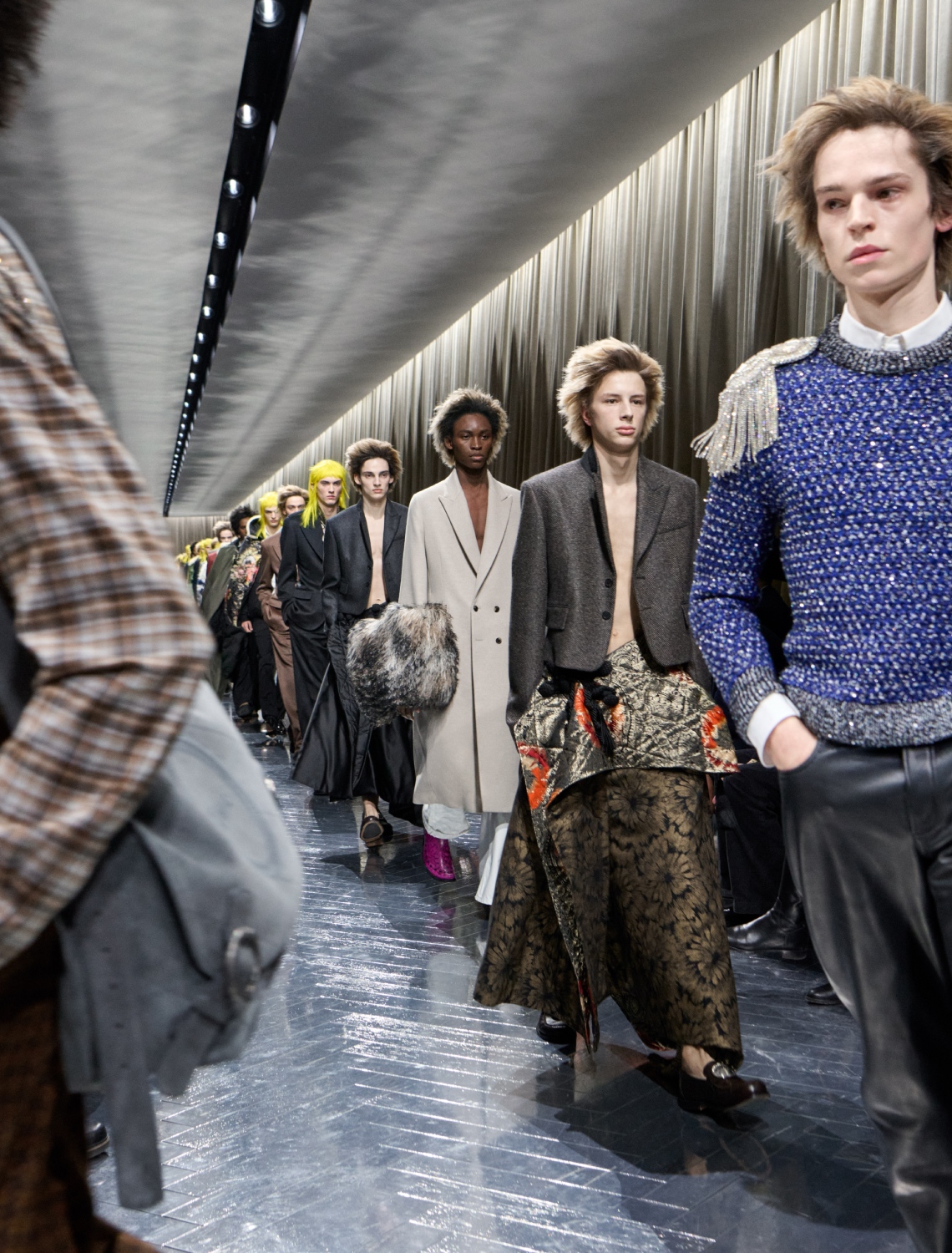
That sensibility plays out in a deliberate clash of codes. The discipline of Dior tailoring meets the irreverence of denim and parkas; ceremonial silhouettes are disrupted by garments that suggest ease, movement, and even vulnerability. Tailoring remains central, but it is pushed and pulled into new proportions–elongated jackets sit alongside sharply cropped blazers, tailcoats coexist with shrunken Bar jackets, and trousers are lean to the point of severity.
Outerwear becomes one of the collection’s strongest vehicles for Anderson’s dualities. Technical field jackets swell into cocooning forms, bombers dissolve into cape-like constructions, and utilitarian silhouettes are elevated through brocade finishes and sculptural backs. These are clothes designed for motion, but also for presence–pieces that acknowledge practicality while indulging in drama.
Throughout the lineup, traditional ideas of masculine and feminine dress are treated less as boundaries than as interchangeable tools. There is an intentional tension between being fully dressed and slightly undone: formal suits paired with lavallière shirts, waistcoats worn with an almost theatrical delicacy, and long john–style underlayers replacing conventional trousers. It’s not provocation for its own sake but a reminder that elegance can be expressive, even playful.
Materiality deepens the narrative. Heavy Donegal tweeds sit beside lustrous velvets and luminous jacquards; dense fringing and ornate passementerie introduce tactile richness without tipping into excess. The palette remains largely restrained–sombre, even austere at times–allowing texture and construction to do the expressive work. When embellishment appears, it feels intentional rather than decorative.
Accessories reinforce the collection’s understated eccentricity. Lace-up shoes with subtle heels, D-shaped loafers, and softened messenger bags feel less like seasonal novelties and more like long-term wardrobe companions.
Our favourite looks
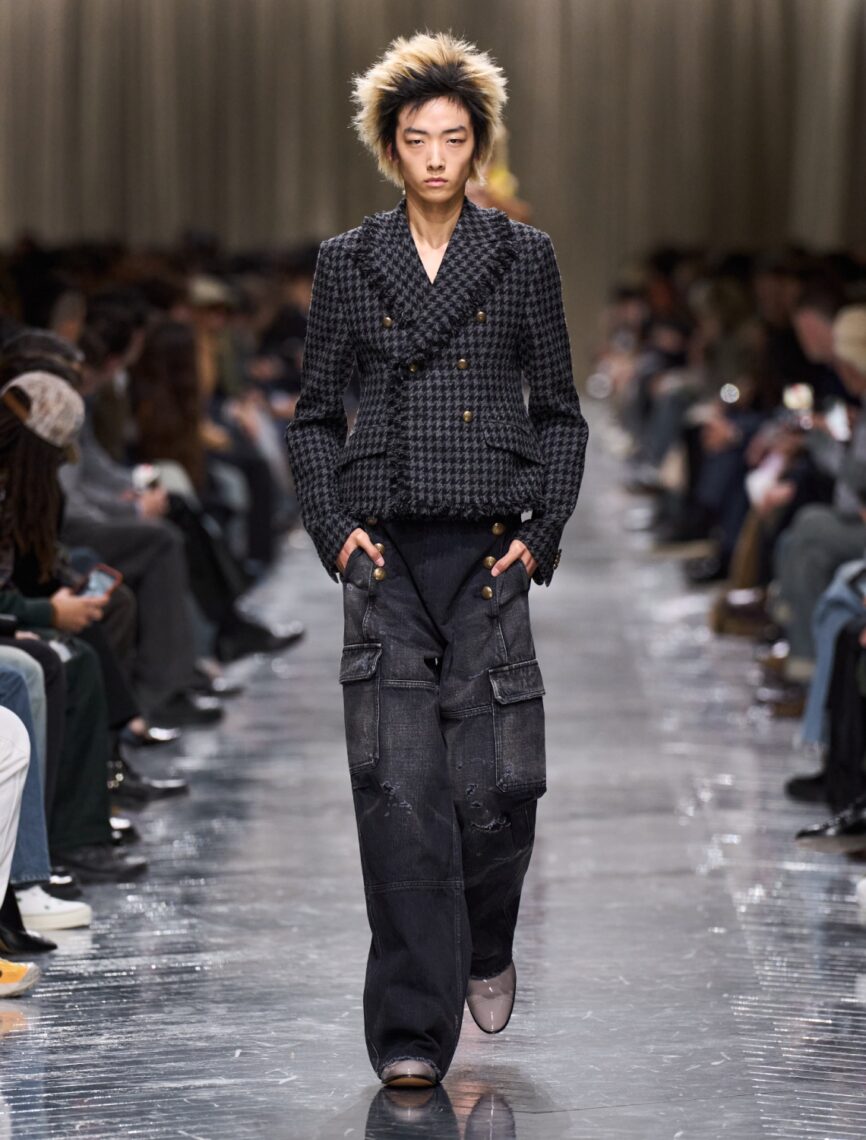
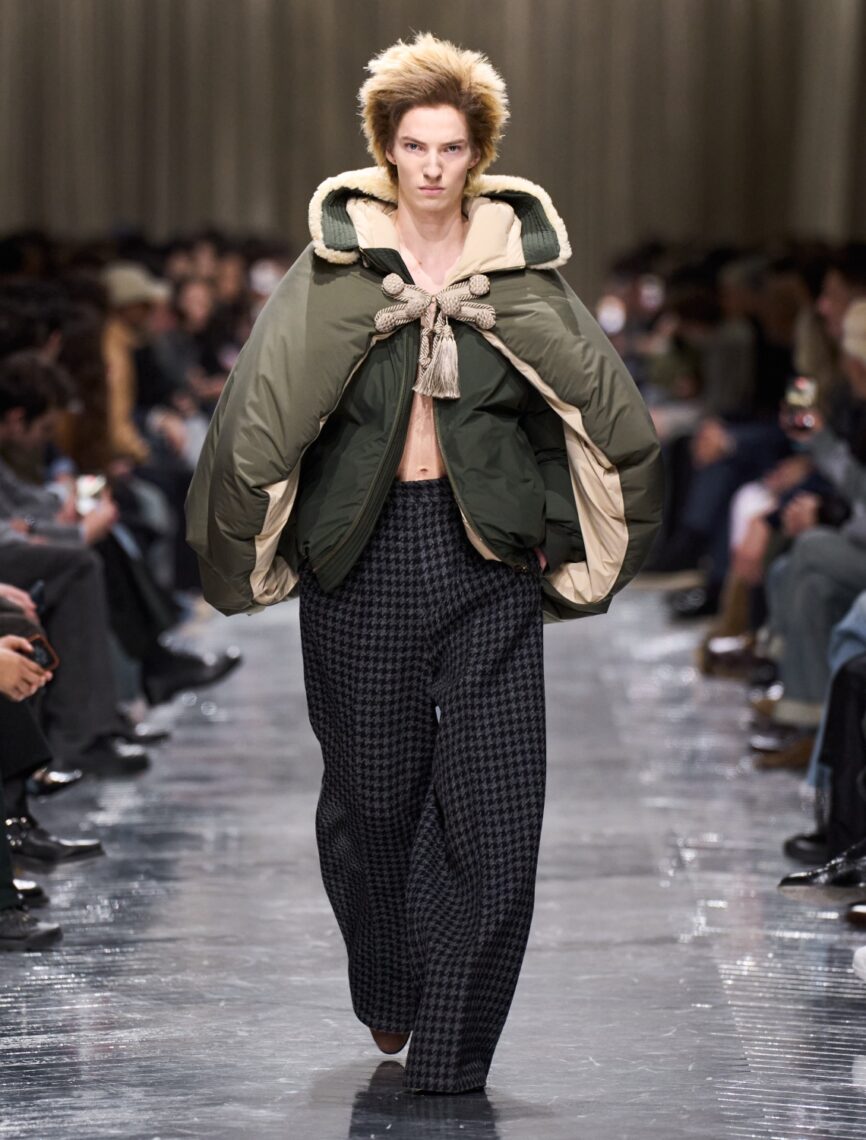
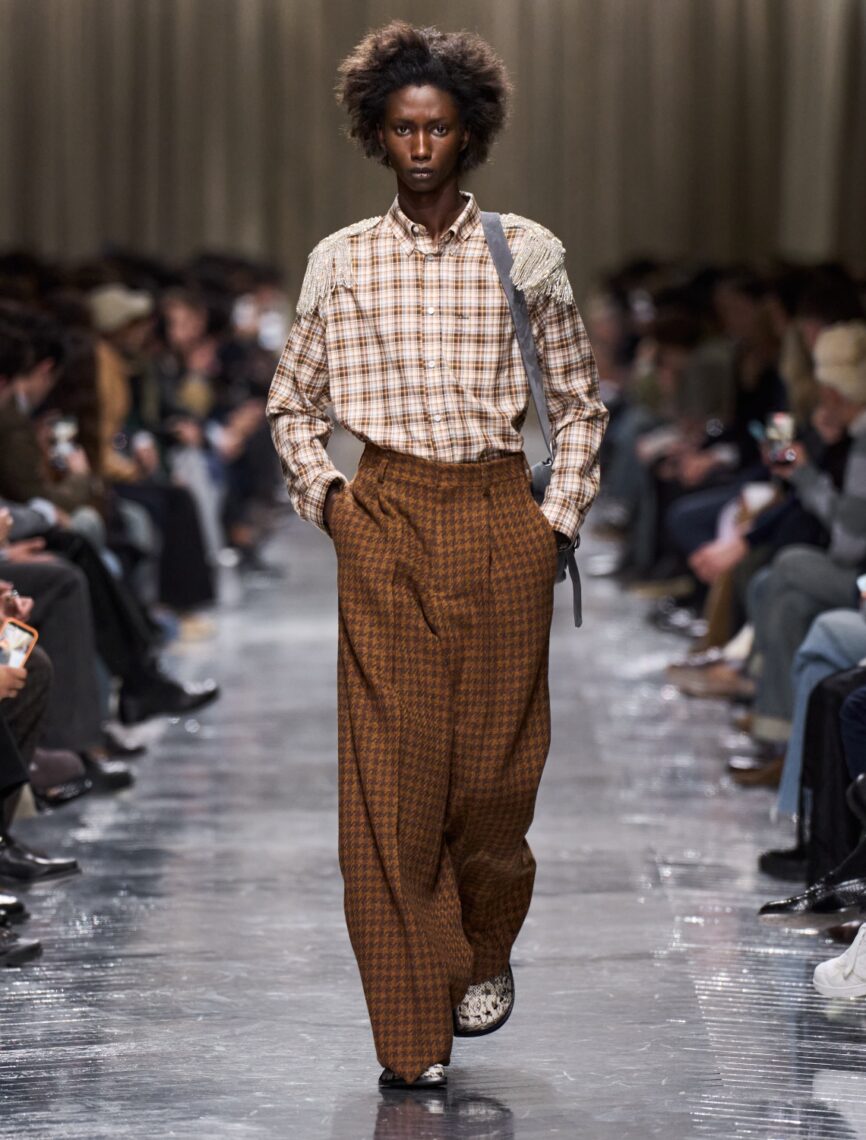
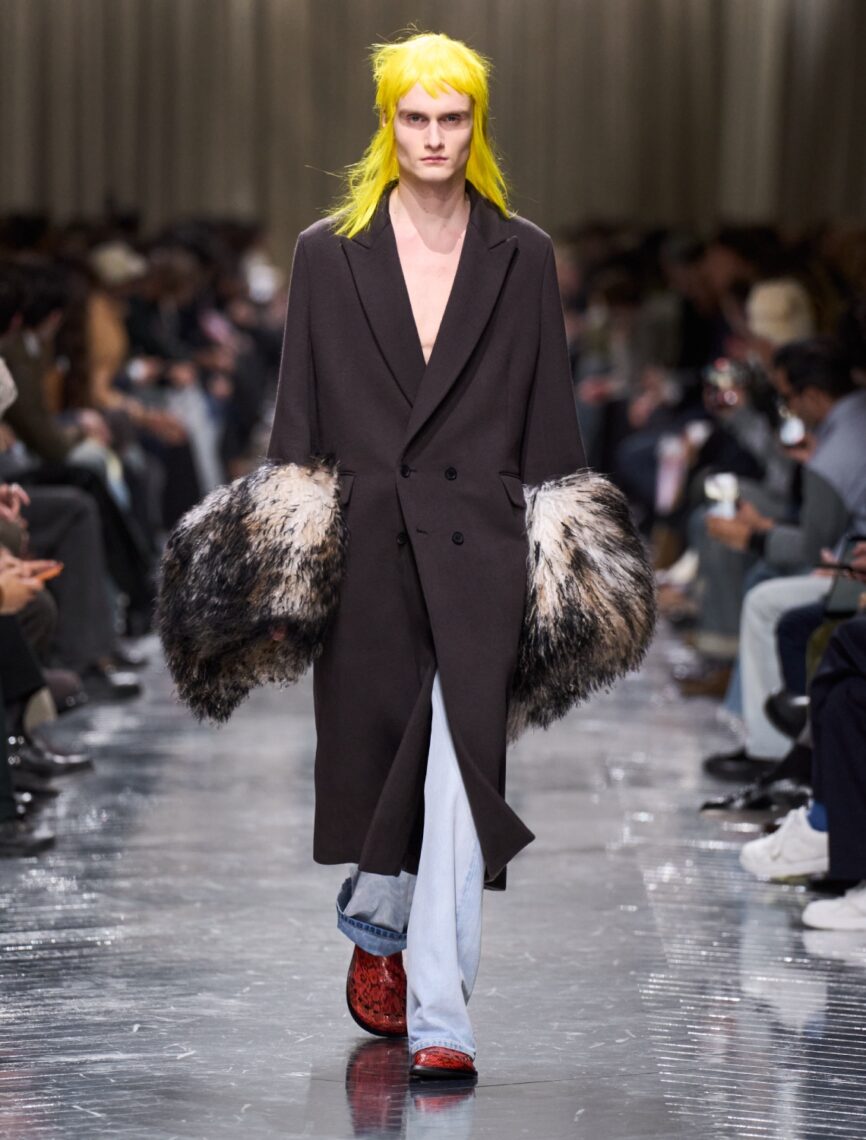
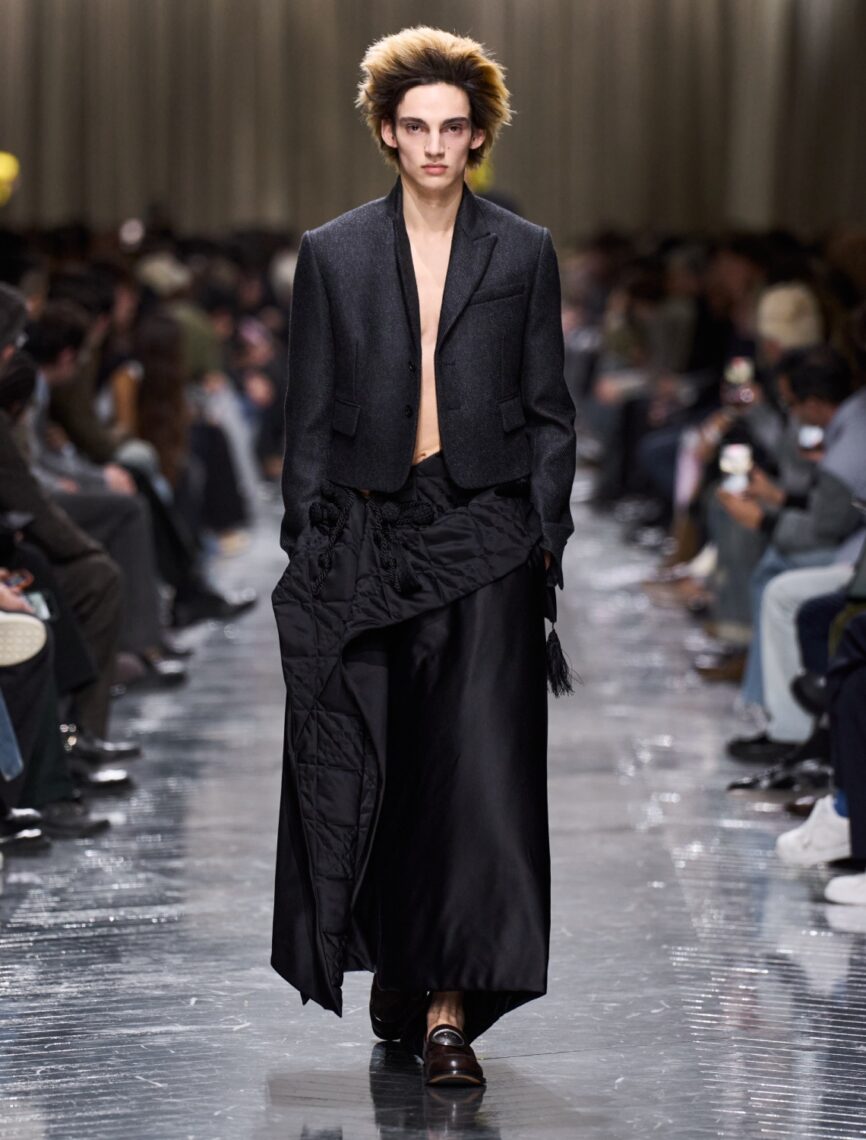
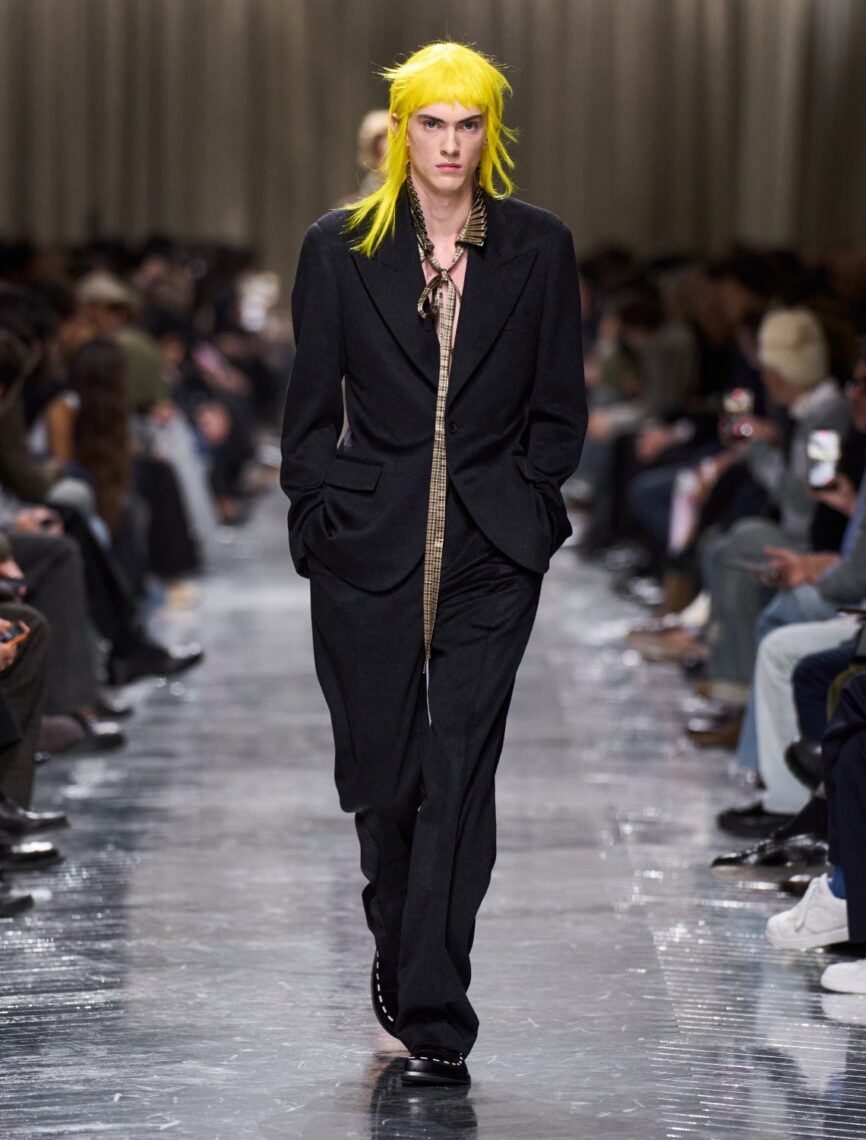
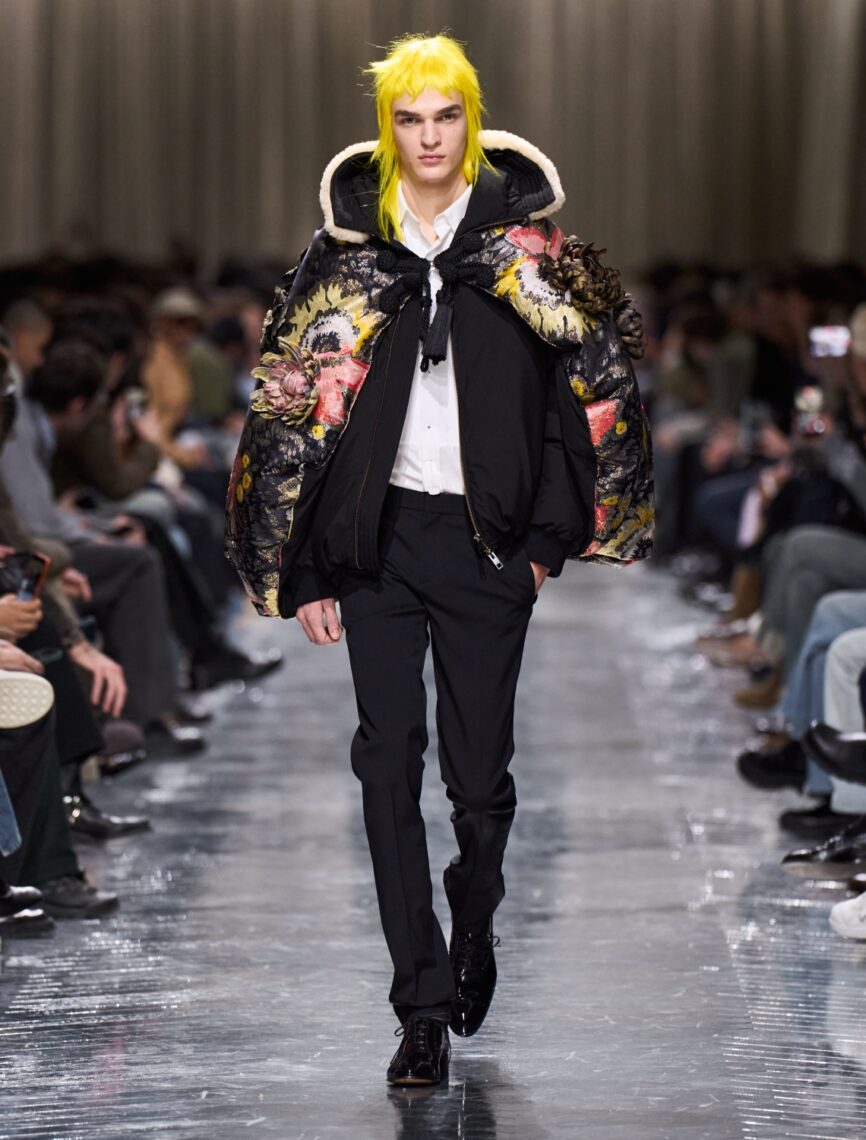
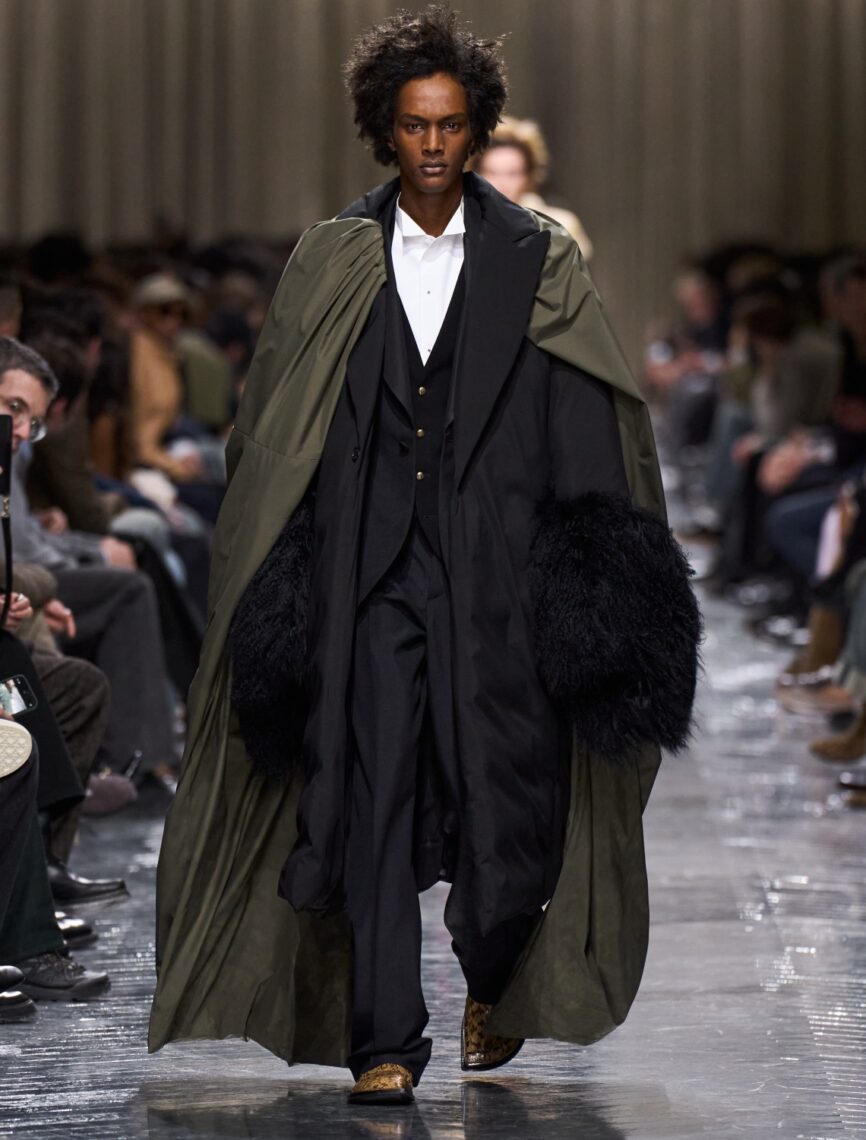
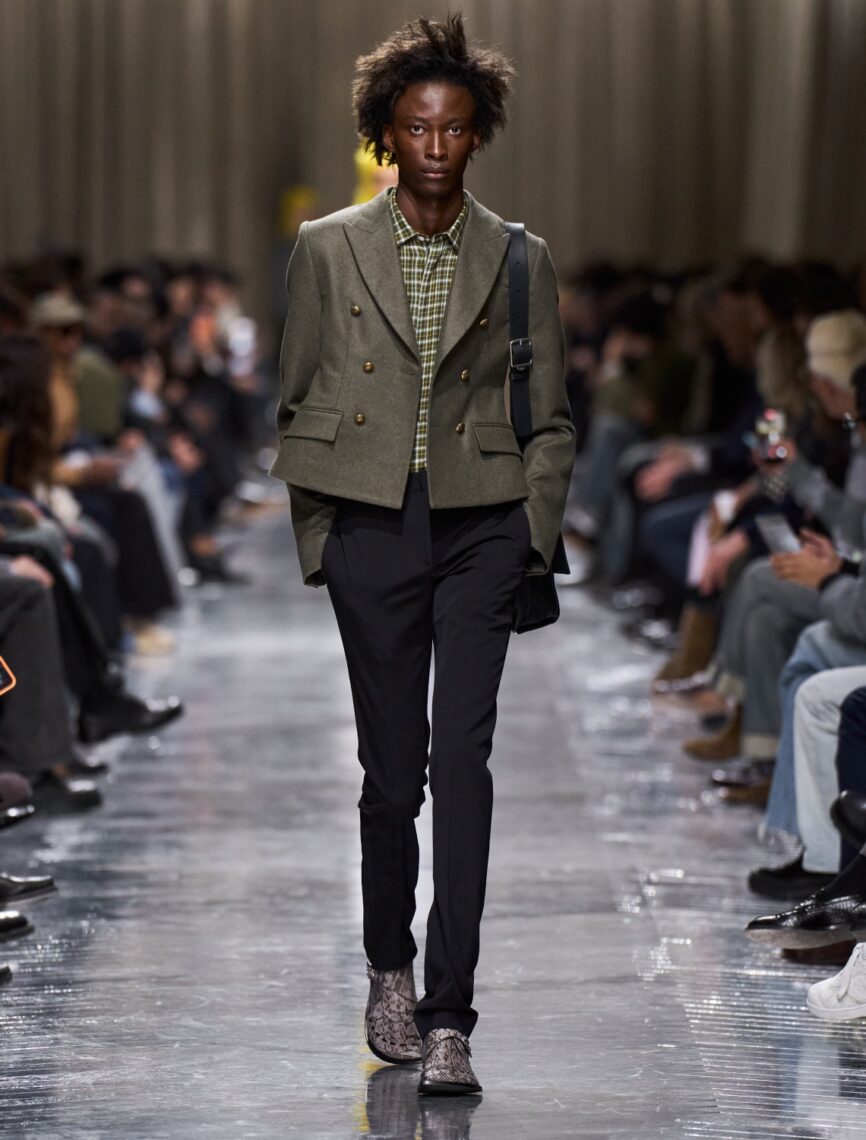
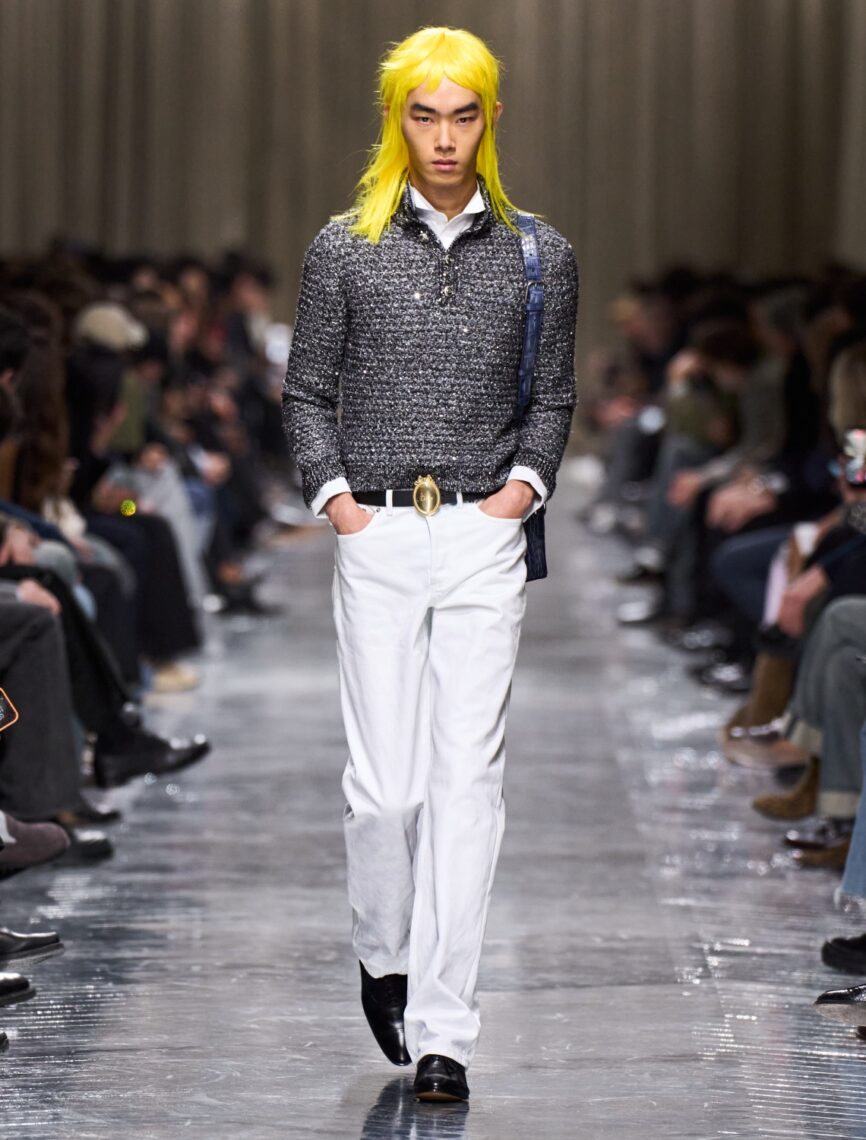
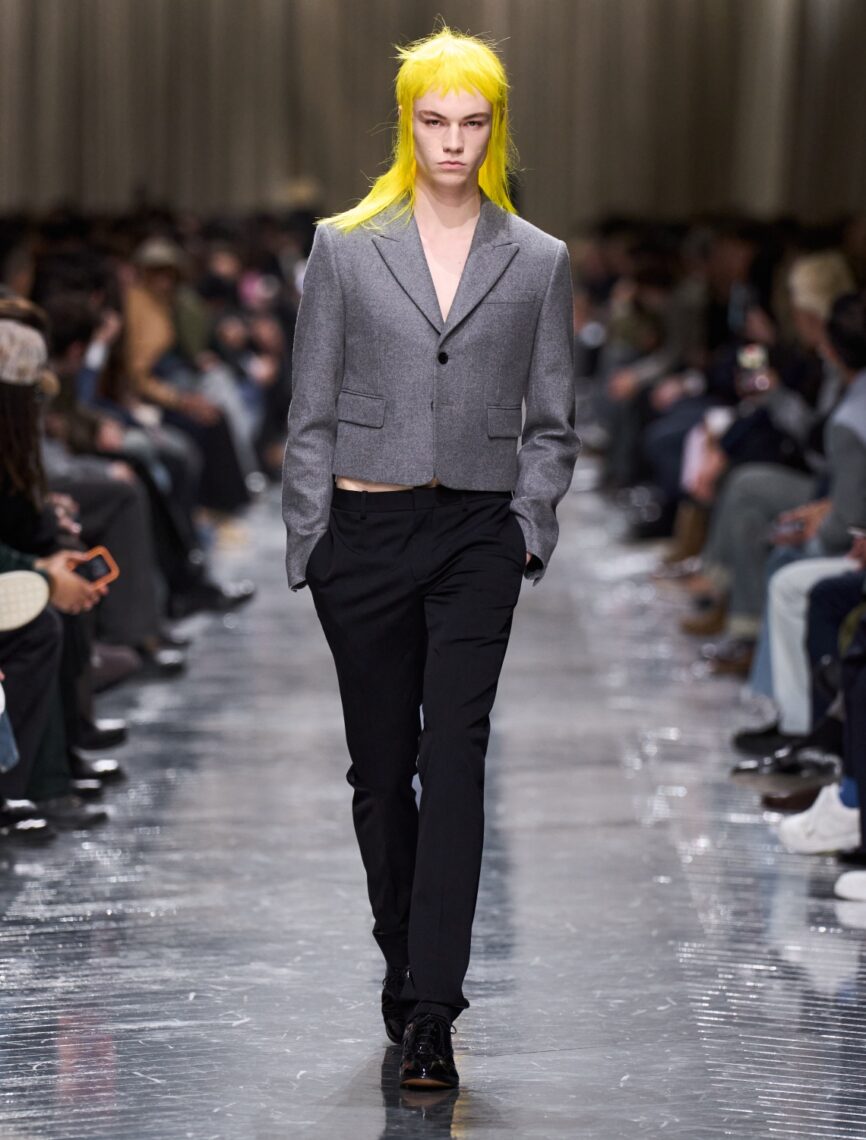
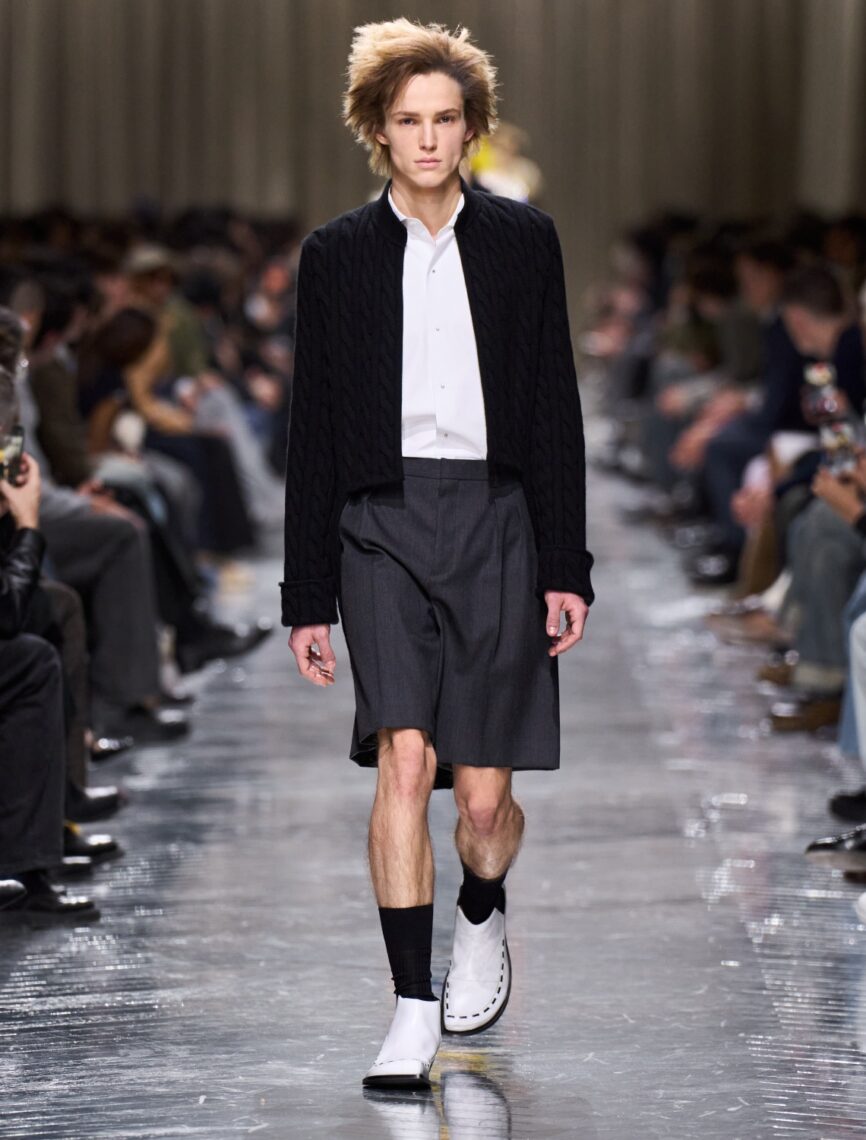
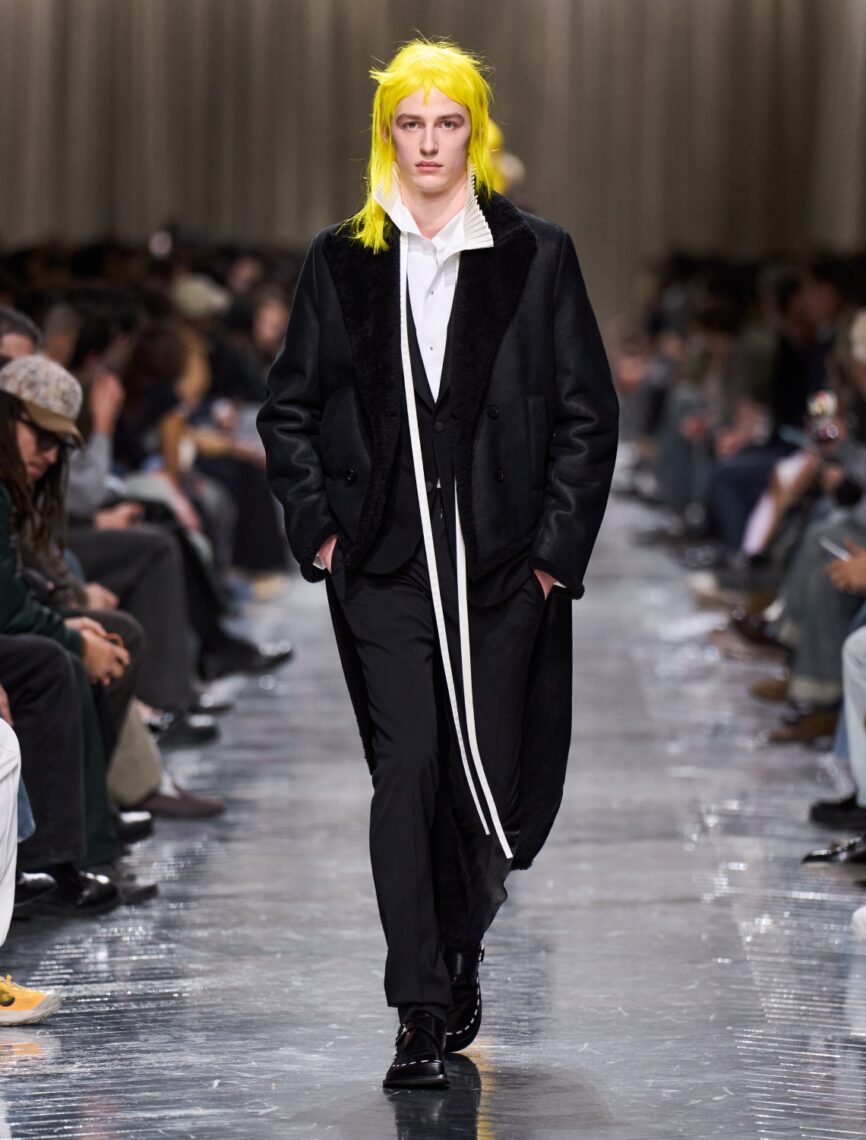
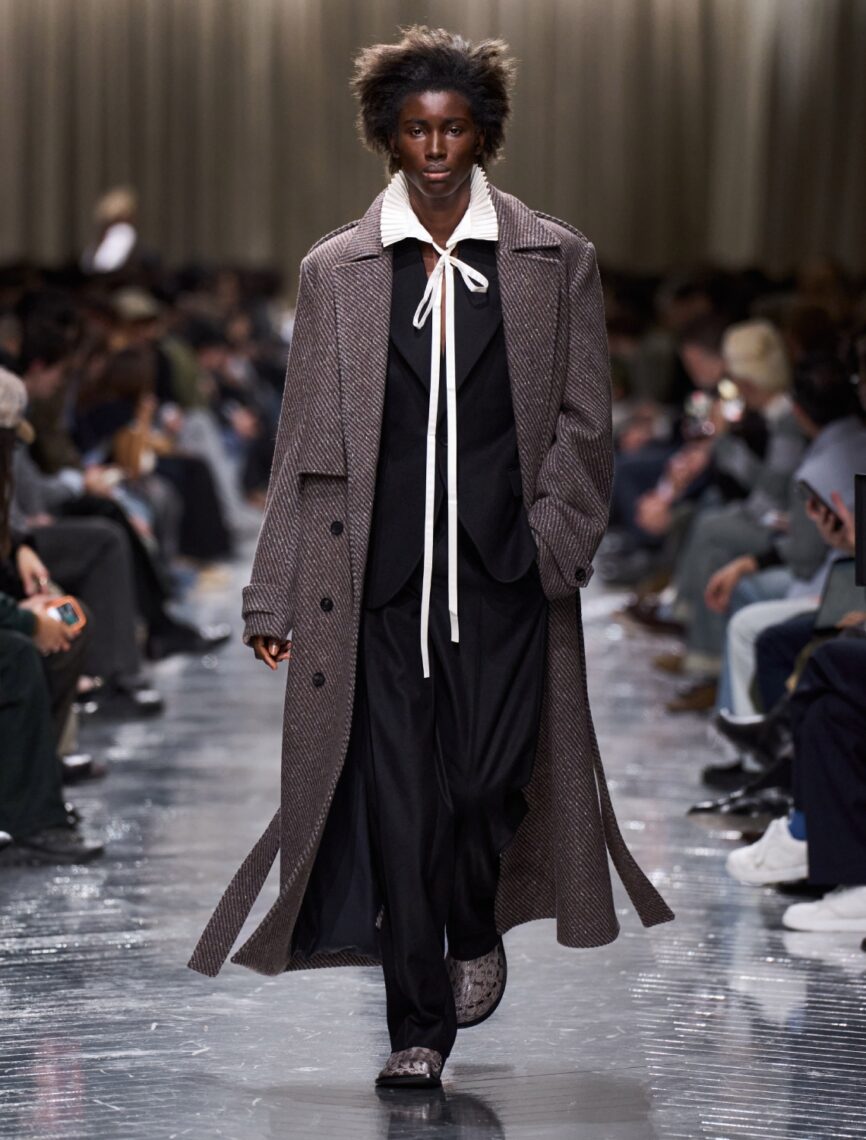
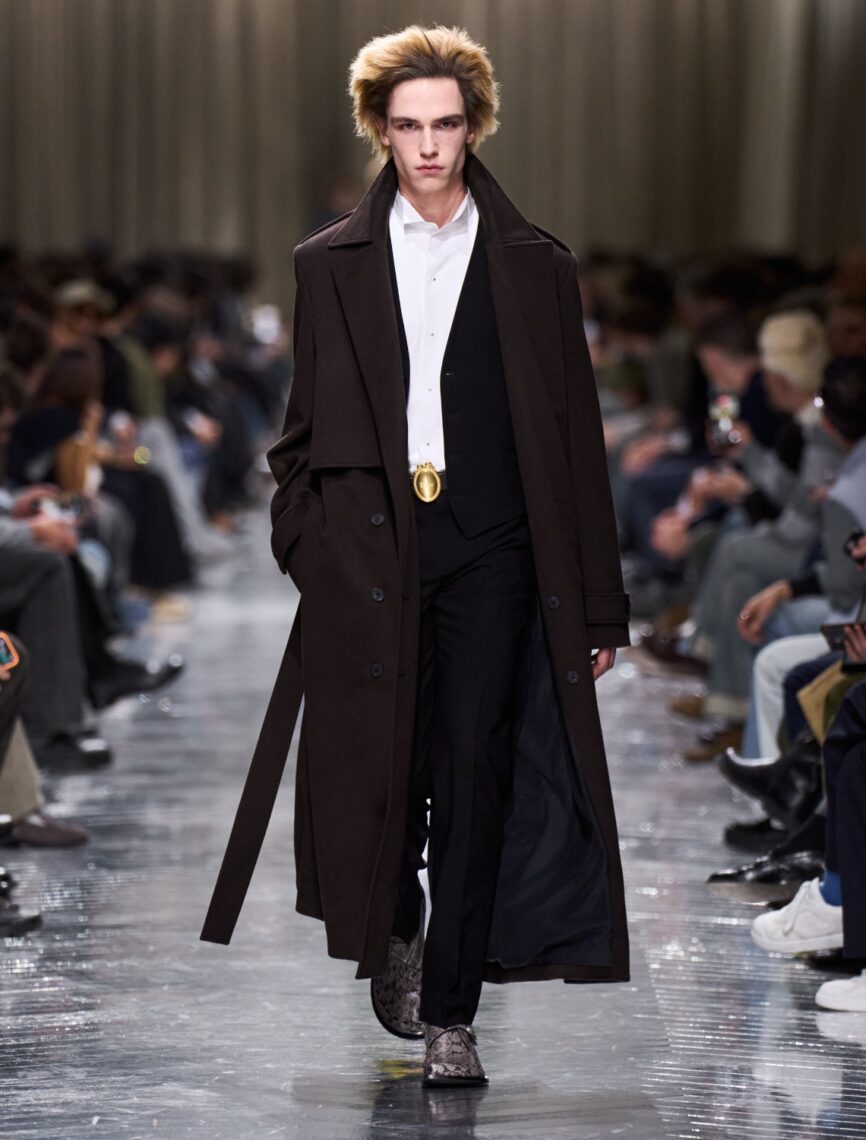
This season, where most luxury houses are retreating into minimalism or nostalgia, Dior chooses to speak in nuanced grammars—a mixture of heritage tailoring, rugged practicality, and calculated provocation. While this is not a safe collection, it is, however, a memorable one, signalling Dior’s confidence in evolving tradition with a voice entirely its own.