The Joséphine Amour d’Aigrette collection revisits the empress’s favourite jewel through transformable creations crafted in white gold and diamonds
Marie Josèphe Rose Tascher de la Pagerie first encountered Chaumet in Milan in 1805. As Napoleon and Joséphine prepared to be crowned King and Queen of Italy, François-Regnault Nitot—the son of the maison’s founder—stopped to present a tiara he had created for the Pope. Joséphine was captivated, and Nitot became her jeweller. The rest is more than two centuries of history.
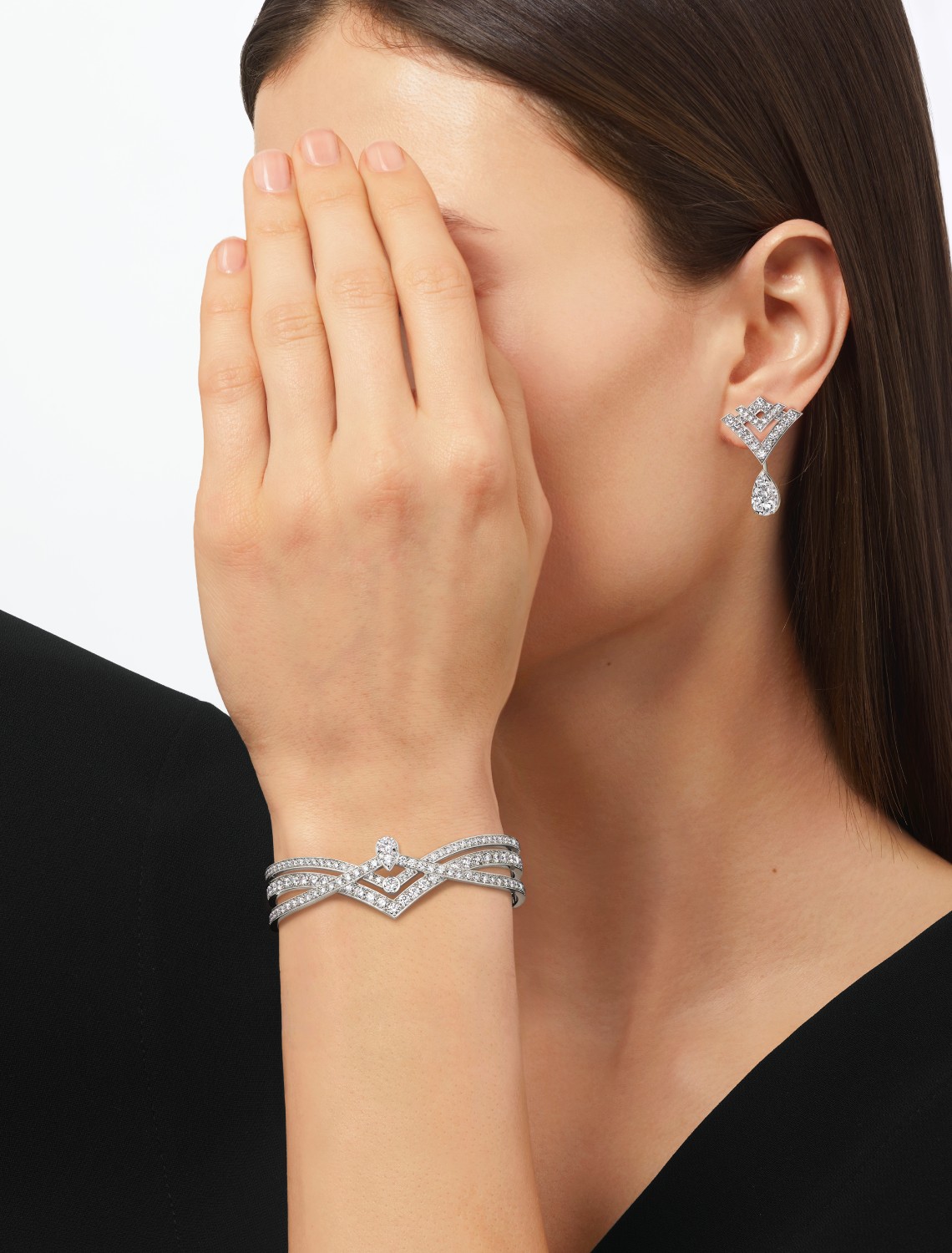
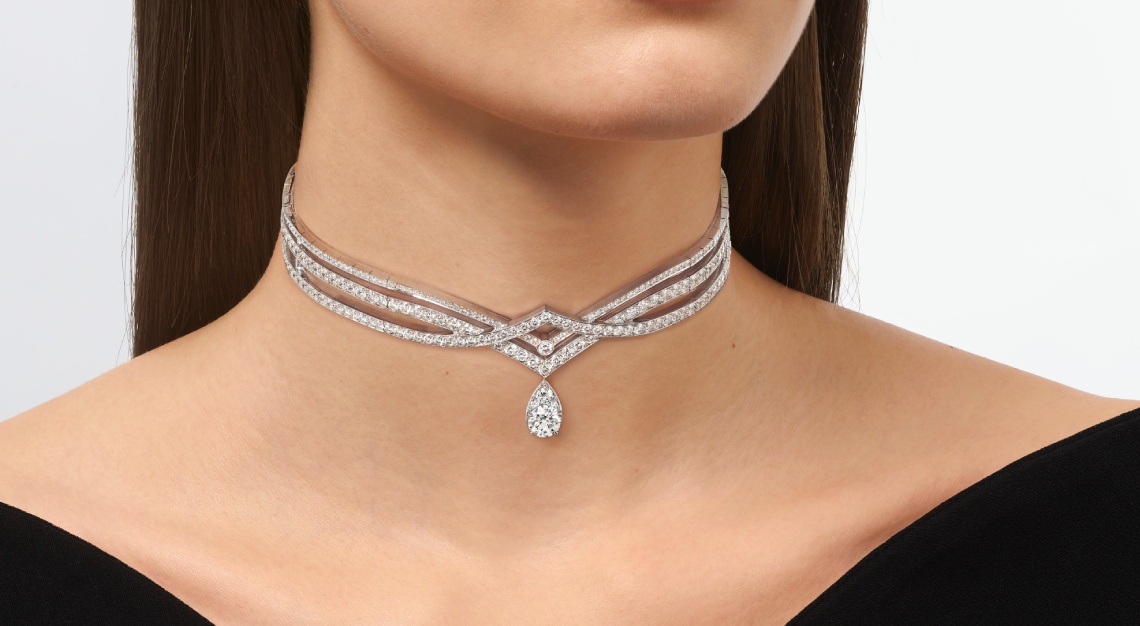
Chaumet’s new Joséphine Amour d’Aigrette High Jewellery parure—a matching set of jewels designed to be worn as a coordinated ensemble—is crafted entirely in white gold and diamonds. At its heart is the aigrette’s signature V-shaped motif, inspired by the feathered ornament that was among Joséphine’s most treasured accessories. The design recurs throughout the ensemble—in the tiara, choker, bracelet and earrings—with each piece structured around two distinctive V-shaped lines that unfold in slender, elegant curves.
The use of openwork throughout the collection heightens its sense of lightness, while brilliant-cut diamonds catch and release the light with every movement. The effect is almost a trompe-l’œil, evoking the pear-shaped gemstones Joséphine so favoured without reproducing them literally.
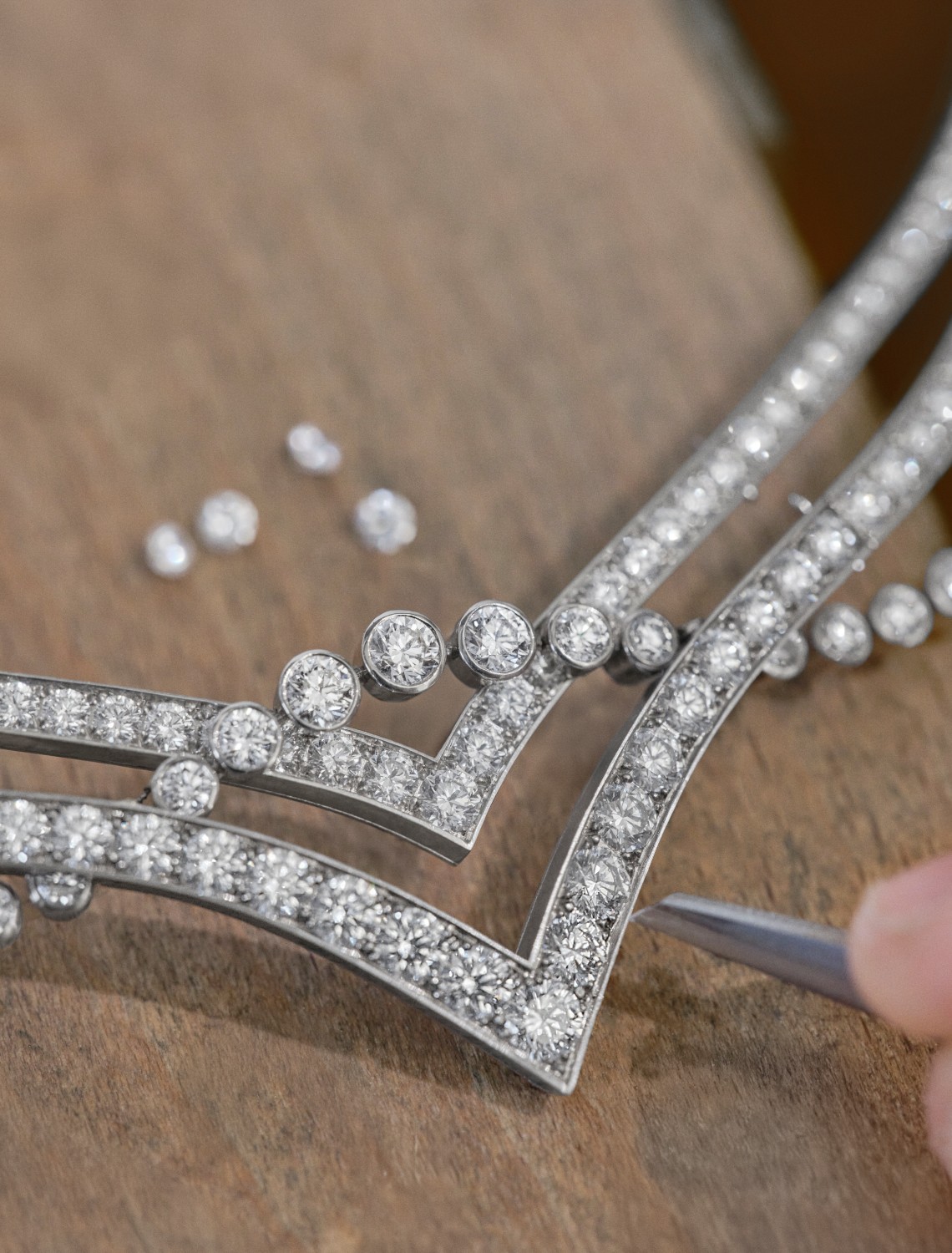
The tiara is the centrepiece and the collection’s greatest technical achievement. Designed to be worn in multiple ways, it transforms from a head ornament into a necklace—a versatility that would surely have delighted its original muse. An empress who defied convention at every turn would have appreciated jewellery that refuses to be confined to a single form. The generously proportioned, adjustable choker possesses an effortless couture elegance, while the earrings and bracelet complete the parure with the quiet confidence of a design that knows exactly what it is.
What Chaumet has always understood—and what the Joséphine Amour d’Aigrette collection makes newly vivid—is that the tiara is not a relic. In Joséphine’s hands, it was never simply a symbol of rank. It was an expression of presence. This new parure carries that spirit forward: imperial in scale, contemporary in line, and worn, above all, with an ease that makes it feel entirely at home.