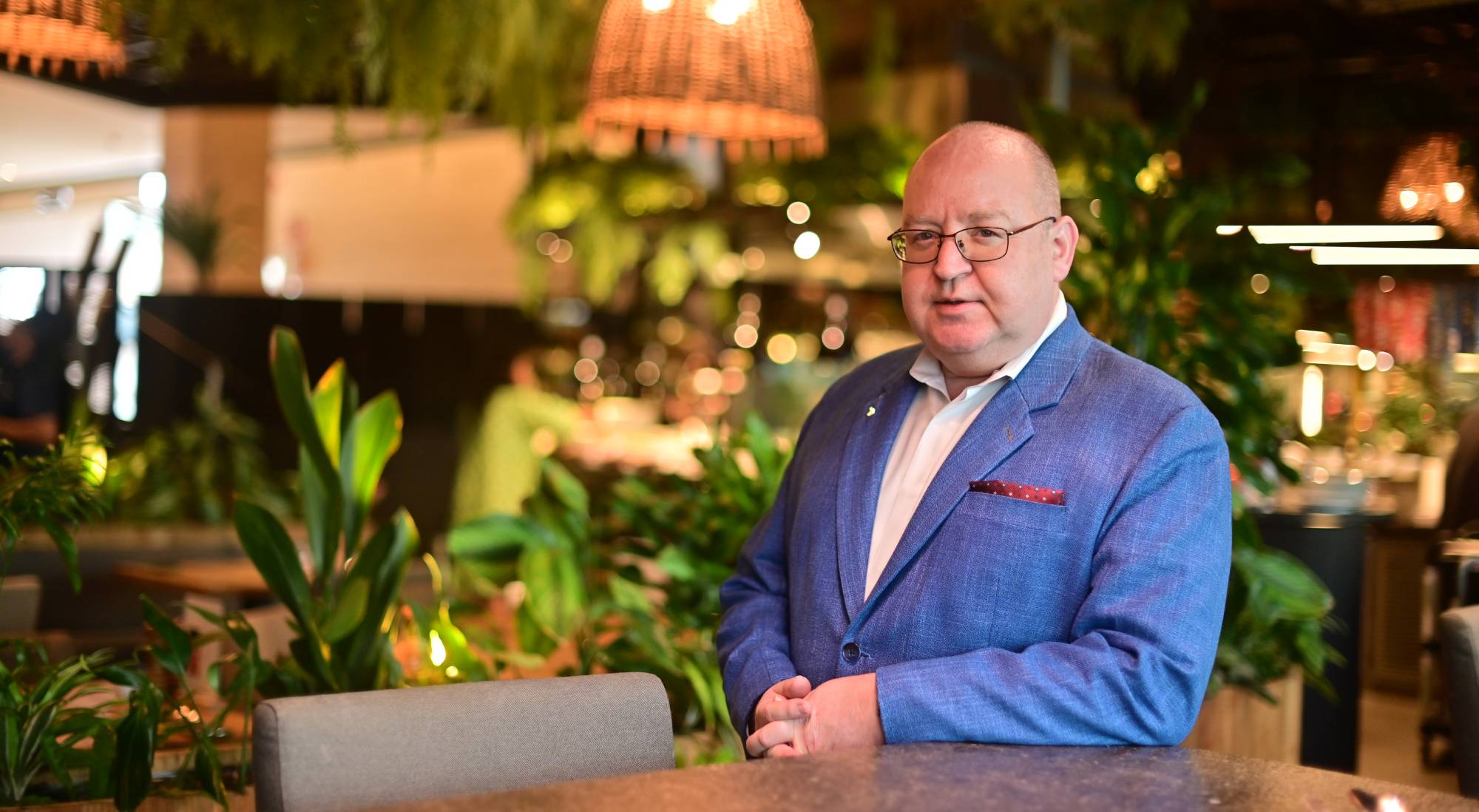
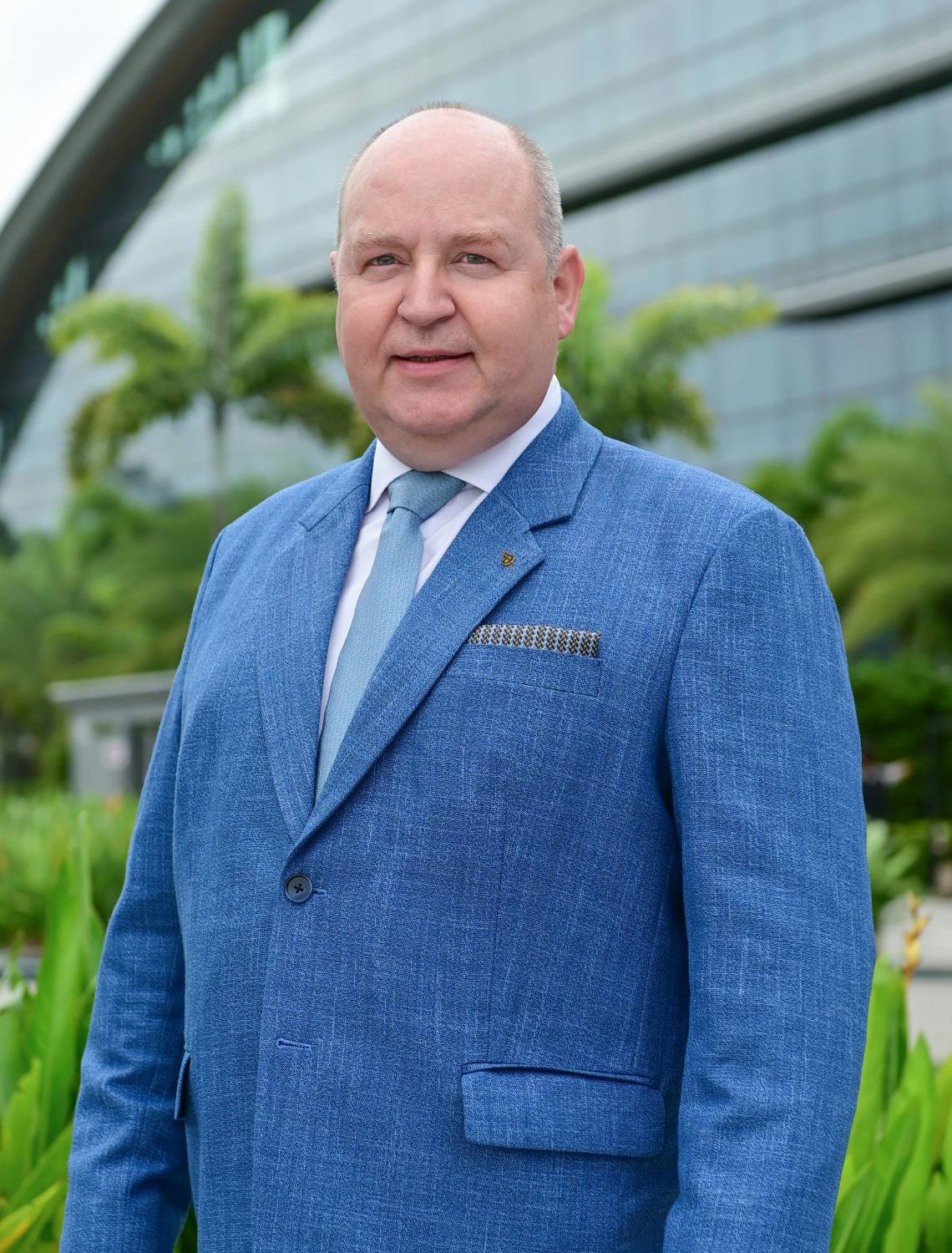
Bruno Rotschadl, the newly appointed general manager of Dusit Thani Laguna Singapore, aims to transform the concept of modern luxury into an experience that is sensed rather than merely observed
Singapore’s hospitality landscape is largely defined by speed and scale—perhaps mirroring our hyper-modern metropolis where efficiency more often than not outpaces empathy. Yet, on the eastern fringe of the island, just minutes from Changi Airport, one finds a different rhythm. Dusit Thani Laguna Singapore has carved out a distinct position as an urban sanctuary, marrying championship golf with comprehensive wellness architecture.
Taking the helm of this sprawling resort is Bruno Rotschadl. Appointed general manager in late 2025, Rotschadl brings with him over four decades of experience, along with multiple Best General Manager titles during tenures across China, Hong Kong, Thailand, and the US.
But Rotschadl is uninterested in resting on his laurels. For the veteran hotelier, the luxury paradigm has shifted away from opulence and towards something that is more difficult to engineer: intuition. True luxury, he argues, is no longer about grandeur; it is the seamless, almost imperceptible orchestration of time, privacy, and human connection.
What drew you to Dusit Thani Laguna Singapore at this stage of your career?
The sheer uniqueness of the property. Singapore is globally recognised for its vibrant city hotels, but we offer a true resort sanctuary within the urban environment. Few destinations can successfully blend championship golf courses, extensive wellness facilities, and genuine tranquillity so close to a major aviation hub.
My focus since arriving has been on cementing this identity—positioning us not simply as another luxury hotel, but as the premier sanctuary of the East where business, leisure, and wellness naturally coexist.
How do you translate Dusit Thani’s centuries-old Thai graciousness to fit the fast-paced machinery of Singapore?
Luxury should never feel scripted. Thai hospitality is anchored in genuine warmth, humility, and intuitive care—qualities that transcend geography. Our challenge is not modernising that graciousness, but expressing it in a way that respects Singapore’s pace. Technology can, and should, remove friction from a stay, but hospitality remains profoundly human. We encourage our teams to create authentic interactions rather than transactional ones.
Define modern luxury travel.
It has become far less visible and far more personal. Ten years ago, luxury was often conveyed through grandeur and tangible products. Today, our most discerning guests value privacy, time, and effortless personalisation above all else. Modern luxury is now the seamless orchestration behind every moment, where a guest feels that everything happened naturally and their preferences were anticipated without needing to ask.
How do your teams anticipate unspoken needs?
Rather than waiting for instructions, our teams look for behavioural cues. If we notice that a guest enjoys early morning runs, we might map out a bespokejoggingroutethroughthepropertyand ensure a tailored wellness breakfast is waiting upon their return. For our golfers, it’s about coordinating preferred tee times and post-game recovery before they are even requested.
Technology integration is sweeping the hotel industry. Where do you draw the line between high-tech convenience and high-touch service?
Technology should remove friction and never replace relationships. If digital tools allow our associates to spend less time behind a screen and more time engaging with guests, that is incredibly valuable. But luxury hospitality has always been about emotional intelligence. Artificial intelligence can process information, but it cannot replicate empathy, intuition, or sincere care. The future belongs to hotels that successfully combine digital convenience with authentic human interaction.