Are waterfront homes in Singapore still an attractive proposition?
For years, “waterfront living” meant one address: Sentosa Cove. Conceived in the 1990s, the luxury residential enclave on Singapore’s resort island set the benchmark for idyllic living, framing bungalows, terrace houses, and condominiums against private yacht berths, marina access, and resort-style living within an exclusive gated community.
Prior to this, coastal developments such as Lagoon View and Mandarin Gardens gave Singapore residents a taste of waterfront living. Such projects introduced sea-facing residences to prospective home buyers as part of a highly selective market segment. In the early 2000s, more developments, such as marina-facing Caribbean at Keppel Bay, were launched.
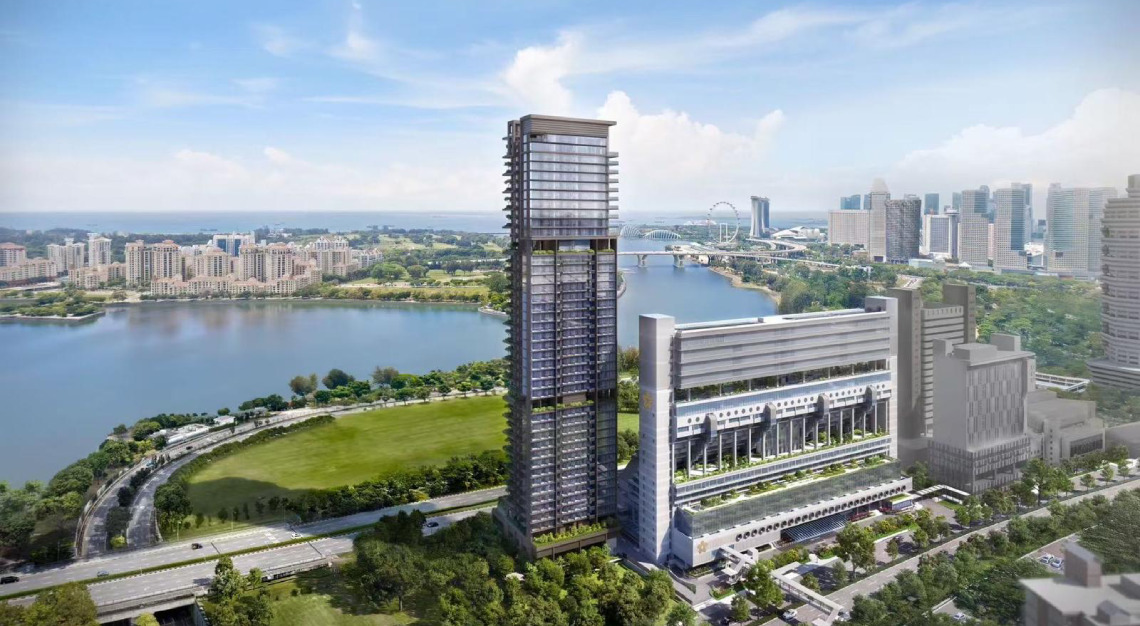
Enduring appeal is arguably a leading attribute of these homes; in a dense city like Singapore, a residence facing or near calm water often creates a sense of tranquillity and wellness, a welcome sanctuary for urban dwellers. Such homes are coveted, particularly among Chinese buyers and feng shui enthusiasts, for whom water symbolises the flow of wealth and energy (qi) into their living space.
While the defining fundamentals remain constant—stunning views, privacy, and accessibility to a place of work or school—as boxes to be checked off, what has evolved is the variety of options available for different lifestyles.
Today’s definition of a “waterfront home” has broadened considerably, with iterations no longer just sea-facing. By placing water bodies such as lagoons, marinas, reservoirs, and rivers at residents’ doorsteps, these premium residential assets now span varied districts and price points—lending quiet distinction to postcodes through a successful balance of scenic views and day-to-day liveability.
Based on the recent Knight Frank–Ipsos Quality of Life report, in which a large proportion of 1,000 respondents polled indicated a preference for better access to greenery and nature, and prioritised work-life balance for mental wellbeing over remuneration, demand for waterfront homes is expected to grow further.
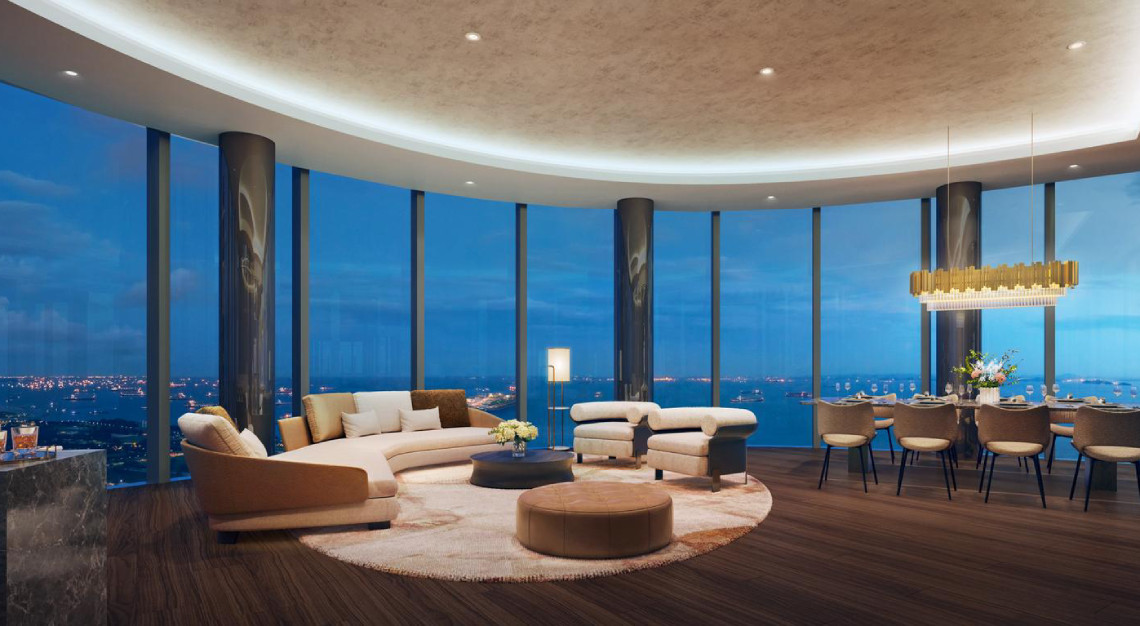
Waterfront living remains a rare privilege in our tropical isle. Based on proprietary Knight Frank data, out of some 76 non-landed private residential projects launched between 2023 and 2025, only 12 offered waterfront living experiences. What’s more, not all blocks within each project were water-facing, highlighting the rarity factor.
Not surprisingly, caveats lodged show that homeowners have been willing to fork out as much as 5 to 8 per cent more to own these prime-view assets compared to non-waterfront units within the same development.
Addresses to covet
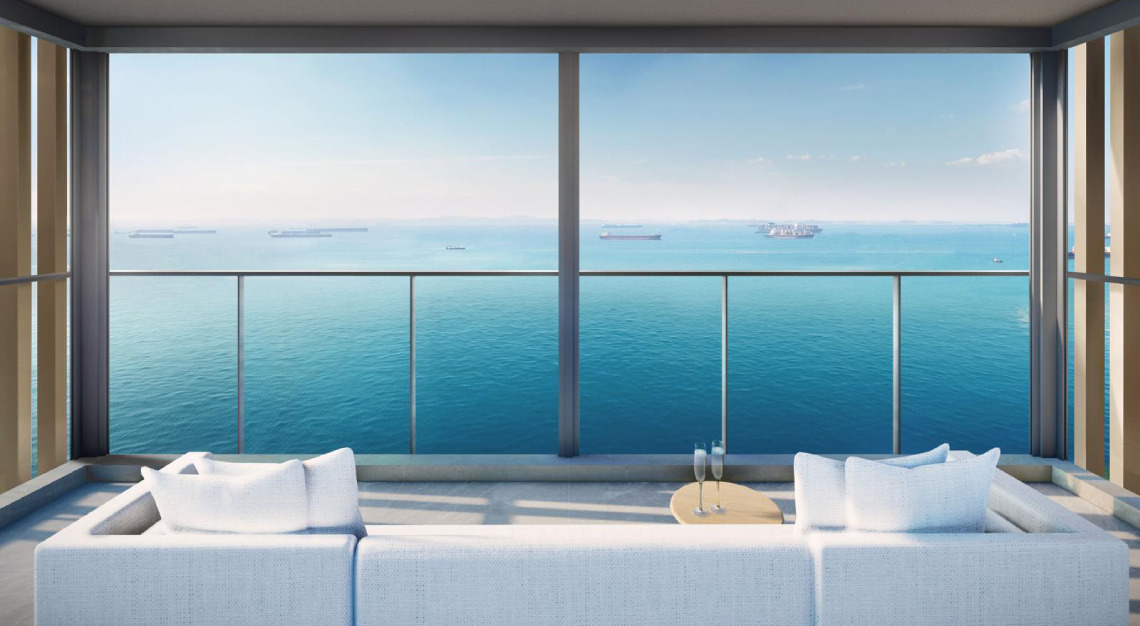
Recent launches with stunning sea views include One Marina Gardens and W Residences at Marina View, underscoring the Marina Bay precinct’s growth as one of Singapore’s most iconic waterfront neighbourhoods. The area is home to landmarks such as Southeast Asia’s leading garden attraction, Gardens by the Bay, complemented by a growing variety of lifestyle and entertainment options. At One Marina Gardens, homes are typically priced between $2.5 million and $3.7 million for a three-bedroom unit measuring 90 to 115 sqm.
Higher-end properties, Marina Bay Residences and Reflections at Keppel Bay, represent the pinnacle of exclusivity. However, their locations may be polarising for residents, being potentially far removed from day-to-day amenities such as schools and neighbourhood dining options, or too close to the city centre.
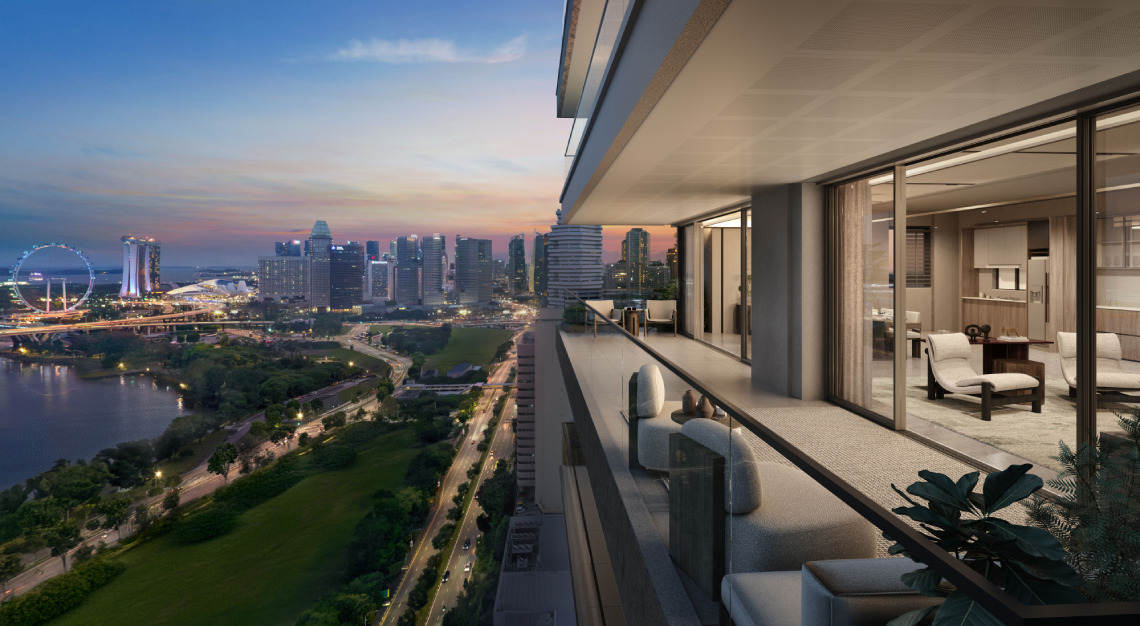
Waterfront home options in both downtown Singapore and suburban locations cater to different preferences and varied budget appetites. Jurong Lake Gardens, Lower Seletar Reservoir, and Bedok Reservoir are popular for their tranquil lake and reservoir views. A three-bedroom apartment in these areas, measuring about 80 to 100 sqm, could cost around $2.1 to $2.3 million for new homes at Sora and The LakeGarden Residences, and $1.6 to $1.9 million for resale units at Lake Grande and Lakeville. A slightly lower budget could secure an equally attractive waterfront home at The Estuary or Orchid Park Condominium in northern Singapore—the commute may be longer, but the views are magnificent, bordered by nature well within arm’s reach.
For the most breathtaking sea views, the multiple options along the East Coast and southern coastline, including Keppel Bay, Marina Bay, and Tanjong Rhu, rise to the occasion. These prime precincts also place residents minutes by car from the Central Business District. However, developments in these areas are mostly older, with the only new launch being Meyer Blue (TOP 2028).
Supply in the increasingly gentrified Beach Road precinct will be boosted with the completion of Aurea in 2029. Its residential tower, promising expansive views of the Kallang waterfront, forms part of the mixed-use development, The Golden Mile. Aurea will join City Gate Residences and Concourse Skyline as three private developments that place residents within minutes of recreational activities by the bay. Home prices here typically fall within the range of $2.7 million to $3.2 million for a three-bedroom apartment measuring 80 to 100 sqm.
New waves
Singapore has one of the shortest coastlines in Southeast Asia: 223 km, to be precise, just behind Dubai’s 161 km. Less than half of this is available for residential use, competing with various commercial needs. Combine that with the limited number of water bodies across the island, and a persistent scarcity emerges that will continue to support demand for waterfront homes for years to come.
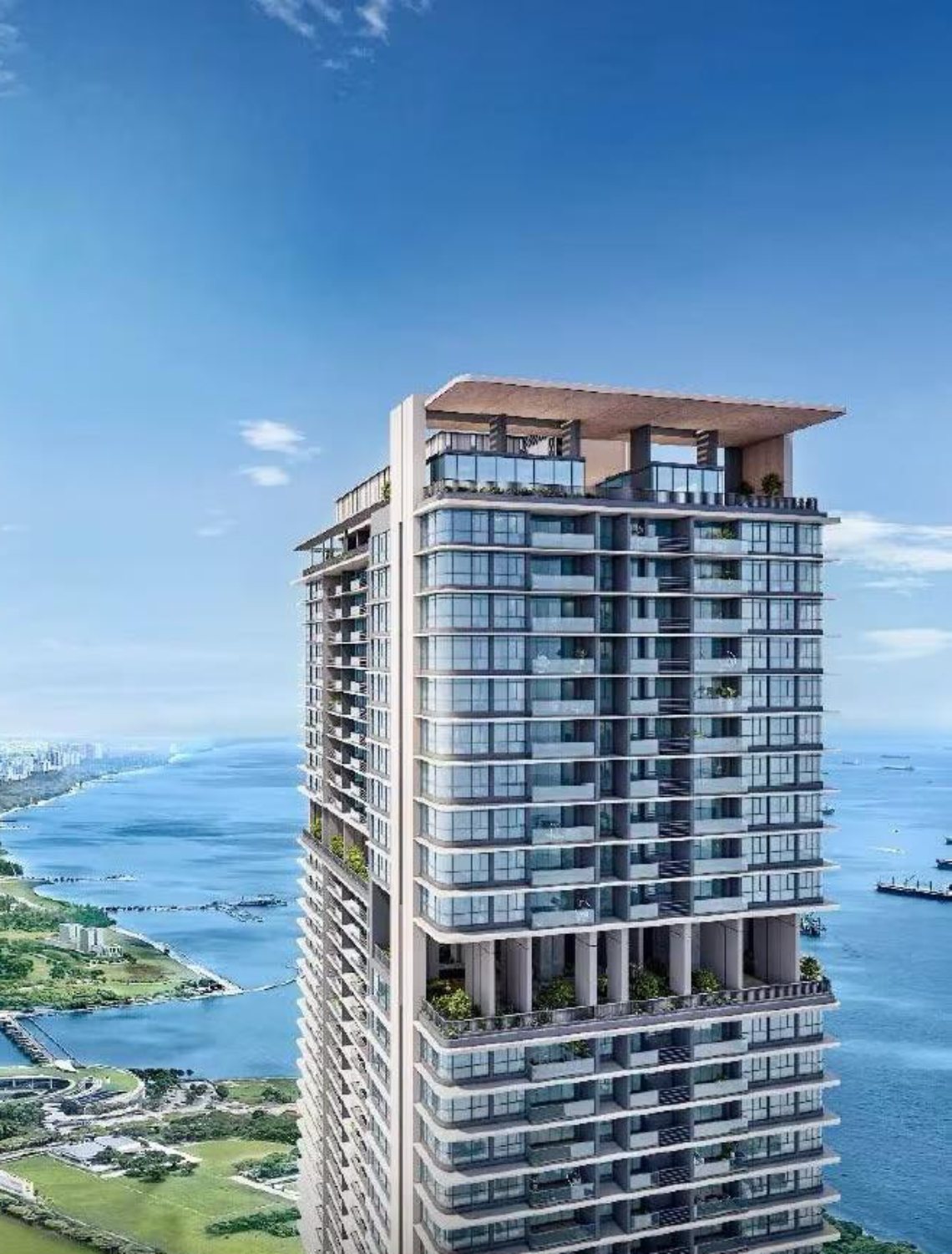
Looking ahead, long gestation periods are expected, with upcoming waterfront residential projects largely concentrated in the northern and southern regions of Singapore and slated for completion post-2030. Among these, the most highly anticipated precinct is the Greater Southern Waterfront, a long-term large-scale development initiative with projects planned over the next 10 to 15 years.
It forms part of an ambitious, multi-decade transformation, with land formerly used for industrial purposes set to be reimagined as a mixed-use waterfront district, combining residential neighbourhoods, business nodes, lifestyle amenities, and community spaces.
Yet, the next chapter of waterfront living is already here as part of a rapidly maturing market segment. Developers who achieve the optimal balance of access, connectivity, and long-term liveability will stand out, offering qualities that most residential options simply cannot.