Artist duo Chow and Lin discuss their research-driven practice, their work The Play Project – 440060, and their participation in The Red Pencil Singapore’s Art to HeART Charity Art Exhibition 2026
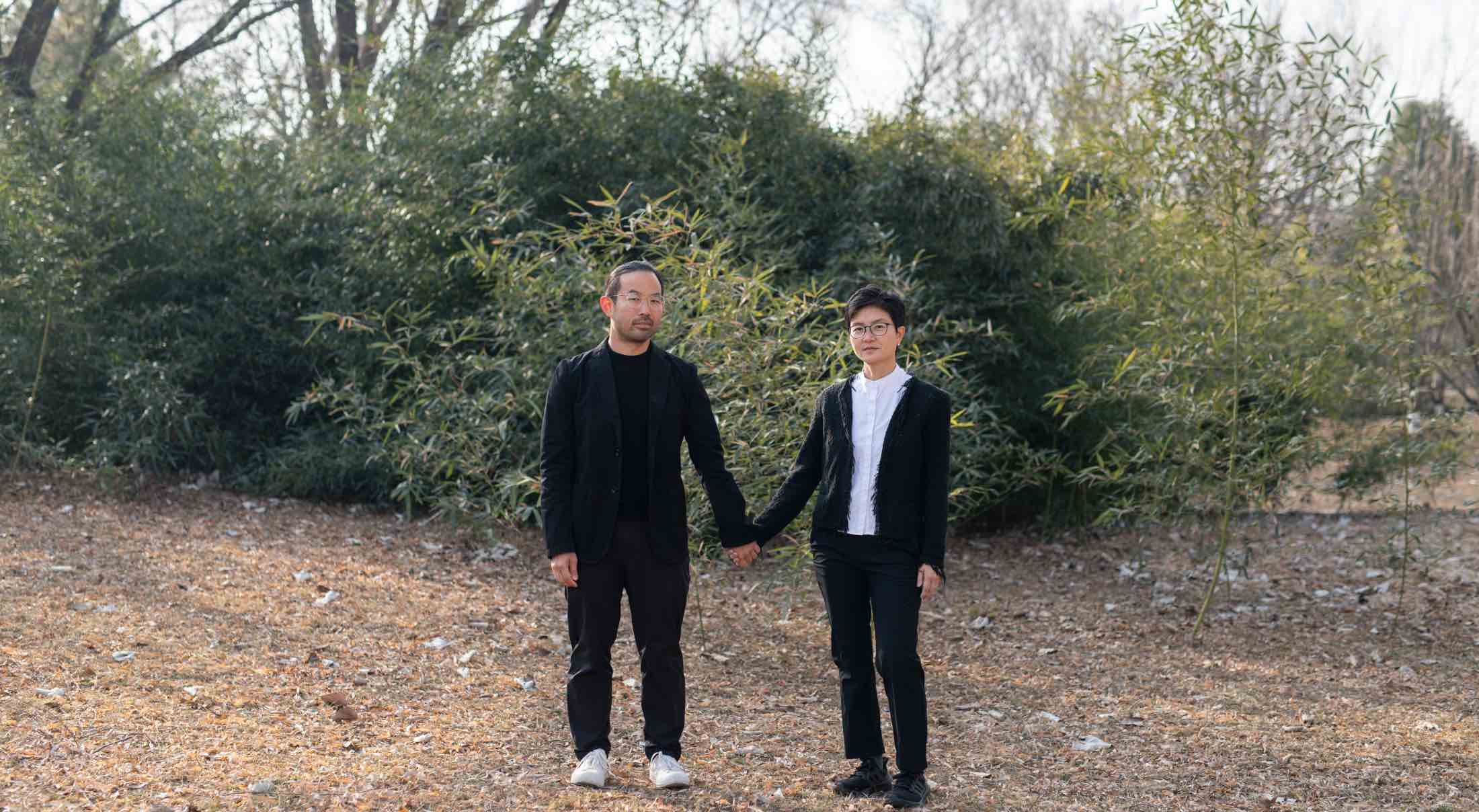
Art can be both a mirror and a chisel. For some, it is a means of reflection, expression, and memory. For others, it is a tool used to examine, question, and reshape the way we understand the world. This idea is perhaps best illustrated in the work of artist duo Chow and Lin, whose research-driven practice combines art, data, and social inquiry, transforming everyday objects and environments into visual investigations of global systems and human experience.
The husband-and-wife duo, whose works have been exhibited internationally across museums, biennales, and academic platforms, are among the artists participating in The Red Pencil Singapore’s Art to HeART Charity Art Exhibition 2026, a fundraising exhibition that brings together some of Singapore’s most esteemed artists in support of mental wellness through creative arts therapy.
Organised by The Red Pencil, a registered charity that provides creative arts therapy to underprivileged children, adults, and families who have experienced traumatic life circumstances, the exhibition demonstrates how artistic expression can extend beyond galleries and studios to create meaningful social impact.
Held from 10 to 12 April 2026 at The Culture Story, the exhibition invites the public to engage with art in a broader movement supporting emotional resilience and mental wellbeing. Proceeds from the exhibition will support The Red Pencil (Singapore)’s art therapy programmes, which help individuals express emotions, process trauma, and build confidence and hope through creative expression.
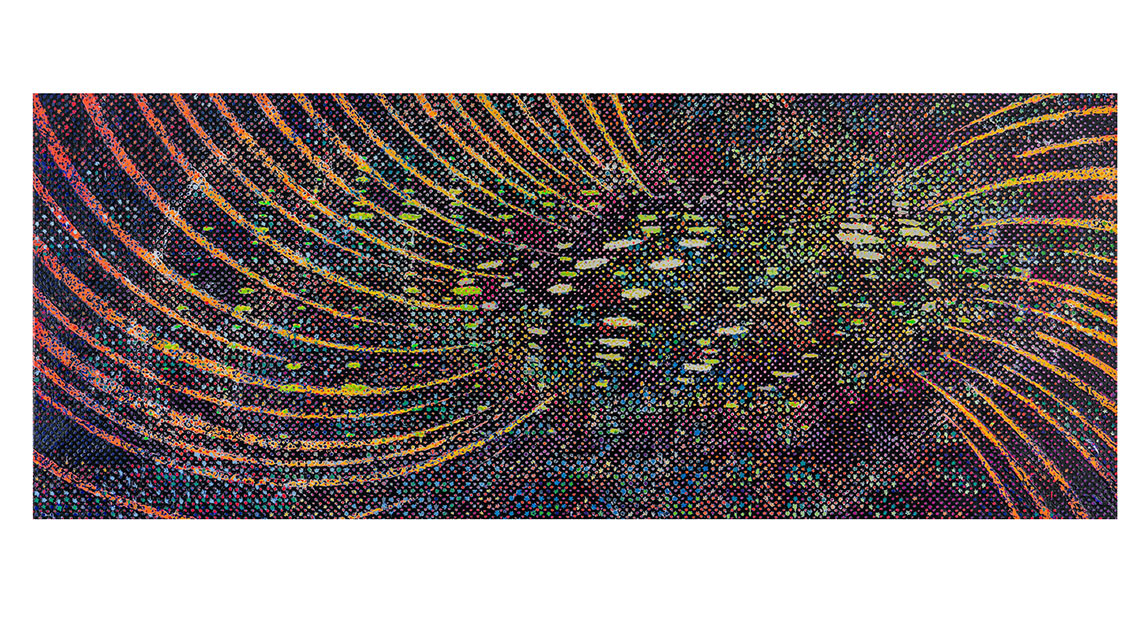
For the exhibition, Chow and Lin will present The Play Project – 440060, a work that reflects their ongoing interest in systems, society, and the everyday environments that shape human life. We spoke with the artist duo about their practice, collaboration, global perspectives, and the role of art in fostering empathy and understanding in today’s complex world.
Art to HeART highlights how creative expression can support mental wellness and community healing. What resonated with you about participating in this exhibition?
Our practice looks at global societal issues, connecting with objects and experiences at an individual level. In our own journey, we have found art to be a powerful language of exploration and engagement. The Red Pencil (Singapore) and the theme of the Art to HeART Charity Art Exhibition strike us as very meaningful in creating social awareness and building community bonds through art.
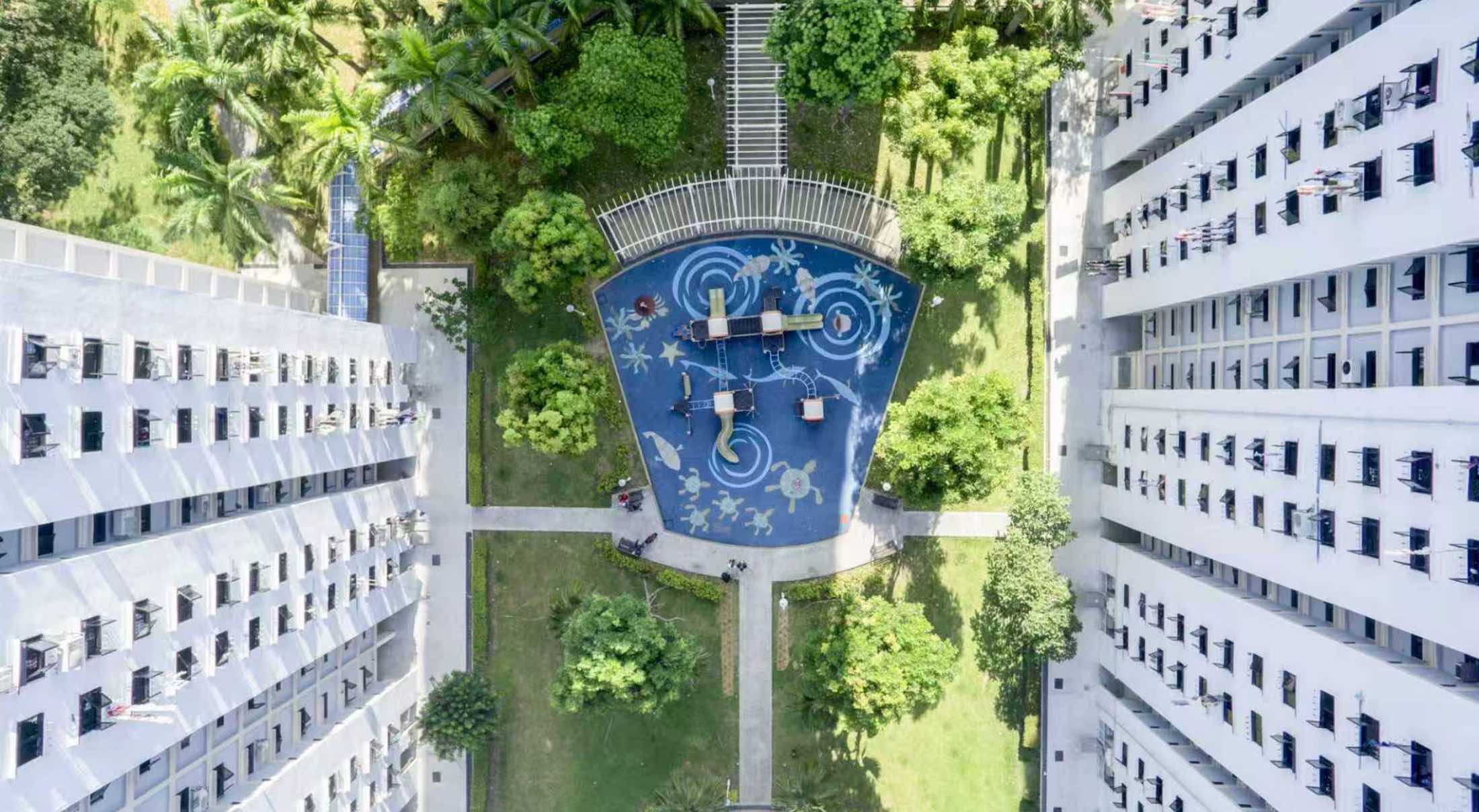
We understand that you will be presenting The Play Project – 440060 at the exhibition. Could you tell us more about this work and the ideas behind it?
We created the work in 2015, which marked the 50th year of Singapore’s independence and the second birthday of our daughter. As first-time parents, we saw her fascination with playgrounds. She would naturally run towards these multi-coloured structures that she could climb, slide and move parts.
We researched the history and development of public playgrounds in Singapore before conceiving the project. The project was a pioneer in showing the aerial perspective of a public playground and the surrounding residential estate. It provides a different viewpoint to examine the elemental constructs and connections in an urban society, and also imagines innocence in the free spirit of play.
Your work is known for combining art, data, economics, and policy research. How do you balance rigorous research with the need to create works that are emotionally engaging and accessible to audiences?
We begin with questions about what we observe. Our first project, The Poverty Line, was started in 2010 by asking, “What does it mean to be poor?”. We discussed what we saw and experienced in various societies and researched different policy approaches.
What is seemingly objective can invoke different associations and interpretations. By connecting with the everyday, we can create new ways to view the world we live in.
You’ve previously spoken about how living and working internationally allows you to view Singapore “from the outside looking in.” How has this perspective shaped the kinds of questions you ask in your work?
We both grew up in Singapore, and have been living overseas for nearly 20 years now. One core issue that we often think about, is being part of and relevant to a global network. In today’s uncertain world, global systems interact with and impact local communities and individuals in ways that we may not realise. We are curious about the transmission mechanisms, network effects, gaps and possibilities.
As a collaborative duo with different backgrounds, how do your perspectives complement (or challenge) each other in your creative process?
Dialogue is very much part of our creative process. The exchange, sharing and critique of ideas and information between us enables reconstructing and building up of perspectives and questions. We do not always agree. In fact we often disagree.
Your work often involves collaboration with economists, policymakers, and researchers. How do these interdisciplinary exchanges shape the way you think about the role of art in society?
We gather knowledge by moving in and out of the art ecosystem, talking to academic and industry experts to probe the underlying structures and related topics. It is exciting to investigate dynamic interactions and impact cutting across traditional boundaries.
Knowledge fields develop on the basis of certain historical, cultural and ideological norms. There are many complex problems we face together; some result from systemic gaps or blind spots, some are unanticipated side effects of purported solutions.
You’ve previously spoken about how Southeast Asian artists have historically been underrepresented globally, but that this is beginning to change. What do you think makes the perspectives of artists from our region particularly important today?
Southeast Asia has a very diverse mix of cultures with intertwined histories and economic systems within a close distance. The flows and exchanges of people, resources and products are tied to colonial infrastructure and post war modernisation.
No one person from one of the countries can truly represent the whole region. Many artists here are exploring the complexities of identity, decolonisation and development. These discussions on what it means to be Southeast Asian are critical especially in the midst of the geopolitical and environmental challenges which require deeper cultural knowledge and capacity building.
What role do you think art plays in fostering empathy and deeper understanding in a fast-moving world?
For us, art is about building platforms for understanding and questioning. Human development has created large systems which sometimes feel overwhelming. It’s really about finding the pathways into why something matters, and how we can affect change.
Lastly, what questions or themes are currently occupying your minds as artists?
We are interested in global phenomena which situate in local conditions, interlinked with social structures, geopolitics, economic systems, and environmental changes. We can look at this from a high-level transnational view, or down to the level of an individual.
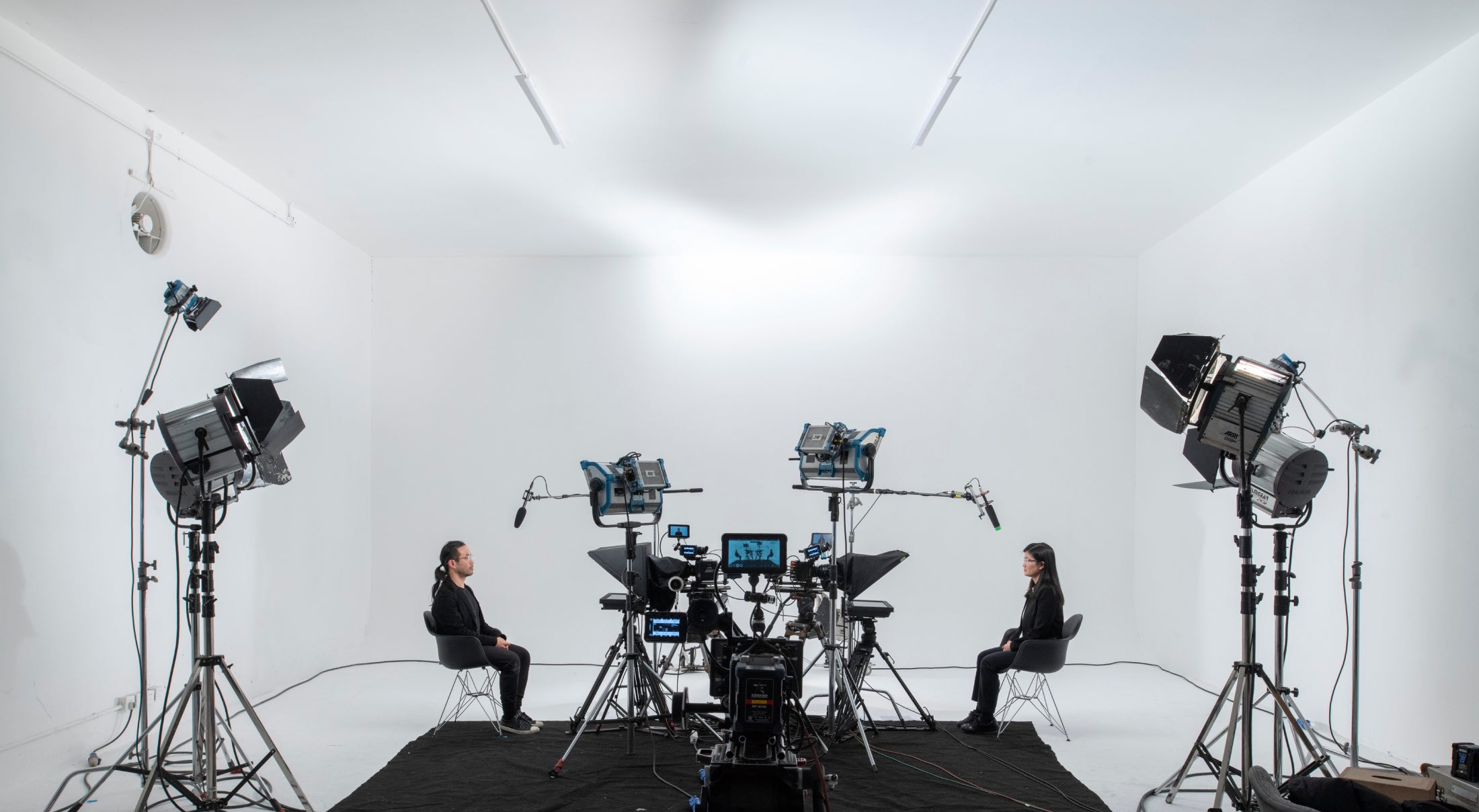
We are applying the analytical record framing to ourselves in a 40-year project, “The Conversation”. By building a cognitive archive of our dialogues over time, we are mapping how a shared reality is constructed against personal and global shifts.